Travel: Capri

2013-05-29 03.36.21

Since I had a flexible schedule due to eliminating a few of my planned cities along the original route, I decided to meet my friend (we became acquainted in Venice), on the gorgeous island of Capri. She was staying in Nerano, I was staying in Naples, and hopping on ferries to rendezvous in the middle of the sea happened to be the best compromise

Capri is about a 1-hour ferry ride from the western end of the Italian Peninsula. It lies on the south-side of the Gulf of Naples within the Campania region of Italy. As a result, I set out early in the morning; It was a joy to be on the water and feel the wind in my face while watching the large wakes the boat’s speed left behind.

2013-05-29 04.55.21According to the greek geographer Strabo, and confirmed by archeological findings and geological surveys, Capri was once part of the mainland. Evidence of human settlement during the Roman Era indicates that the city has been inhabited since the  Neolithic and the Bronze Ages.

It is on these shores that the emperor Augustus constructed his villa; giant bones and “weapons of stone” were prominently displayed in the garden of his Sea Palace. He is the individual credited with the urbanization of Capri, seeing it as his own private paradise. Temples, villas, aqueducts, and gardens built to complement Augustus’ Vision.

2013-05-29 08.46.54

His successor,  Tiberius, went on to build a series of Villas, the most famous of all, Villa Jovis, remains one of the best-preserved Roman villas in Italy. It is from these shores that Tiberius ran his empire from 27 AD until his death in 37 AD.


Renata

My friend and I hiked up to the main town foregoing the funicular. With no set plan, we merely traipsed around the paths catching gorgeous panoramic views of the island, and absorbing some Vitamin D. After, we grabbed some deli sandwiches (my european favorite being the Caprese with Fresh Buffalo Mozzarella), and relaxed on the beach.

She, being an inspirational late-20’s Marathon runner,  went off to run, and I sun-bathed and caught up on a bit of my reading. After grabbing some wine upon her return, we split off of each other, and I hopped on a round-the-island tour to see all the hidden coves and imaginative rock formations that Capri had to offer.

2013-05-29 08.40.392013-05-29 08.49.54

Unfortunately, due to extenuating wind conditions, I was not able to kayak into the infamous cavern known as the Blue Grotto (Grotta Azzurra). It is one of the most visited sites on of Capri, and considered the island’s emblem.


Travel: Vesuvius and Pompeii

Today, I finally achieved my goal of hiking along the side of an active volcano, and exploring a two-millennia old roman village. We will get to the emotions ignite later. Getting there was a challenge, however, because they shut down the metro system without any notice. I was forced to cram myself into two different buses (transfer) so that I could reach the train station. What should have taken a mere half hour, ended up in consuming an hour and a half of my morning. 😦

2013-05-28 04.47.14

Finally, I arrived on Mt. Vesuvius, after getting to the Ercolano Train station, and hopping a 20-min shuttle drive up the side. I won’t lie, it was a little anticlimactic for me. The 30-min hike up the rim was steep, but riddled with gravel and dust, and no protection from the beating sun. The rim of the volcanic crater slopped off into this massive hole with disproportionate sides, sparse vegetation, and nothing close to an imposing atmosphere.

2013-05-28 05.17.24

The volcano is best known for it eruption in AD 79 that completely smothered and buried the Roman cities of Pompeii and Herculaneum. The activity ejected a sprawling cloud of stonesash, and fumes to a height of 20.5 miles; Molten rock and pulverized pumice were spewed at a rate of 1.5 million tons/sec, releasing a 100,000x the thermal energy released by the Hiroshima Bombing.

Today, it is on only volcano on the european mainland to have erupted within the last hundred years. It is regarded as one of the most dangerous in the world due to the dense population of 3,000,000 people and its tendency towards explosive (Plinian) eruptions.

2013-05-28 08.56.19

Descending from the volcanic slopes, I hopped a train to reach my next destination. Unfortunately, the signage was not clear, and it took a bit longer due to having to hop off and go back in the former direction. I did meet two british teachers who were on holiday for the season, and we enjoyed a very nice chat about employment and careers. Somehow I always manage to converse with kindly middle-aged people; I just have that kind of personality.

2013-05-28 09.19.11

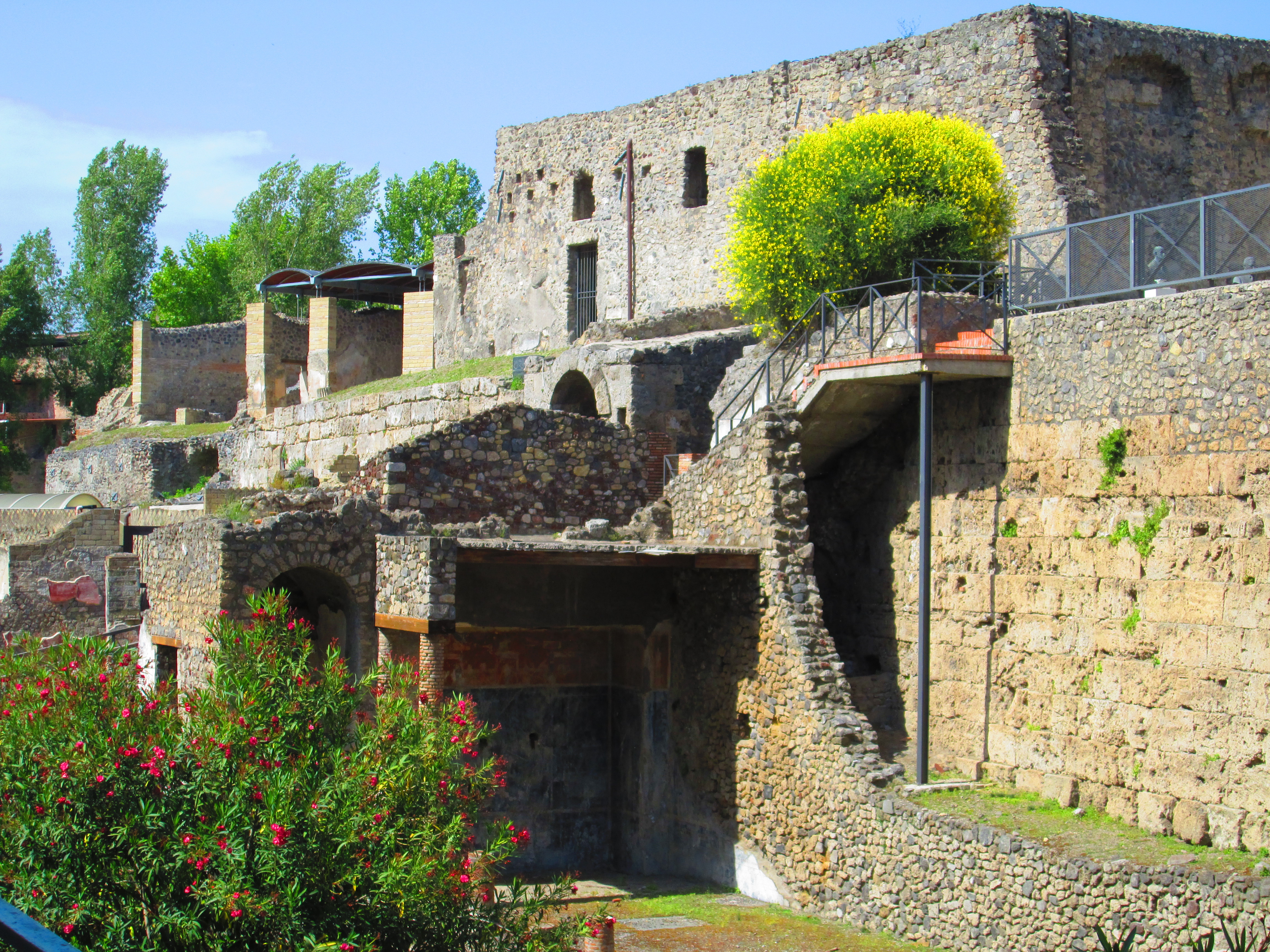
Arriving at the Pompeii Scavi, it is difficult to describe how much square footage this city encompasses. It is believed that the town was founded in 6th or 7th century BC and was captured by the romans in 80 BC. When it was destroyed 160 years later, the population had exploded to 20,000 with a complex water system, amphitheatre, gymnasium, and a port.

Evidence indicating the destruction comes from a surviving account from a letter written by Pliny the Younger. He saw a firsthand account of the eruption from a distance across the bay, and described the death of his uncle, Pliny the Elder, an admiral of the Roman fleet who tried to rescue citizens. The site was then lost for 1500 years before being rediscovered in 1599. Buried objects have been well-preserved for thousands of years due to the lack of air and moisture.

The  Pax Romana civilization was extremely intelligent in their urban design:

2013-05-28 09.06.46

White Marble to reflect the moonlight, so citizens could walk the streets at night.

2013-05-28 12.16.21


Raised stones, so citizens could cross the streets above the much of animal refuse and garbage.


2013-05-28 11.24.46


The first documented brothel in the world. (Okay, maybe not innovative, but certainly a historical achievement).


At the end of the day, I just couldn’t get over the fact that it was these humble two feet, that traipsed across the streets of a centuries old city riddled with heritage and tragedy.2013-05-28 10.50.57

Travel: Streets of Napoli

2013-05-27 07.40.38

Right outside the San Lorenzo Maggiore is the Via San Gregorio Armeno a quaint street that has gained notoriety as the ‘Christmas Street.’ The shops lining this alley are overflowing with artistic takes of the traditional italian nativity. Even today, the setting of a presipio is more important in Napoli Culture than a christmas tree.

Much emphasis is based on providing a thorough and comprehensive Nativity Scene that not only presents Christ in his manger along with his doting parents and the wise men, but also illustrate the everyday life of the population.  Scenes include the preparation of a meal, a bartender at work, or even a craftsman honing their art.

It then took me a few wrong turns to locate the Capella San Severo a building dating from 1590 when a private chapel was built for John Francesco di Sangro, Duke of Torremaggiore after recovering from a serious illness. It houses a large collection of sculptures that were crafted by some of the leading Italian artists of the 18th century.

Veiled Christ

Veiled Christ

Although there are three emblematic structures that express the  emphasis of decorating in the  late-Baroque style, two particularly caught my eye. They are composed of a marble-like substance developed, partially or solely, by Raimondo. In the words of the all-knowing Wikipedia:

VeiledMary

Veiled Truth

“The Veiled Truth (Pudizia, also called Modesty or Chastity) was completed by Antonio Corradini in 1750 as a tomb monument dedicated to Cecilia Gaetani dell’Aquila d’Aragona, mother of Raimondo. A Christ Veiled under a Shroud (also called Veiled Christ), shows the influence of the veiled Modesty, and was completed in 1753 by Giuseppe Sanmartino (1720-1793).”


2013-05-27 08.34.26


At this point, my lunch was much overdue, and I stopped for some traditional Napoli Pizza. It is in this city after all, where this classic italian flat bread was invented.


The Associazione Vera Pizza Napoletana maintains strict guidelines concerning what can be characterized as “Genuine Neapolitan Pizza Dough.”Ingredients are as follows: wheat flour (type 0 or 00, or a mixture of both), natural Neapolitan yeast or brewer’s yeast, salt and water.”

2013-05-27 09.46.37

Castel Nuovo

2013-05-27 10.36.29

Palazzo Real

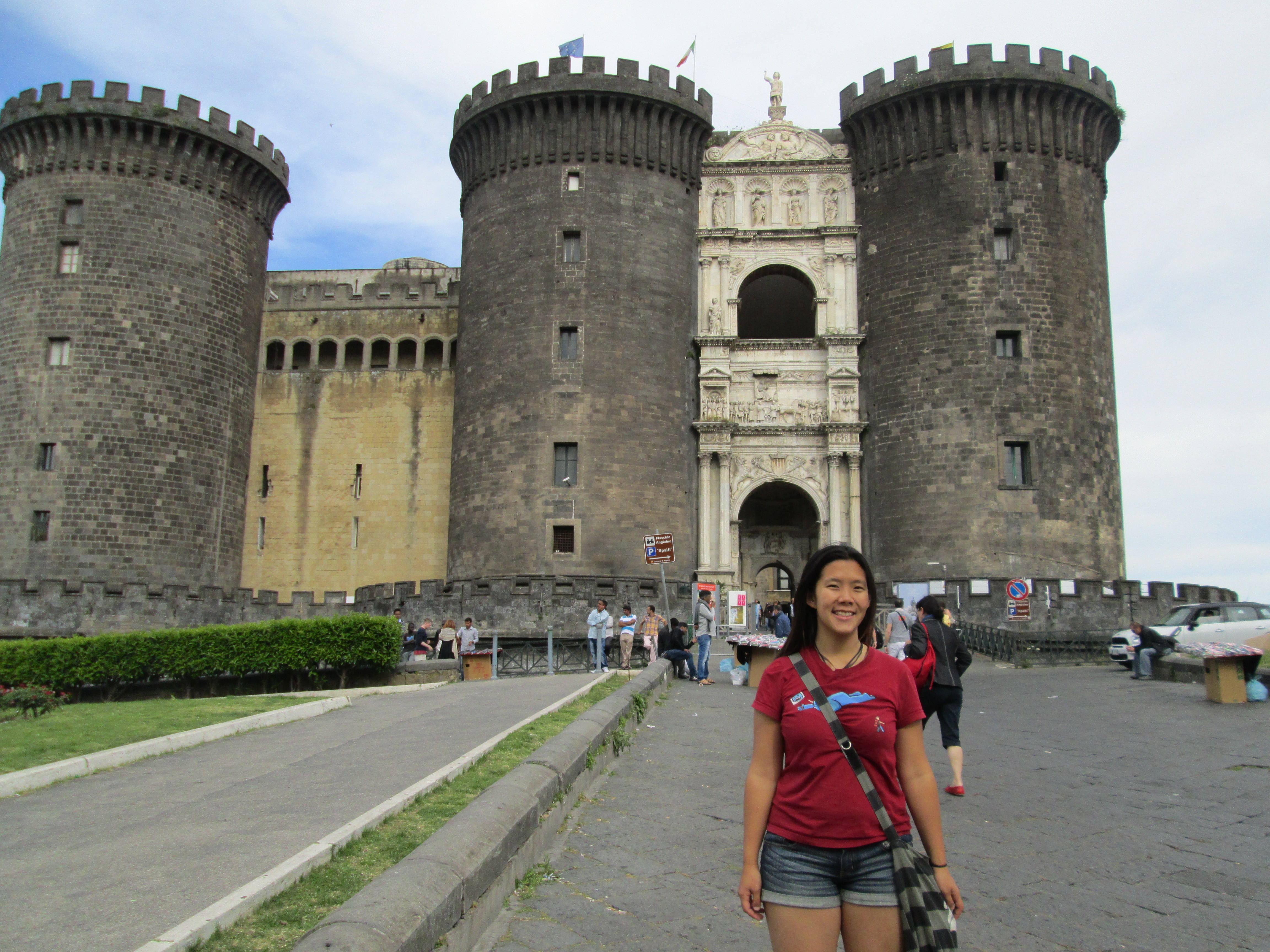
After a thoroughly satisfying eating experience, I took a leisurely stroll down Via Toledo, enjoying some spectacular views of some eye-catching architecture. I spent the last few hours of my day strolling along the port, pausing to explore the three castles that dominate the Napoli coast (Castel Nuovo, Palazzo Reale, & Castel Sant’Elmo), and hike up a hill.

2013-05-27 12.47.43

Castel Sant’Elmo

2013-05-27 12.32.02

Travel: Napoli Underground

Italy is a surprisingly long peninsula, requiring my trip from Venice to Napoli to last around 7 hours. Therefore, I took a night train and arrived in Napoli in the wee morning hour of 7 AM. After hauling my backpack to my hostel, I departed to explore the historic centre, without an inkling of a plan. (I had chosen Napoli as my rendezvous point so that I had easy day-trip access to Mt. Vesuvius and Pompeii. )

2013-05-27 06.07.54

Don’t get me wrong, this city is the only one on my list that legitimately terrified me. At present, the city has one of the highest crime rates in Italy; high unemployment paired with severe waste management issues continue to plague the city. Rumors of blackmail, extortion,and illicit contract tendering have emerged questioning the ethical viability of the local government. Read up on Camorra Organized Crime for a better understanding of the powerful opponents that challenge elected officials.


2013-05-27 05.36.43

Some of the most interesting churches I have visited are here. In my wanderings, I stumbled into the Church of Santa Maria delle Anime del Purgatorio ad Arco, an abode that has gained a cult-like following for the dark, yet hopeful atmosphere housed beneath it’s floors.


Traditionally, Roman Catholics view Purgatory as a state or place of purification or temporary punishment. It is where souls that died in a state of grace are believed to be preparing for the Beatific Vision in Heaven. No one in Purgatory will remain forever, or be banished to hell.

BelowWings

Origins of the ‘cult’ can be traced back to the early 1600s, when a church sought to establish a liturgical link between the living in the dead. The modes of worship for these souls vary, but express the possibility of developing a relationship through the ‘adoption’ and caring for of an individual’s remains. This ancient cult, survived despite wars and famines, and was so pervasive that Cardinal Ursi prohibited it in 1969, although it is still practiced.

Lucy


One of the most famous remains is ‘Princess Lucia.’ According to legend, the skull was that of an 18th-century teenage bride, whose tragic death evolved into her becoming the unofficial protector of young brides.


My next destination was a stop at San Lorenzo Maggiore; as a church and monastery, its presence is rooted in the Franciscan order, one that existing during St.Francis of Assisi‘s lifetime. Its location is at the precise geographic center of the historic center of the ancient Greek-Roman city. I was able to explore the streets of the original Roman Market at the intersection of via San Gregorio Armeno and via dei Tribunali.

2013-05-27 06.18.252013-05-27 06.24.15

Travel: Piazza San Marco

Anticipating the crowds we would encounter, my friend and I opted to wake early so that we could avoid the lines. I’m quite impressed with ourselves as we made it to St. Mark’s Square around 8 AM when it was still peaceful and quiet, void of boisterous vendors and the hubbub of tourist groups.

2013-05-26 02.07.04

St. Mark’s Square is the principal public square in Venice. This sprawling open area formed the social, religious, and political centre of Venice.

A popular remark attributed to Napoleon termed this area as “the drawing-room of Europe.”

It is breathtaking to witness during tranquil moments, but also impressive as one of the few remaining great urban spaces in Europe where human voices prevail over the sounds of motorized traffic.

The Piazza is dominated by some landmark buildings:

2013-05-26 02.06.24


St Mark’s Basilica


2013-05-25 03.21.21


Torre dell’Orologio


2013-05-26 10.06.03


Campanile

Procuratie

Museo Correr


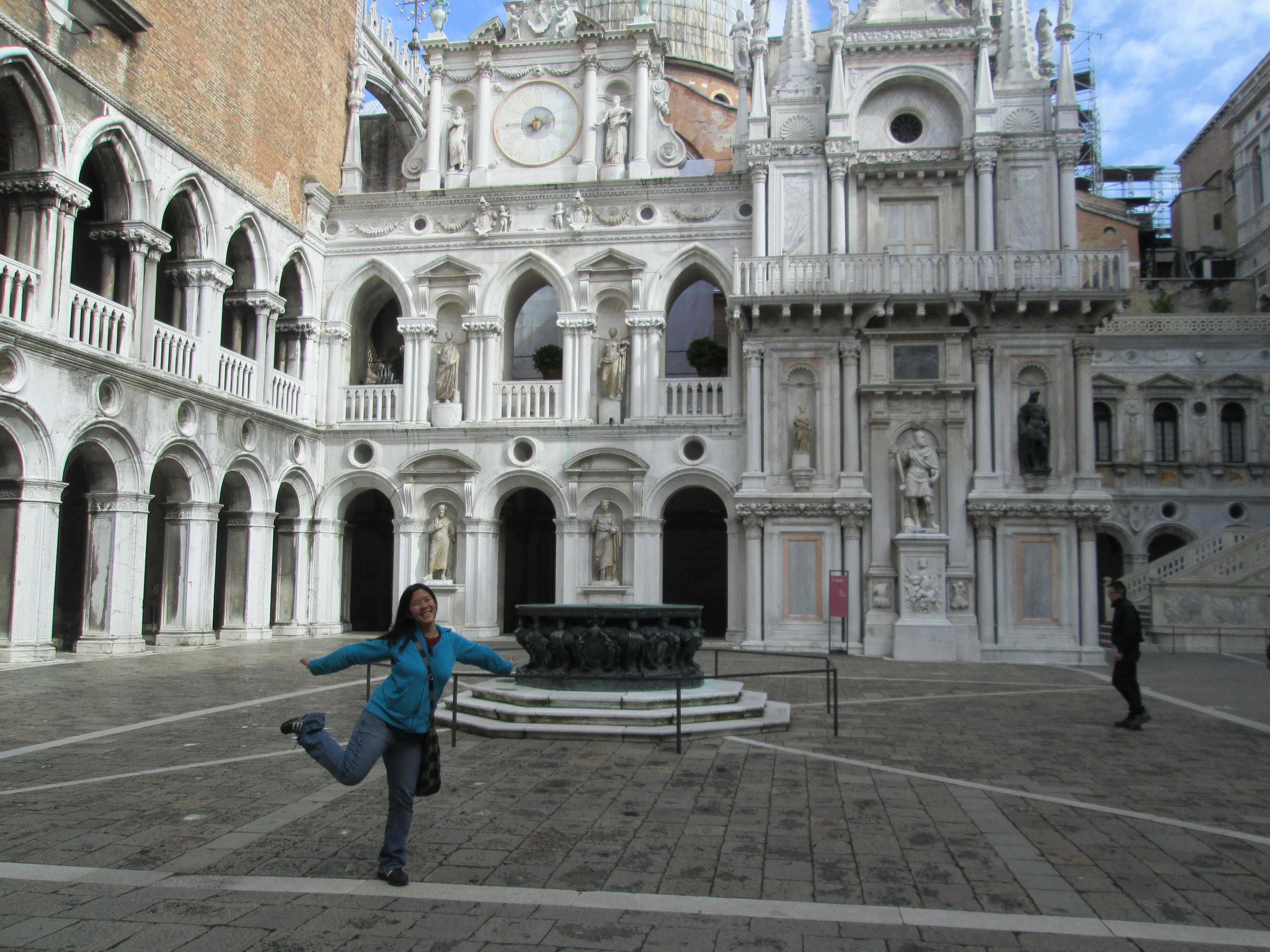
Doge’s Palace:

The Doge’s Palace is built-in the Venetian Gothic style; it was the residence of the supreme authority of the Republic of Venice. He was the chief magistrate and leader of the Serene Republic of Venice for over a thousand years. Doge’s were elected for life by the city-state’s aristocracy, and was commonly the shrewdest elder in the city. He was variously referred to as “My Lord the Doge”, “Most Serene Prince”, and “His Serenity.”

This institution originated around 700 replacing the  tribunes that formerly led the cluster of early settlements around the lagoon. The official elected was a the local representative of the Emperor of Constantinople, and regarded as the ecclesiastical, the civil and military leader, in a power structure named caesaropapism. His prerogatives were not defined with precision, and despite the position being entrusted to members of the inner circle of powerful families, a law was necessary to decree that no doge had the right to name his successor.

2013-05-26 02.14.47

In 1172 the election process was finally entrusted to a committee of forty, who were chosen by four men selected from the Great Council of Venice, an annually nominated group of twelve people. New regulations were then introduced in 1268 that remained effective until the end of the republic in 1797. The primary objective was to minimize the influence of great families by instituting a complex elective machinery.

The ceremonial formula before the doge took the oath of investiture was as follows. “This is your doge, if it please you.”

2013-05-26 10.14.02


Travel: Islands of the Venice Lagoon

Since my itinerary is pretty flexible, I latched onto my new friend and partook in a 4-hour demonstration and boat tour of Murano, Burano, and Torcello, just a few of the islands immediately off the coast of the Venice Peninsula. To my disappointment, the weather was not the best while I visited the city and ranged from sunny and windy, to gloomy and cloudy

The first boat stop was Murano; it is a series of islands connected by bridges and lies about 1.5 km north of the city. Its claim to fame lies in its history of glassmaking.

2013-05-25 04.38.472013-05-25 04.37.532013-05-25 04.39.35

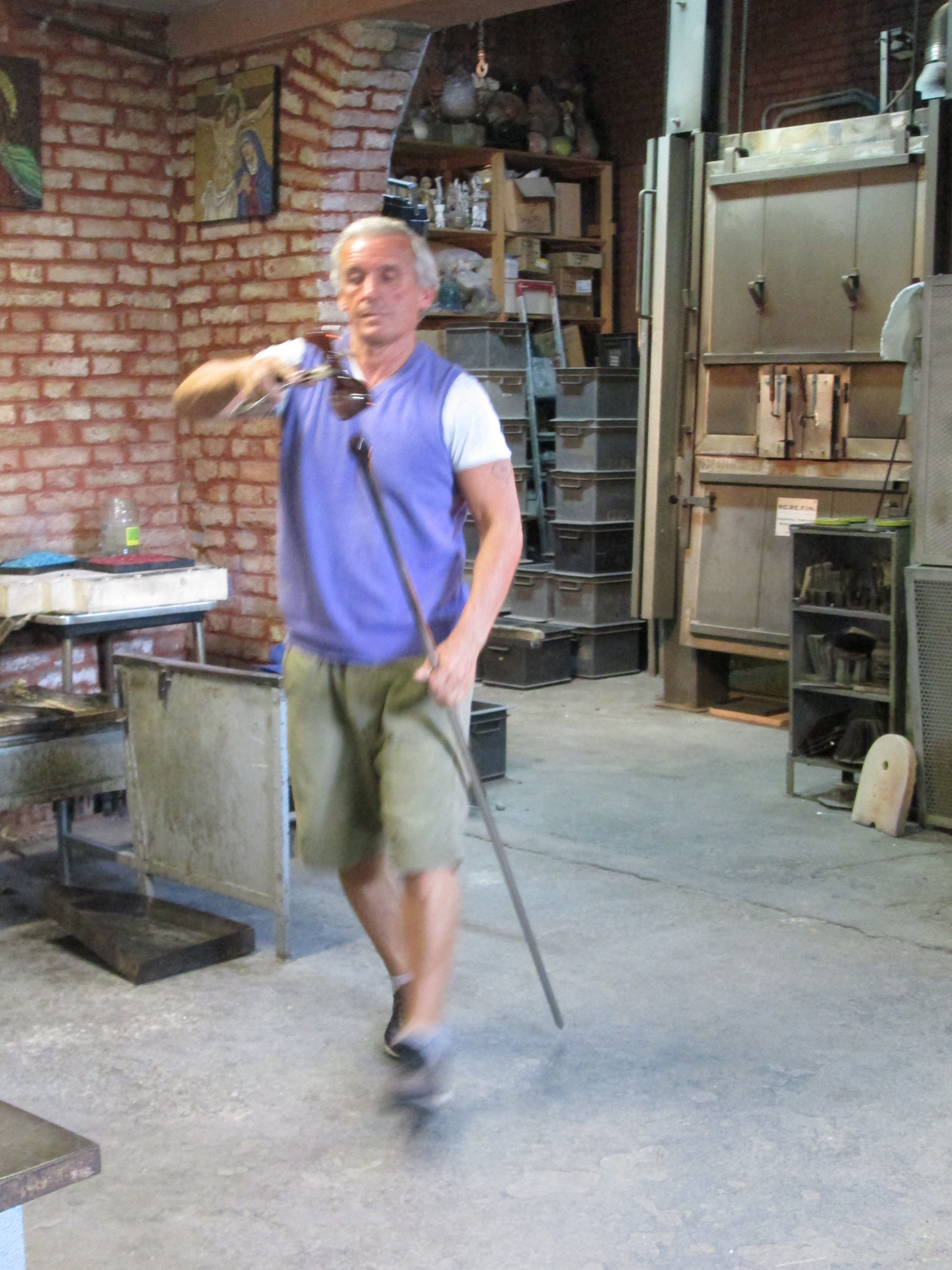
In 1291, the Venetian Republic, fearing destruction of the city’s mostly wooden buildings through fire, ordered glassmakers to relocate their foundries to Murano. Murano’s glassmakers soon became some of the island’s most prominent citizens and enjoyed special privileges by the 14th century. They were allowed to wear swords, enjoyed immunity from prosecution by the state, and married their daughters into the city’s most affluent families. However, they were also forbidden to leave the republic, and often took risks migrating and establishing glass furnaces in the surrounding cities. Today, artisans still employ centuries-old techniques such as crystalline glass, enameled glass, glass with threads of gold, multicolored glass, milk glass, and imitation gemstones.

2013-05-25 05.59.342013-05-25 06.25.16

Our second stop was Burano, an archipelago of four islands linked by bridges; it is situated 7 km away. There are two stories attributed to how the city obtained its name. One is that the town was founded by the Buriana family, and the other is that the first settlers came from the small island of Burancello, which lies 8 km south. It soon became a thriving settlement as it arose from its 6th century origins, but was administered from Torcello and enjoyed none of the privileges. Burano only gained a foothold in the 16th century when women on the island began creating handmade lace with needles.

2013-05-25 07.17.512013-05-25 07.27.00

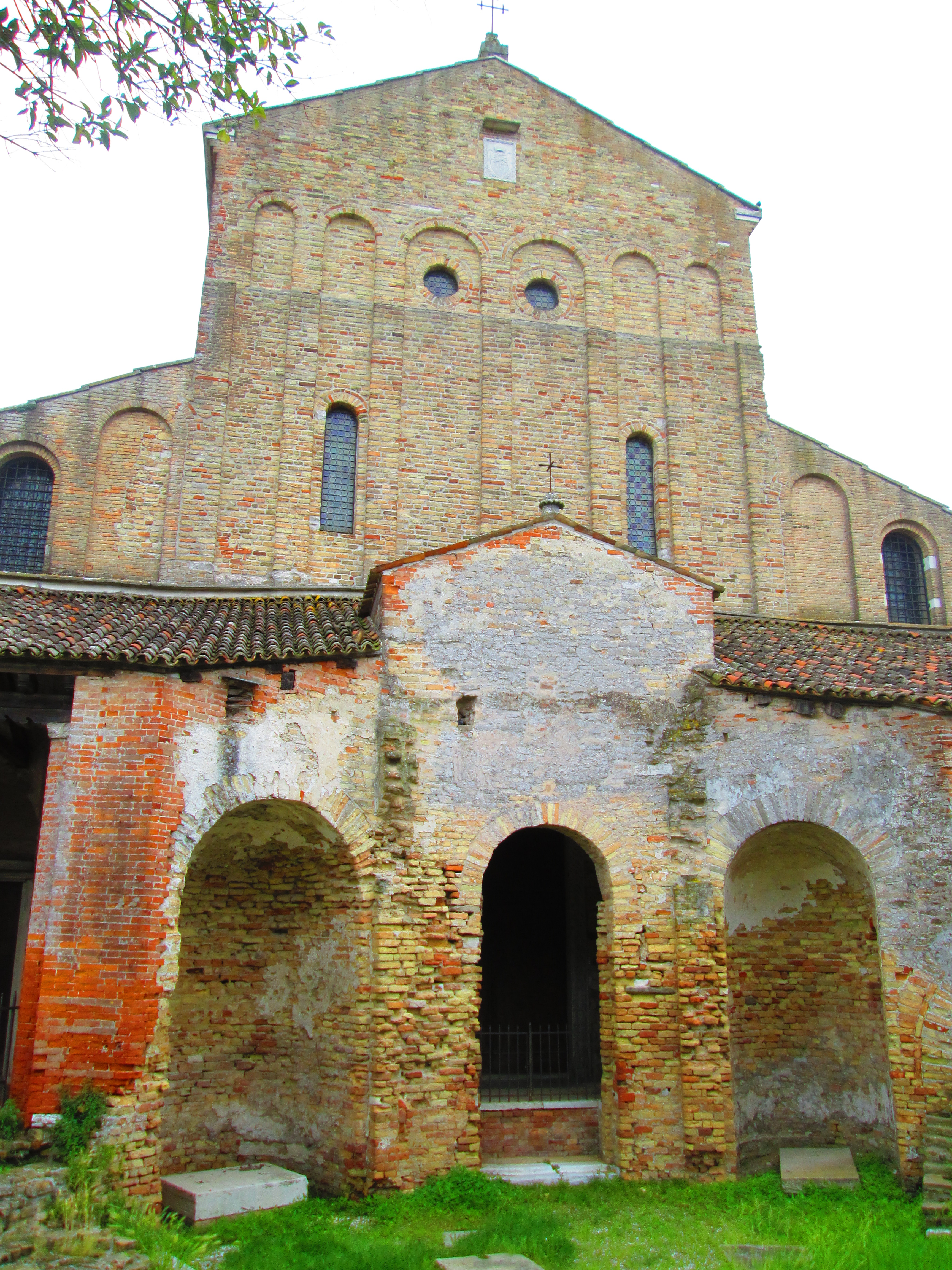
The last stop was Torcello; one of the first lagoon islands to be successively populated by the Veneti after the downfall of the Roman Empire. They used the island as a shelter, hiding from the recurring barbarian invasions, and as refuse after Attila the Hun had destroyed the city of Altinum and it’s surrounding settlements in 452. It remained unsafe even after the end of the Gothic War due to frequent Germanic invasions and wars. In the following 200 years a permanent influx of urban refuges was fuelled by Lombards and the Franks. Throughout this, Torcello maintained close cultural and trading ties with Constantinople.

Fortunately, the wet drops of rain only started as we hopped on the ferry from our last stop. We both enjoyed a nap on the long 45 min journey back to the ferry port next to San Marco Square.


Travel: Getting Lost in Venice

2013-05-26 E


After we arrived back at the port, we decided to snack at this quaint little coffee shop. I had the best Prosciutto, Salami, and Blue Cheese sandwich on an Olive Bread Bun. Mmmmm. 🙂


2013-05-26 B

We then enjoyed a walk along the, for lack of a better term, ‘boardwalk’, and enjoyed a view of the Venice Lagoon and the well-documented Ponte dei Sospiri. It is an enclosed bridge made of white limestone with barred windows that connects the Doge’s Palace to the prison’s interrogation room.

The translation of the Sospiri is ‘sighs’. The ‘Bridge of Sighs’ gained its name because it was the final view of the beautiful Venice that convicts enjoyed before they were imprisoned within their cells.

2013-05-26 A

A local legend states that lovers will be granted eternal love and bliss if they kiss on a gondola under the bridge at sunset, as the bells of St. Mark’s Campanile toll.

What a contradiction! The walkway is historically associated with imprisonment and a prisoner’s longing for freedom, but over the years it has become significant for amorous couples?

2013-05-26 DOur last stop was a visit to the Grimani Palace. It was originally a residence of the doge Antonio Grimani, but was rebuilt by his heirs Vittore and Giovanni Grimani from 1532 to 1569.

Unfortunately they had much of the interior decoration was either removed or deteriorated, so I was quite disappointed by the lack of ‘Period-Escape’ provided. Photos were also not allowed, but I managed to sneak a few of some outstanding Stucco and Rococo. 😛

2013-05-26 C

Travel: Austria to Italy

Today, was an extremely tedious travel day. Who knew that getting from Austria to Northern Italy would take so long? I had the option to either transfer once to a bus in Verona, the infamous city of the tragic Romeo and Juliet, or to take trains the entire way. Rather than risk getting lost and missing my connection, I opted for the latter option. Unfortunately, this entailed two transfers, and an average of 45 min stopovers.

2013-05-24 05.00.00

As such, I awoke early to catch a train from Salzburg to Innsbruck. From here, the train from Innsbruck to Verona was the longest leg of my trip. I am a little disappointed that I became so engrossed in my novel, that I missed the fluid transition from green mountains, to watching snow gently waft down from the sky.

It was completely breathtaking, and not a view I had prepared for, having missed the gentle slope that the train had obviously chugged upwards on.

2013-05-24 09.42.55


Finally arriving in Verona, I latched on my Travel Belt (Yes, the only place I was terrified of being pick-pocketed in was Italy) and hopped on my final train for the day. I successfully arrived in Venice around 5 PM.


2013-05-24 09.54.51

Unfortunately, the hostel did not provide walking directions, and the tourist desk did not have any maps left. Rather than risk being the lost in the maze of the city, I opted for the suggested method of travel to the hostel, the water taxi. It was so expensive! Definitely an experience, but not worth the cost, when the entire city is meant to be traversed on foot.

I then acquainted myself with a lovely new Australian friend, and we ventured to a nearby pizzeria for our first Italian Dinner. 🙂

Next Newer Entries