Travel: Islands of the Venice Lagoon

Since my itinerary is pretty flexible, I latched onto my new friend and partook in a 4-hour demonstration and boat tour of Murano, Burano, and Torcello, just a few of the islands immediately off the coast of the Venice Peninsula. To my disappointment, the weather was not the best while I visited the city and ranged from sunny and windy, to gloomy and cloudy

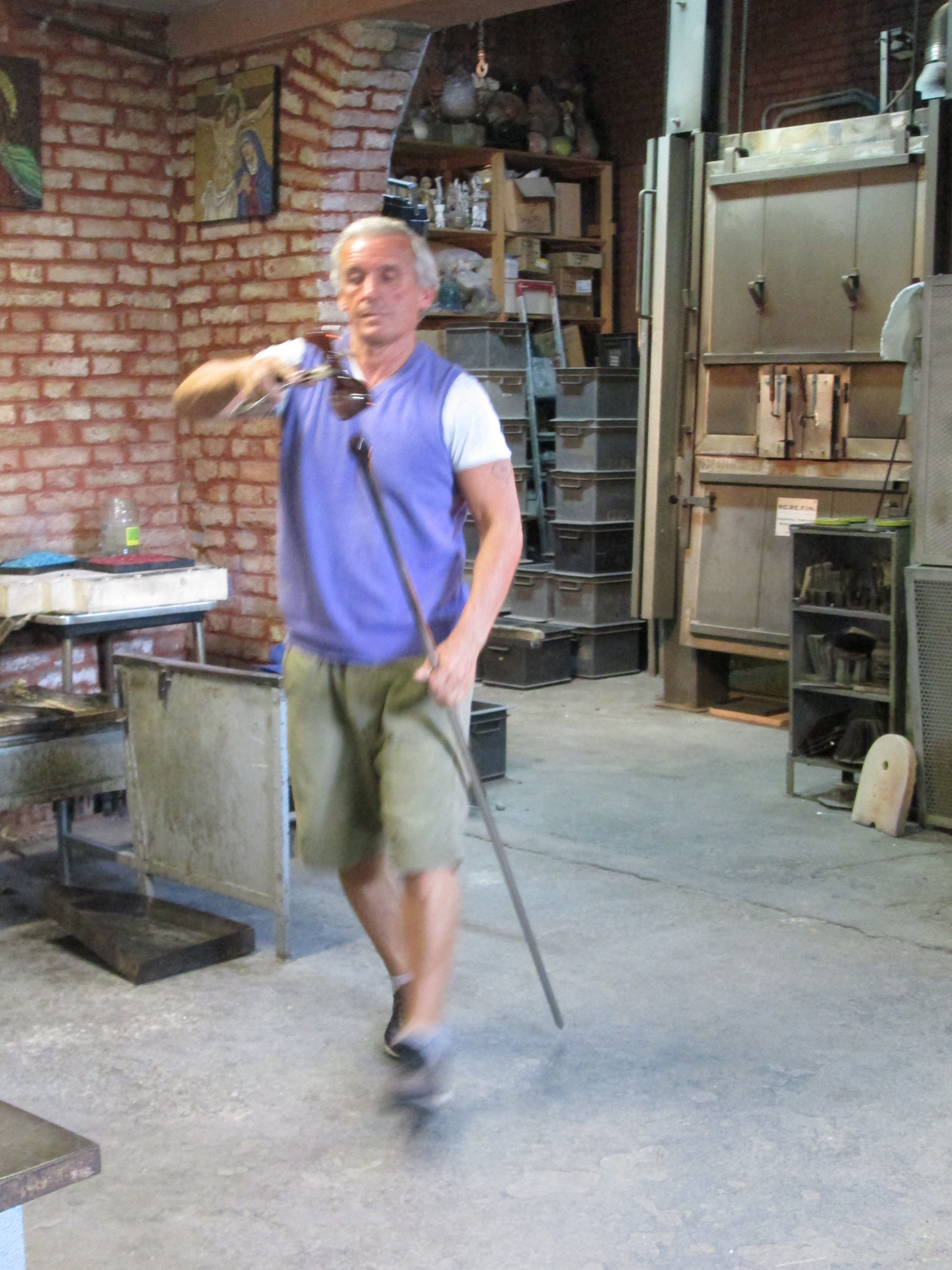
The first boat stop was Murano; it is a series of islands connected by bridges and lies about 1.5 km north of the city. Its claim to fame lies in its history of glassmaking.

2013-05-25 04.38.472013-05-25 04.37.532013-05-25 04.39.35

In 1291, the Venetian Republic, fearing destruction of the city’s mostly wooden buildings through fire, ordered glassmakers to relocate their foundries to Murano. Murano’s glassmakers soon became some of the island’s most prominent citizens and enjoyed special privileges by the 14th century. They were allowed to wear swords, enjoyed immunity from prosecution by the state, and married their daughters into the city’s most affluent families. However, they were also forbidden to leave the republic, and often took risks migrating and establishing glass furnaces in the surrounding cities. Today, artisans still employ centuries-old techniques such as crystalline glass, enameled glass, glass with threads of gold, multicolored glass, milk glass, and imitation gemstones.

2013-05-25 05.59.342013-05-25 06.25.16

Our second stop was Burano, an archipelago of four islands linked by bridges; it is situated 7 km away. There are two stories attributed to how the city obtained its name. One is that the town was founded by the Buriana family, and the other is that the first settlers came from the small island of Burancello, which lies 8 km south. It soon became a thriving settlement as it arose from its 6th century origins, but was administered from Torcello and enjoyed none of the privileges. Burano only gained a foothold in the 16th century when women on the island began creating handmade lace with needles.
2013-05-25 07.17.512013-05-25 07.27.00

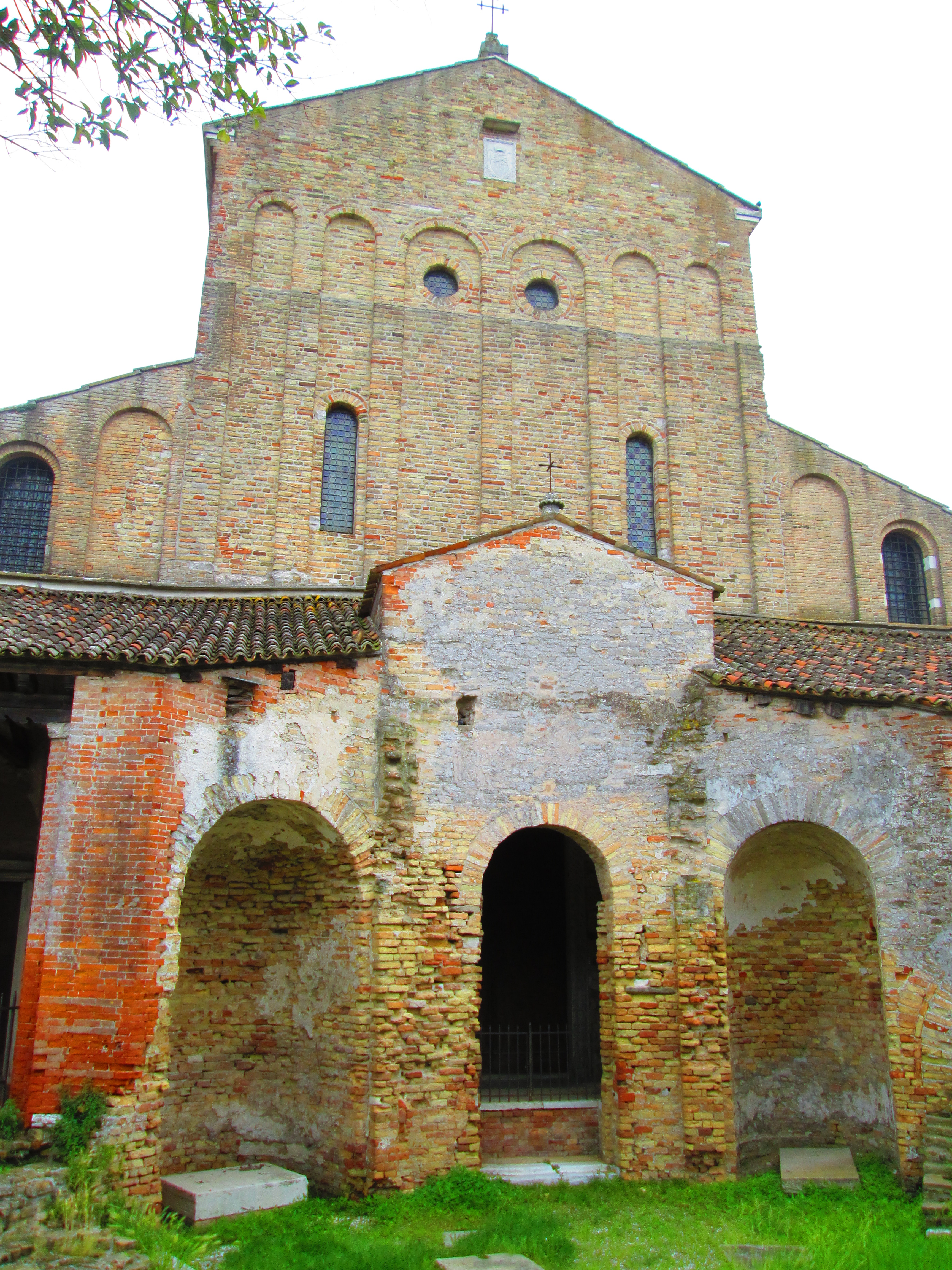
The last stop was Torcello; one of the first lagoon islands to be successively populated by the Veneti after the downfall of the Roman Empire. They used the island as a shelter, hiding from the recurring barbarian invasions, and as refuse after Attila the Hun had destroyed the city of Altinum and it’s surrounding settlements in 452. It remained unsafe even after the end of the Gothic War due to frequent Germanic invasions and wars. In the following 200 years a permanent influx of urban refuges was fuelled by Lombards and the Franks. Throughout this, Torcello maintained close cultural and trading ties with Constantinople.

Fortunately, the wet drops of rain only started as we hopped on the ferry from our last stop. We both enjoyed a nap on the long 45 min journey back to the ferry port next to San Marco Square.


Travel: Austria to Italy

Today, was an extremely tedious travel day. Who knew that getting from Austria to Northern Italy would take so long? I had the option to either transfer once to a bus in Verona, the infamous city of the tragic Romeo and Juliet, or to take trains the entire way. Rather than risk getting lost and missing my connection, I opted for the latter option. Unfortunately, this entailed two transfers, and an average of 45 min stopovers.

2013-05-24 05.00.00

As such, I awoke early to catch a train from Salzburg to Innsbruck. From here, the train from Innsbruck to Verona was the longest leg of my trip. I am a little disappointed that I became so engrossed in my novel, that I missed the fluid transition from green mountains, to watching snow gently waft down from the sky.

It was completely breathtaking, and not a view I had prepared for, having missed the gentle slope that the train had obviously chugged upwards on.

2013-05-24 09.42.55


Finally arriving in Verona, I latched on my Travel Belt (Yes, the only place I was terrified of being pick-pocketed in was Italy) and hopped on my final train for the day. I successfully arrived in Venice around 5 PM.


2013-05-24 09.54.51

Unfortunately, the hostel did not provide walking directions, and the tourist desk did not have any maps left. Rather than risk being the lost in the maze of the city, I opted for the suggested method of travel to the hostel, the water taxi. It was so expensive! Definitely an experience, but not worth the cost, when the entire city is meant to be traversed on foot.

I then acquainted myself with a lovely new Australian friend, and we ventured to a nearby pizzeria for our first Italian Dinner. 🙂

Travel: Guten Tag Salzburg

Leaving South Germany, I returned to Austria and the city of Salzburg, home to the classical composer Wolfgang Mozart, but made infamous by the movie Sound of Music. It took me a little longer than usual to get my bearings after checking in; I was also generally indecisive about my wardrobe options given the contrasting weather report and what I was witnessing outside. Eventually, feeling optimistic, I opted for a sundress and light cardigan (as you will see in my pictures); this proved to be an unfortunate choice, we will get to that reason later.

2013-05-20 06.03.23


Nonetheless, I enjoyed a leisurely stroll through the beautiful city, capturing a multitude of scenic views on my way, while simultaneously absorbing some sunshine. At the base of the mountain, I had the option to be lazy and take the funicular up, or hike 20 mins to the castle. Seeing how I am asian and enjoy conserving money that is better spent on quality food, not to mention the warm weather, I opted to complete the climb.

2013-05-20 06.03.44

At the top of the hill lies the Hohensalzburg Castle, more commonly called the Salzburg Fortress. Construction began in 1077 under Archbishop Gebhard von Helfenstein. During this period, the Archbishops of Salzburg were powerful political figures, which necessitated expansion of the castle in order to protect their interest. Most notably, Gebhard’s conflict with Emperor Henry IV during the Investiture Controversy.

2013-05-20 06.08.15

The fortress only came under siege once during the German Peasants’ War in 1525. A group of miners  farmers, and townspeople attempted and failed to oust Prince-Archbishop Matthaus Lang.


Notable Historical events further include:

  • Death of the deposed Archbishop Wolf Dietrick von Raitenau while imprisoned here.
  • Surrender to French troops during the Napoleonic War of the Second Coalition in 1800.

It was then used as a barracks, storage depot, and dungeon before being abandoned as a military outpost in 1861.

2013-05-20 08.03.13

As I this hill also contained the Nonnberg Abbey, I opted to head in this direction as I left the castle. Unfortunately, dark and ominous clouds encroached on the sky. Believing it would rain as the weather forecast predicted, I was prepared with an umbrella. Therefore I continued to amble along the cobblestone road.

2013-05-20 08.30.58

Turns out, that it did not rain as anticipated; Rather, it started to hail. First, the torrents came down as small pebbles, however they immediately progressed to index-nail sized rocks. It was at this point that I used my better judgement to wait out the hail-storm under a bridge. The wind also picked up, and my think cardigan and skirt did not quite provide the necessary insulation. Hail finally gave way to rain, and rather than continue to be miserable and cornered, I completed the rest of the walk to the Abbey.

2013-05-20 09.13.04

Alas! I was unaware that we were only able to visit the church. Nonnberg Abbey is known to be the abbey at which Maria August Kutschera was a postulant after World War I. It is her life that was the basis for ‘The Sound of Music’ film.

In the short time it took me to meander a circuit around the pews. The sun re-emerged scattering light and warmth across the garden. What strange and unpredictable weather!

Travel: Bavarian Magic Castles

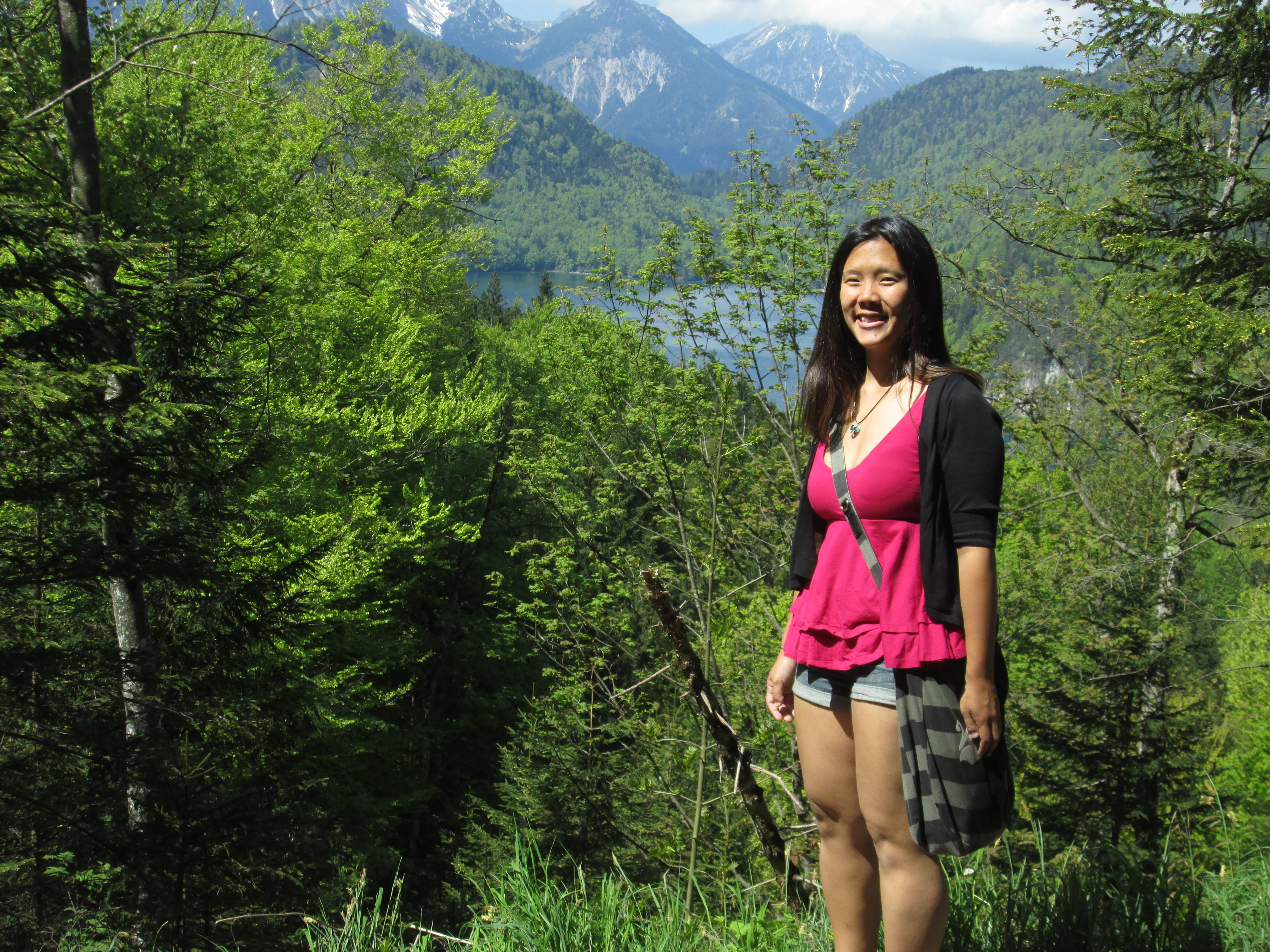
At this point in my trip, I have become increasingly uninterested in man-made structures, despite the story they tell about the daily lives of the clergy, royalty, and general population. Therefore, I took a day-trip to the heart of Bavaria; thankfully it was a gorgeous day filled with sunshine, that complemented my intense need to traipse through the natural undergrowth of the mountains.

2013-05-18 08.26.10

Modern day Bavaria comprises a large chunk of Southern Germany (approximately 27,200 square miles); this is 20% of the nation.  It originated as a duchy during the middle of the first millennium. Previously it had been inhabited by  Celts, but Bavarians began to emerge north of the alps, seeming to have coalesced out of the population remaining in the aftermath of the 5th century Roman withdrawal.

2013-05-18 04.07.46

This led way to the Duchy of Bavaria which was ruled by the house of Agilolfing from 554 to 788, before the last Duke Tassilo III was deposed by Charlemagne. In the following four centuries, numerous families held the post, but rarely did this extend beyond three generations.


2013-05-18 04.19.23

Fast-forward to the 1800s, when Napoleon abolished the Holy Roman Empire, Bavaria became a kingdom in 1806. It then preserved its independence by capitalizing on the rivalries during the 1866 Austro-Prussian War.

Eventually, Bavaria became a part of the German Empire despite religious tension between the protestant Prussian state and the Bavarian Catholic Population. 

2013-05-18 07.19.10

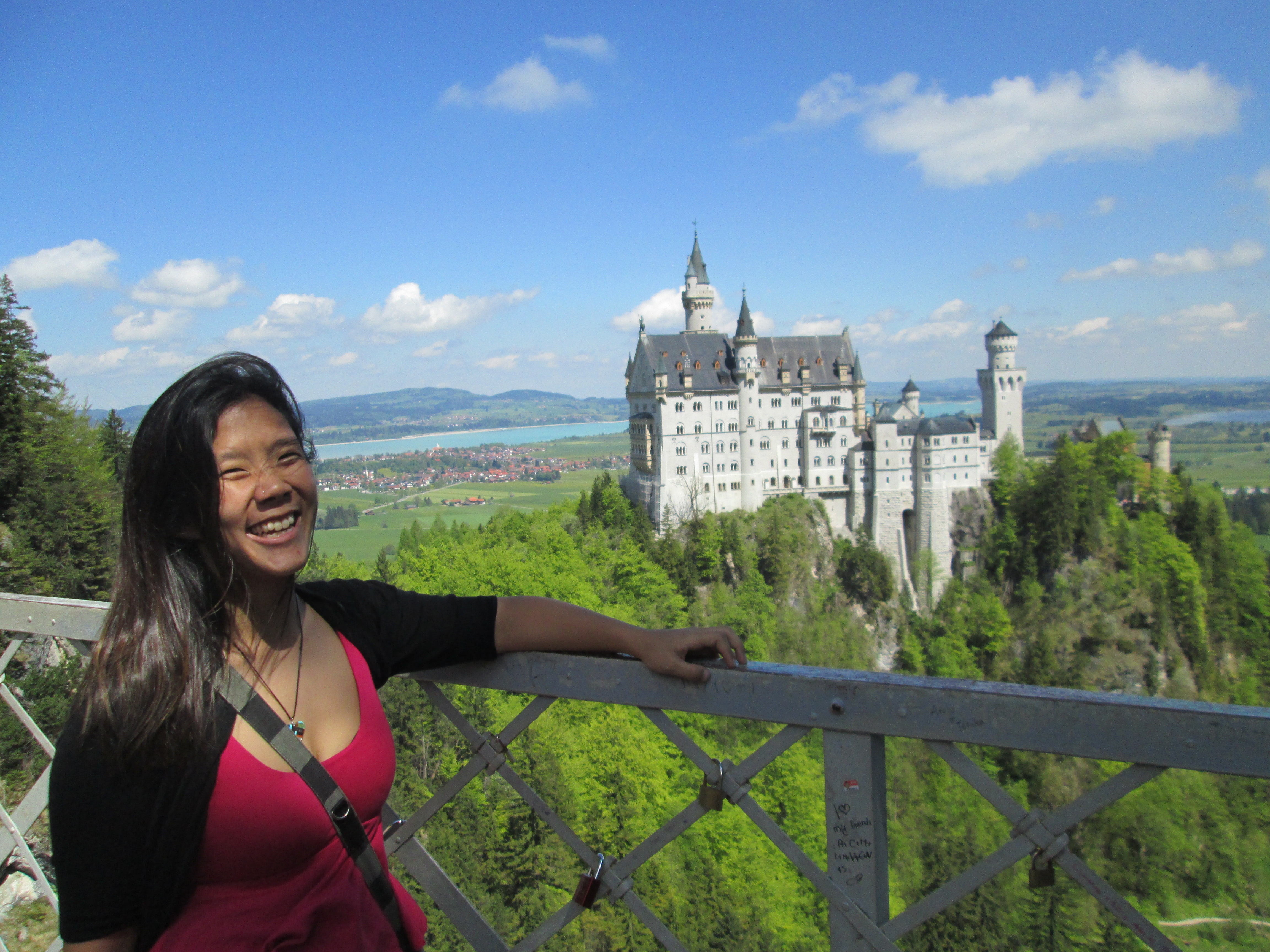
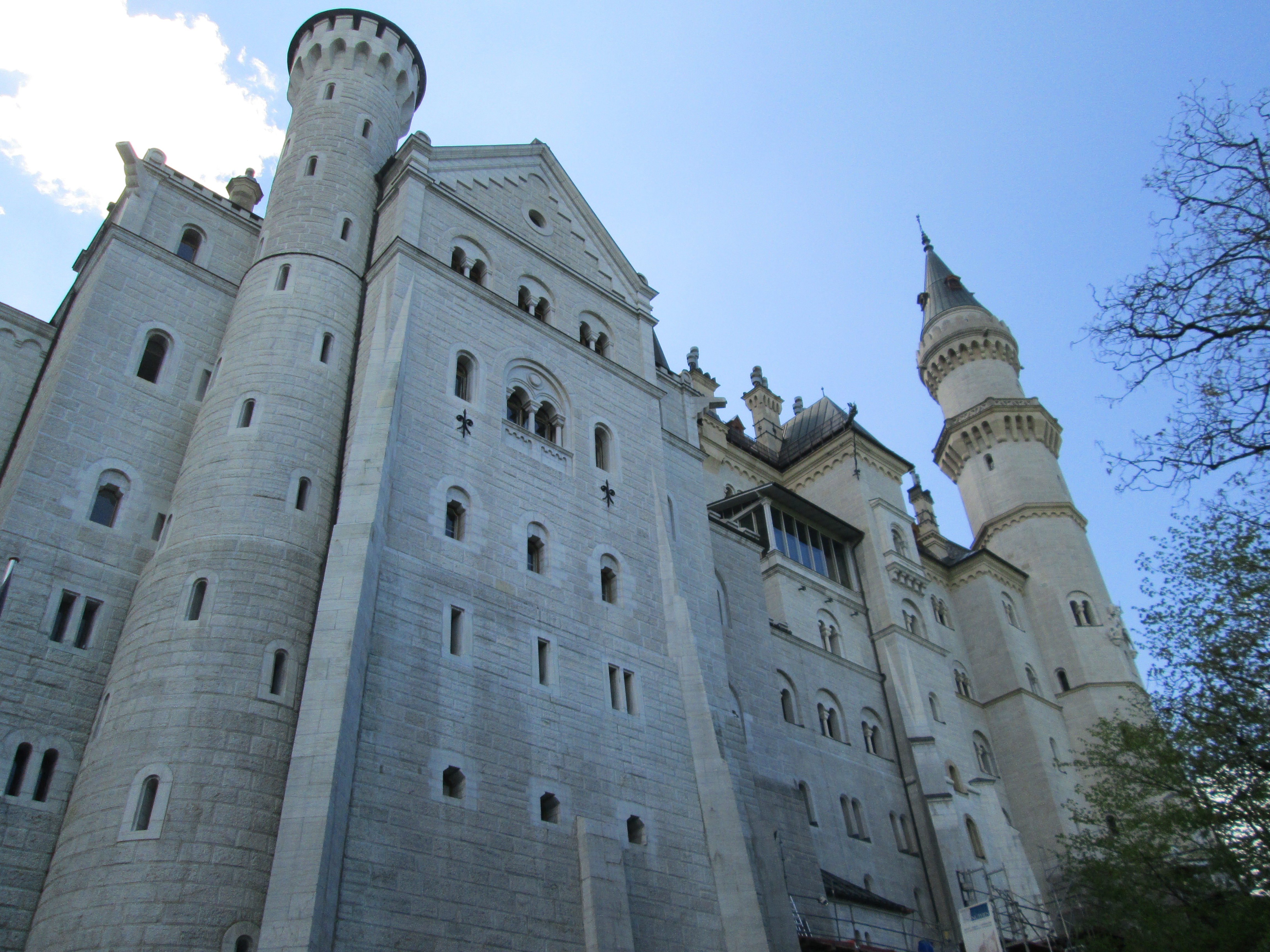
Sorry, I always let myself get overly enthusiastic about the origins and history of an area. Perhaps I should have chosen to be a history major or study anthropology or archeology instead! Nonetheless, the mountainous region was beautiful and capped off by a visit to Neuschwanstein Castle.

2013-05-18 04.33.33


The brainchild of Ludwig II, it was designed as a  Romanesque Revival in homage to Richard Wagner. Fortunately, Ludwig paid for the construction with his personal fortune or via borrowing instead of selfishly utilizing public funds. Unfortunately, the king died before the castle was complete, and therefore many of the major features remain unbuilt to this day, with only 14 rooms finished.

The Myth:

2013-05-18 04.52.31

Ludwig II is often called ‘Mad King Ludwig‘. His younger brother Otto was considered insane, so it is claimed to be hereditary. He was deposed on the grounds of mental incapacity despite lack of medical support.

Furthermore Ludwig II died under mysterious circumstances when both him and is doctor were found dead in the waist-high water of Lake Starnberg the day after his confinement. The doctor had managed to sustain unexplained injuries to both his head and shoulder.


Travel: Palaces of Vienna

Finally summoning the willpower to leave Prague, I found myself in the capital of Austria. As home to Sigmund Freud, and a history of providing philanthropic support to inspiring composers, Vienna is indeed the ‘City of Dreams and Music.’ It is hard to miss the beauty of its streets, as merely a stroll down any avenue will greet you with gorgeous architecture, baroque décor, and green landscapes.

I never considered myself ‘Palaced-out’ until I visited Vienna. The city has enough imperial palaces to satisfy the requirements of a minor ‘Disneyland’. As such, I averaged a royal residence a day, and each had its own unique quirks. Though I will admit, my enthusiasm has begun to wane in regards to both palaces and churches.

2013-05-14 02.10.37

My first visit commenced at the Schönbrunn Palace, as it was within easy walking distance of my hostel. It consists of 1,441 rooms designed in the  Rococo Style.  Once again, as in the case of Versailles, it originated as the court’s recreational hunting ground on an estate that was purchased the Holy Roman Emperor Maximilian II in 1569.

A mansion named Katterburg was subsequently erected, and then an Orangery added on by Eleonora Gonzaga, wife of  Ferdinand II in 1643.

2013-05-15 04.36

The next palace was the Belvedere Palace complex. Prince Eugene of Savoy purchased a sizable plot of land in 1697, and chose Johann Lukas von Hildebrandt as the chief architect. His vision was to construct a landscaped garden and a summer residence. He had to wrest the upper portion of land from imperial Grand Marshall Count Heinrich Franz Mansfeld, Prince of Fondi, by taking out a large loan secured against Stadtpalais. Thus, Lower Belvedere and Upper Belvedere became a united estate.

2013-05-14 10.35.45Vienna’s last, but most renowned palace is the Hofburg Palace, the primary residence of Emperor Franz Joseph I and Empress Elisabeth. It was a rare love match for the royal couple, despite ‘Sisi’ neglecting her duties as Empress, and spending much of her time traveling abroad. The complex itself is stunning, and incorporates many buildings, which have since been converted to accommodate museums, libraries, and theatres. This area has been the document seat of government since 1279, and the residential portion is now termed the ‘Sisi Apartments.’ Although not well respected in life, due to her indifference to participate in royal court, ‘Sisi’ was remembered fondly in her death after she was assassinated by the radical Italian anarchist Luigi Lucheni in Geneva.

2013-05-14 04.16.15

Overally each palace was unique and rested on absolutely gorgeous grounds! The architectural landscape is so elegantly crafted and detailed, that despite the centuries past, you can almost feel the royal presence strolling through the gardens.

Next Newer Entries