Travel: The Opulence of Versailles

Since we previously had two gorgeous days in Paris, we had anticipated nice weather for our day-trip to Versailles. Unfortunately, this was not the case, and we were ill prepared for the onslaught of wind and drizzle, forcing us to cut our Chateau visit short. We did manage to tour the main palace before concluding that it was too miserable outside for us to trek across the gardens to the more secluded dwellings at the back of the estate.

2013-04-26 03.44.20

In understanding the history that precluded Versailles, from its humble beginnings as hunting lodge, it is easy to comprehend the beauty that drove Louis XIV to construct a palace here. Despite the carefully maintained landscape, one can envision the natural wilderness that once had a place in this town.

At the time, it was a defiance of how the royal family typically resided. It was tradition for the family to travel to and fro from amongst the households of its nobles, and smaller residences scattered about the country; a manner of putting the monarchy on display. The building of the extravagant Versailles put a stop to this.

2013-04-26 03.57.39

The most important part of living at the main palace was etiquette, a defined manner of greeting, conversation, and room organizing must be maintained by both the royal family and visiting nobles. The closer each room was to the royal bedroom, spoke of how dear or high-positioned the individual in that apartment was.

2013-04-26 05.39.462013-04-26 05.46.04

My favorite room was the Hall of Mirrors (although I suspect that I would have preferred the Hall of Battles, which was unfortunately closed due to limited manpower). You can see the sparkle of the room as the chandeliers play off of the expanse of reflecting surfaces generously scattered along the corridor. This room is still used for diplomatic functions and state dinners, almost makes me motivated to find a diplomat to marry just so I have the opportunity to waltz about this grand gallery!

2013-04-26 05.30.062013-04-26 05.33.38

Upon entering, it is simple to comprehend the vast amounts of taxation that citizens were burdened with for Louis’ vision to emerge. It is not difficult for me to understand why this resulted in the fuse for the dynamite of the French Revolution. Marie Antoinette lived a privileged yet lonely existence here, as her husband who preferred to focus his energy on his hobby of hunting neglected her. Unfortunately, in the end she was seen as a symbol for the failed French Monarchy and put to the guillotine in 1793 after spending several weeks in a cell at the Conciergerie Prison.

2013-04-26 06.03.292013-04-26 06.01.08

What are your thoughts on Marie Antoinette? Did she deserve her sentence as wife of the King? Or was she just as culpable for the suffering of the peasants through her extravagant lifestyle?

Travel: Classic Paris Sites

I promise, this is the last church that I visited in France! Of course, it is the infamous Notre Dame; the building that inspired Victor Hugo’s classic novel with a hunchback as the protagonist who watched medieval Paris life occur from afar. The sprawling gothic architecture is unique, and it is not difficult to revel in the stark contrast these dark creatures present against the sunny skyline.

2013-04-25 07.24.39

The one flaw in climbing the tours however, was how incredibly jam-packed it was. There was little to no room to maneuver, and the entire walkway was enclosed within a 3” x 3” wire mesh. I can’t even imagine partaking in this during the summer!


While I understand the safety precautions, it took some strategic planning to get good photographs devoid of this interference.

2013-04-25 05.19.272013-04-25 05.21.452013-04-25 05.57.342013-04-25 05.55.37

The statues also reminded me of a classic Warner Brothers cartoon called the Gargoyles. It was ‘back in the days’ of my youth, and I’m sure it is no longer a recognizable cartoon or brand. I enjoyed it though! It told the story of good versus evil gargoyles that could only continue their battle within the confines of darkness. If sunrise hit, they returned to their stony state.

2013-04-25 12.31.02

We then headed to the Orsay Museum; it has a diverse collection of impressionist paintings, and documents the progression of this art. Once again, no photos allowed. Some of my favorite artists were on display, such as Van Gogh, Manet, Monet, and Cezanne.

2013-04-25 13.36.55


As dusk approached, we decided to breath in the crisp Paris air, and swing by the triumphal arch to witness the largest roundabout in the world. Interesting Fact: Insurance companies no longer debate claims when an accident occurs here, to save time and headaches they now just split the damage costs 50/50.

Strolling to the Eiffel Tower took longer than expected. Fortunately, we arrived just as the sun dipped below the horizon. This allowed for a large array of photographic shots documenting the vibrancy of the lights with respect to the darkening sky.

2013-04-25 14.28.56

(I almost lost mother in the crowd, she is about a head shorter than me and quite difficult to locate even in a supermarket)

Opting not to wait in line and pay the high lift prices, We managed to climb to the 2nd level platform (a LOT of stairs) and witness some breathtaking views of the city, and particularly the Champ de Mars at night.

2013-04-25 15.32.00

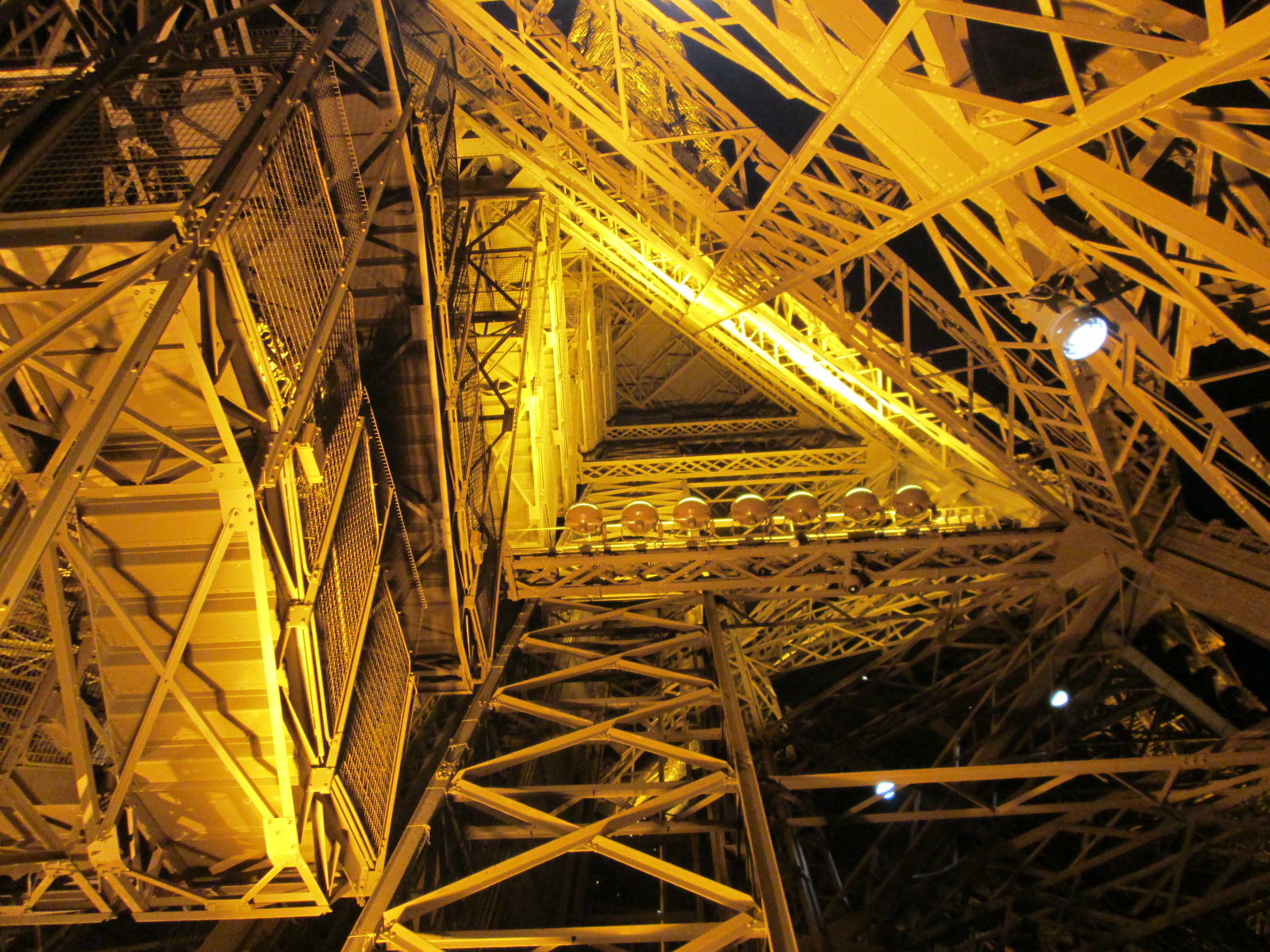
On the hike up, I took some time to have a nerd moment and admire the forethought required in the difficult connections. It’s interesting to consider the complexity of the geometry and how the designers engineered all the steel elements to puzzle together in just the right formation.

2013-04-25 14.53.382013-04-25 14.54.37

What comes to mind when you think of Paris? Have you been to any of these places? How have the inspired you?

Travel: Roman Ruins of Provence

I just finished the France part of my trip, so I am back-posting amid a week of spotty WiFi. I legitimately had to get something at McDonald’s every night so that I could coordinate the next leg of my trip, leaving not so much time to keep my posts regular. I spent a few day’s traipsing the Roman Ruins in Provence.

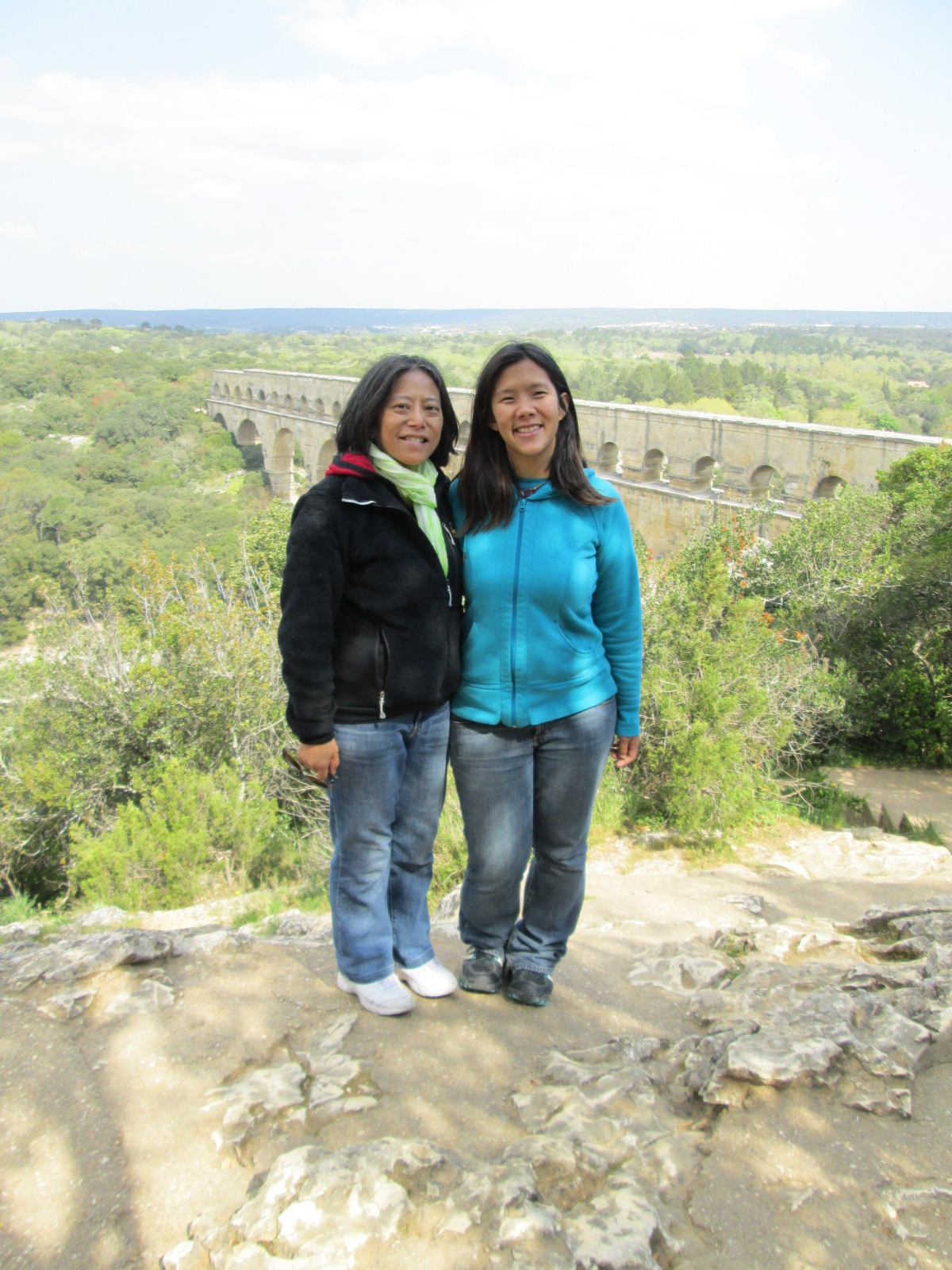
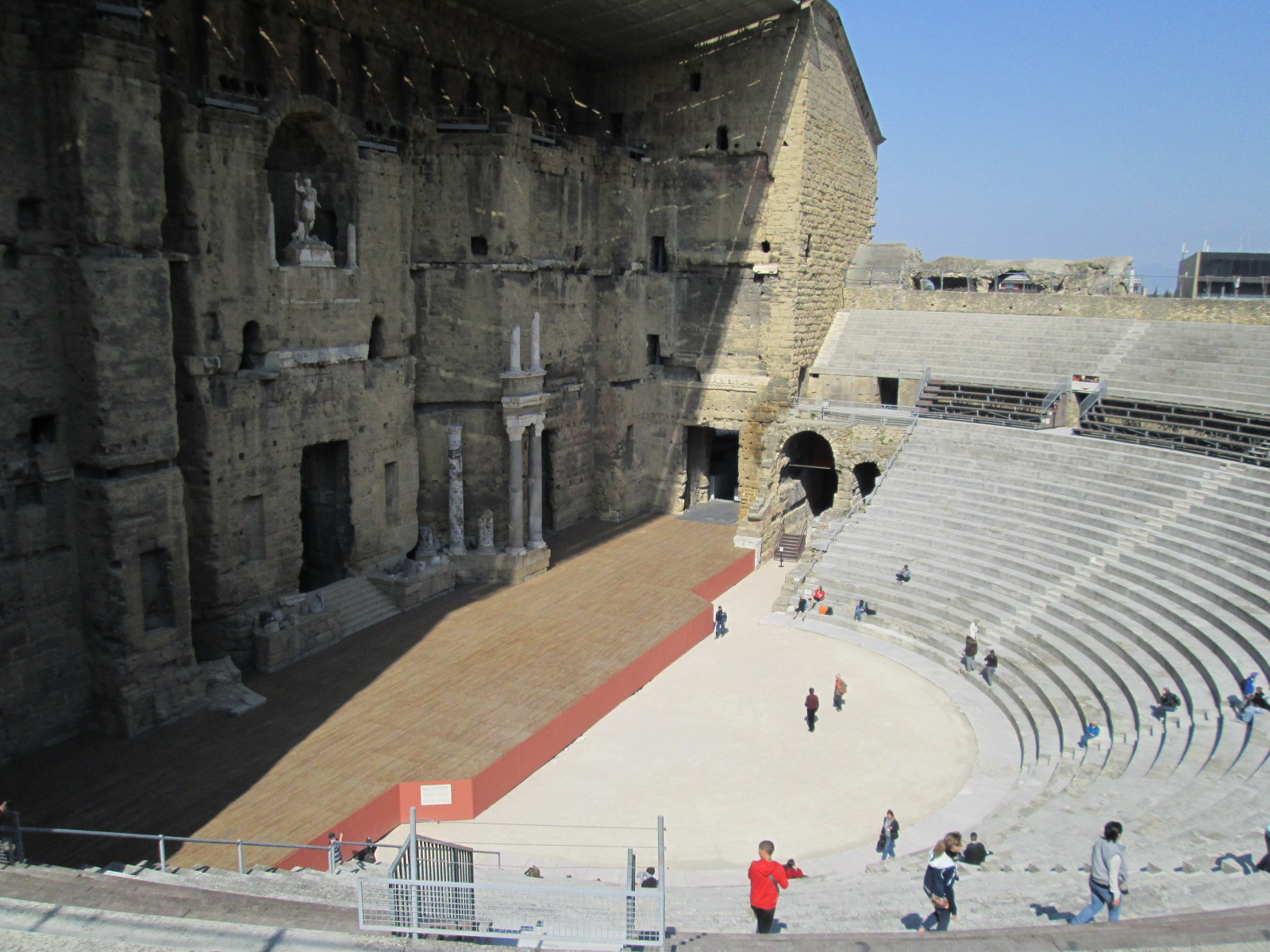
Provence’s history dates back to the Roman Era in which it was the first province they established beyond the Alps. The outstanding architecture that still exists today is best attributed to the Pax Romana, a movement initiated by Caesar Augustus that was seen a period of peace and minimal expansion by military forces. It lasted from about 27 BC to 180 AD, a length of two centuries.

It is not hard to see the distinct culture of this heritage-filled region, and the lasting impact that the Romans have had; from the Aqueducts, to the Temples, to the Theaters  their construction methodology is precise to a tee, this has enabled the structures to last thousands of years with little weathering. This is in sharp contrast to the asian-style of construction, if you’ve ever been to the Great Wall, the rocks are jagged, disproportionate  and merely thrown together in a pile, some of the slopes require you to hike up an 80 degree grade!

2013-04-21 03.27.22

Arena of Nimes

Just imagine when this immense arena was used to proclaim the glory of Rome through the battles of gladiators versus beasts!

2013-04-21 04.28.23

BullFighting

Interestingly enough, I did not get the opportunity to watch bullfighting when I was in Spain, but the Nimes Arena is now a popular attraction for it, and we managed to watch the youngsters take on ferocious bulls. We did not expect, however, that they would actually slaughter the poor creatures, it turned out to be a pretty gory experience


Travel: Sagrada Famila

So, I tend to think that I am traveling during the off-season of the tourism industry, but today was not the case. When we arrived at the Sagrada Familia the line wrapped all the way around the cathedral, thankfully, in my preemptive research, we had already purchased tickets online that allowed us selective entry within the assigned time-slot; no waiting for us!

2013-04-18 03.33.15

The Cathedral is Gaudí‘s brainchild, and has been in construction for over a century. Construction of the structure commenced in 1882, and Gaudi officially took the design of the project in 1883, transforming the conventional structure into his vision, something that cohesively incorporated gothic roots and curvilinear Art Nouveau forms. It recently reached surpassed the halfway point of construction primarily due to financial setbacks that had resulted from the interruption of the Spanish Civil War.


2013-04-18 04.43.14

Nativity Facade

Passion Facade

Passion Facade


It was absolutely breathtaking to behold. Gaudi has a penchant for embracing the natural forms he sees in nature, such as the way a tree branches or the facets of a crystallized gem. In the modern architecture world, we call this biomimicry, utilizing observations from nature and emulating the structure or processes to build a thought-provoking and innovative structure.

You can see it in his design of the interior columns.

2013-04-18 03.44.352013-04-18 03.44.53

You can see it in how he effectively uses natural lighting in the interior.

2013-04-18 05.10.05

2013-04-18 05.47.49

It was also quite amazing as a structural engineer to understand that he utilized the concept of form-finding in one of his earlier designs, the Colonia Guell. This is particularly fascinating because it involves finding the equilibrium shape of a structure given applied loads. It is an example of simplified non-linear analysis in actions wherefore the structure tends to get stiffer, and stronger, as it is subject to more deformation, the opposite of what one would typically think.

Okay, moving on from my enginerd moment. : P

Next, we spent a leisurely walk admiring the architectural discord that resulted from having different architects design houses that are co-located side by side on the Illa de la Discordia. It is particularly vital since it is noted for being prime examples of Barcelona’s most important Modernista architects, Lluís Domènech i MontanerAntoni GaudíJosep Puig i Cadafalch and Enric Sagnier

2013-04-18 08.20.43

The image is a little jarring, yet its catches the viewer’s eye and allows one to study the uniquely disparate styles of each individual.

Our final act of the day was to swing by the Palau Musica after traipsing through the streets of the Gothic Quarter. We opted not to tour the interior earlier in the week because the cost tradeoff wasn’t quite worth it considering that the Sagrada Familia was the same entry price, but had more significant visionary value. It does seem gorgeous though, so if you are in the area and have time, you should try to catch a performance at least.

The Sagrada Familia has been a consistent controversy within the borders of Spain, what are your thoughts on it? Is it over-the-top and an unnecessary investment? Or is it an icon of Gaudi and a symbolic representation of the Catholic Faith?


Travel: Picasso

Pablo Picasso 1962

We started off the day by checking out the Museu Picasso. It was the vision of Jaume Sabartés, Picasso’s longtime friend and secretary, to provide a means to display the many paintings, drawings, and prints that he had acquired through the years. Although the original intent was to found the museum in  Málaga, his birthplace, his strong ties with Barcelona made the city a far more suitable candidate.

I’m sure you are all well acquainted with Picasso, but I will provide you a brief background nonetheless. In 1881, He was the first-born child of Don José Ruiz y Blasco and María Picasso y López. His father was a professor of art at the school of crafts and curator for the local museum. We can chance his Ruiz ancestor back to the blood of minor aristocrats.

Don, his father, was a firm believer in traditional artistic training, requiring young Picasso to conduct a disciplined study of the masters and perfect his sketches by practicing from sculptures and nude models. Through the years, and with the urging of his father and uncle, Picasso ended up at the Royal Academy of San Fernando in 1898, the most famous art school in the country. However, he disliked the formality of classwork and quit soon thereafter.

He eventually made his first foray into Paris in 1900, and it was there, that he formed his own unique style, what we know as  Cubism today. Cubism is a fairly abstract expression of art as it lacks formality and is disruptive and detached to the eye. It also has the capability of evoking a realistic spirit and raw emotion if one chooses to ponder the painting long enough. See my previous post on the Guernica for more guidance.

*No Photographs = No Pictures for this. 😦

Exterior - Barcelona Cathedral

Exterior – Barcelona Cathedral

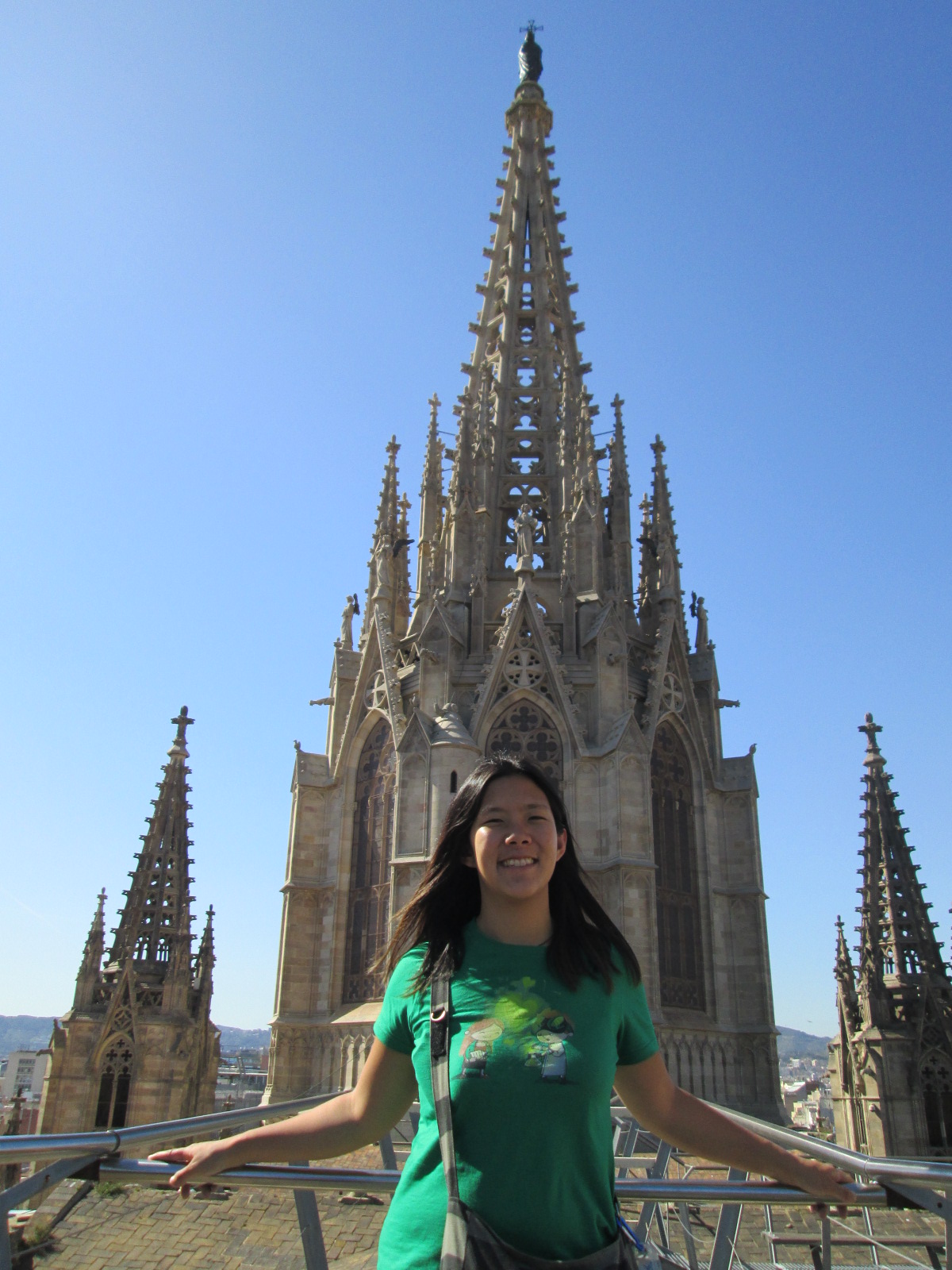
Our next destination was the Barcelona Cathedral, a massive looming structure that originates from the 13th century with final finishes completed in the 15th century. It is the seat of the ArchBishop in Barcelona, and dedicated to the Patron Saint  Eulalia of Barcelona.

Cathedral Tower

Cathedral Tower


Saint Eulalia suffered martyrdom at the hands of the Romans when they stripped her in a public square; it is said that a miraculous snowfall covered her nudity. They then subjected her to 13 tortures, the primary one involving putting her in a barrel with knives in it, and rolling her down the street. She was only 13.

Forgive me for my gory imagery, I have been trying to decipher the meaning of all these saints as I am exposed to them in my foray into religious architecture. I will admit, however, the dearth of Gothic architecture I’ve encountered these past few weeks may have been excessive.

The day was wrapped up with a leisurely walk down the infamous La Rambla, including a stop at the Mercat de La Boqueria.

2013-04-17 12.44.482013-04-17 12.48.372013-04-17 12.40.202013-04-17 12.37.39

Travel: Transition Day to Barcelona

Didn’t accomplish much today, we were considering visiting the Mosteiro  de San Miguel de Los Reyes but after the awe-inspiring El Escorial, we weren’t sure it was worth delaying our train. This is particularly true since we like to arrive in our next city early enough to accomplish some tasks before night hits.

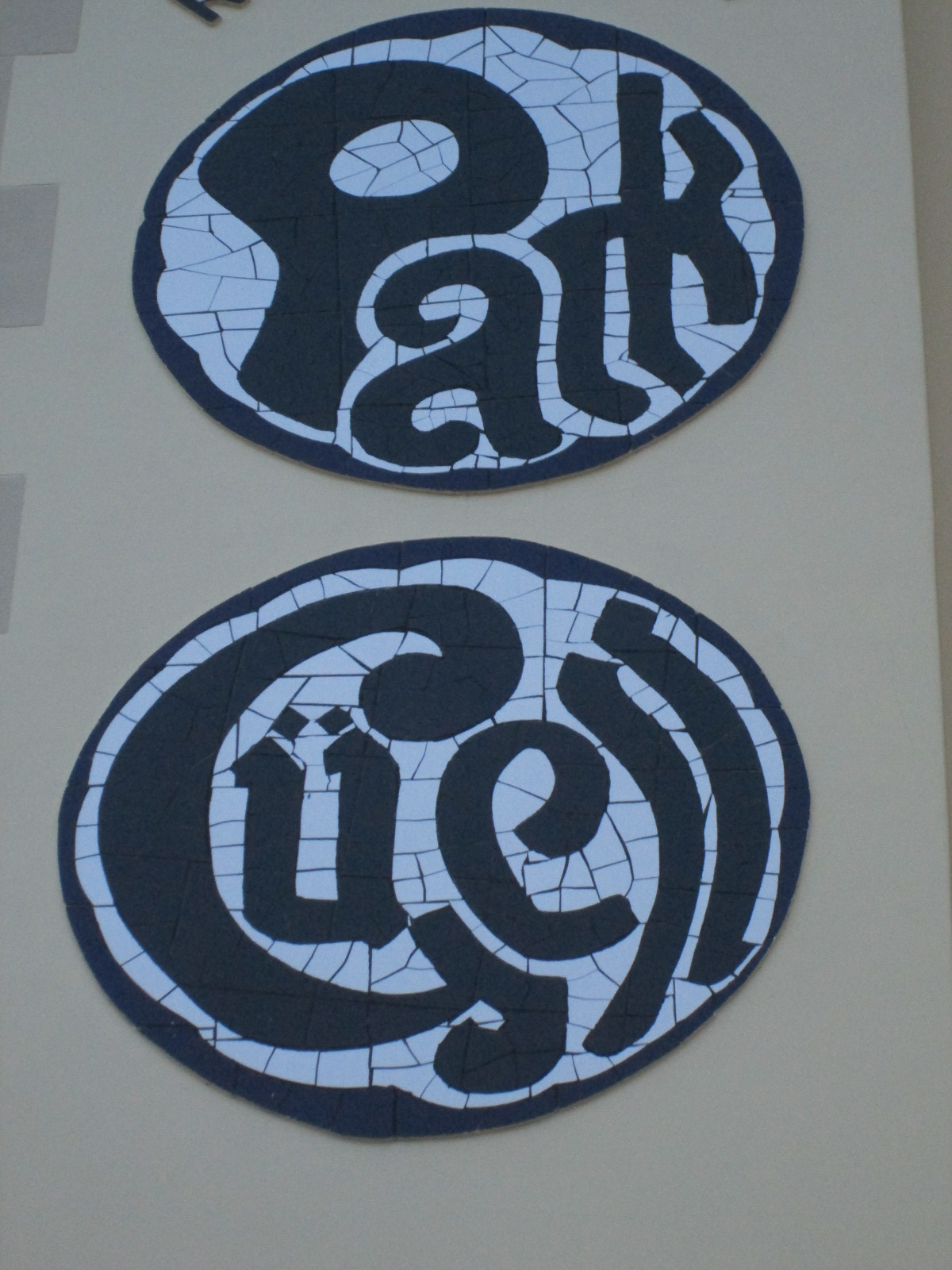
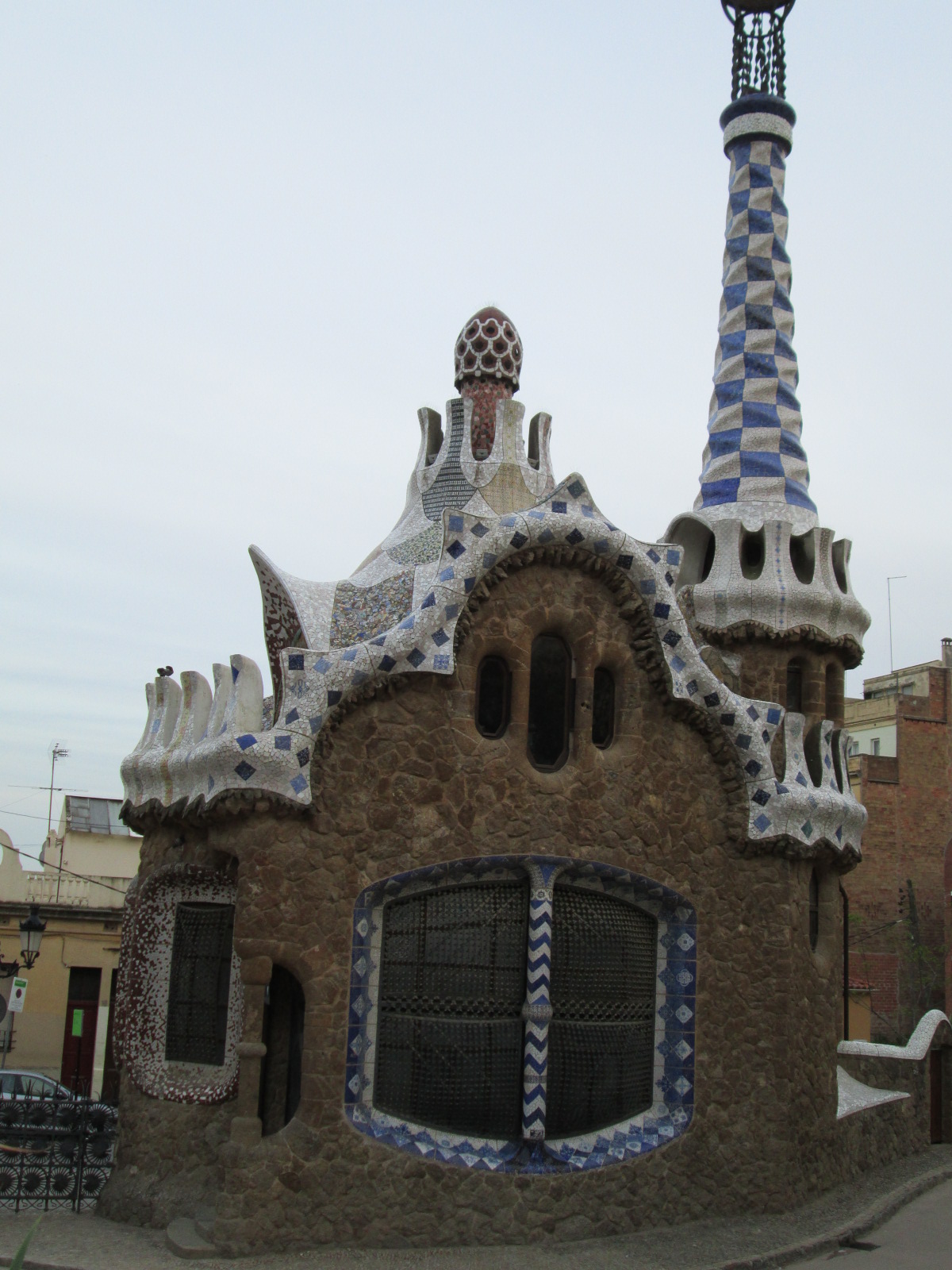
AKA. It was a travel day. After arriving at our destination of Barcelona, we had just enough daylight to spend traipsing around Parc Güell. It originated as a commercial housing project, founded by the Count Eusebi Güell. Inspired by the  English garden city movement, the intention was to exploit the fresh air and capitalize on the beautiful views by providing 60 triangular lots of luxury houses.

2013-04-16 13.32.112013-04-16 13.17.47


However, only two houses were eventually built, and although Gaudi is associated with these, that is far from true. Gaudi did, however, live in the park from 1906 to 1926, purchasing the remaining vacant lot at the count’s suggestion. It now houses the  Gaudi House Museum.

A big part of the design, incorporates  a slew of mosaic tiling.

2013-04-16 13.16.202013-04-16 12.10.40

Obviously, we didn’t accomplish as much as we usually do, due to my jam-packed schedule planning. Nonetheless, it was relaxing to just take a quiet, no schedule, breather day.

2013-04-16 13.19.082013-04-16 12.45.47


Travel: Valencian Atmosphere

Most attractions in Spain tend to remain closed on Mondays, it was no different in Valencia. Mind you, this doesn’t included the mid-day siesta’s that the Spanish enjoy. Unfortunately, this means that I had to forego some of my desired historical sites, since my mother needs to catch a flight in Paris in 10 days. 😦

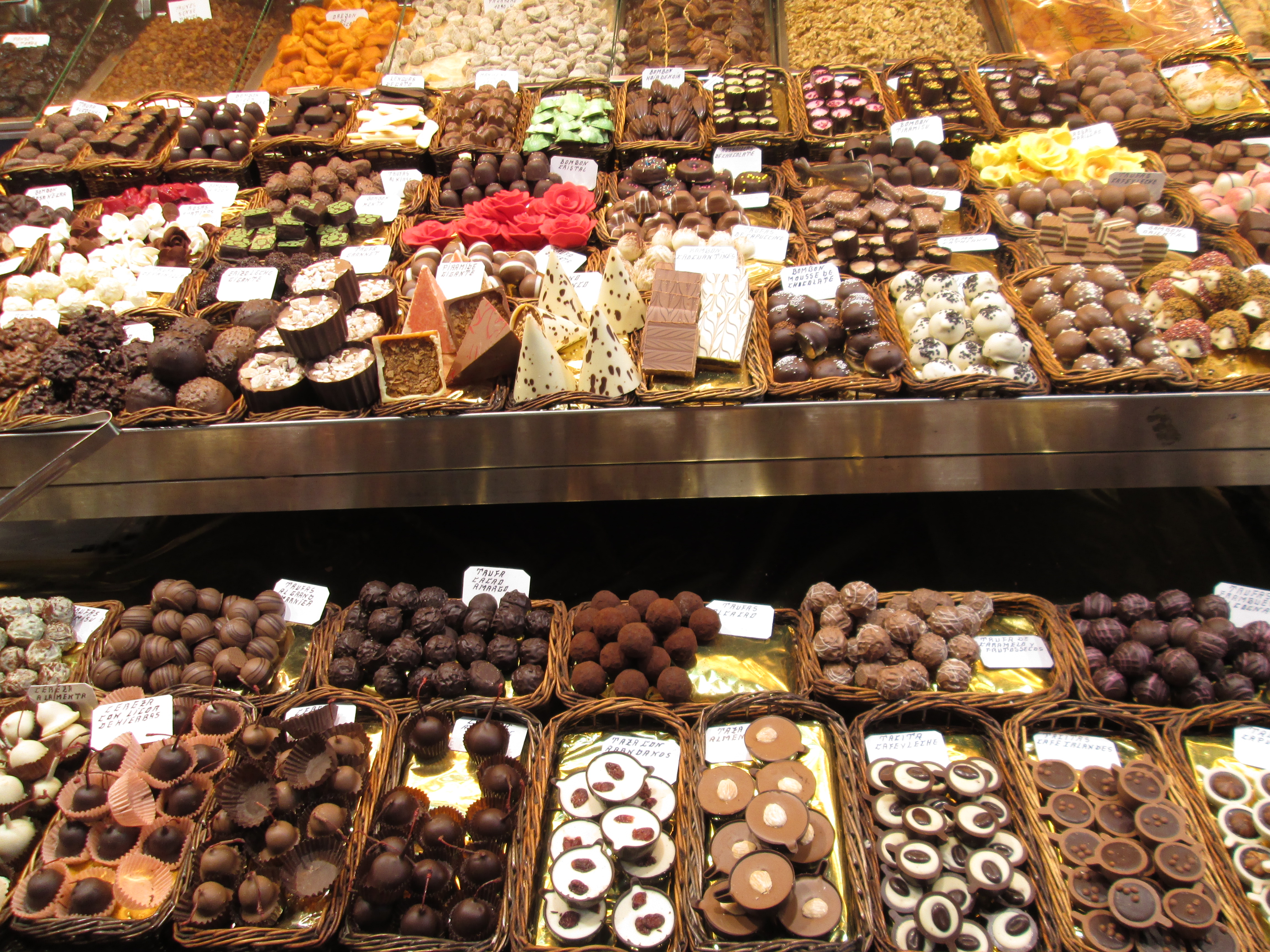
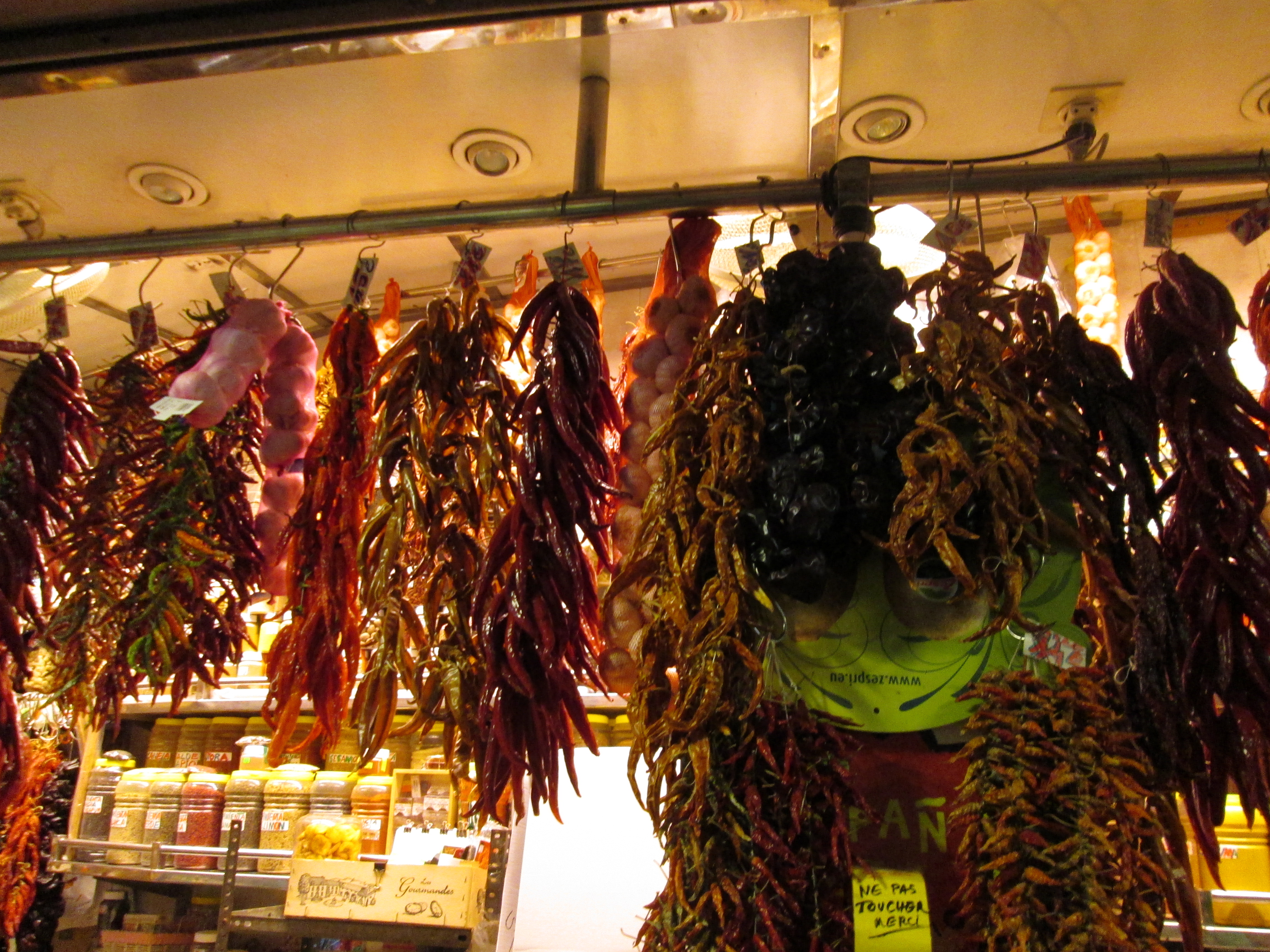
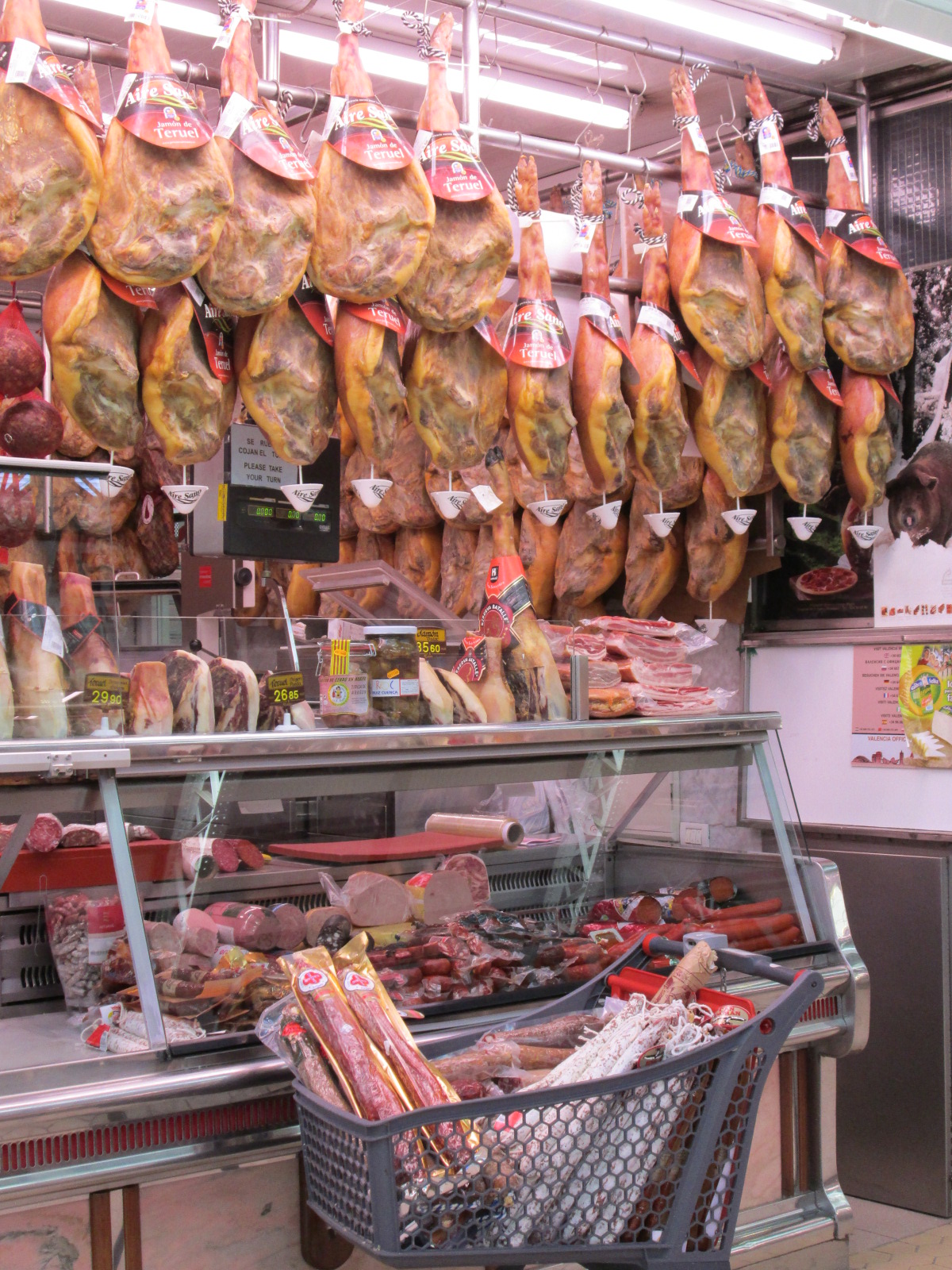
We did have a very relaxing day however, and it was kicked-off by a visit to the Central Market! It has been in operation since 1928, and provides a large variety of food products that are freshly enticing. Walking through the diverse array of stalls allowed us to immerse ourselves in the grocery lives of the locals, and find some great snacks to tide us over in our nearby hostel. Valencian Oranges are delicious!

2013-04-15 02.28.052013-04-15 02.30.242013-04-15 02.30.032013-04-16 04.10.19

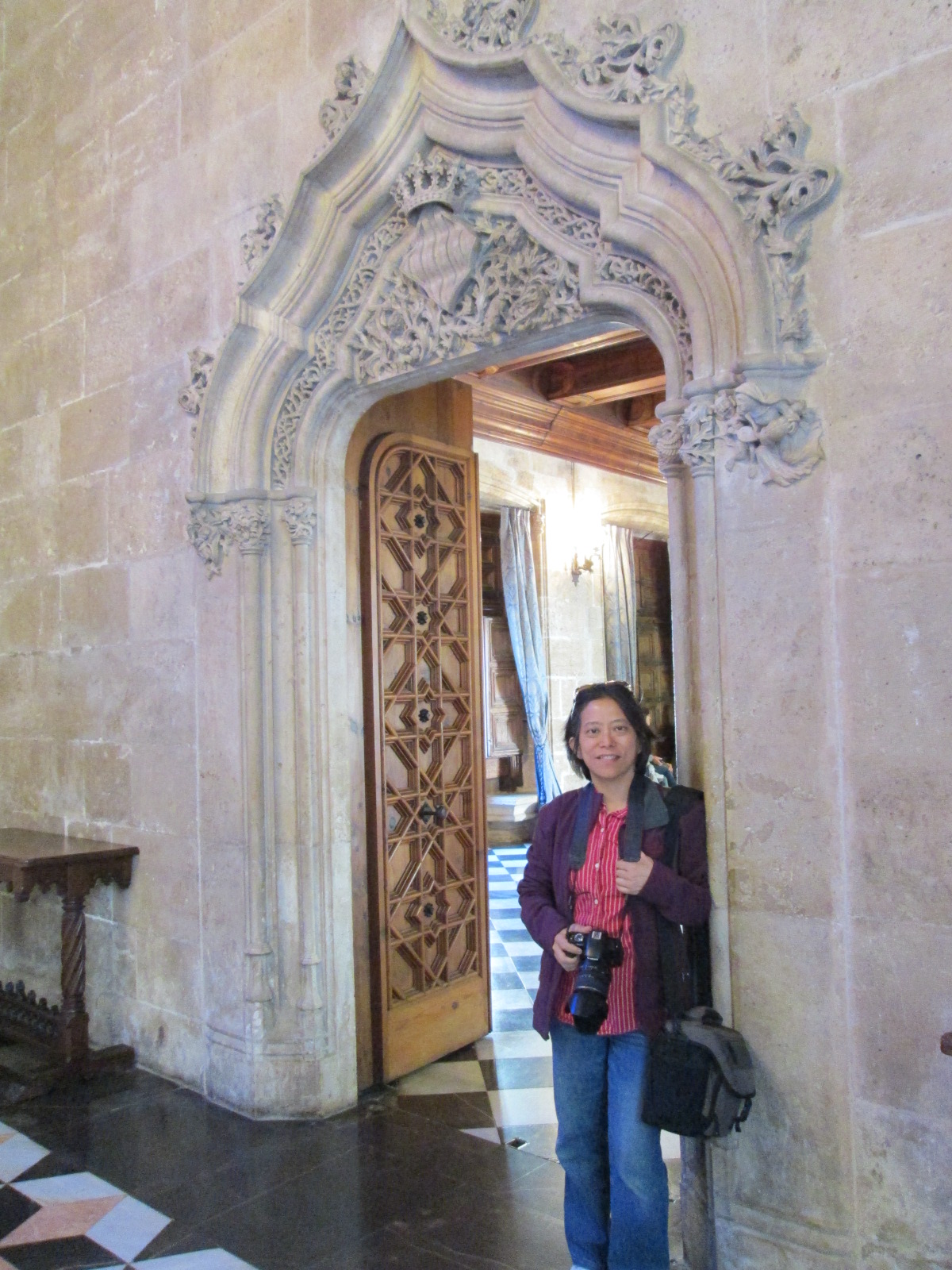
After, we went back to the hostel to snack on our newly acquired fruit, we regrouped, and then left for our next destination, the Llotja de la Seda, the old silk exchange. It was built between 1482 and 1548, and was designed by the architect Pere Compte. An important inscription is engraved on the walls of the trading hall.

2013-04-15 04.00.492013-04-15 04.22.14

Inclita domus sum annis aedificata quindecim. Gustate et videte concives quoniam bona est negotiatio, quae non agit dolum in lingua, quae jurat proximo et non deficit, quae pecuniam non dedit ad usuram eius. Mercator sic agens divitiis redundabit, et tandem vita fructur aeterna.”

It demonstrates that good trade and ethical behavior can be established regardless of religion or ethnicity.

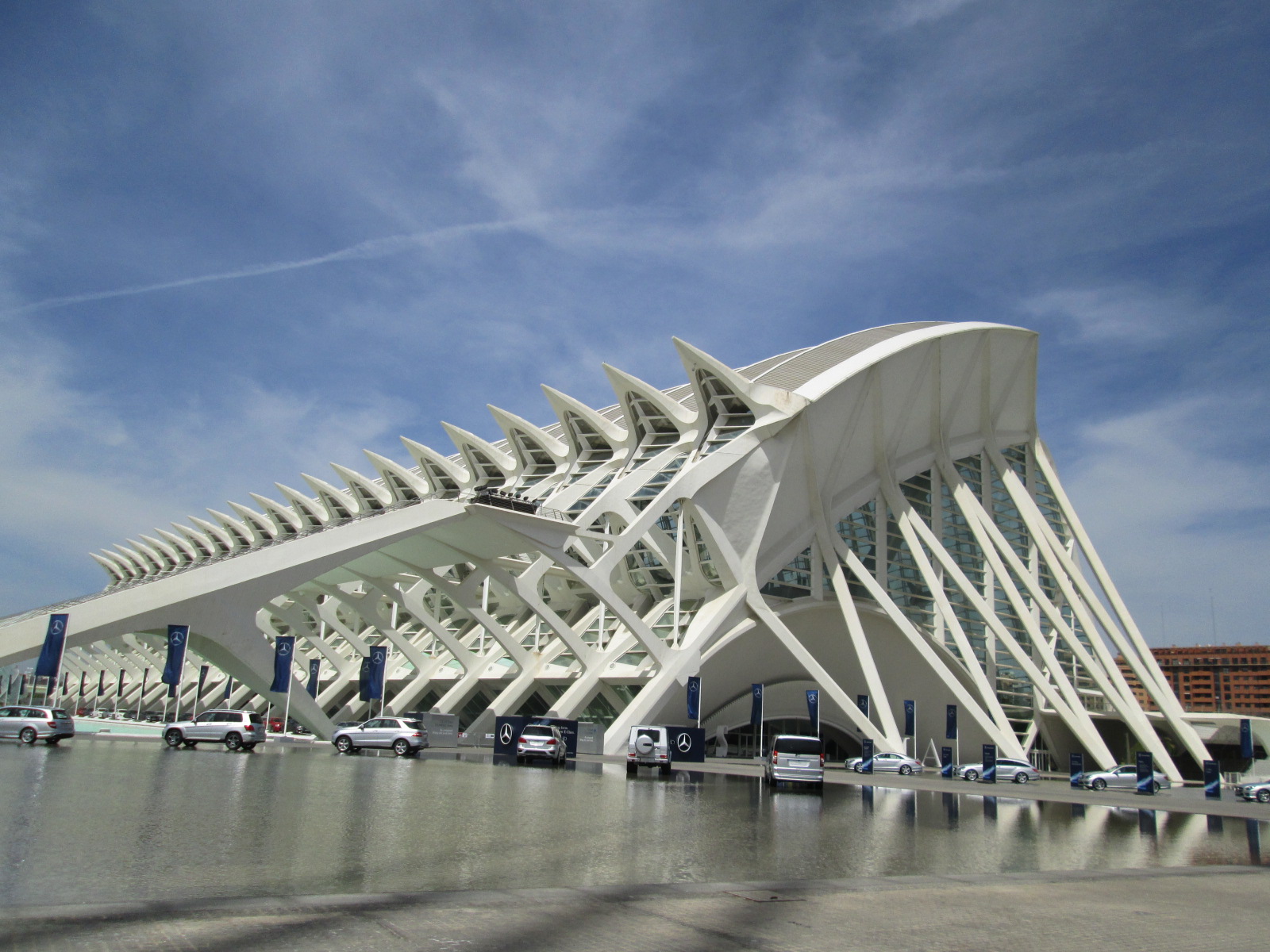
Since none of the other venues I originally wanted to visit were open, we opted to visit the City of Arts and Science an amazing cultural complex. It was envisioned by one of my favorite architects, Santiago Calatrava, who is responsible for designing some of the most iconic buildings that are recognized in the world today. See the pictures below for some amazing views of the structures.

2013-04-15 07.17.54

2013-04-15 06.52.022013-04-15 07.21.15

2013-04-15 07.07.262013-04-15 08.01.04


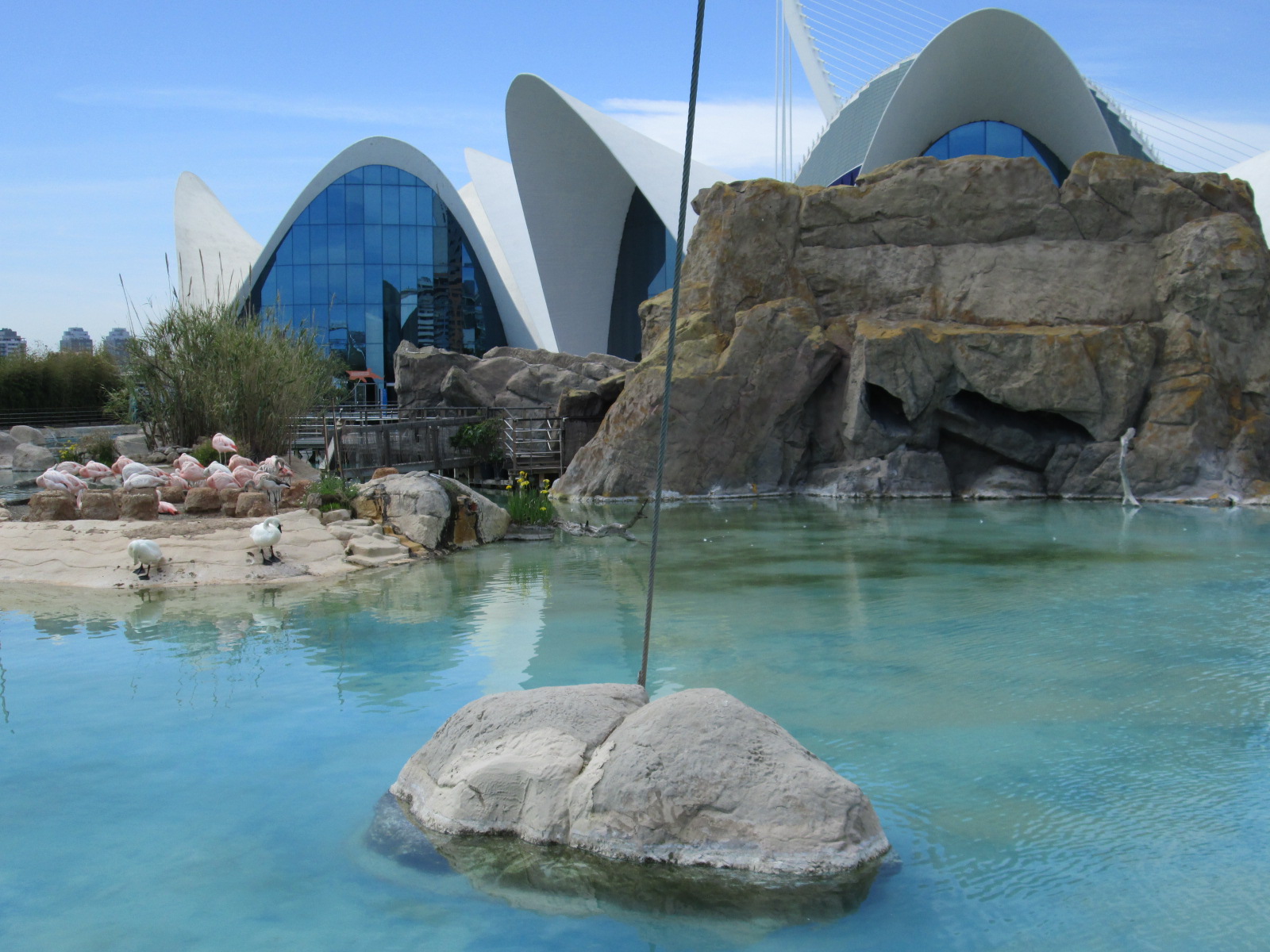
At this point, we only had half the day left, so we opted to visit the L’Oceanogràfic, which is the 2nd largest in the world, and the largest in all of Europe. It is an open-air marine park in which each ‘habitat’ is submerged below the surface (excluding those creatures that are suited to southern Spain’s climate). 10 habitats are represented, and 45,000 animals spread across 500 different species of fish, birds, mammals, invertebrates and reptiles are distributed into a volume of 1.2 million square feet. It was literally breathtaking.

We wrapped up the day by consuming some genuine Valencia Paella. Yummm!

2013-04-15 13.36.49

Travel: Picasso’s Guernica

After being incredibly moved by observing the clear faith humans can maintain despite their hardships, we decided to enjoy the rest of our afternoon taking a leisurely stroll through the Parque del Buen Retiro, it is quite reminiscent of New York City’s Central Park.

Here are some highlights:

Palacio de Cristal

Palacio de Cristal

Monument to King Alfonso XII

Monument to King Alfonso XII

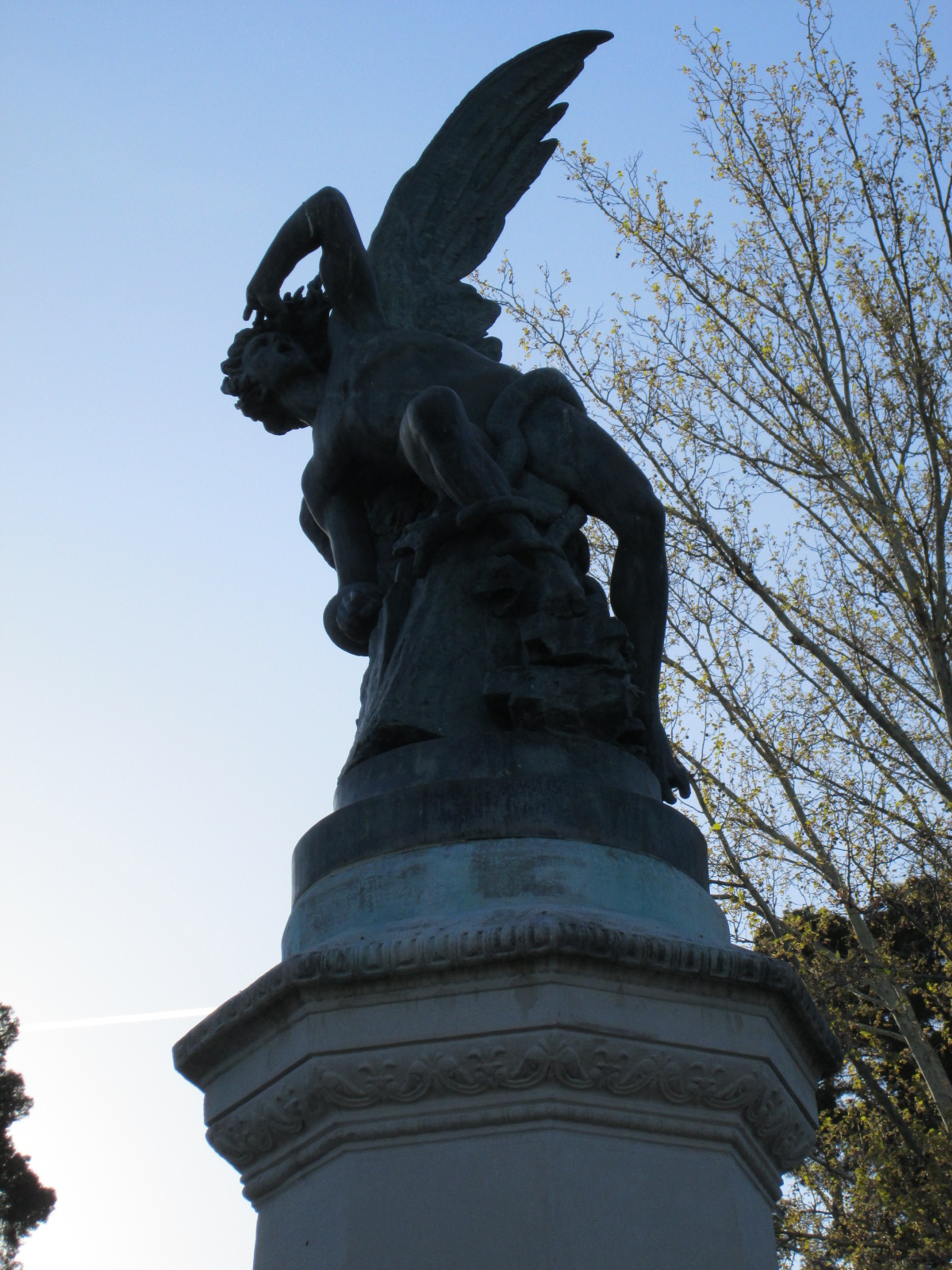
El Angel Caído

El Angel Caído

The highlight of our night included dropping by the Rena Sofia Museum. It was particularly economical because it happened to be free entry night. 😛 Our primary motivation was to bear witness to Pablo Picasso‘s infamous Guernica. The republican government commissioned Picasso for this piece to express the struggles of the the spanish during the  Spanish Civil War at the Paris International Exposition (1937), despite the official theme. It was meant to be used as a venue for propaganda to illustrate the nation’s suffering.

Guernica

Guernica (1937)

For months he struggled with inspiration for his canvas, then, on April 26, 1937, the town of Guernica was bombed. This was a direct order from Colonel Wolfram von Richthofen, and the German Condor Legion‘s warplanes served the hit. Hitler was lending support to the Nationalist’s during this period, and the Civil War provided a venue for the nazi’s to test their new weaponry.

At the time of the bombing, the primary population consisted of women and children, as the men were away fighting. If you gaze at it in thought, it is easier to see the expressions of pain and protest. depicted on the faces of the bull, the horse, and the woman. The black, gray, and white colors were deliberately selected to reflect the somber mood of the event while simultaneously expressing chaos. A broken sword lies on the bottom, symbolizing defeat.

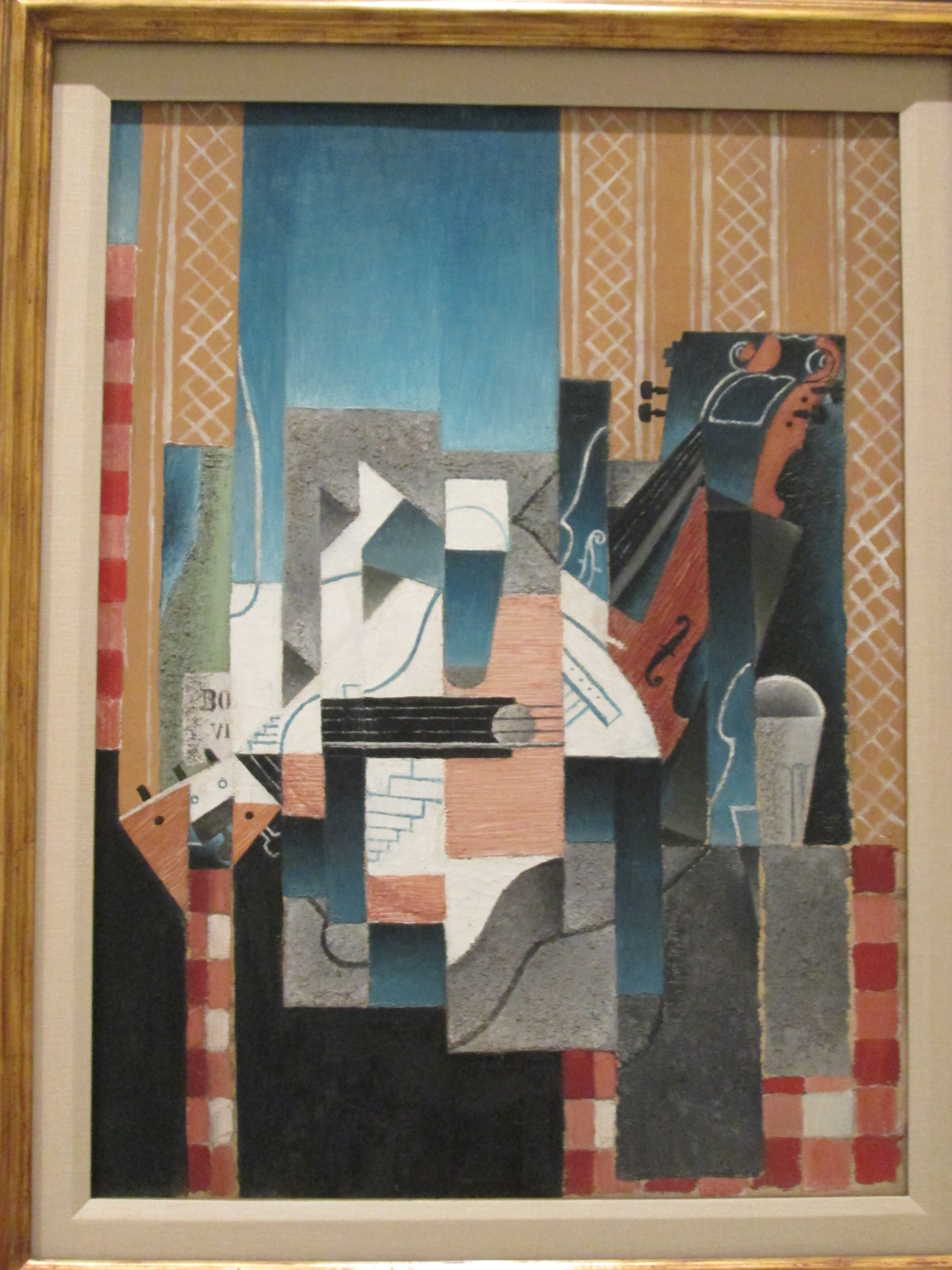
I also enjoyed discovering some other painters’ that I had touched on before, but hadn’t had a chance to further explore their work.

A World (1937)

Santos Torroella – A World (1937)

Violin and Guitar (1913)

Juan Gris – Violin and Guitar (1913)


I’m not an art expert by any means, I am merely an aficionado that enjoys how a single picture or panting can express deep-seated emotion without any words. What are your thoughts on art? Who is your favorite artist? What is your favorite style?

Travel: El Escorial

Having completed far more than I thought we could in the half-day we had in Madrid after arriving via plane, we decided to take a Day Trip to the site of El Escorial.

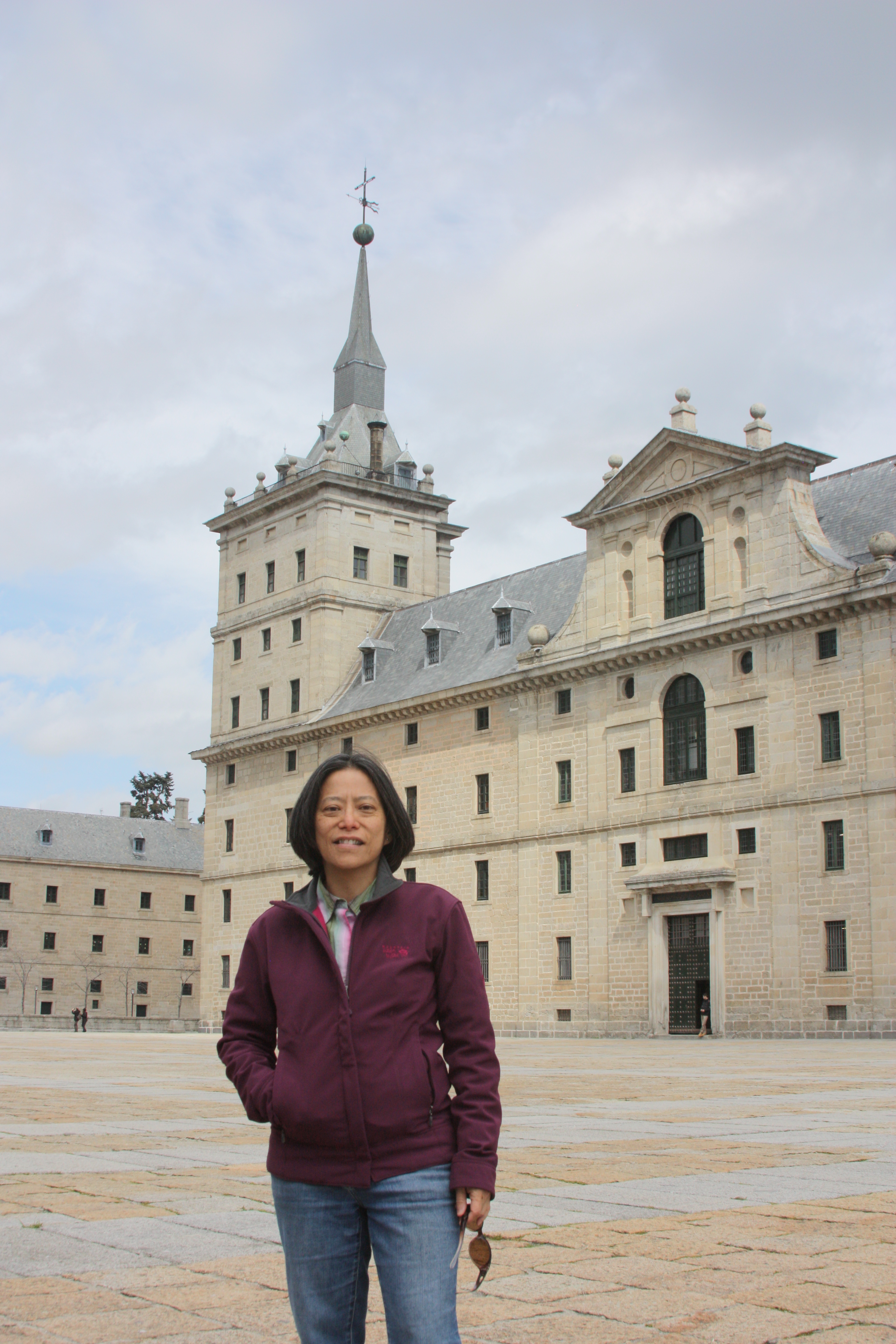
El Escorial was formerly the official residence of the King of Spain; it serves multiple functions. It has two primary architectural complexes, which serve the dual purposes of representing the power of the Spanish Monarchy, and illustrating the predominance of Roman Catholicism. Phillip II invested his inexhaustible stores of New World Gold to stem the growing protestant tide during the reformation. Failing to do this, he decided to enlist  Juan Bautista de Toledo as the collaborator on this complex in 1559. However, the building was not completed until 1584, and his apprentice, Juan de Herrera had already taken over due to Toledo’s death.

IMG_7838

IMG_7848

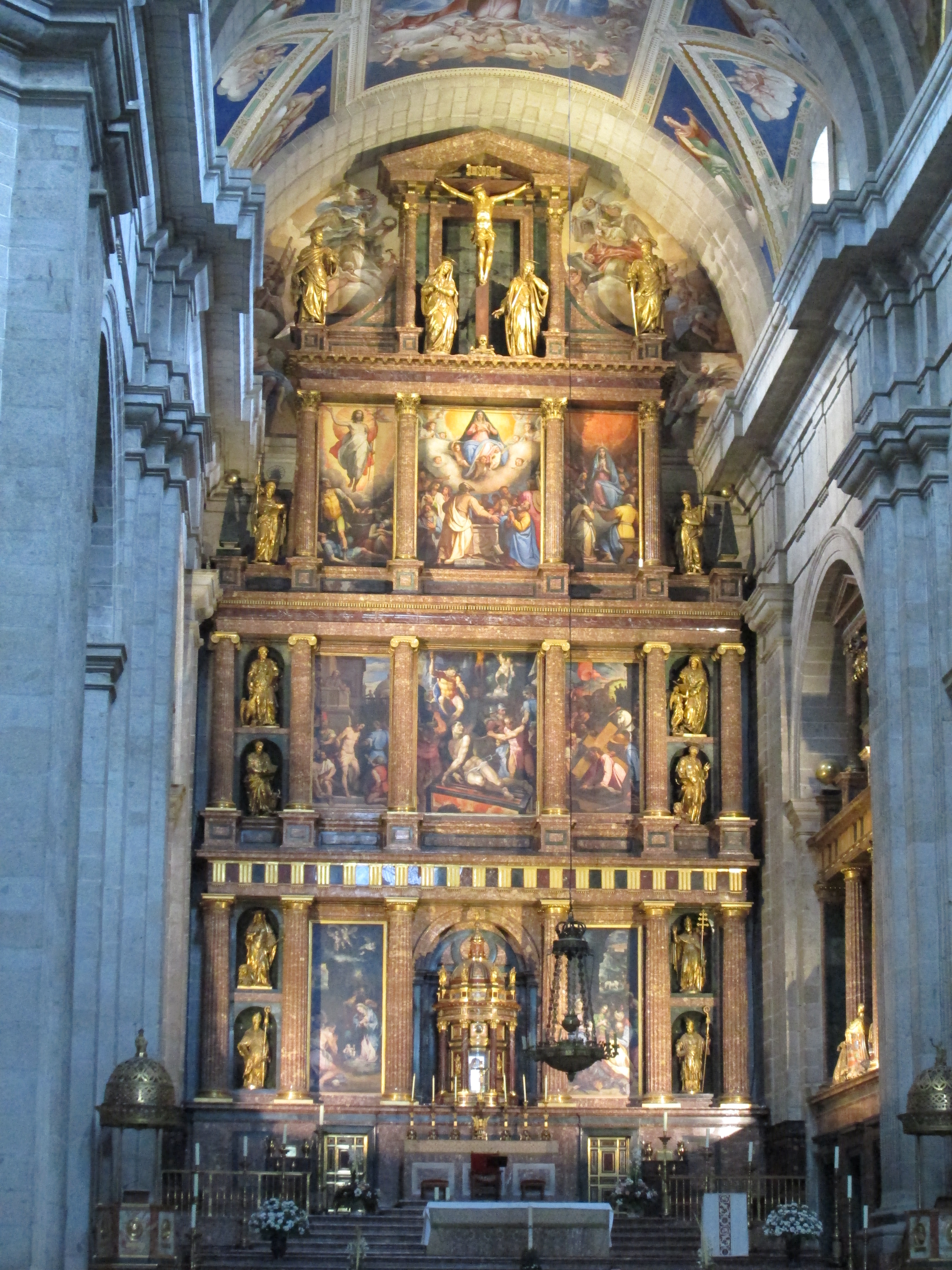
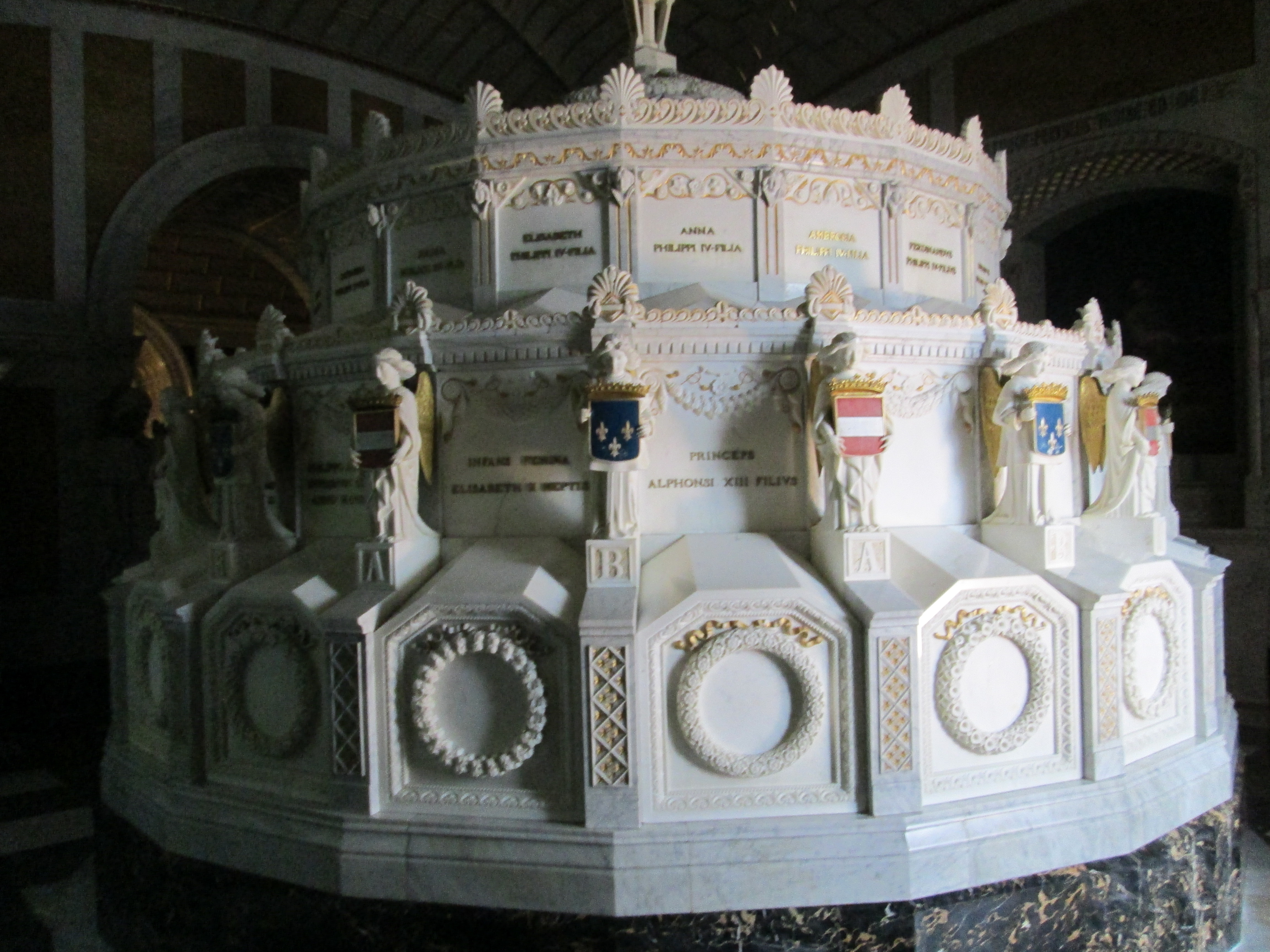
Since pictures where not allowed in the interior, a certain percentage of the following photographs are provided courtesy of Wikipedia. I will say, that this is irksome, as pictures themselves do not harm the heritage, flashes do!! I do understand that many tourists do not follow this rule stringently, and I believe this is why photograph capabilities were ruined for all of us. 😦

My favorite rooms are as follows (I swear I walked MILES through the interior of this great structure):

2013-04-12 08.17.15

Basilica


Battle

Wikipedia: Hall of Battles


Wikipedia: Pantheon of Kings

2013-04-12 07.36.50

Tomb of Infants


EscorialBiblioteca

Wikipedia: Biblioteca

I’m obviously feeling really lazy today, so I will leave it to you to do the research this time. 😛

Travel: Au Revoir Portugal!

I was finally fortunate enough to stay at my first hostel ever! (Since I was staying with my friend’s family while visiting her in Portugal). Unfortunately (or fortunately) it was the off-season, so I had a quiet relaxing day, and enjoyed the room to myself at night. This was probably for the better considering that I woke up a 3:00 AM this morning so I had time to walk the 15 minutes to the OPO Airport in time to catch a 6:30 AM flight.

So, Guess where I am? : P . . . MADRID!
I rendezvoused with my dear mother. While this may not sound optimal, considering the classic vision of a no-holds barred and party hard Euro Trip with close friends, I am both sad that I don’t have that opportunity, but grateful to be spending what could be my last quality moments with her. You see, since my school was on a completely different track than typical universities, Quarters versus Semesters respectively, I don’t have any friends that have the same availability as I do. Furthermore, as I was pursuing a graduate degree, those of my friends who streamlined into the working world have exactly that, work, with limited options or freedom to drop everything and disappear.

IMG_7784

I had planned to complete this trip on my own, and yet, it is nice to have some company. There would have been moments of loneliness and doubt, followed by meeting people from different countries and spontaneously finding bonds of friendship. Don’t you worry though! My mother leaves in 2.5 weeks, and my trip will revert to solo travel as I continue through my next few European nations.

Despite us both being incredibly tired, her because of the 6 hours time-difference, and me because I have the incapacity to sleep early, we managed to pack in our day!

2013-04-11 08.38.20

Palacio Real

Our first stop was the Palacio Real. After the 9th century Alcazar was destroyed in a fire in 1734, Felipe V, who was raised in Versailles, decided to replace it with a much grandeur structure. He never lived to see his vision however, since it was not completed or habitable until 1764. The palace’s exterior is not ostentatious, but is compensated for by the extravagance of the interior rooms.

2013-04-11 08.10.012013-04-11 08.12.36

Unfortunately, I have limited pictures since most palaces and sites in Madrid do not allow you to take pictures. 😦

After completing the Palacio Real, we meandered back to the Plaza de Oriente to savor some coffee and a snack, and enjoy the fresh open air of the square. We were able to admire the central fountain, which includes a bronze equestrian statue of Felipe IV; it dates from 1640 and is reputedly the first ever bronze depiction of a rearing horse. It is said that Galileo assisted with the calculations to allow it to balance on the horse’s hind legs.

2013-04-11 10.25.46

Almudena Cathedral

2013-04-11 07.31.17

Plaza de Oriente


We then admired the Cathedral de La Almudena, and the splattering of gothic chapels encased within its neoclassical shell. This cathedral was in fact planned centuries ago, but suffered from a lack of funds and a Civil War bombing, so it did not actually open until 1993. The best part was the crypt, which features neo-Romanesque architecture, and more than 400 columns! Each bears its own unique capital.

2013-04-11 11.12.592013-04-11 11.15.512013-04-11 11.12.41

2013-04-11 11.15.342013-04-11 11.12.082013-04-11 11.13.20

This is also the sight of the image of “Our Lady of Flor de Lis” It is one of the oldest images in Madrid having been commission by King Alfonso VI in 1083 AD.

The day was wrapped up by a relaxing stroll the Jardines de Sabatini, and quiet contemplation when gasping at awe at the ancient hieroglyphics that still lay carved on the interior walls of the Temple of Debod. (Unfortunately due to a lack of better preservation techniques, these images are gradually fading from existence).

2013-04-11 11.34.06

Sabatini Gardens

IMG_7799

Temple of Debod


Previous Older Entries Next Newer Entries