Alta: City of Northern Lights

Leaving Oslo behind, we caught a plane this morning to fly north into the Artic Circle. The earth is split into five major circles of latitude, and the Artic Circle is the most north of these. It received its name from the Greek word “ἀρκτικός” which translates to “near the bear; northern.” The term may also refer to either the constellation “Ursa Major” or “Ursa Minor,” which contains Polaris, the North Star.  

Credit: CIA World Factbook

 This polar region has mystified and beckoned to explorers for centuries; from the unique evolution of the local wildlife, to the giants of ice, and, the most mythical of all, the Northern Lights. It is for this reason that Tom and I have bundled up to brave the cold. It’s even expected to get as cold as ZERO degrees farenheit during our stay!

Alta is an idyllic city nestled further inland and east than other well-known Norwegian cities such as Tromso. While we could have chosen Tromso as our home-base for our hunt, we felt that it would have been too touristic in feel. Furthermore, based on our research, Alta’s geographic location makes it less prone to cloudy weather, as clear skies are a must. 

This is the reason why the first Northern Lights Observatory was built here in 1899 by Kristian Birkeland. It’s about a 3-hour hike up Mount Haldde and therefore inaccessible to visitors during the winter. We would have loved to see the lights at night from up there! 
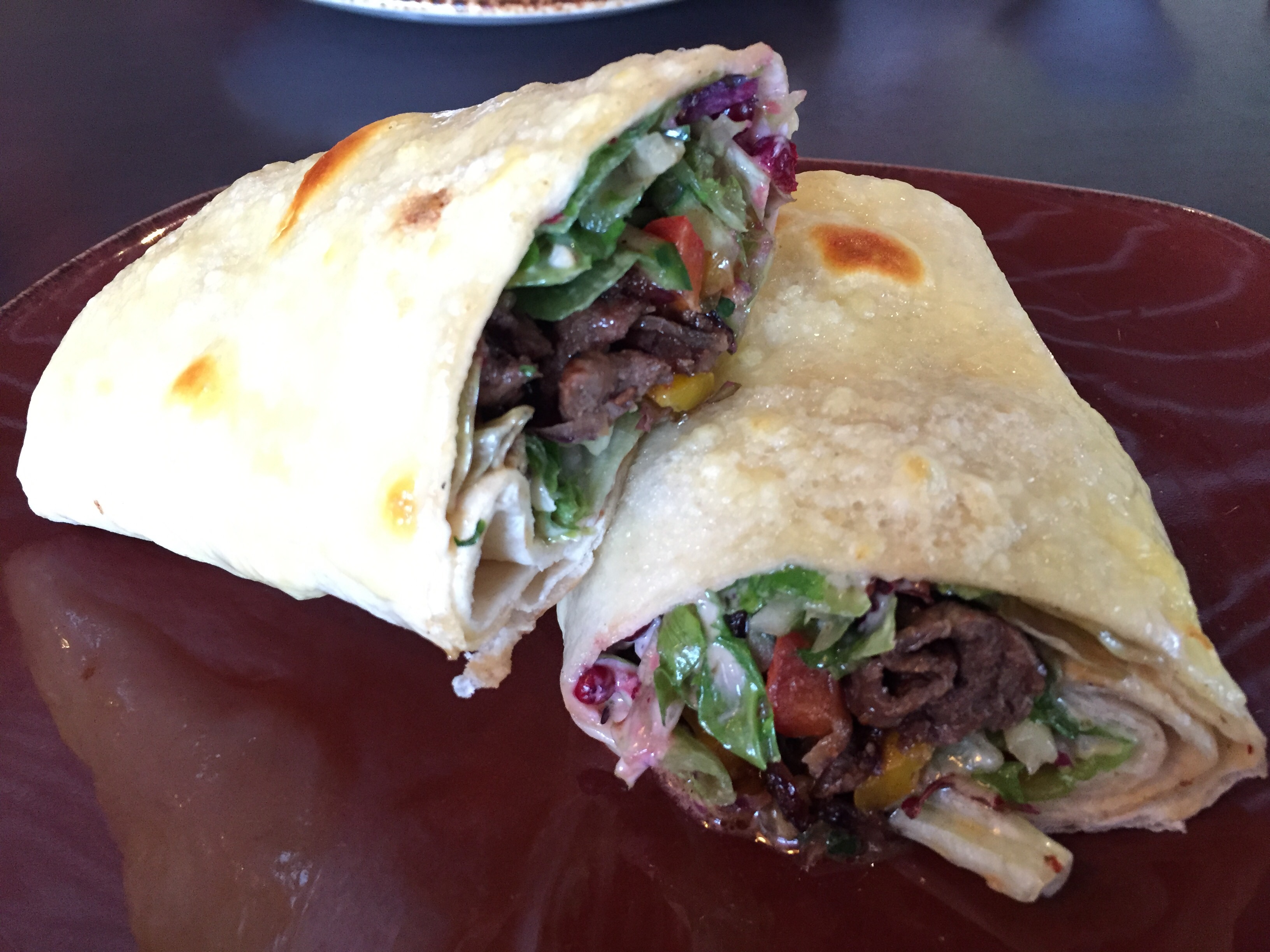
 Since today was predominantly a travel day, we stopped by the city center to grab lunch before heading to the nearby Gargia to check in to our hotel. We knew we’d be renting a car for our hunt, so we opted to stay outside of town to save on lodging costs. Fortunately for me, Tom can drive a stick shift, a skill I have yet to learn! I had a Reindeer Wrap, and it was really yummy! 😄

After relaxing for a bit in our room, we ventured out for Day 1 of our hunt. We drove South-East for about 2-hours and steadily climbed up a mountain pass away from the city lights. Norwegian highways here have designated parking spots along the main thoroughfares making it easy and safe to stop between driving intervals to check the sky. The only time it was remotely scary was when one of the lots had deep snow, I was concerned that the car would get stuck and there would be no human-beings around to rescue us from our dire fate. 

 The skies ended up cloudier than predicted by the forecast, and since it was our first time out, we weren’t even entirely sure what we were looking for. There were some glimmers in the sky that I managed to capture with my Sony RXIII, but a lot of the lights were overshadowed by clouds. We were optimistic about our minor success and knew that we had 3 more nights of hunting ahead of us, so we headed home. 

Oslo: Munch and Vigeland

Edward Munch and Gustav Vigeland are two of the most notable artists with Norwegian descent, but for very different reasons. Each utilized a different medium but jointly they sought to evoke an interpretation of the human experience. One quite more morbid and grotesque than the other.

To explore the works of Munch, we visited the Munch Museum. He is best known for “The Scream,” which, to be honest, is exactly what I had hoped to see in the museum’s exhibits. Unfortunately, despite owning 2 of the 4 known versions of this drawing, neither were on display; Tom and I did not feel like paying an additional entrance fee at the National Gallery for the experience of seeing the original 1893 pastel, so we were pretty disappointed.

  In his pastel, Munch’s simplified forms and broad bands of garish color, focus the viewer’s eye on the agonized figure at the center. It’s form is that of a garbed skull who is commonly interpreted as being in the throes of an emotional crisis. The commonly accepted interpretation is that his drawing represents the anxiety and angst of the modern man. Munch had sucessfully looked within himself to depict his personal state of turmoil at that time. He expressed this with his own words years later, “You know my picture, ‘The Scream?’ I was stretched to the limit—nature was screaming in my blood… After that I gave up hope ever of being able to love again.”

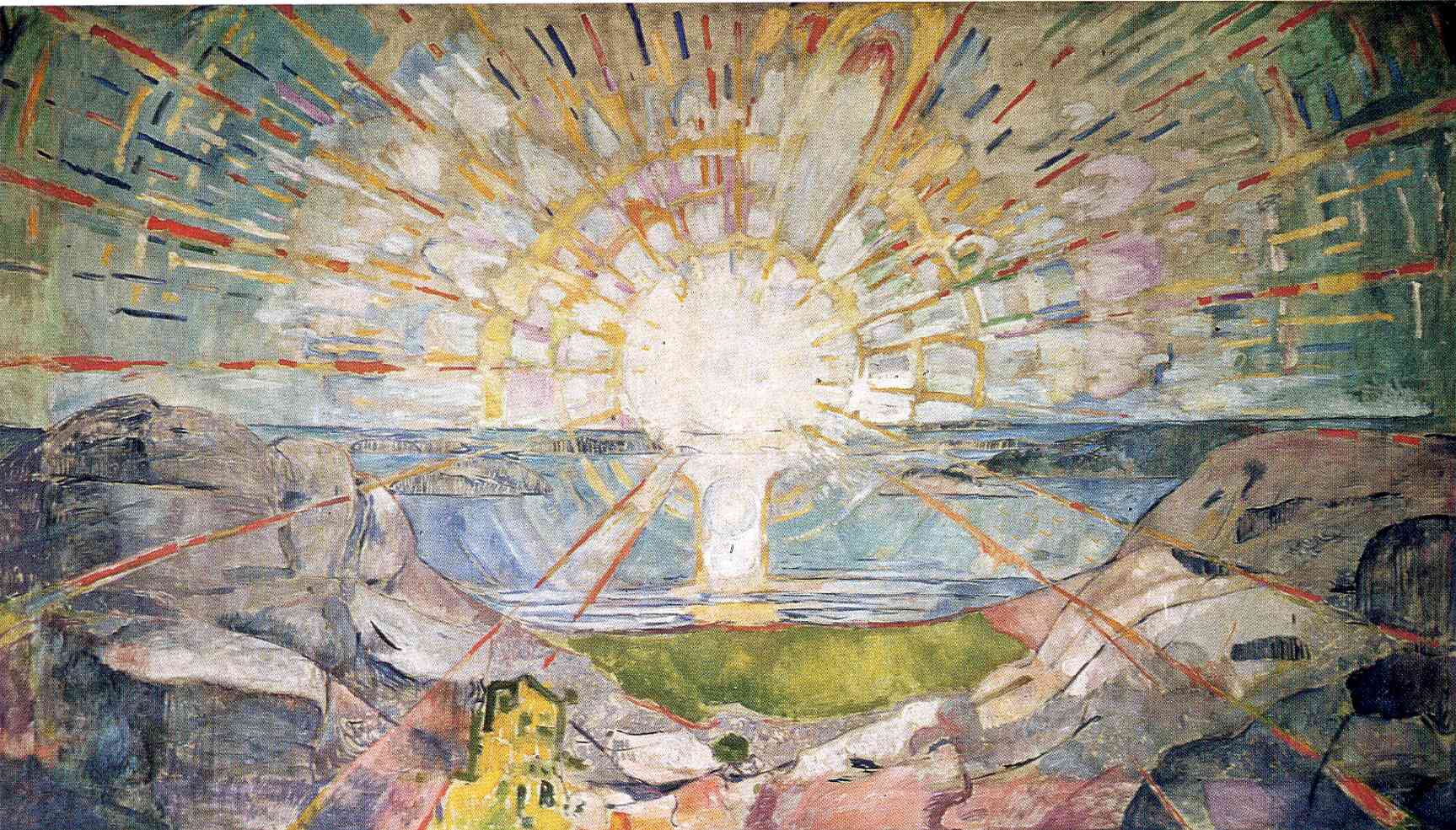
 Tom’s favorite was “The Sun,” which we didn’t see in person, butwas one of 11 murals painted by Munch on the walls of the University of Oslo’s Assembly Hall to celebrate its centennial  in 1911. Compared to the other works Munch is known for, this seemed bright and welcoming, a contradiction to his darker, more violent expressions.

 My favorite was “The Kiss,” which shows a couple kissing, however their faces are amorphously fused together representing their unity. Other interpretations, including one from the MOMA have more pessimistic analyzed it as showin, ” a loss of individuality, a loss of one’s own existence and identity.”

P.S. The Maplethorp and Munch cross-exhibit that was on display was a little too graphic for both of us. Robert Maplethorpe was an American photographer who bluntly addressed controversial topics through his work. All-in-all the pictures on display were far more erotic and vulgar than what we would consider “child-friendly.” 

Gustav Vigeland happens to be the designer behind the Nobel Peace Prize medal. His largest installation of sculptures in Oslo is in Frogner Park, so we went for a winter walk amidst turbulent flurries that wet our faces. Today was probably the coldest it’s been for us in Oslo since we’ve been here! 

 In total there are 212 bronze and granite sculptures. The most iconic of this is a monolith with shows 121 figures struggling to reach the top. Tom and I took some time to walk around this massive pillar, before we realized that the figures carved into it seemed to be dead or in pain. This could be attributed to the fact that experts consider his works to be expressions of Nazi or Fascist aesthetics. After all, he had been a Nazi sympathizer even after Nazi Germany unprovokedly invaded Norway in 1940.

And, in between our artist adventures, we stopped by to take a quick pictures with Oslo’s most photographed citizens, the tiger outside Central Station. FYI Tom does not seem to like being in pictures; he was not the least bit interested in taking a selfie with me and my new friend. 


Oslo: The Norwegian Spirit of Adventure

Norway not only has a rich maritime heritage, but its citizens have also consistently demonstrateda thirst and tenacity for adventure. We visited museums dedicated to two of such explorations, and the Kon-Tiki Museum and the Fram Museum.

 An explorer named Thor Heyerdal developed a theory that Polynesia was settled by inhabitants from South America. According to an Incan legend, there was a sun-god named Con-Tici Viracocha who was the leader of a mythical fair-skin tribe from Peru. His people were nearly massacred during battle on an island in Lake Titicaca when Chief Cari from the Coquimbo Valley came to call. Con-Tici managed to escape with some close companions and disappeared westward out to sea.

In an effort to prove this myth, and demonstrate the plausibility that Polynesians and Peruvians exhibited common traits (such that they shared fair skin coloring generations ago), Thor and five other companions set out on an expedition. The raft was made out of balsa logs and other native materials in the traditional indigenous style documented by the Spanish Conquistadors. After being towed out to sea on April 28, 1947 and being left to the mercy of the wind and currents, they traveled a distance of 4,300 miles in 101 days across the Pacific Ocean before smashing into a reef in Raroia in the Tuamoto Islands on August 7, 1947. Against all odds, and defying expert options that each crew member was facing ultimate death, successful landfall was achieved.  

It’s hard for me to imagine how brave and courageous these men had to be. Not only did anthropologists dismiss Thor’s theories as impossible, but each member had to withstand the pressure and burden of knowing that everyone thought they would perish. 

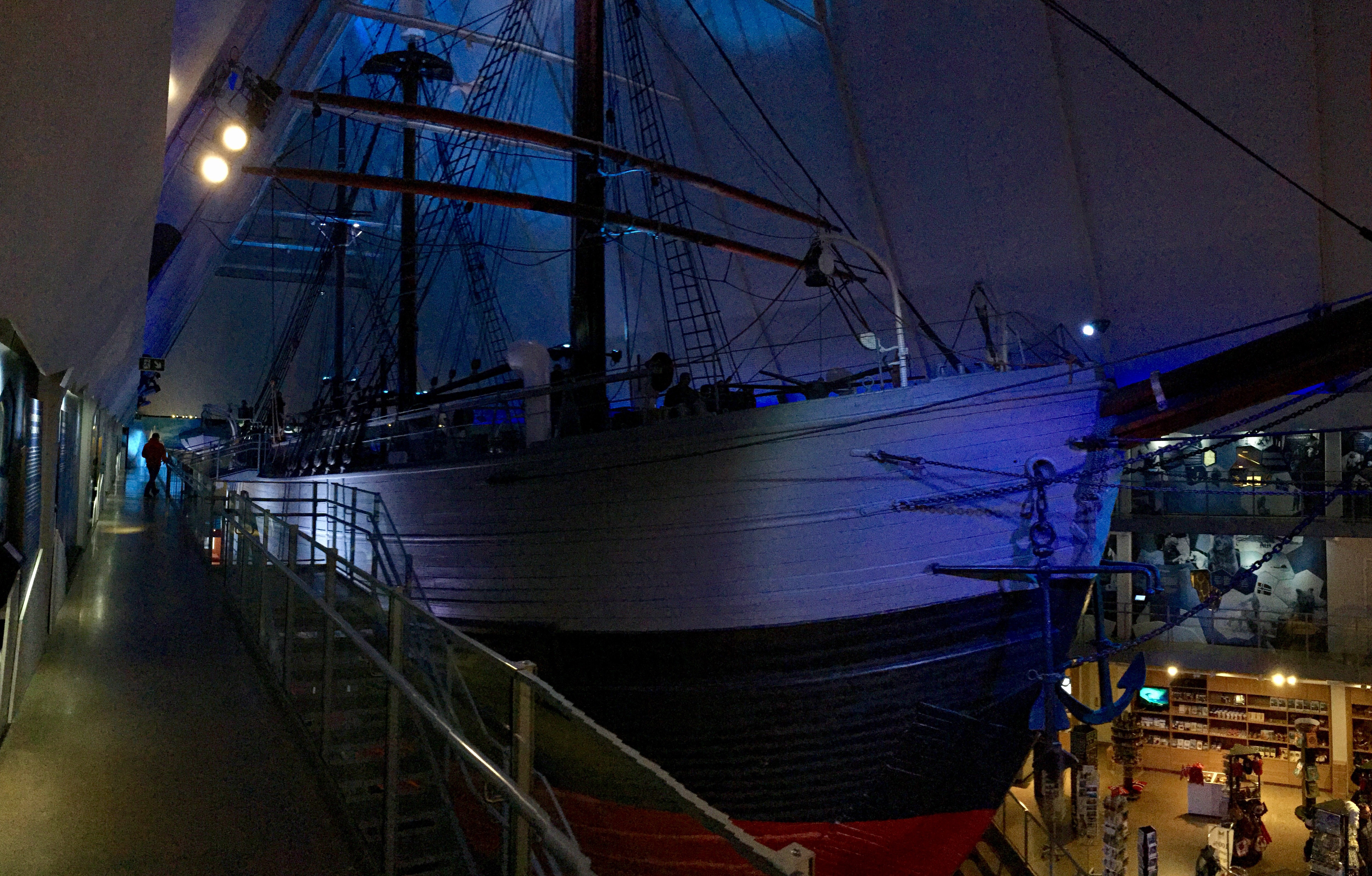
Another historical vessel we had the wonderful opportunity to board and explore was the Fram Polar Ship. The captain, Fridtjof Nansen’s ambition was to explore the Artic further north than anyone else. From the beginning, he planned the for wooden ship to freeze in a polar ice sheet and float with it over the Noth Pole.

 In order to accomplish this, several creative and technologically advance design changes were made to what would have otherwise been a traditional wooden ship. The hull was built unusually wide and atypically shallow. This allowed do the force of the pressing ice to push the ship up to “float” on top of it rather than being crushed by it. 

Credit: Tom

Additionally, the ship had almost no keel to handle shallow waters, while the rudder and propeller were designed to be retracted. The outer layer of greenheart wood provided for a strong hull, and careful insulation decisions were made so that the crew could live on board for a maximum time of five years. The inclusion of a windmill allowed the ship to generate its own electricity. 

The Fram Polar ship was in service from 1893 to 1912, and is said to have sailed further north and further south than any other wooden ship. 

Oslo: Ashes of Vikings

The one thing Tom and I do every morning is to take some time to savor a good cup of coffee. We are both aficionados of this savory drink, and it’s a great way to to warm us up from the inside out before we venture off to galavant about a city blanketed in snow. 

Since our legs and feet were so tired from walking about 10 miles yesterday, we decided today would be a museum day. Specifically, we would pass our time by visiting the museums on the Bygdøy Peninsula, an area that still maintains its rural vibe, and houses the Oscharshall Palace, the summer home of the Norwegian Royal Family.

 Our first stop was the Norwegian Folk Museum, an open-air museum that has many traditional buildings on site that allow you to explore the daily lifestyles of Norwegians from the 16th century and onwards. They also had a few exhibit halls that displayed typical wardrobes and furniture from these eras. The primary reason I wanted to visit however, was to see the Gol Stave Church.

 This one is from 1212, meaning that its over 800 years old! Stave churches were medieval Christian churches that developed in Northern Europe. The name for this type of structure is derived from the Old Norse term “stafr,” meaning the type of timber framing where load-bearing ore-pine posts support lintels. It’s a descendent of palisades construction from the Viking Age. Logs were split into two halves, driven into the earth, and a roof erected over it. 

 The Gol Church falls under a smaller sub-category called the Borgund Group. The stability of the structure is further enhanced by cross-bracing that joins the upper and lower beams and posts. This essentially creates a truss which allows for the weight of the building to be transferred into the ground without the need for intermediate posts, creating a wider, more open, interior space. 

Next, we stopped by the Viking Ship Museum, because what visit to Norway would be complete without getting the chance to learn about Viking history? 


Oslo: City of Tigers II

In 1870, Bjørnstjerne Bjørnson wrote a poem titled , “Sidste Sang”. In it, he illustrates a dramatic fight between a horse and a tiger. The tiger, metaphorically represented the dangerous city, while the horse symbolized the security of the countryside. This is where he first referred to Oslo as Tigerstaden, which represented his perception of the city as a cold and dangerous place. 

 This has not been the case for Tom and I. We have found this snowy, northern city to be warm and friendly. Our barista from earlier this morning graciously gave us a list of restaurants to eat at, and even attempted to teach me the word for “thanks” in Norwegian, “Taak”. (I hope I haven’t been butchering the word too much, but I always like to learn how to say “please” and “thank you” when I travel. I’ve found it is a simple way to show your enthusiasm for the local history and, even though they may laugh, the locals often appreciate your effort.) 

 Making use of one of the barista’s recommendations, we ventured towards Aker Brygge, a unique, waterfront development that was completed in 2014. It was formerly the site of a shipyard and industrial buildings. Vingen, a restaurant attached to the Astrup Fearnley Museet was difficult to find, but incredibly tasty! Tom had the Eggs Benedict, while I had their version of a Katz Pastrami Sandwich.

 After a brief break, we ventured back into the cold to explore the history of the Akershus Fortress. Construction of the fortress is believed to have started around 1290 when King Hakon V realized that the city needed a stronger defense center than that which currently existed. Since it lied adjacent to the sea, it allowed Norway to prosper commercially while providing the nation with a strong military presence. 

 The Akershus Fortress has never been successfully besieged by a foreign enemy. However, in 1940, it surrendered to Nazi Germany without combat. The Norwegian government evacuated the capital when it was unprovokedly assaulted.

  
Our feet getting wary, we decided to make our last stop for the day before heading back to the hostel to rest our laurels. The Oslo Opera House is uniquely designed such that the roof of the structure angles to the ground level. This creates an elevated plaza that allows pedestrian interaction with the building. Tom and I climbed all the way up and were greeted with a panoramic view of the waterfront.

As a structural engineer,the fact that this roof is merely supported by thin angled columns is intriguing. How, exactly did they analyze the load paths/patterns through the asymmetrical characteristics of the column geometry?  The minimalistic framing and specialty glass allows for optimal views of the surrounding water. 

 From the roof, and at ground level, we observed the sculpture, “She Lies.” The stainless steel and glass fabrication resembles ice and depicts a symbol of power for the region. As it lays on a transient concrete platform, it is free to turn with the bidding of the tide and the wind. I think the sculpture is a metaphor. For as quick as the tides change and the wind changes direction, so too can the power shift.  

P.S. Tom is currently passed out next to me. If anything, my boyfriend could certainly hibernate through a long winter if instinct required it of him. 😛

Oslo: City of Tigers


We started off our day with a latte and cappuccino from Tim Wendleboe. Its known as one of the best places to get coffee in Oslo, and also serves as a micro-roastery and training center for all things related to the art of coffee. Tim has claimed multiple championship titles including that of “World Barista Champion.” Tom, the coffee conossieur, said that it was probably the best coffee he has ever had, and I’d have to agree.  

Walking further south to the historic city center, we passed Damstredet, a street that has preserved the charming, small town character of Oslo with its pedestrian-only access and wooden houses. Unfortunately, since it was snowing, the sloping drive up to it simply seemed too precariously slippery to the both of us.  

We spent our afternoon strolling around Old Oslo and passed the Storting Building (Parliament). Oslo’s parliament was established in 1814, but it was not until 1836 that a government proposal was approved for the construction of a permanent building. The location of this structure was finalized in 1857, and a competition was held for the architectural design.  Even though Heinrich Ernst Schirmer and Wilhelm von Hanno won, their proposal looked to much like a church and was thus struck down. Eventually, Swedish architect Emil Victor Langlet was chosen, and the parliament moved into their new permanent residence on March 5, 1886. In 1860, the building cost 957,332 NOK to construct. That’s $31.3 Million dollars in present day value!


Coinciding with our trip, is the 2016 World Biathlon Championship, so we strolled through a pop-up market celebrating this event with kids participating in mini-versions, and were even able to take a picture with the mascot. 

Next, we passed the Nobel Peace Center which celebrates the history of this prestigious award. Ironically, Alfred Nobel, is the inventor of dynamite, and it was a premature obituary condemning him for profiting from the sale of arms, that inspired him to establish the Nobel Prizes. 

It is in the adjacent City Hall that Malala Yousafzai was awarded the Nobel Peace Prize on December 10, 2014. You may recall her as the brave girl that fought for a female’s right to education in Pakistan, was subsequently targeted with an attempted assassination by the Taliban, and after achieving a full recovery, continues to promote her message around the globe. “One child, one teacher, one pen and one book can change the world.”

Journey to Norway

At last, we have arrived! Norway has long been a place that I have only dreamed of. From the glacier-made fjords to the rolling mountains, and, further north above the arctic circle, the aurora borealis waits for us. This nation is rich in its Norse history, and Tom and I look forward to exploring more of it. 

 With a total travel time of 15 hrs, it was not surprising that both Tom and I were exhausted by the time we arrived to our hotel in Oslo. Both of us promptly passed out at 3 pm intending to wake up an hour later, but dutifully failed. We ended up not waking up until 8 pm! Unfortunately, it was far too late to do much exploring, so we merely took a 15 minute walk to try the “Voted best kebab in Oslo.”

 
I should have made an executive decision when I saw the size of one after the girls in front of us put in an order. I didn’t realize that Tom didn’t see how large the servings were. Neither of us managed to finish our portions, so we brought them back to our room to save for later in the fridge.

Next Newer Entries