Travel: Varanasi

Given how hectic and crazy the past few days have been, I’m happy that today was just a “kick back and relax” transit day. With an early afternoon flight out of Khajaraho en route to Jaipur, we savored the luxury of sleeping in. 🙂 Unfortunately, I’ve gotten into the habit of waking up at 8 am of my own accord, this happens pretty consistently for me regardless of how late I went to bed the previous night.

imageThe downside of visiting a smaller town is the limited amount of conveniences that we have grown accustomed to as Americans. This is not to say that neither of us were adaptable. Contrary to that, both Nick and I have the prior experience of traveling through Asia, and we were prepared for the likelihood of the squatting toilets, limited hot water, lack of heat, and taking sponge baths from a bucket. Still, warmth would have been nice given how cold it was in the room last night and this morning.

imageOur flight to Jaipur included both a stop in Varanasi and a layover in Delhi. Varanasi, is recognized as the Holy City for Hinduism, and is one of the oldest continuously inhabited cities in the world. It is set along the Ganges River. You may recall that the Ganges is the Holy River. It is considered sacred and is personified as the goddess Ganga.

image

Credit: Babasteve

The common belief is that bathing in the river, results in remission of sins and facilitates Moksha – liberation from the cycle of life and death. Many Hindu’s pilgrimage to the Ganges to immerse the ashes of their dead. The river is also a water lifeline for millions of Indians across the country, as it is the largest body of water in India. Unfortunately, the cumulative purpose of the Ganges has resulted in it being named the 5th most polluted river in the world.

At Varanasi, I picked up an interesting row-mate named Wayne. It turns out that he was also born and raised in New Jersey! (Jersey City to be precise). He also happened to spend a few years living in Houston.

imageSometimes I think the world is so large, that I can’t even begin to explore all of it, and then coincidences such as these happen that remind me how small the world can actually be. We had a very thorough conversation and I quickly became envious of him. Wayne is a General Orthopedist that works in contracted positions. This has somehow allowed him to work in Europe, Africa, and now Asia! He also happens to own some great sports cars (although they are in storage) such as the Lotus, Ferrari, and Maserati. Still, my jealousy had its limits. Averaging 18-hr days for continuous weeks with a brief reprieve of a week here and there takes its toll.

We parted ways at Delhi and Nick and I caught our connection to Jaipur, “The Pink City.” After arriving at our hotel, we were both happy to settle into our rooms and savor a long, relaxing hot shower. I also had time to Skype with  friends from back home ^_^.

Travel: Khajaraho Temples

image*Disclaimer: The photographs contained in this post may not be suited for younger eyes.

This morning, we bid adieu to the chaos and clamour of New Delhi, and hopped a quick domestic flight to Khajaraho for the night.

Khajaraho lies 385 miles southeast of New Delhi and is home to a mere population of 20,000 people. It was the seating ground of the Chandela Dynasty which ruled much of the Bundelkhand region of central India between the 10th and 13th centuries.

imageThe name Kharjuravāhaka is derived from ancient Sanskrit (kharjura, खर्जूर meaning date palm, and vāhaka, वाहक meaning “one who carries” or bearer). As the legend goes, there was once two golden date-palm trees at the gate of the temples. Kharjuravāhaka also has another meaning in Desai, scorpion bearer; this is a symbolic name for the deity Shiva, who bears snake and scorpion garlands upon his shoulders. This is fitting, as Khajuraho is one of four holy sites linked to Shiva. Hindu mythology recognizes the town as the location of his marriage.

imageIn its prime. Khajaraho had 85 temples spread over 20 square kilometers. Today, there are only 12 temples spread over 6 kilometers. As is typical with Hindu temples, they are clustered near a body of water and face east, towards the sunrise. Each temple integrates the interdependence between feminine and masculine deities and highlights the four goals of life – Dharma, Kama, Artha, and Moksha.


imageLike most Hindu temples, these temples follow a grid geometrical design called vastu-purusha-mandala, which has three important components. Mandala meaning circle, Purusha conveying universal essence, and Vastu meaning a dwelling structure.


This is displayed by the geometric use of squares and circles. A square, divided into 64 perfect sub-squares (padas) circumscribe the circle of mandala. The square is considered divine and represents the product of knowledge and human thought while the circle, considered earthly, symbolizes everyday life.

imageTo further illustrate the comprehensive design of the site, the Chandela’s laid out the territory in three triangles, which converge to forma a pentagon. The three triangles represent the three realms (trilokinatha) and the five-side pentagon, indicates the five cosmic substances (panchbuteshvara).

image


For me, the most interesting thing about the temples, is that the sandstone blocks aren’t glued together with mortar. Rather, in a fashion similar to classic Chinese wood construction, each mortise and tenon was precision cut so that the male piece could interlock with his female counterpart, allowing gravity to keep them joined.


We decided to take this side trip primarily because the temples are best known for the erotic carvings that adorn the faces.

imageHowever, these sexual figures only account for about 10% of the detailing on the temples, and are not prominent nor emphasized compared to the others. It was a bit of a “Where’s Waldo” scavenger hunt, as we went searching for these. Other sculptures depict the numerous aspects of human life and the values vital within the Hindu Pantheon.

Some of the positions just didn’t seem humanly possible! Although, given that the art of Yoga was developed in Ancient Pre-Vedic India between 5th to 6th century BC, perhaps our ancestors possessed a depth of flexibility that current humans do not.

Travel: Agra Cantonment

We woke up at 4 AM today, because we needed to catch the 6 AM Shatabdi Express – India’s Fastest Train – to Agra for a day trip. Needless to say, it was a long day as our transit time was 2-hours one-way, assuming that everything is executed flawlessly.

image

Credit: Nikhil Kulkarni

Agra, a former cantonment of the British empire, is the home of the Taj Mahal, one of seven wonders of the world. It is an eye-catching structure consisting entirely of white marble and its impossible to miss the light reflecting off of its surface as the sun creeps higher in the sky.


Its origin story is one of love, despair, and tragedy.

imageIn the 17th century, Shah Jahan, one of the Mughal Emperors, lost his third wife, a Persian princess named Mumtaz Muhal during the birth of their 14th child in 1631. The following year, construction of the Taj Mahal began. Over the course of 20 years, this project enlisted the labor of over 1,000 elephants to transport building materials from all over India and Asia. In addition to the iconic white marble that the building is known for, 28 other types of precious and semi-precious stones were inlaid into the ornate design.


image


As this was a period of prosperity within the empire, a skilled labour force of twenty-thousand workers were recruited from all across India. A total of 37 men were selected to form the creative unit behind the Taj Mahal.


There were sculptors from Bukhara, calligraphers from Syria and Persia, inlayers from southern india, stonecutters from Baluchistan, and individuals who specialized in everything from turrets to the carving of marble flowers.

image

Credit: Nikhil Kulkarni

Not too soon after the Taj Mahal’s completion, the Shah was deposed by his son, Aurangzeb, and imprisoned at Agra Fort. It is said that he was given a cell with a window facing the Taj so that he could gaze at the resting place of his love. Shah Jahan was later buried in the mausoleum next to his wife.

image


As a young professional trying to balance the scales of career and ambition between passion and family in the 21st century, it is difficult to imagine the depth of emotion, much less, the hollow shadows that the Shah must have felt on his wife’s passing.


image

I feel that so much of my generation tends to trivialize the word love, that it’s merely a word to convey feeling, but the term amor speaks volumes more. It means depth of commitment, being willing to compromise, accepting the flaws of your significant other, and most of all, not giving up on your relationship when things get rough. You have to be willing to fight for it.

That’s what Shah Jahan did. Although Mumtaz was long gone from the world, she stayed alive in his memory. He wanted to commemorate her significance in his life, and the empty space left in his world by her departure.

The Taj Mahal was truly a tribute to the joy they shared.

imageNot too far away, is the Agra Fort, a towering fortress where the throne-less shah was held captive. A fort has stood at this location since the 11th century, although the current structure was built by the Mughal Empire. Spanning a total area of 94-Acres, the red sandstone is a staunch guard that dominates the skyline.

As the stories say, Shah Jahan was actually held in the Muasamman Burj, a tower with a marble balcony facing the Taj Mahal.

image


After our visit to the fort, it was time to catch our train home. This took a large amount of patience as, despite our 6 PM tickets back, our plane was consistently delayed. First it was by 40 mins, and then it was 1-hour. This soon changed to a 2-hour delay, and progressed further to a 3.5-hour delay. Eventually, we bought another set of tickets for the Shatabdi Express (which is always on time), and managed to get back to Delhi around 11:30 PM. Whew!

Travel: Hinduism and Peace

The one thing about traveling in a foreign country whose citizens are predominately one ethnicity or skin tone, is the complete incapacity for me to blend in. Much like a blonde friend of mine who studied abroad for a semester in Hong Kong, I am a curiosity to the locals. More so an anomaly, because it seems that East-Asians do not often visit India.

image

Credit: Juthani1

It is a little strange to feel eyes on oneself everywhere I go. This was best exemplified today when we went to visit the Akshardham. A toddler baby pulled my hair as we were going through security, and an entire school trip of boys all shouted hello and goodbye as we walked past their orderly line. One even ran up to me to shake my hand.


. . .If only they had been a few years older, it would have certainly been a major ego boost. 😛

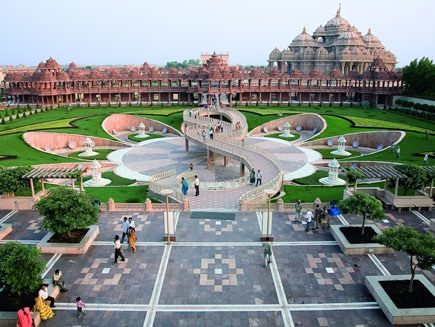
The Akshardam is a massive complex with a Hindu temple, devoted to Swaminarayan as its central focal point. Swaminarayan is the founder of one of the sects of Hinduism. Originally born in Chhapaiya, Uttar Pradesh, India in 1781, he began a 7-year pilgrimage across the country on June 29, 1792 at the age of 11 after the death of his parents.

image

Credit: Juthani1

He traveled across India and Nepal in search of an ashram that practiced what he considered to be the correct understanding of Vedanta, Samkhya, Yoga, and Pancaratra, the four primary schools of Hindu philosophy.


Finally, in 1799, Swaminarayan’s travels as a yogi concluded in Loj, where he stayed as a disciple of Ramanand Swami, and took over leadership as guru after Ramanand died. Swaminarayan passed away on June 1, 1830.

The Akshardham, although a more recent structure that was just completed in 2005, is designed according to ancient Vedic text, and features a blend of architectural styles from across India. It is not supported by steel nor concrete, but is constructed entirely from Rajasthani pink sandstone and Italian Carrara marble. Pictures can’t even begin to illustrate the ornate detail and craftsmanship that was invested into each microscopic niche of the temple. It’s truly an awe-inspiring piece of architecture.

image

Credit: Stanislav Sedov and Dmitriy Moiseenko


To quantify, the main monument is 141 ft high, 316 ft wide, and 356 ft long. There are 234 intricate pillars, 9 domes, and 20 0,000 murtis and statues of Hinduism’s sadhus, devotees, and acharayas. It also contains 148 scale-sized elephants. This total building weighs a massive 3000 tons.

image

Credit: Nikhil Kulkarni

In stark contrast to the elaborate and jaw-dropping Akshardham, Raj Ghat is understated and simple, as one would expect of the burial place of Mahatma Gandhi.  Its difficult not to be overwhelmed by the legacy this great man left behind.


Not only did he free his nation through peace, but he also inspired countless movements across the world. You can see his influence span from the American Civil Rights Movement to the Occupy Wall Street Moment. So many of the leaders we admire today have used Gandhi as there guiding light, Martin Luther King, Cesar Chavez, Nelson Mandela, and the Dalai Lama are but a few.

image

Credit: Nikhil Kulkarni


Our last stop of the day was Humayan’s Tomb, the inspiration behind the Taj Mahal, and the resting place of Emperor Humayan.


I shall leave you with one of my favorite quotes:

“Be the Change  you wish to see in the world” ~ Mahatma Gandhi.

Travel: Ancient India

Today, Nick and I learned the true meaning of IST ‘Indian Standard Time.’ We went to Vodaphone with the intent of acquiring pre-paid SIM cards. Needless to say, 2.5 hours later, we finally had our SIM cards, however, neither of us have managed to get service.

imagePart of the challenge was that regulations for foreigners to acquire SIM cards are much more stringent than it has been previously due to the 2008 Mumbai Attacks – 12 coordinated shooting and bombing attacks lasting over four days by the terrorist group Lashkar-e-Taiba.

image

Credit: Nikhil Kulkarni

With our errands over for the day, we were finally able to explore part of Delhi’s ancient past. Delhi has been home to a total of seven previous dynasties, and as a result, retains unique heritage structures that illustrate the diverse differences between each kingdom.


As we cut our way through the bazaar of Connaught Place, one of the largest commercial, financial, and business centers of New Delhi, we went from the Inner Circle, Rajiv Chowk, to the outer ring, Indira Chowk.

image

Credit: Nikhil Kulkarni

Nick managed adopt a little girl along the way. We were both confused and laughing at the time, because we simply did not know how to react. Truthfully, it was heartbreaking. She couldn’t have been more than 5 years old, and she just latched onto the corner of Nick’s polo, and followed us for a few blocks.


It was at this moment that I understood why some are proponents of Child Labor. While it may seem like a travesty against human rights, it does provide a means for children in developing countries to earn an income, and provide essentials for their survival. It’s a sad reality, but a necessary truth.

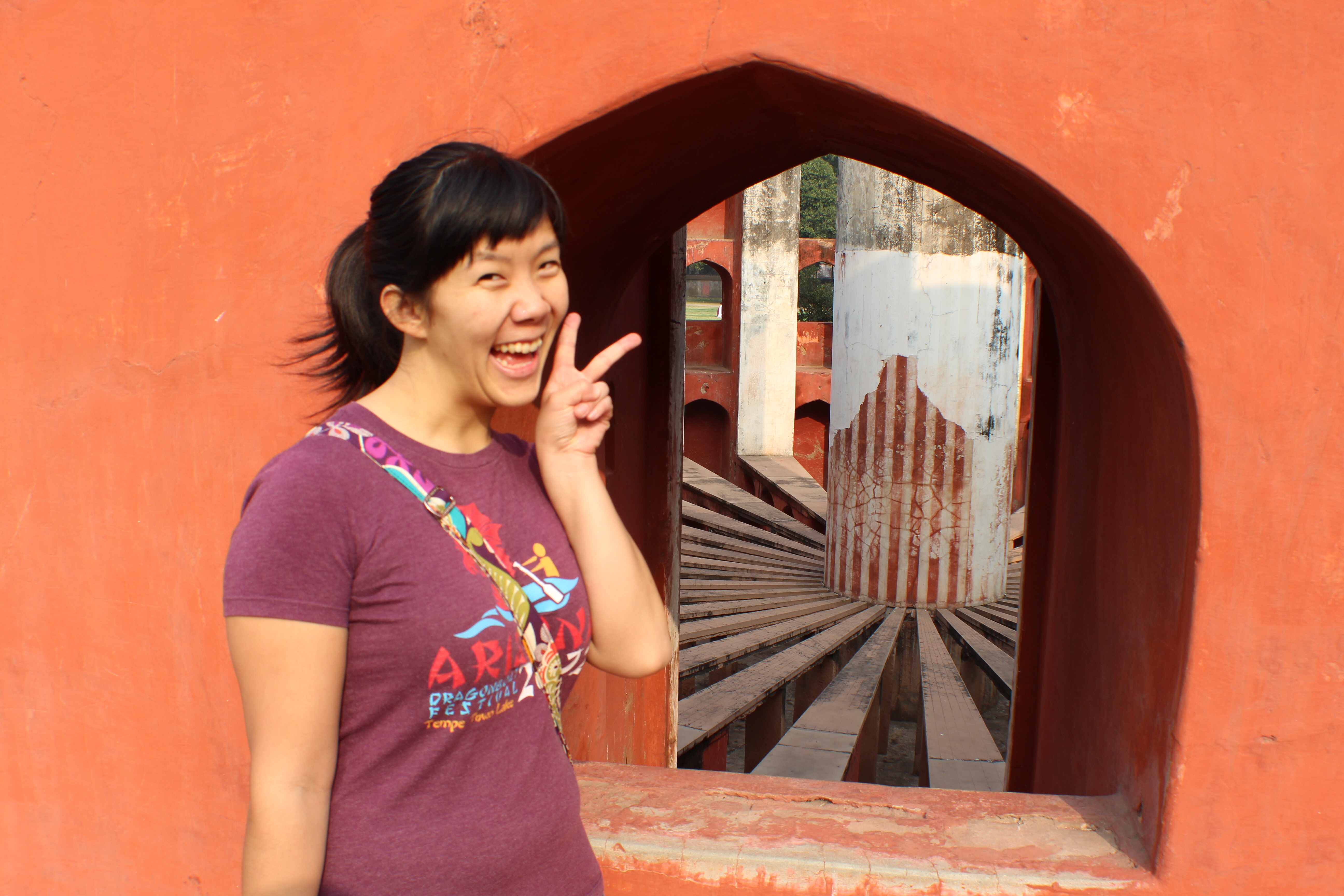
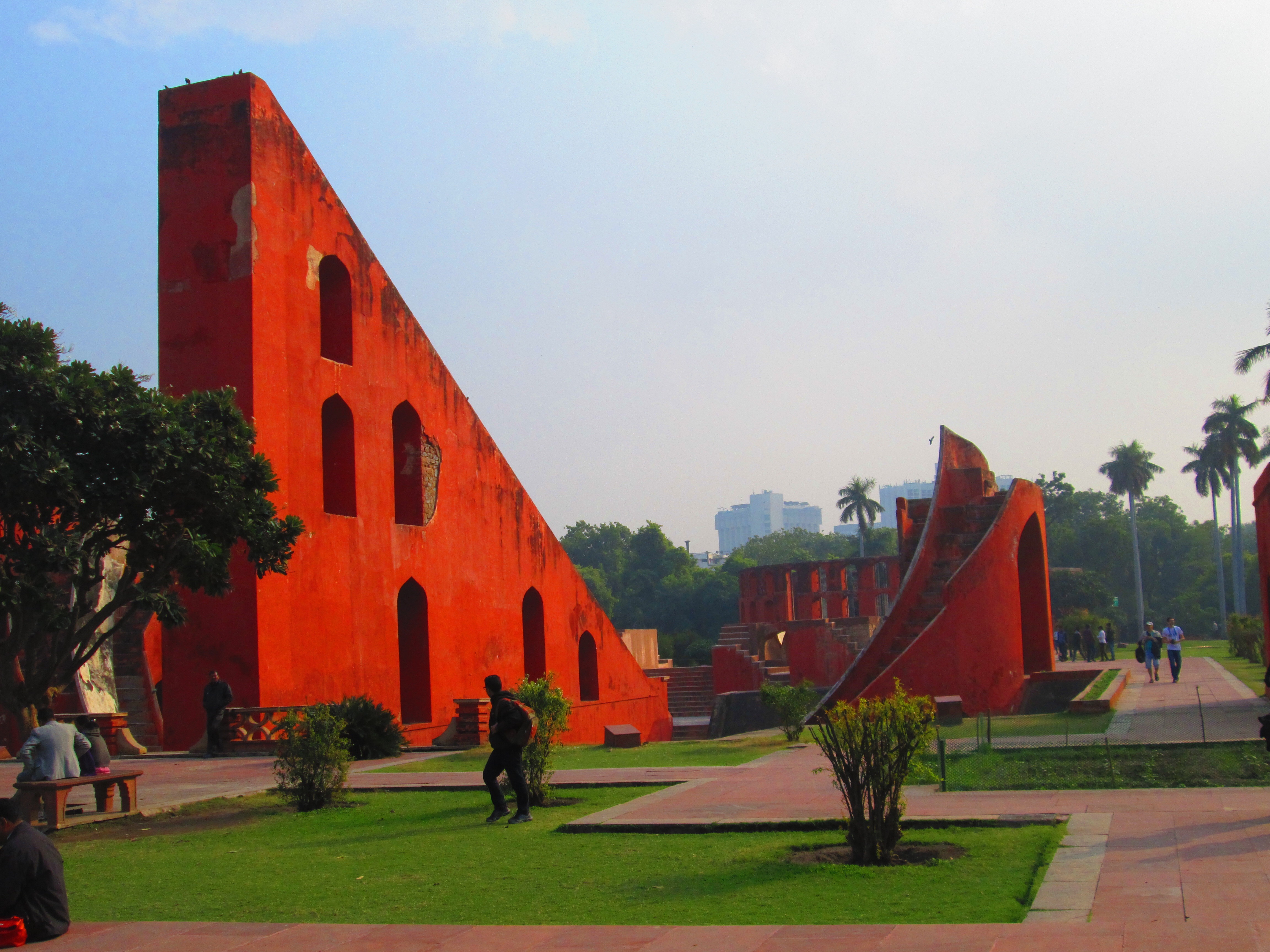
Outside the Rajiv Chowk, lies the Jantar Mantar complex. Built in 1724, it comprises 13 astronomical instruments. This site is one of five built by the Maharaja Jai Singh II of Jaipur, after he was given the task of revising the calendar and astronomical tables by the Mughal emperor Muhammad Shah.

image


The Mughal Empire lasted for over 300 years, and spans the timeline from 1526-1857. Babur, the founder, had turned to India to satisfy his political ambitions after being ousted from his ancestral domain in Central Asia.


The towering instrument that greets us as enter the grounds is the Samrat Yantra, a giant triangle that is essentially a massive sundial. The 128-ft long hypotenuse is parallel to the Earth’s axis and points toward the North Pole. Each side has a quadrant, with graduations that indicate hours, minutes, and seconds, turning the basic instrument, into a precision tool.

image

Credit: Nikhil Kulkarni

We next came across the Jayaprakesh Yantra; A hollowed out hemisphere with cross-wires stretching out between points of the rim. An observer at the center, could align the position of a star with the various ribs.


Then, we came across the Misra Yantra, a tool used to determine the shortest and longest days of the year in addition to the exact moment of noon in cities and locations worldwide, regardless of geographical distance from Delhi.

imageDescending even deeper into time, the Qutab Minar is the 2nd tallest Minaret in the world at a total height of 73 meters. It is made of red sandstone and marble, and has a diameter gradient that begins at 14.3 meteers at its base before narrowing to 2.7 meters at its peak. This sprawling tower has five layers, and despite construction beginning in 1192, was not complete until 1368.

You will often see minarets as an iconic feature of muslim mosques. It is from these spires that Adhans, the call to prayer, are issued five times each day.

imageIf you look closer, you can see the islamic influence in the shape of the Muqarnas that encircle each tier of the tower. Remniscient of stalactites, they take the form of small pointed niches stacked in radially symmetric tiers that project outward. The number of unique tiles is limited by N-gonal symmetry, or the equation N = N/2 -1.

imageWe then stopped by the Dilli Haat, a market that hosts unique handicrafts from each of India’s 29 states, and snacked on some Momo’s, which are essentially dumplings. This makes sense, given that this ethnic food is from north-eastern India near the Chinese border.


.

Travel: New Delhi

image

Credit: Nikhil Kulkarni

After checking-in to our rooms, we took some time to scour off the travel grime, and prepare for our day. We arrived at the hotel around 7 AM, and had decided that taking a nap would basically just serve to encourage our jet lag.

New Delhi is the capital of India, and the seat of its executive, legislative, and judicial branches. Although the capitol was originally in Calcutta in the early 1900s, the British, formally decided to migrate the seat of their power to New Delhi in 1911.

It is not difficult to feel the british influence when one walks along the kingsway.


Master-planned by the architect Edwin Lutyens, New Delhi is centered around two central promenades call the Rajpath and the Janpath. The streets are wide and tree-lined, a design that was both ambitious and forward thinking in its hey-day.

imageOur first stop, was the India Gate. It sits along the eastern edge of the ‘ceremonial axis,’ and is a towering memorial that evokes an architectural style akin to the Arch of Constantine in Rome, or the Arc de Triomphe in Paris.


It calls for the remembrance of the 82,000 soldiers of the undivided Indian Army who lost there lives between 1914 and 1921 during the First World War and in the Third Anglo-Afghan War.

Below this towering structure, is an understated black marble plinth that bears a reversed rifled, capped by a war helmet, bound by four urns, each with a permanent jyoti (light) from flames. Inaugurated in 1972, this is the Amar Jawan Jyoti, India’s Tomb of the Unknown Soldier.

image

Credit: Nikhil Kulkarni

At the opposite end of the Rajpath, lies the secretariat, home to some of the most important ministries of the Cabinet of India. Much of the buildings of the North and South block are classic in style, but it is not difficult to see the Mughal or Rajastani motifs that have been incorporated.


They are visible in the form of the perforated screens which shield from both the scorching sund and the monsoon rains. Another feature is the dome-like Chatri, which provided shade to travelers in ancient times.

image

Credit: Nikhil Kulkarni

Our last stop of the day was the Lotus Temple. This location serves as the Mother Temple of India. The Bahá’í Faith, has roots dating from 19th-century Persia, its founder, Bahá’u’lláh died a prisoner when he was exiled to the Ottoman Empire for his teachings.


Three core principles are emphasized in the Bahá’í religion: (1) The unity of god, (2)  The unity of religion, and (3) The unity of Humanity.

image

Credit: Nikhil Kulkarni

Inspired by the lotus flower, a symbol of purity, the Lotus Temple is composed of 27 free-standing marble clad “petals” that form nine sides of three clusters each. Each of its nine doors open into a central hall that is more than 40 meters high, and can hold a total capacity of 2,500 people.

image


The engineer in me was completely awe-inspired by this building. Not only is it remniscent of the Sydney Opera House in Australia, but its a challenge to grasp the depth of shell-stresses and structural analysis involved in the fabrication of each monstrosity of a petal.


imageWe finished our day by savoring a snack of Pao Bhaji (Bombay street food, very similar to the American Sloppy Joe, except vegetarian) and having Tea, before retiring to our rooms to pass out.


Travel: Chaos of Delhi

imageAfter finally meeting up with Nick at the Delhi Airport around 6 AM (his flight was delayed by 2 hours on his way out from Dubai), we hopped on a Metro to reach our hotel.  Emerging from the metro station, I was quickly overwhelmed by the site that greeted us. It can best be summed up in one word: Chaos.

image


India is the most populous democracy in the world, with a staggering 1.2 billion citizens. However, despite being the world’s 10th largest economy by GDP, and the 3rd largest by PPP, this nation struggles to align its modern ambitions with its financial limitations.


After securing its independence from British rule in 1947, a period during which Mahatma Gandhi yielded significant influence,  India continues to face the shackles of corruption of corruption and poverty. It is home to the largest concentration of people living below the World Bank’s poverty line of $1.25 a day.

Chronic malnutrition of children is rampant across the nation, and the socio-economic disparity between this nation’s states has only continued to grow. India can only tax about 0.1% of its population, and then these funds are directly used to feed its poor, leaving little flexibility for the money to be allocated elsewhere.  It is a sobering reality to see all the day-to-day battles these individuals have to endure.

image


The street clamours for attention with the loud yells of the rigshaw drivers bantering for business and the constant beeping of horns as cars dodge each other, and people, as they drive the street.


We decided to take a rigshaw to our hotel, since we were a little disoriented after our tedious travel. I’d describe riding in a rigshaw as a harrowing experience, filled both with excitement, adrenaline, and an ounce of fear. There is little regard for right of way, and the drivers bravely weave their cars in and out of traffic. We like to laugh and call it taking a gamble on life, akin to playing a round of Mario Cart.


Travel: India

So, I apologize for disappearing this past year. Unfortunately, certain responsibilities come with being an adult. This includes things such as acquiring a job, paying my own bills, and being thrust out of my mother’s nest into the real world.,

IMG_0005-0

I’ve gone from growing up in New Jersey, to attending Graduate School in California, and finally settling in Texas. And yet, I feel discontent. During school, hard work paid off by manifesting itself in the form of grades, but a career, and subsequently long hours, is only gratifying in the form of wealth.


image

Its fact that wealth doesn’t buy happiness, but savoring the little moments, and cherishing time spent with family and friends does. I can’t deny that I am grateful for the niche I have built in Houston. I do enjoy what I do, and there’s a certain thrill I feel whenever I drive past a building I worked on, or when I finished modeling a complex building. Yet, I feel incomplete. There’s a certain yen I have to explore and discover all the beauty and history that our planet has to offer, and it’s not something I can do with my career while chained to a desk.

imageAnd so, with some strategic planning and the benefit of not having to use my vacation days to visit family, I have managed to scrounge up a sufficient amount of days for my next big travel venture. This year, it is India.

imageDespite a 36-hour total travel time to New Delhi, and an overwhelming sense of unspoken questions that I have left behind in Houston, I’m excited to explore this diverse nation with one of my best friends from high school.Because, for me, travel allows me to keep things in perspective.

image


I think that as Americans we can become blinded within the bubble that is patriotic egoism. Exploring different cultures and countries allows one to understand what simple freedoms we enjoy and to really appreciate our place in life.


Travel: Hopeful Disillusions

I thought I would love Athens. As a kid I was fascinated by the colorfulness and diversity of Greek mythology and the polytheistic nature of is deities. I was wrong. Athens is in disrepair, crime is high, the neighborhoods are sketchy, and the nation is struggling, it is difficult to imagine this city at the height of its glory considering the clear challenges it has before it.

One thing that any passerby in Athens cannot help but notice is the quantity of people that are out and about just lounging, drinking coffee, or enjoying the sun, even in the middle of the day on a weekday. Unfortunately Greece cannot conceal the fact that the country is suffering, and as a tourist on the mainland, the evidence is clear. Unemployment is high, sustainable incomes are scarce, and many government employees are having to work without pay. 

This was no truer than it was this morning at 5 AM. After 10 weeks of an amazing solo journey backpacking from the Atlantic Coast of Europe to the Mediterranean Coast, it was time for me to catch a flight home. My graduation ceremony is in a few days, and still without a job offer, it was time for me to return to real life.

When I woke up at 5 AM this morning to catch the metro to the airport, I discovered that the employees had declared a strike overnight. How in the world was I supposed to get to the airport?! My back-up plan, carefully formulated the prior evening, to walk a few blocks north and hop on the slower, more expensive airport shuttle, were also foiled, apparently the operators were also part of the strike.

Amidst my clear panic, the hostel front desk was open and he helped me phone a taxi. The gentleman went even further to coordinate with the Taxi driver for us to stop at a street ATM on the way to the airport, since the driver would not accept credit, and I was down to my last few euros having budgeted my spending for Option A and B.

Thankfully, after a very hectic and stressful morning, I was able to catch my plane for the long flight home!

Travel: Tranquility of Olympus

Waking up th2013-06-11 22.58.17e next morning, we were greeted by clear skies bursting full of sunshine. I don’t believe I’ve breathed any fresher air than I did on the side of Mount Zeus. There was something so quintessentially pure about the moment, a second of peace with no clock, no city fumes, and the microscopic presence of man.
2013-06-12 01.20.26

Unfortunately, we did not awaken early enough to have time to reach the summit. After a quick breakfast, we had to turn back and begin our descent. My two friends had a plane to catch to Italy out of Thessaloniki, and I had a train to catch back to Athens, as my flight back to California departed the next morning.

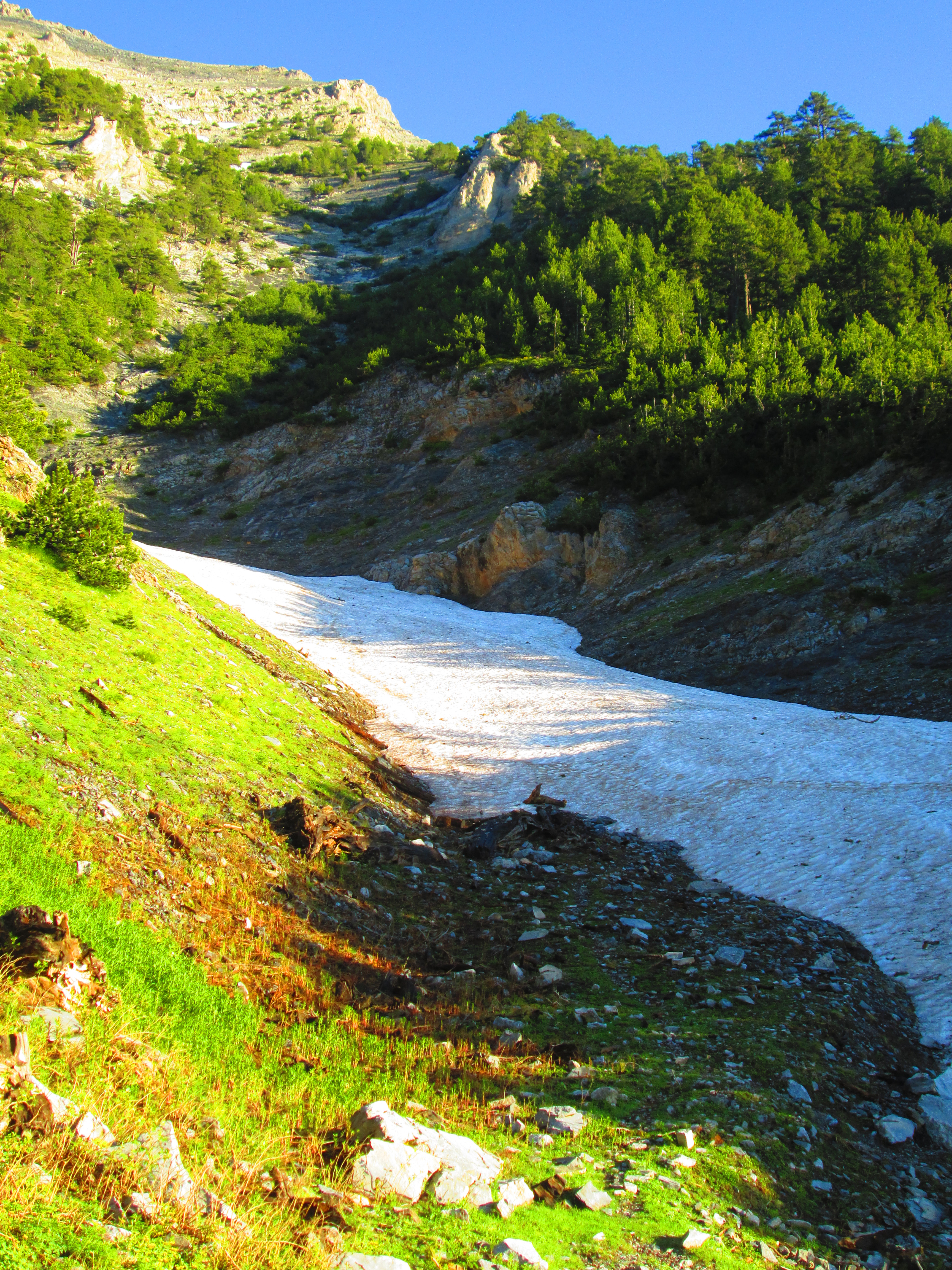
We caught some gorgeous views of the region on our way down the side of Mount Olympus, passing a slowly melting mound of snow, and watching the sun crest over the nearby peaks.

2013-06-11 23.09.322013-06-11 23.32.57


Once back at the base of the mountain, we climbed back into the car, and headed back to the hostel. The owner was kind enough to only charge us half the cost of a night, given how we became stranded on the mountainside.

2013-06-12 03.15.39


Not too soon after, I was dropped off at the local train station to catch my connection. I was missing the few euros I needed for my train reservation, but a european Samaritan in the station was feeling generous. It was my saving grace.

I arrived in Athens later that evening, treated myself to a Cappuccino and Frozen Greek Yogurt, and called it a night.

2013-06-12 10.30.142013-06-12 13.16.27


Previous Older Entries Next Newer Entries