Travel: Catacombs of Rome

I woke up early this morning to catch a fast train back to Rome. It only took about 1.5 hours, and I didn’t want to waste my entire morning by sleeping in (although there’s no denying that I was very sleep-deprived at this point). After arriving at my hostel, I gave myself some decompression time to regroup while I figured out where I could most optimally spend my day.

2013-05-30 07.13.14

My first stop was the Catacombs of Callixtus, it is an underground graveyard that is 20 km long and occupies 15 hectares.  The tomb got its name from the belief that it was created by Pope Callixtus I, a deacon of rome, by enlarging early pre-existing Christian hypogea during the 2nd century. It was continuously used for burials through the 3rd and 4th centuries. As the years passed into the 9th century, the crypt suffered from disuse and decay as it was subject to enemy ransacking and the relics were translated to the various churches of Rome.

The catacombs are best known for containing the Crypt of the Popes as this site held the remains of 16 popes and 15 martyrs.

Catacombe

It was a little creepy walking through these arcades. You could see the narrow niches that had been carved into the bedrock, and imagining oneself lying in those small spaces was quite, gruesome. It was a true maze, and it’s terrifying to consider the possibility of getting lost in the cold, damp, passages.

2013-05-30 08.37.45From there, I strolled down Appian Way,  one of the earliest Roman roads of the ancient republic.

It was strategically important in that it connected Rome to Brindisi, Apulia, in southeast Italy. 

This is represented by its very common name, as recorded by Statius

Appia teritur regina longarum viarum

“the Appian way is the queen of the long roads”

At the beginning of Appian Way, lies the Church of Domine Quo Vadis. The small building lies on the site where, according to the legend, Saint Peter met Jesus while the former was fleeing persecution in Rome.

2013-05-30 08.49.15

The presence of St. Peter is confirmed by an epigraph in the Catacombs of Saint Sebastian that reads Domus Petri (House of Peter). It is here, that according to the apocryphal Acts of Peter, Peter asked Jesus, “Lord, where are you going?” (Domine, quo vadis?). Jesus answered, “I am going to Rome to be crucified again” (Eo Romam iterum crucifigi).

On a marble slab in the center of the church, are two embedded footprints. They are believed to be a miraculous sign left Jesus.

2013-05-30 10.56.22

The final stop of the day were the Baths of Caracalla, the second largest Roman public baths built between AD 212 and AD 216 during the reign of Emperor Caracalla. A slightly longer construction period between 211-217 AD is provided by Chris Scarre.

To meet this constricted deadline, over 2,000 tons of material would have had to be installed every day over a six year period. Historical records show that the idea for the baths were drawn up by Septimius Severus. A complex  hypocaust system burning coal and wood beneath the ground was utilized to heat the water that was provided by a dedicated aqueduct.

2013-05-30 10.01.522013-05-30 10.02.02

I would have loved to experience them at the peak of of its life. Can you imagine having a FREE spa experience in this huge architectural complex? What is your favorite relaxation activity?

Travel: Napoli Underground

Italy is a surprisingly long peninsula, requiring my trip from Venice to Napoli to last around 7 hours. Therefore, I took a night train and arrived in Napoli in the wee morning hour of 7 AM. After hauling my backpack to my hostel, I departed to explore the historic centre, without an inkling of a plan. (I had chosen Napoli as my rendezvous point so that I had easy day-trip access to Mt. Vesuvius and Pompeii. )

2013-05-27 06.07.54

Don’t get me wrong, this city is the only one on my list that legitimately terrified me. At present, the city has one of the highest crime rates in Italy; high unemployment paired with severe waste management issues continue to plague the city. Rumors of blackmail, extortion,and illicit contract tendering have emerged questioning the ethical viability of the local government. Read up on Camorra Organized Crime for a better understanding of the powerful opponents that challenge elected officials.


2013-05-27 05.36.43

Some of the most interesting churches I have visited are here. In my wanderings, I stumbled into the Church of Santa Maria delle Anime del Purgatorio ad Arco, an abode that has gained a cult-like following for the dark, yet hopeful atmosphere housed beneath it’s floors.


Traditionally, Roman Catholics view Purgatory as a state or place of purification or temporary punishment. It is where souls that died in a state of grace are believed to be preparing for the Beatific Vision in Heaven. No one in Purgatory will remain forever, or be banished to hell.

BelowWings

Origins of the ‘cult’ can be traced back to the early 1600s, when a church sought to establish a liturgical link between the living in the dead. The modes of worship for these souls vary, but express the possibility of developing a relationship through the ‘adoption’ and caring for of an individual’s remains. This ancient cult, survived despite wars and famines, and was so pervasive that Cardinal Ursi prohibited it in 1969, although it is still practiced.

Lucy


One of the most famous remains is ‘Princess Lucia.’ According to legend, the skull was that of an 18th-century teenage bride, whose tragic death evolved into her becoming the unofficial protector of young brides.


My next destination was a stop at San Lorenzo Maggiore; as a church and monastery, its presence is rooted in the Franciscan order, one that existing during St.Francis of Assisi‘s lifetime. Its location is at the precise geographic center of the historic center of the ancient Greek-Roman city. I was able to explore the streets of the original Roman Market at the intersection of via San Gregorio Armeno and via dei Tribunali.

2013-05-27 06.18.252013-05-27 06.24.15

Travel: Vienna Churches

Despite my growing impatience for the medley of iconic religious frescoes, alters, chapels, and biblical interpretations, I continue to struggle with avoiding the visitation of churches. It is not hard to deny how intrinsically the tie into european culture; the strength of the populations devotions has deep roots with the development of heritage. As such, the following two are presented briefly.

2013-05-14 12.09.30

St. Steven’s Cathedral is an icon of Vienna, and dominates the shopping streets of the city center. It is  the mother church of the Roman Catholic Archdiocese, and the seat of the current Arch Bishop, Christoph Cardinal Schönborn. The site stands on the ruins of two earlier churches, the former dating from 1147. As a symbol of the city, it has borne witness to vital moments of Austrian History. The tomb houses the Bishops, Provosts, and Ducal crypts. Furthermore, it was only spared damage from the World War II bombings, when Captain Klinkicht disregarded orders from the city commandant to leave it in just debris and ashes.

2013-05-15 09.28.14

Interesting Fact: “The composer Ludwig van Beethoven discovered the totality of his deafness when he saw birds flying out of the bell tower as a result of the bells’ tolling but could not hear the bells. ”

The roof is multicolored, and despite its exterior having been marred black by pollution overtime, significant restoration projects have helped it regain its glossy tiled and white facade.

The Interior is a rainbow of colors that interplay with each other along the Gothic/Romanesque pillars, high spanning nave, and mass of windows. It is a current art feature, and provides a creative, modern-day take on the limestone cathedral.

2013-05-15 08.43.352013-05-15 09.38.48

I also stopped by to visit St. Peter’s Church. It lies but a few streets away, but the two couldn’t be more different. This other one reflects the Baroque style, and maintained by the priests of the Opus Dei. Despite having origins dating from the early middle ages, the current building was inspired by St. Peter’s Basilica in Rome, with construction beginning in 1701. The interior golden stucco is particularly eye-catching given how solemn and dark the interior is, due to the current scaffolding that masks the exterior.

2013-05-14 11.44.582013-05-14 11.45.31

2013-05-14 11.39.14

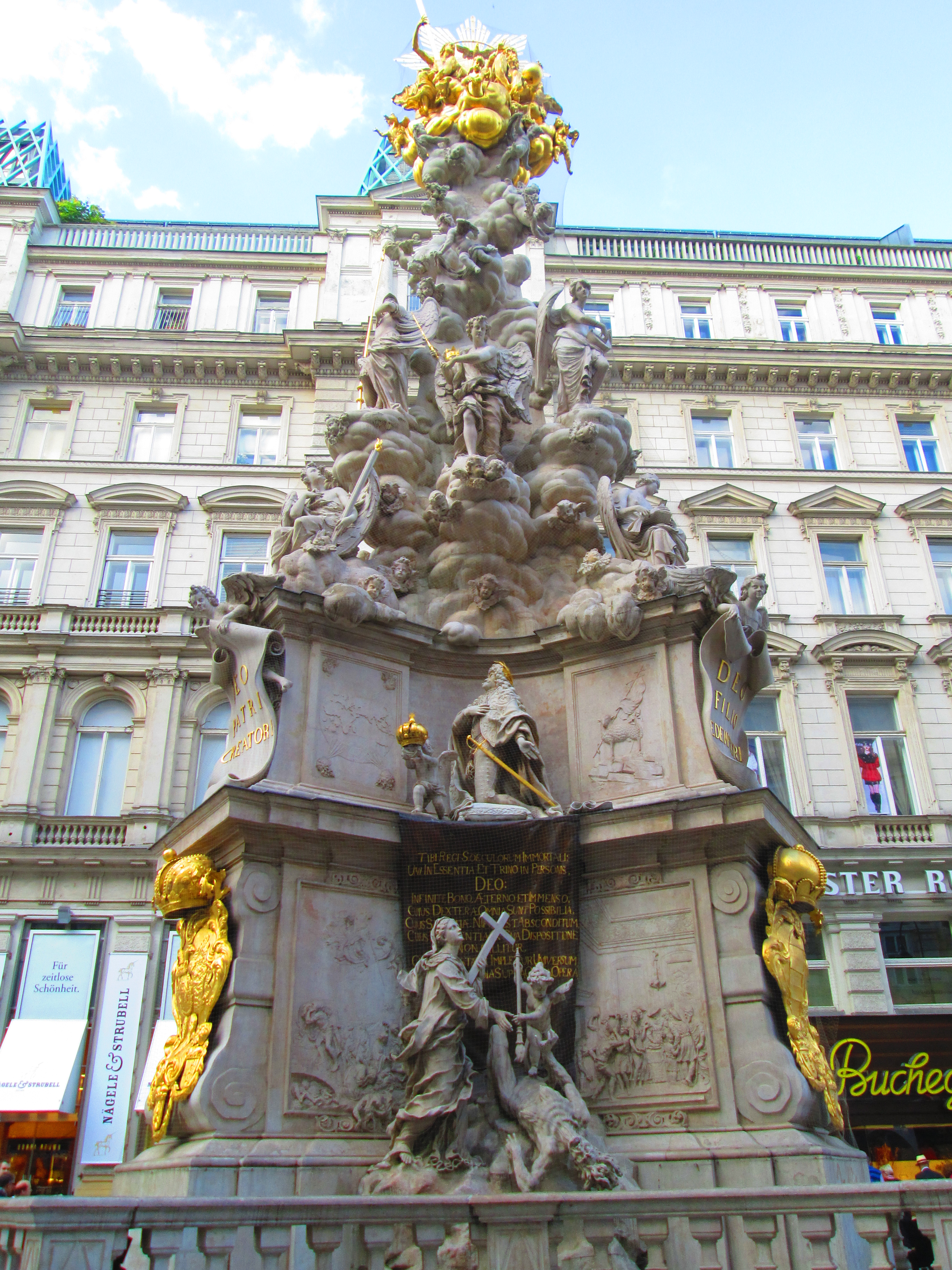
The infamous Plague Column also lies within mere spitting distance. It was designed, and installed to fulfill a vow made by  Emperor Leopold I in 1679, when he fled the plague epidemics, saying that if it would end, a mercy column would be erected in remembrance.

Travel: American Nobility

2013-05-13 05.29.45

I have decided that Prague is seductive. It teases you with old medieval charm that whispers of knights in armor, damsels in distress, ancient architecture, and of course, unhygienic conditions, shorter life spans, and social hierarchies.

For obvious reasons, I ended up extending my stay by two days for the following destinations that spoke to me of family and tradition.

I ventured in to explore the private art and history collection of the Lobkowicz Family, who holds several estates in Prague, but far less than they did a mere century ago, and the loss of this land did not occur as you might think. (Once again, No picture policy)

The Lobkowicz name spans over seven centuries of nobility; it is one of the oldest and most distinguished surnames of Bohemia. Many have held high titles or been inducted into prestigious organizations (i.e. Princes of the Holy Roman Empire, High Chancellor, Dukes of Sagan/Roudnice, and Knights of the Order of the Golden Fleece.) Their adamant support of the arts resonates at a groundbreaking magnitude even today.

Fast-forward six centuries. At the end of WWI, the young Prince Maximilian Lobkowicz was a progressive; His political background allowed him to wholeheartedly provide support for the newly democratic Czech Republic. As such, he adamantly opposed the rise of Hitler in Nazi Germany; this resulted in his name being placed on an arrest list. Fortunately, due to the deviousness of his wife, who understood the Nazi Soldiers discussing military action in her train car (they believed she did not speak German), he was able to escape to London prior to arrest when the country was occupied in March 1939.

At the end of WWII, the properties and collections were returned to the family, but it was not to be permanent. In the onslaught of the Soviet Union, the Cold War, and the encroaching dominion of the Communist Regime, Maximilian and his family were once again forced into exile in 1948.

After the Velvet Revolution of 1989, and the dismantling of Western and Eastern Europe, which were formerly split by the Communist Regime, the Czech president began the issuing of legislative acts to return all confiscated property. At this point, the duty was left to Maximilian’s sons, who had been raised in America. William Lobkowicz, a Harvard grad, and his wife, Alexandra took on this burden, relocating his family to Prague to help maintain the restoration of their estates, and the opening of doors to provide the public with access to their large collection. Unfortunately, due to the decades, the properties were quite damaged due to neglect, so executive decisions were made as to what land could be sold, in the hopes that the money would go towards preserving some of the more historical holdings. These include the Lobkowicz Palace, Nelahozeves Castle and Strekov Castle.

2013-05-13 07.19.13

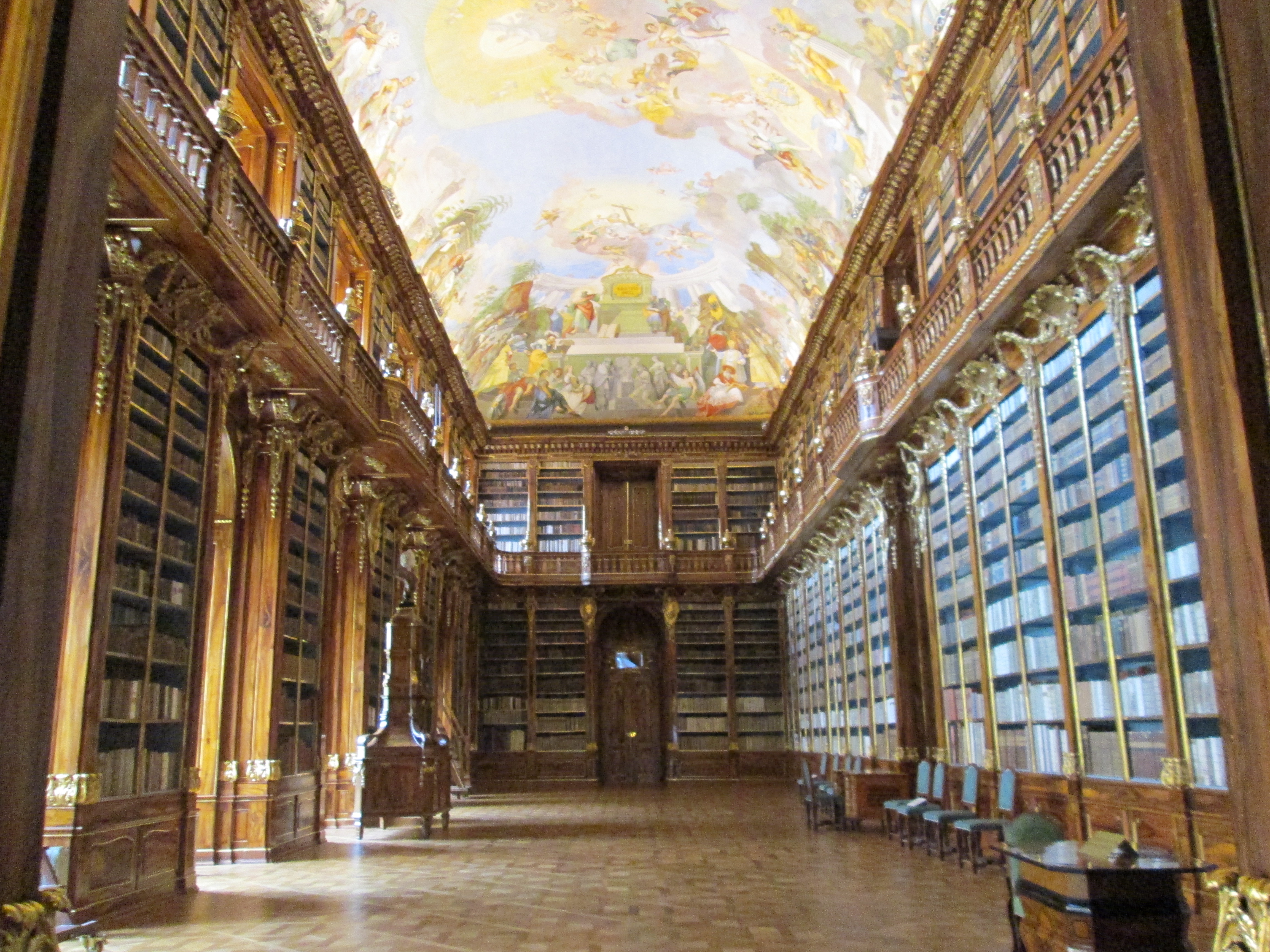
Theological Hall

2013-05-13 07.23.34

Philosophical Hall

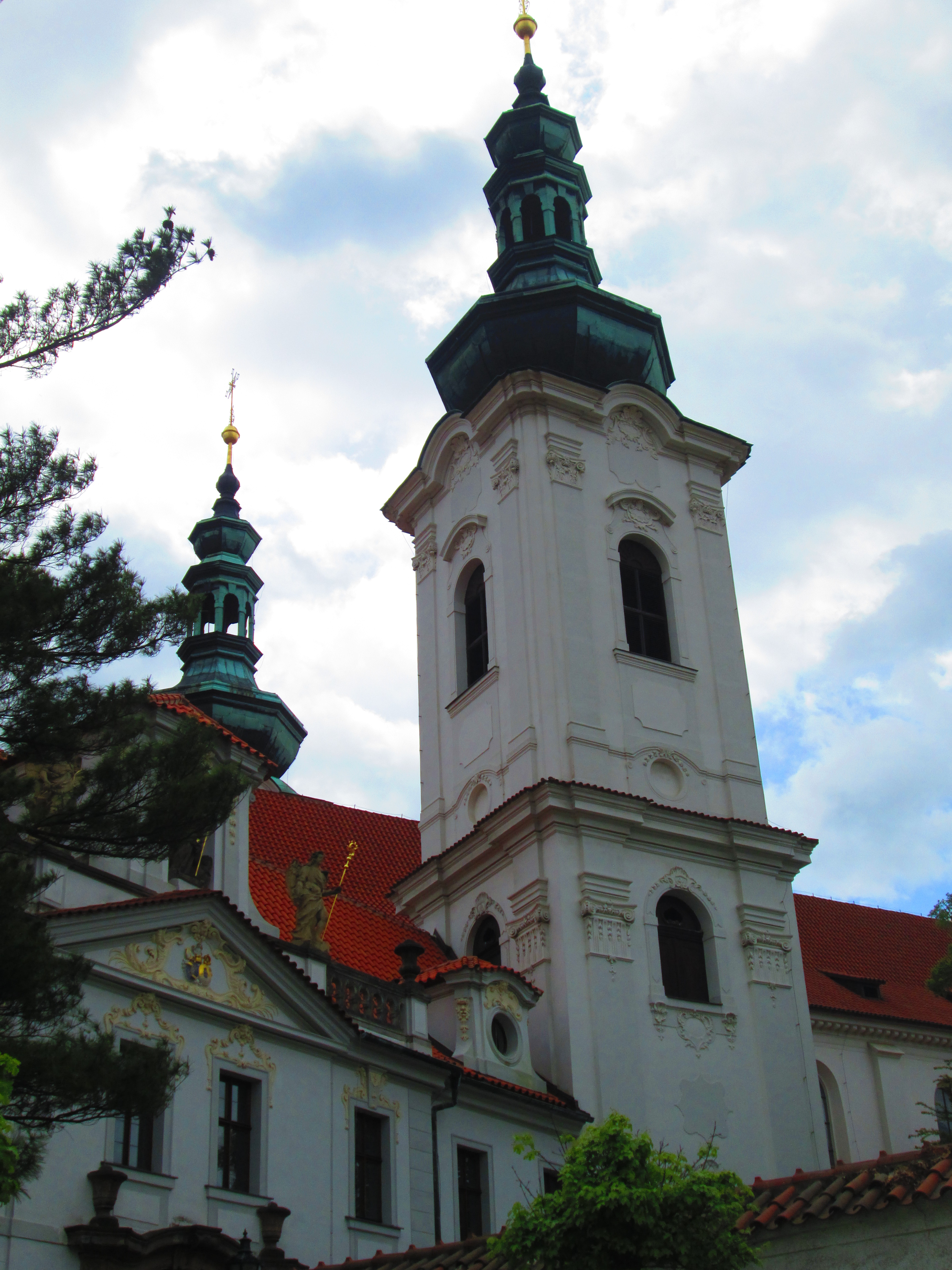
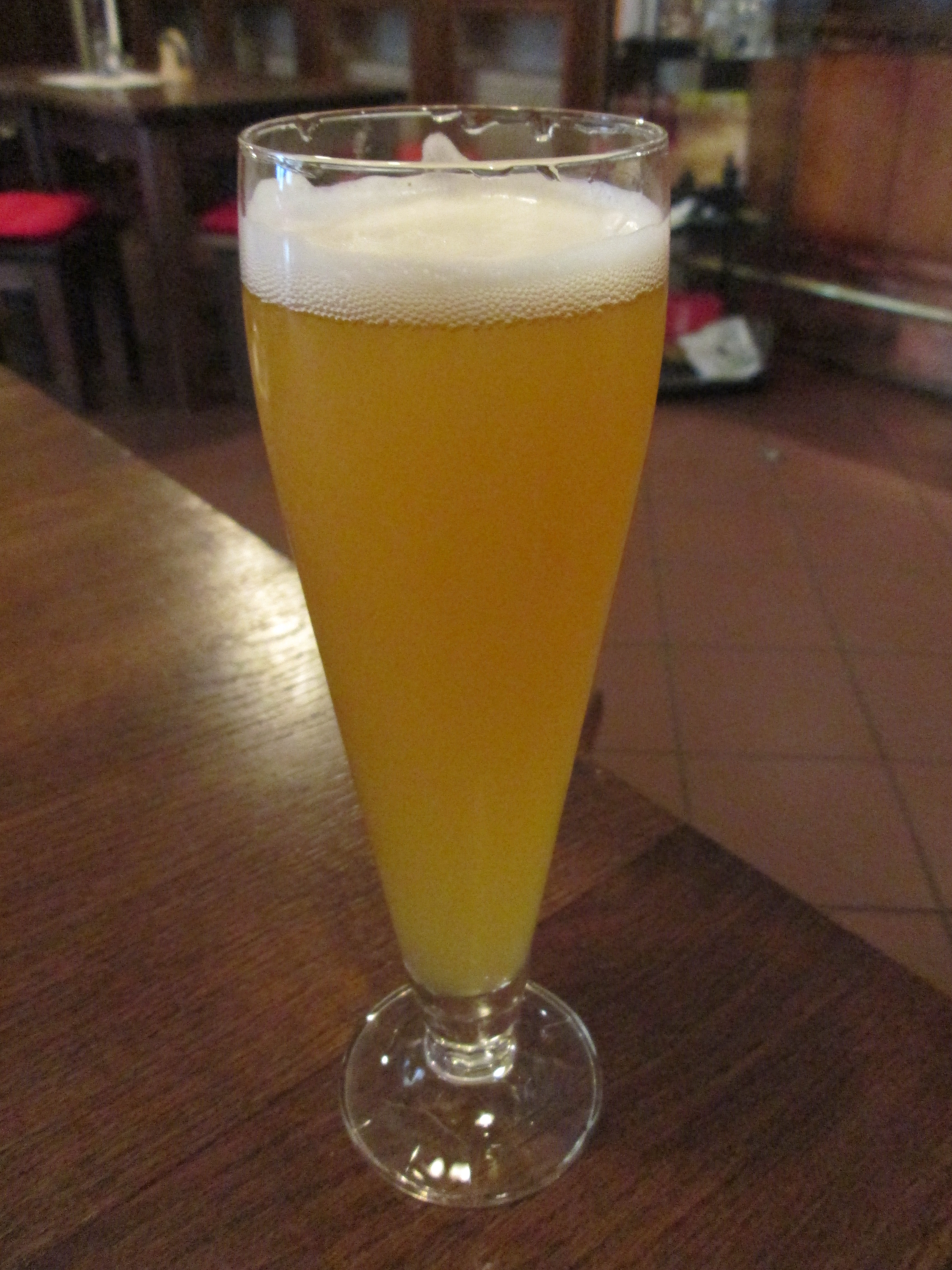
I wrapped up my day by visiting the Strahov Monastery to check out the sprawling Philosophy and Theology Halls. My final wind-down involved drinking Strahov Beer that has been brewed from the same recipe that was used centuries ago.

2013-05-13 07.49.35

Despite the struggles that the Lobkowicz Family was subject too, one can help but feel whimsical about this fairy-tale dream of American Nobility. It did materialize a bit late for it to seem like a happily ever after however. In the challenges faced during the sequential confiscation and restitution of their priceless buildings and art, three main values have steadfastly kept them determined.

  1. Family and Friends
  2. Faith and Beliefs
  3. Education

What values do you hold on to as you traverse life? How do they keep you grounded as a wholesome human being? Have they aided you in the challenges and struggles we face everyday?

Travel: Old Prague

In the midst of Prague lies the old town. I ventured into this step back into time, to bear witness to sprawling medieval architecture that helps maintain the city’s archaic atmosphere. I used the word archaic not to emphasize viewing her as rough or uncultured, but to stress how well her ancient roots are preserved.

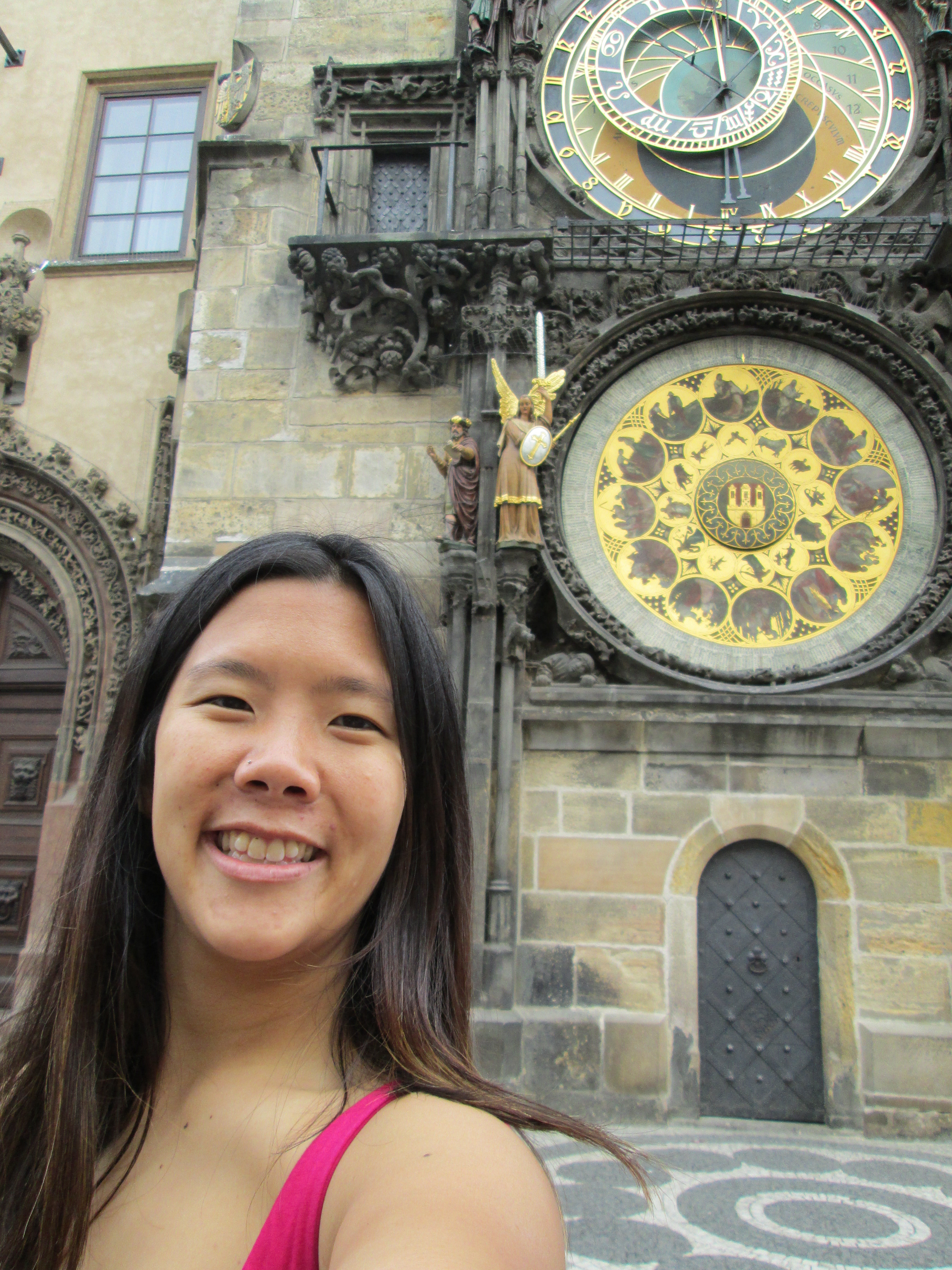
2013-05-09 05.40.28

An Astronomical Clock on the face of the city hall’s tower dominates the old square. It’s name is the Orloj; It is an ingenious contraption designed by clockmaker Mikuláš of Kadaň and Jan Šindel in 1410. Jan Šindel was a professor of astronomy and mathematics at the Charles University. Over the decades and centuries, it has been subject to additional decorative features, maintenance, and repair. The clock itself was almost lost to the incendiary fire from German attacks on May 7-8, 1945 during the Prague Uprising.


There are two legends about this icon of Prague:

  1. The first is that the clockmaker was blinded by the city so that he could not repeat his magnificent work; they say that in revenge, he broke the clock and it was irreparable for the next hundred years. 
  2. The second is that if the clock is neglected, or it’s operation is in jeopardy, the city will suffer.

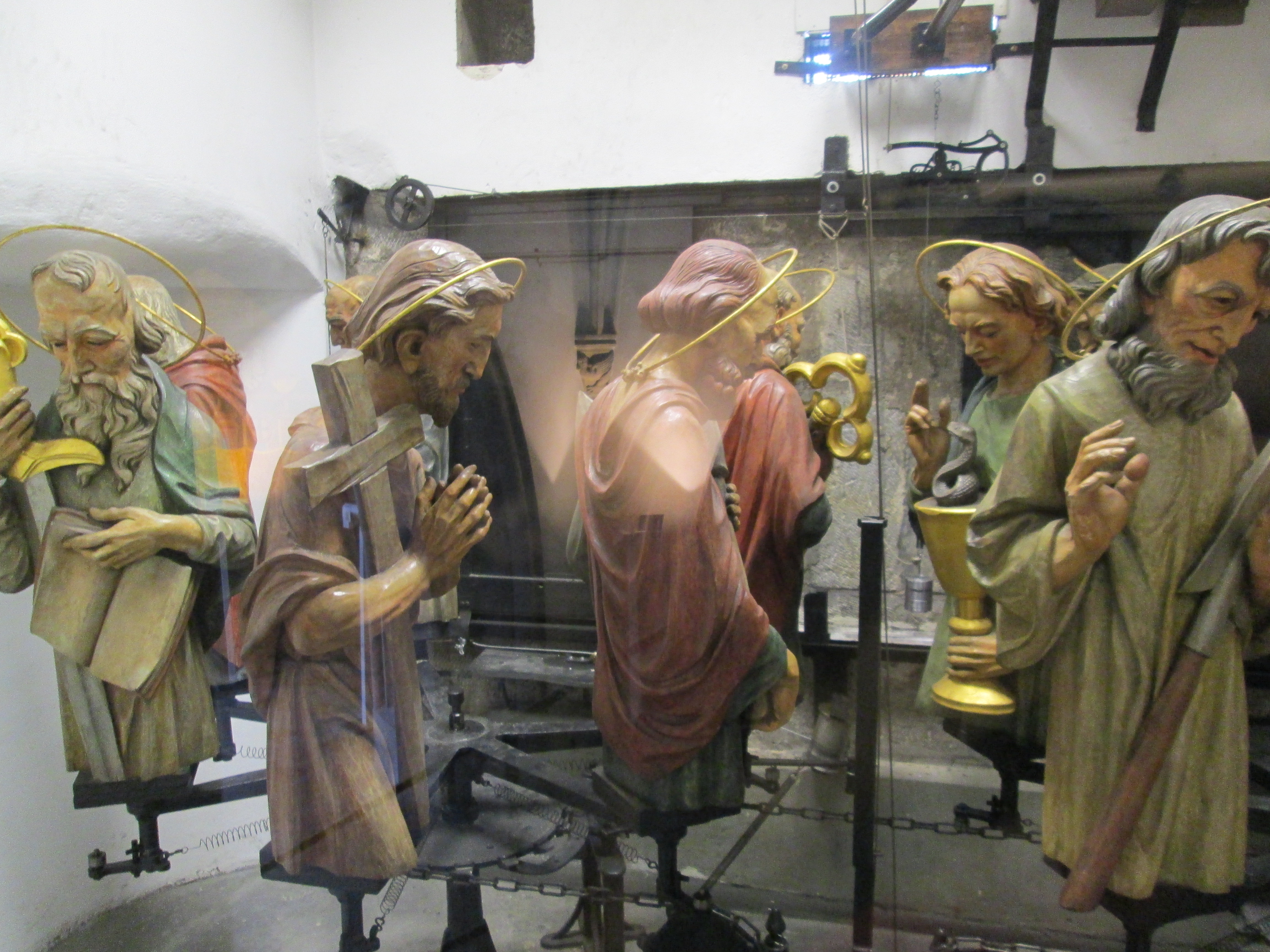
2013-05-09 08.01.14

I was fortunate enough to approach the clock a few minutes before it hit the hour. On each hour, a rotation of 12 figures can be seen within its windows. This is known as “The Walk of the Apostles.”; Glimpses were caught as each appeared for a brief moment before giving way to the next apostle.

Additionally, there are four figures that flank the clock, representative of 4 virtues that were despised in the 1400; they were vanity, greed, death, and pleasure or entertainment.

After this, I detoured to (you guessed it!) two of Prague’s most famous churches in the square:

St. Nicholas Church was built between 1704 and 1755, and is often described as “the most impressive example of Prague Baroque.” It lies on the remains of a 13th century gothic church. The interior decoration is particularly mesmerizing due to the detail of the frescos by Jan Lukas Kracker and Frantisek Xaver Palo. Furthermore ornamentation is provided with Frantisek Ignac Platzer’s sculptures. Mozartis known to have made an appearance here when he played the Baroque Organ, consisting of 4,000 pipes and up to 6 meters in length, in 1787.

2013-05-09 05.14.002013-05-09 05.17.43

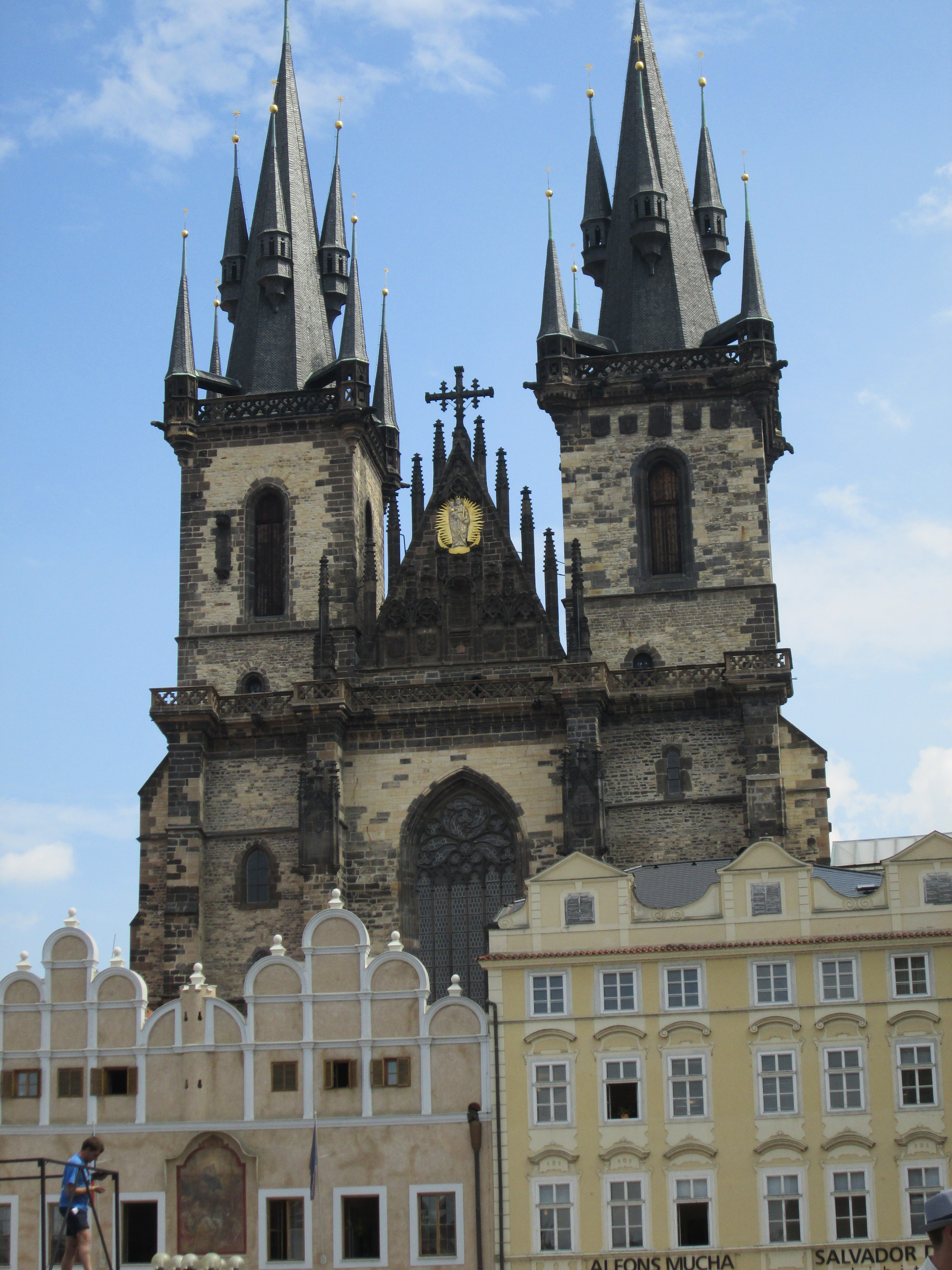
2013-05-09 05.06.42

Our Lady before Tyn dominates the Prague Skyline as if it is the Watchdog of the city. This site originally housed a Romanesque Church in the 11th century, and was replaced by an earlier Gothic Church in 1256. The oldest pipe organ in Prague lies within it’s walls. Additionally, the Danish Astronomer Tycho Brahe is buried here. You may also consider it fascinating to know that this is the church that appears in the opening scenes of xXx.

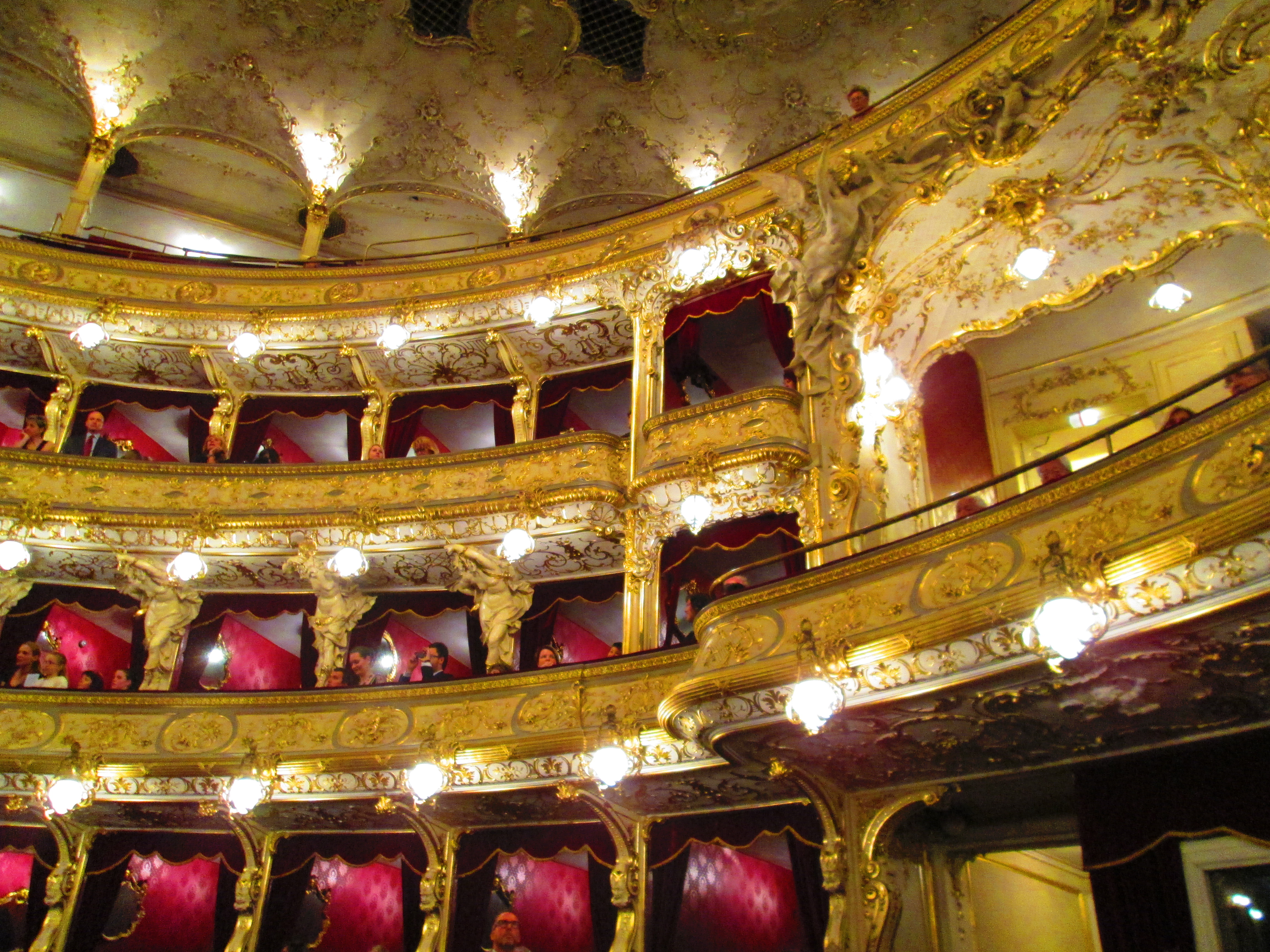
I wrapped up my history  filled day by treating myself to a famous Czech Opera at the State Opera House. The interior was decorated extravagantly and I felt a little drab amongst my peers. (I am backpacking across Europe after all, how fancy did you think I could get?). Rusalka was filled with magic, beautiful soaring voices, and ethereal actors.

2013-05-09 11.43.062013-05-09 11.52.01


Travel: Hamburg Friends

Having taken an international and cross-disciplinary class that involved video conference calls across time zones, I managed to accumulate a variety of friends scattered around Europe. Unfortunately, the only country that my travel plans have been able to accommodate (given the time constraint) is the vast and diverse Germany. The first friend I visited is working now, so I did not approach Germany in a geographically efficient manner, and arrived on a sunday morning so I could spend the day with him.

It was amazingly relaxing to be shown the city by a local as I had no prior itinerary for Hamburg. We walked and caught up, and witnessed some pretty memorable sights along the way.

2013-04-28 11.40.24

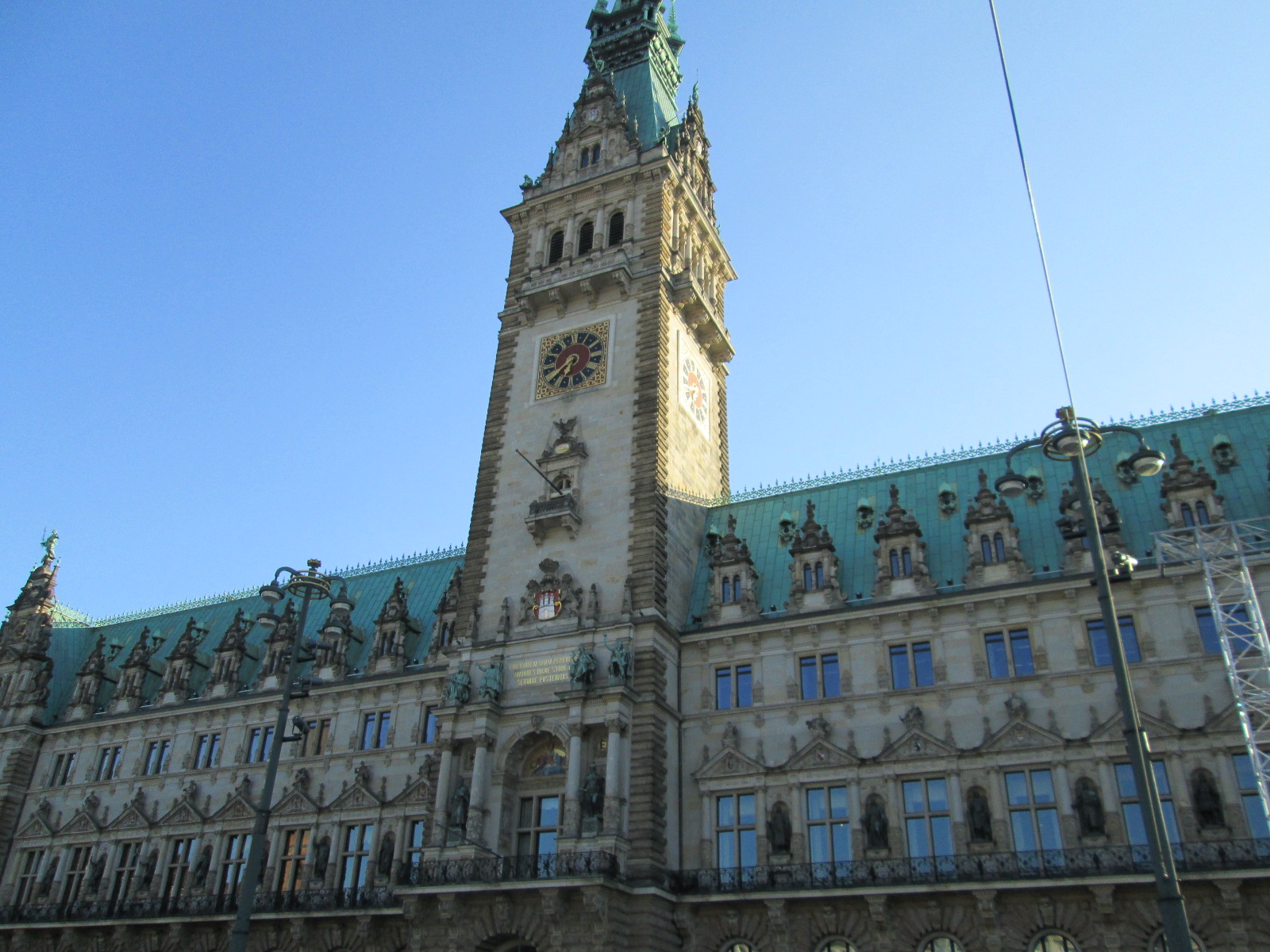
After the old city hall was destroyed in the Great Fire of 1842 (You will hear more about this later), it took 44 years to rebuild the current city hall. Seven architects who were led by Martin Haller designed it in the neo-renaissance style, and it cost an estimated 80 Million Euros.

The building continues to beguile the population even today, because a secret room was found in behind a file cabinet in 1971, so the room count is estimated t 647, but it is speculated that the Rathaus continues to keep some secrets.

2013-04-28 05.43.34


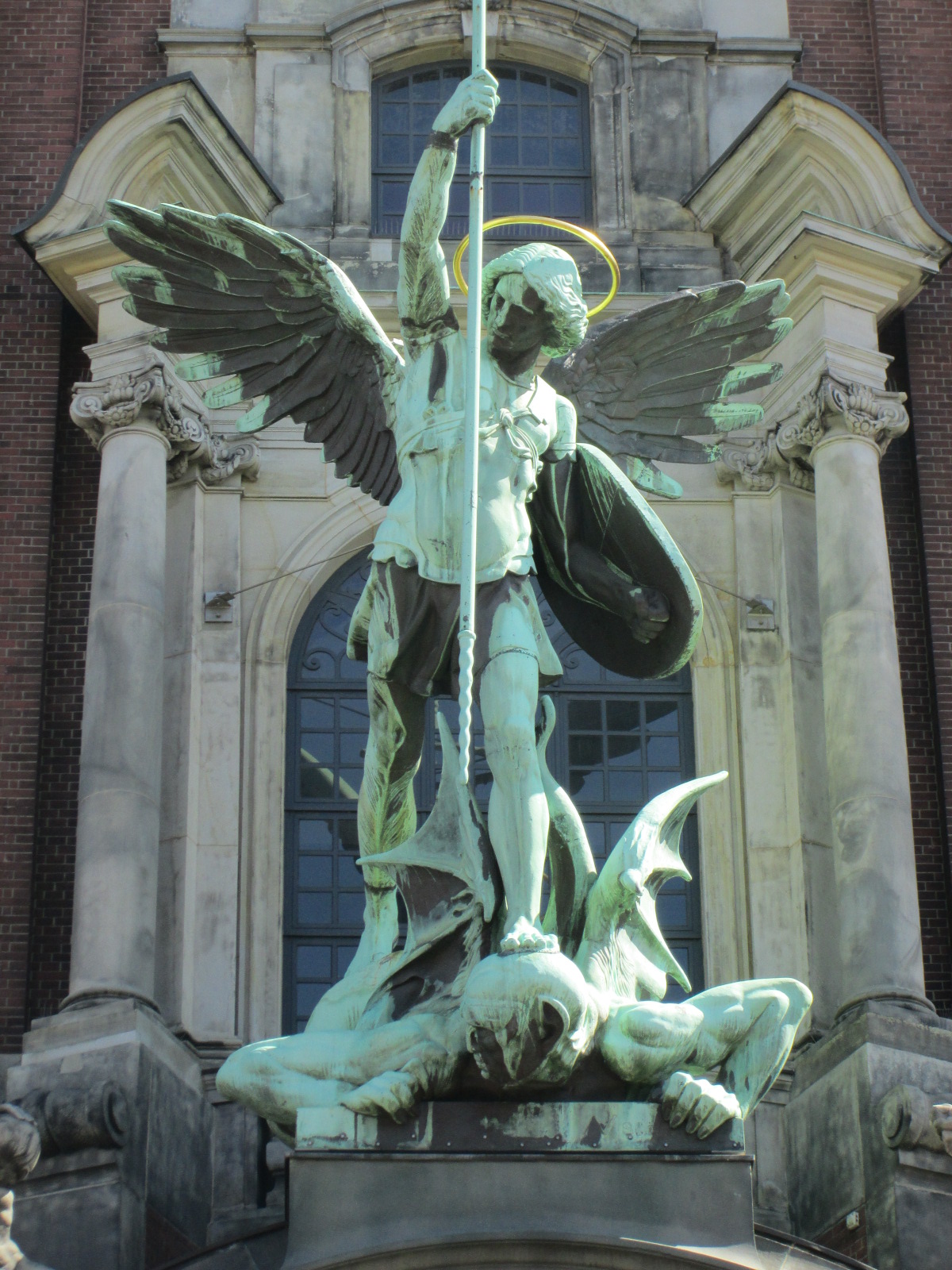
Saint Michaelis is one of the five main Lutheran churches in Hamburg, and certainly the most famous. While the exterior is subtlety conservative, when you enter the doors, rare protestant opulence greets you. It dominates the city Skyline with its 132-meter spire that exemplifies classic Baroque architecture. Furthermore, it is hard to miss the iconic bronze statue that towers of the main entrance showing the Archangel conquering Satan in all his glory.

2013-04-28 07.45.26


Hamburg did not used to have a lighthouse; it was therefore necessary that a lighted boat guide the ships to safe harbor. Every night, this boat would venture into the darkness of the endless sea and light the way for weary travelers.


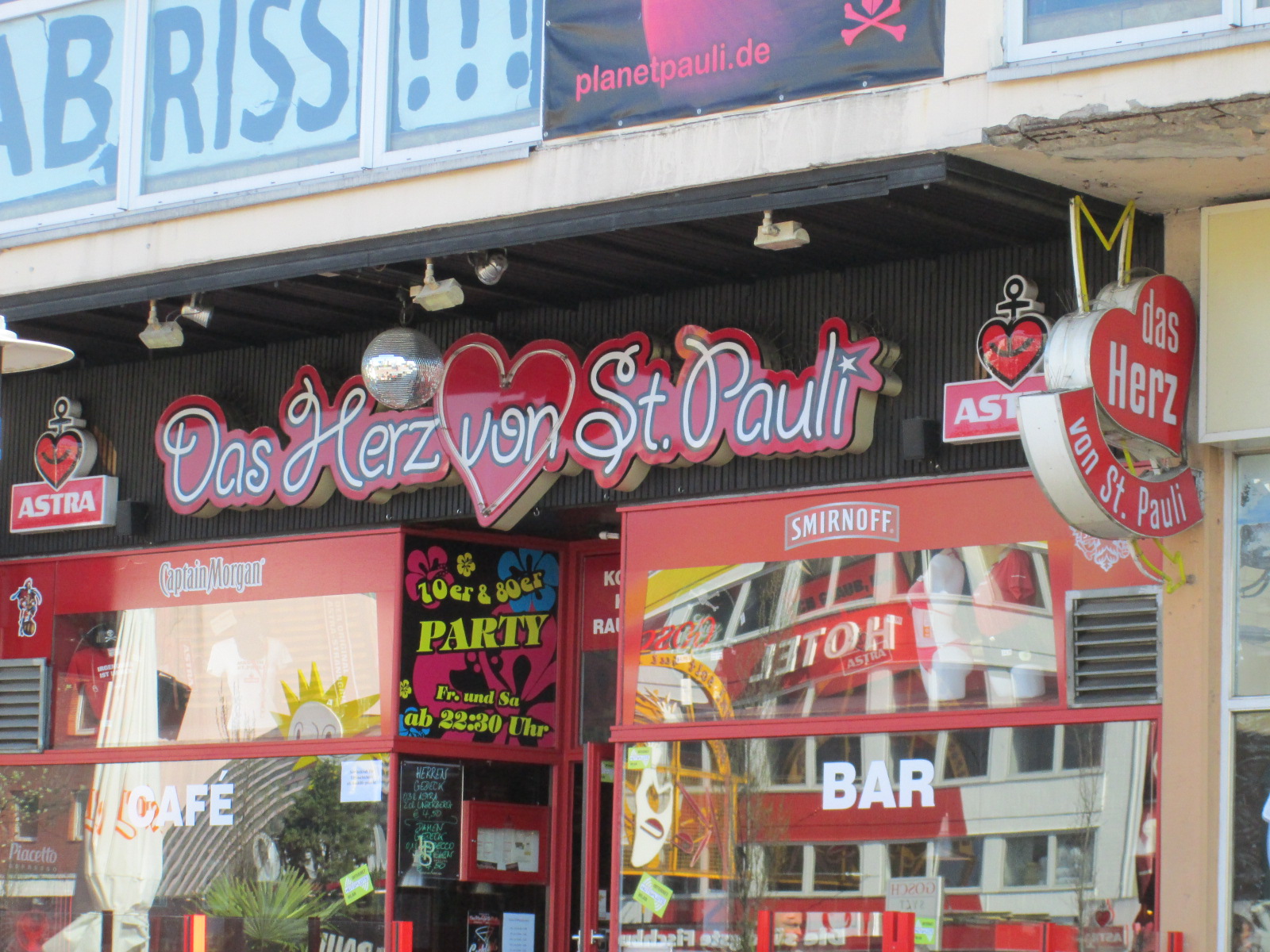
We relaxed at the end of our day by strolling along the Reeperbahn, so named because the older ropewalks were relocated in the 1620s to this region. This is distinctly demonstrated by the Low German phrases of Reep, meaning rope, and Bahn, meaning track.

It is also Hamburg’s district for nightlife with Bars and Clubs on one street, and the Red Light Distract just a mere street over. A large variety of strip clubs, brothels, and sex shops line the street in a blatant manner. This is also the historic area for some of Europe’s oldest and most renowned brothels, such as Dollhouse, Luxor, and the Eros Center; although all have closed down due to the economy or the 1980s aids scare.

2013-04-28 09.18.052013-04-28 08.46.44

I enjoyed a local Hamburg beer called Astra. Beer is not normally to my taste, but when in Germany. 🙂

Travel: Classic Paris Sites

I promise, this is the last church that I visited in France! Of course, it is the infamous Notre Dame; the building that inspired Victor Hugo’s classic novel with a hunchback as the protagonist who watched medieval Paris life occur from afar. The sprawling gothic architecture is unique, and it is not difficult to revel in the stark contrast these dark creatures present against the sunny skyline.

2013-04-25 07.24.39

The one flaw in climbing the tours however, was how incredibly jam-packed it was. There was little to no room to maneuver, and the entire walkway was enclosed within a 3” x 3” wire mesh. I can’t even imagine partaking in this during the summer!


While I understand the safety precautions, it took some strategic planning to get good photographs devoid of this interference.

2013-04-25 05.19.272013-04-25 05.21.452013-04-25 05.57.342013-04-25 05.55.37

The statues also reminded me of a classic Warner Brothers cartoon called the Gargoyles. It was ‘back in the days’ of my youth, and I’m sure it is no longer a recognizable cartoon or brand. I enjoyed it though! It told the story of good versus evil gargoyles that could only continue their battle within the confines of darkness. If sunrise hit, they returned to their stony state.

2013-04-25 12.31.02

We then headed to the Orsay Museum; it has a diverse collection of impressionist paintings, and documents the progression of this art. Once again, no photos allowed. Some of my favorite artists were on display, such as Van Gogh, Manet, Monet, and Cezanne.

2013-04-25 13.36.55


As dusk approached, we decided to breath in the crisp Paris air, and swing by the triumphal arch to witness the largest roundabout in the world. Interesting Fact: Insurance companies no longer debate claims when an accident occurs here, to save time and headaches they now just split the damage costs 50/50.

Strolling to the Eiffel Tower took longer than expected. Fortunately, we arrived just as the sun dipped below the horizon. This allowed for a large array of photographic shots documenting the vibrancy of the lights with respect to the darkening sky.

2013-04-25 14.28.56

(I almost lost mother in the crowd, she is about a head shorter than me and quite difficult to locate even in a supermarket)

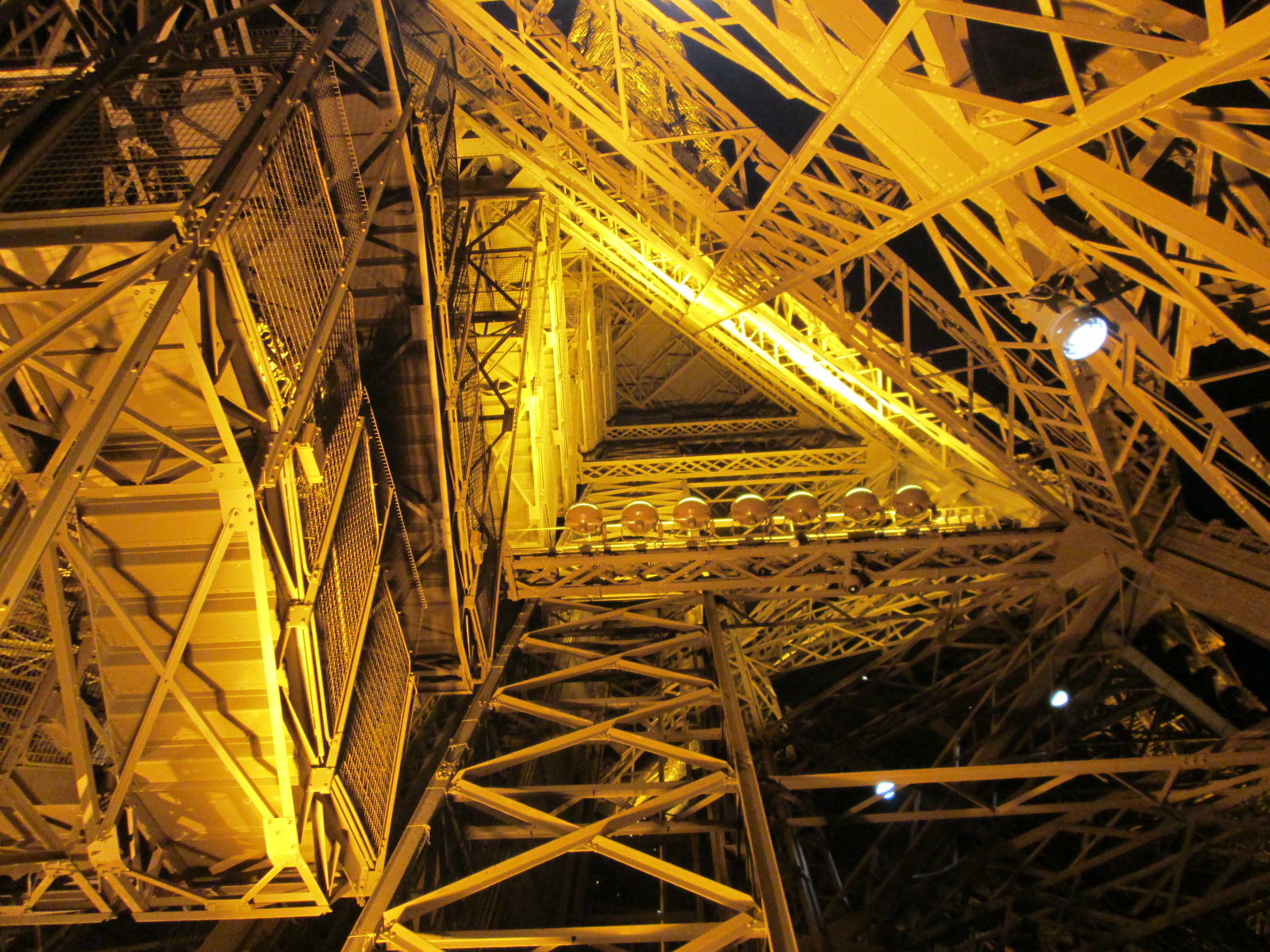
Opting not to wait in line and pay the high lift prices, We managed to climb to the 2nd level platform (a LOT of stairs) and witness some breathtaking views of the city, and particularly the Champ de Mars at night.

2013-04-25 15.32.00

On the hike up, I took some time to have a nerd moment and admire the forethought required in the difficult connections. It’s interesting to consider the complexity of the geometry and how the designers engineered all the steel elements to puzzle together in just the right formation.

2013-04-25 14.53.382013-04-25 14.54.37

What comes to mind when you think of Paris? Have you been to any of these places? How have the inspired you?

Travel: Latin Quarter of Paris

In all theory, I have had more than my fill of churches by this point of my trip. However it is hard to avoid iconic religious architecture that attests to the strength of faith in those that aspired to build it. The bulk of what we explored exists in the Latin Quarter, a section of Paris that is rich in history.

2013-04-24 04.30.292013-04-24 04.45.42


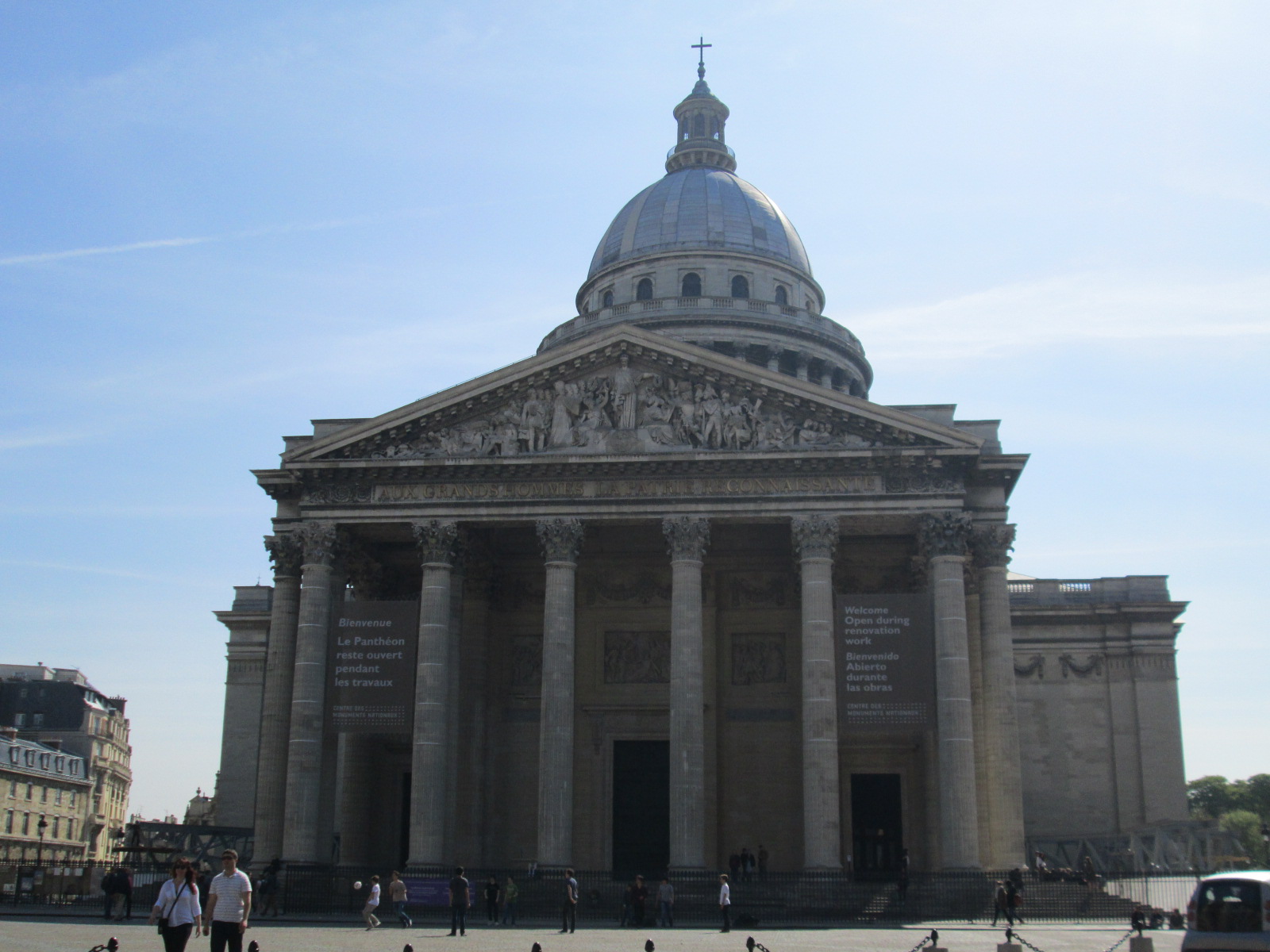
The first part of our day included a visit to the Pantheon. It was a church built as a promise by King Louis XV should he recover from his illness. Consequently, it replaced the ruined church of the Abbey of St Genevieve and was completed in 1790. Unfortunately, the renowned architect, Jacques-Germain Soufflot did not live to see its completion. It is a prime example of early neoclassicism, and has been modified to be a secular mausoleum that houses the remains of distinguished french citizens. Some of the tombs include, Marie Curie, Louis Braille, Alexandre Dumas, and Victor Hugo.

2013-04-24 06.10.11

After that, we made a detour stop to Saint-Étienne-du-Mont Church which contains the reliquary of Sainte-Geneviève. She is the patron saint of Paris, and is said to have led a prayer marathon that saved Paris by diverting Attilla’s Huns away from the city.


2013-04-24 06.51.58

On the way to the last church of our day, we passed through Place Saint-Michel. This area has always been a convening area for students to discuss social life, entertainment, and most importantly politics. It has a history of being the starting spot for insurrections, and even the centre around which famous authors, such a Hemingway, participated in intellectual discourse.


The final church was Sainte-Chapelle, a Rayonnant style building – an offshoot of traditional Gothic Architecture – built to house Louis IX‘s collection of relics of Christ, one of which supposedly included the Crown of Thorns. Louis’ artistic and architectural patronage of Catholicism, and particularly this Church helped to position him as the central monarch of western Christendom.

2013-04-24 08.13.572013-04-24 08.03.19

We then made a stop at the nearby Conciergerie which was formerly a royal palace, but was modified to be a prison. For hundreds of prisoners from the French Revolution, this was their last residence prior to being marshalled at court, sentenced, and guillotined. It’s most famous resident was Marie Antoinette, who spent her last few days in a cell there.

The quality of life of the prisoners was based mainly on their personal wealth, and the whims of the jailers who watched over them.

Travel: Sagrada Famila

So, I tend to think that I am traveling during the off-season of the tourism industry, but today was not the case. When we arrived at the Sagrada Familia the line wrapped all the way around the cathedral, thankfully, in my preemptive research, we had already purchased tickets online that allowed us selective entry within the assigned time-slot; no waiting for us!

2013-04-18 03.33.15

The Cathedral is Gaudí‘s brainchild, and has been in construction for over a century. Construction of the structure commenced in 1882, and Gaudi officially took the design of the project in 1883, transforming the conventional structure into his vision, something that cohesively incorporated gothic roots and curvilinear Art Nouveau forms. It recently reached surpassed the halfway point of construction primarily due to financial setbacks that had resulted from the interruption of the Spanish Civil War.


2013-04-18 04.43.14

Nativity Facade

Passion Facade

Passion Facade


It was absolutely breathtaking to behold. Gaudi has a penchant for embracing the natural forms he sees in nature, such as the way a tree branches or the facets of a crystallized gem. In the modern architecture world, we call this biomimicry, utilizing observations from nature and emulating the structure or processes to build a thought-provoking and innovative structure.

You can see it in his design of the interior columns.

2013-04-18 03.44.352013-04-18 03.44.53

You can see it in how he effectively uses natural lighting in the interior.

2013-04-18 05.10.05

2013-04-18 05.47.49

It was also quite amazing as a structural engineer to understand that he utilized the concept of form-finding in one of his earlier designs, the Colonia Guell. This is particularly fascinating because it involves finding the equilibrium shape of a structure given applied loads. It is an example of simplified non-linear analysis in actions wherefore the structure tends to get stiffer, and stronger, as it is subject to more deformation, the opposite of what one would typically think.

Okay, moving on from my enginerd moment. : P

Next, we spent a leisurely walk admiring the architectural discord that resulted from having different architects design houses that are co-located side by side on the Illa de la Discordia. It is particularly vital since it is noted for being prime examples of Barcelona’s most important Modernista architects, Lluís Domènech i MontanerAntoni GaudíJosep Puig i Cadafalch and Enric Sagnier

2013-04-18 08.20.43

The image is a little jarring, yet its catches the viewer’s eye and allows one to study the uniquely disparate styles of each individual.

Our final act of the day was to swing by the Palau Musica after traipsing through the streets of the Gothic Quarter. We opted not to tour the interior earlier in the week because the cost tradeoff wasn’t quite worth it considering that the Sagrada Familia was the same entry price, but had more significant visionary value. It does seem gorgeous though, so if you are in the area and have time, you should try to catch a performance at least.

The Sagrada Familia has been a consistent controversy within the borders of Spain, what are your thoughts on it? Is it over-the-top and an unnecessary investment? Or is it an icon of Gaudi and a symbolic representation of the Catholic Faith?


Travel: Picasso

Pablo Picasso 1962

We started off the day by checking out the Museu Picasso. It was the vision of Jaume Sabartés, Picasso’s longtime friend and secretary, to provide a means to display the many paintings, drawings, and prints that he had acquired through the years. Although the original intent was to found the museum in  Málaga, his birthplace, his strong ties with Barcelona made the city a far more suitable candidate.

I’m sure you are all well acquainted with Picasso, but I will provide you a brief background nonetheless. In 1881, He was the first-born child of Don José Ruiz y Blasco and María Picasso y López. His father was a professor of art at the school of crafts and curator for the local museum. We can chance his Ruiz ancestor back to the blood of minor aristocrats.

Don, his father, was a firm believer in traditional artistic training, requiring young Picasso to conduct a disciplined study of the masters and perfect his sketches by practicing from sculptures and nude models. Through the years, and with the urging of his father and uncle, Picasso ended up at the Royal Academy of San Fernando in 1898, the most famous art school in the country. However, he disliked the formality of classwork and quit soon thereafter.

He eventually made his first foray into Paris in 1900, and it was there, that he formed his own unique style, what we know as  Cubism today. Cubism is a fairly abstract expression of art as it lacks formality and is disruptive and detached to the eye. It also has the capability of evoking a realistic spirit and raw emotion if one chooses to ponder the painting long enough. See my previous post on the Guernica for more guidance.

*No Photographs = No Pictures for this. 😦

Exterior - Barcelona Cathedral

Exterior – Barcelona Cathedral

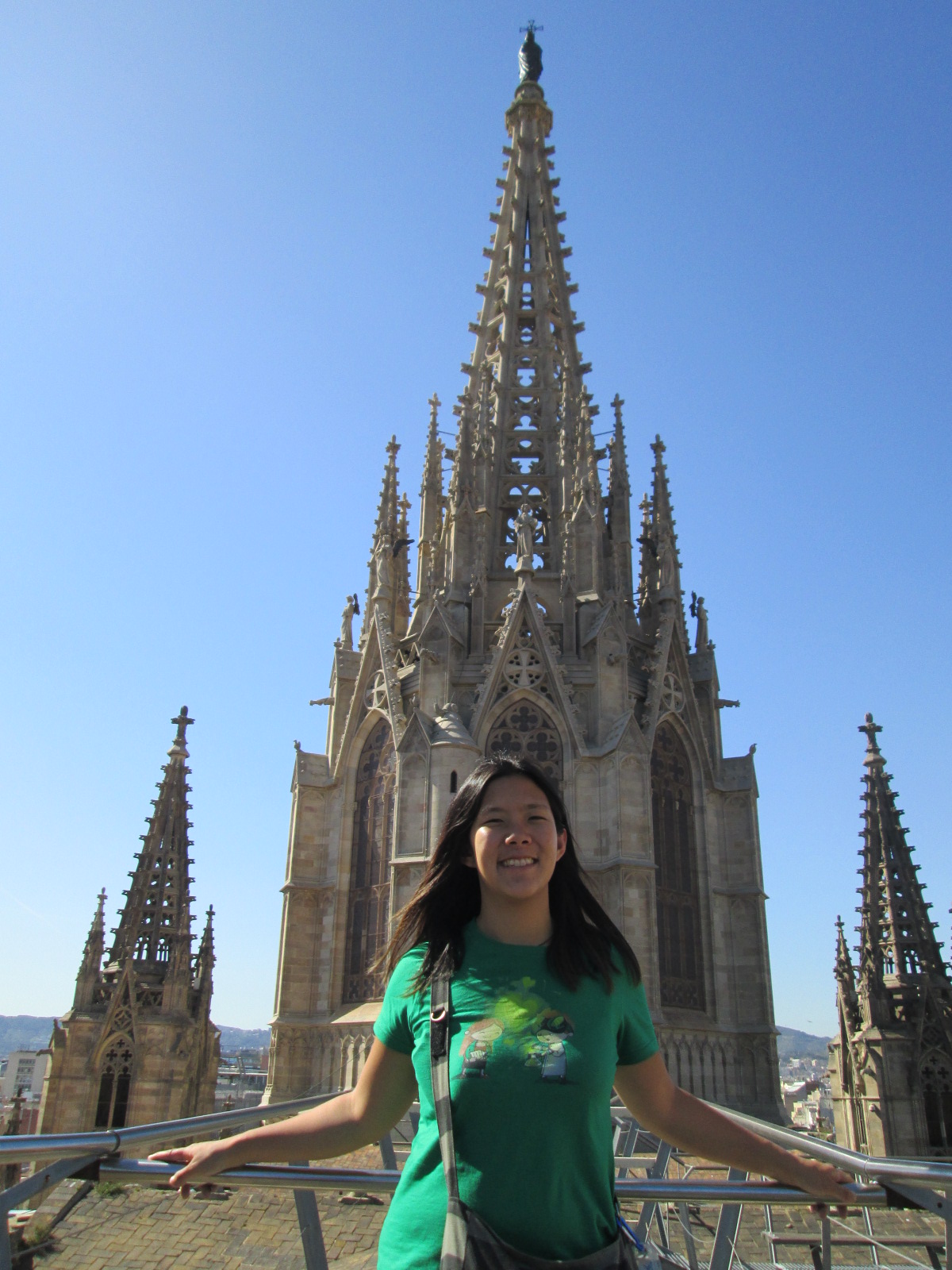
Our next destination was the Barcelona Cathedral, a massive looming structure that originates from the 13th century with final finishes completed in the 15th century. It is the seat of the ArchBishop in Barcelona, and dedicated to the Patron Saint  Eulalia of Barcelona.

Cathedral Tower

Cathedral Tower


Saint Eulalia suffered martyrdom at the hands of the Romans when they stripped her in a public square; it is said that a miraculous snowfall covered her nudity. They then subjected her to 13 tortures, the primary one involving putting her in a barrel with knives in it, and rolling her down the street. She was only 13.

Forgive me for my gory imagery, I have been trying to decipher the meaning of all these saints as I am exposed to them in my foray into religious architecture. I will admit, however, the dearth of Gothic architecture I’ve encountered these past few weeks may have been excessive.

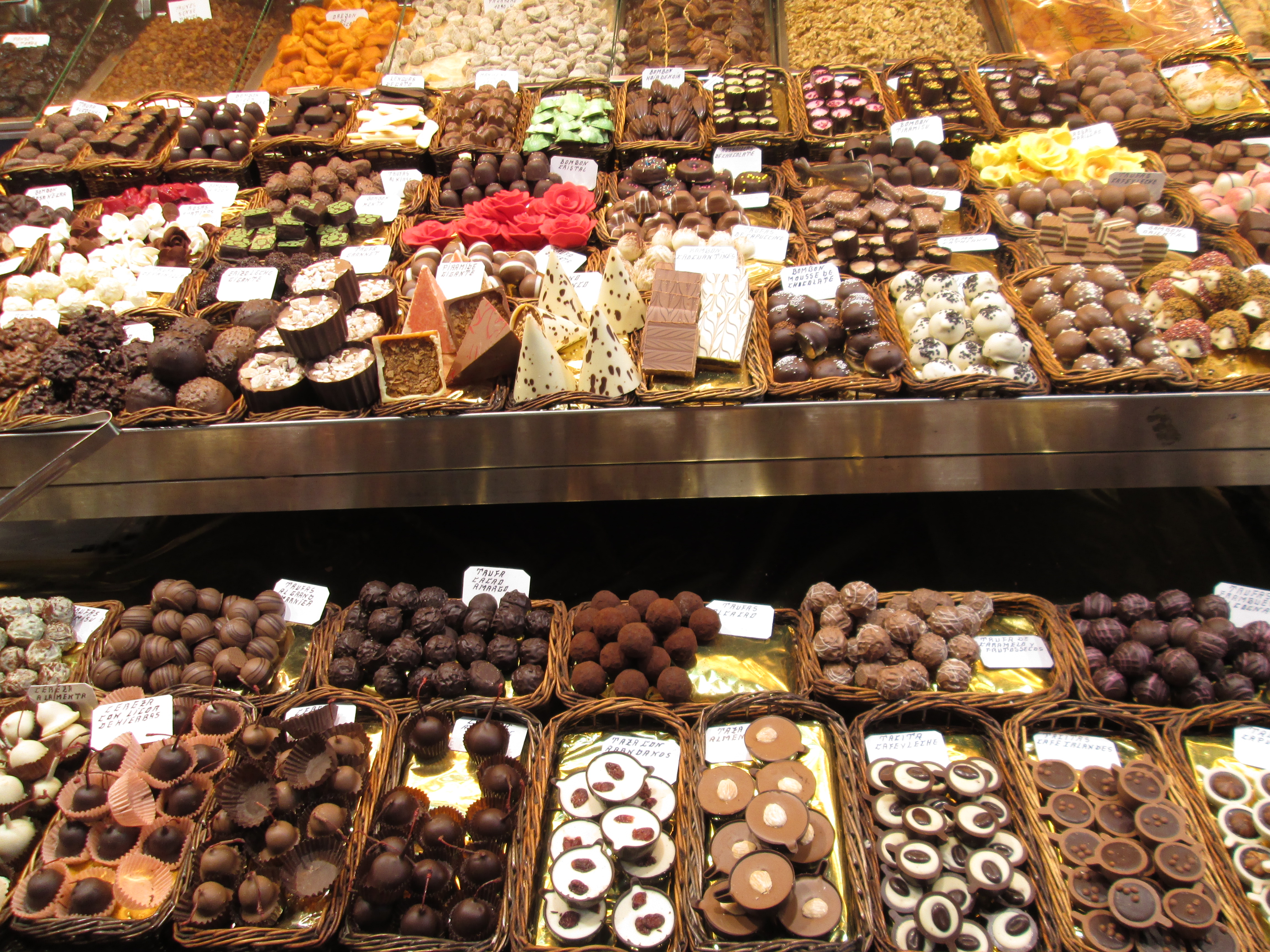
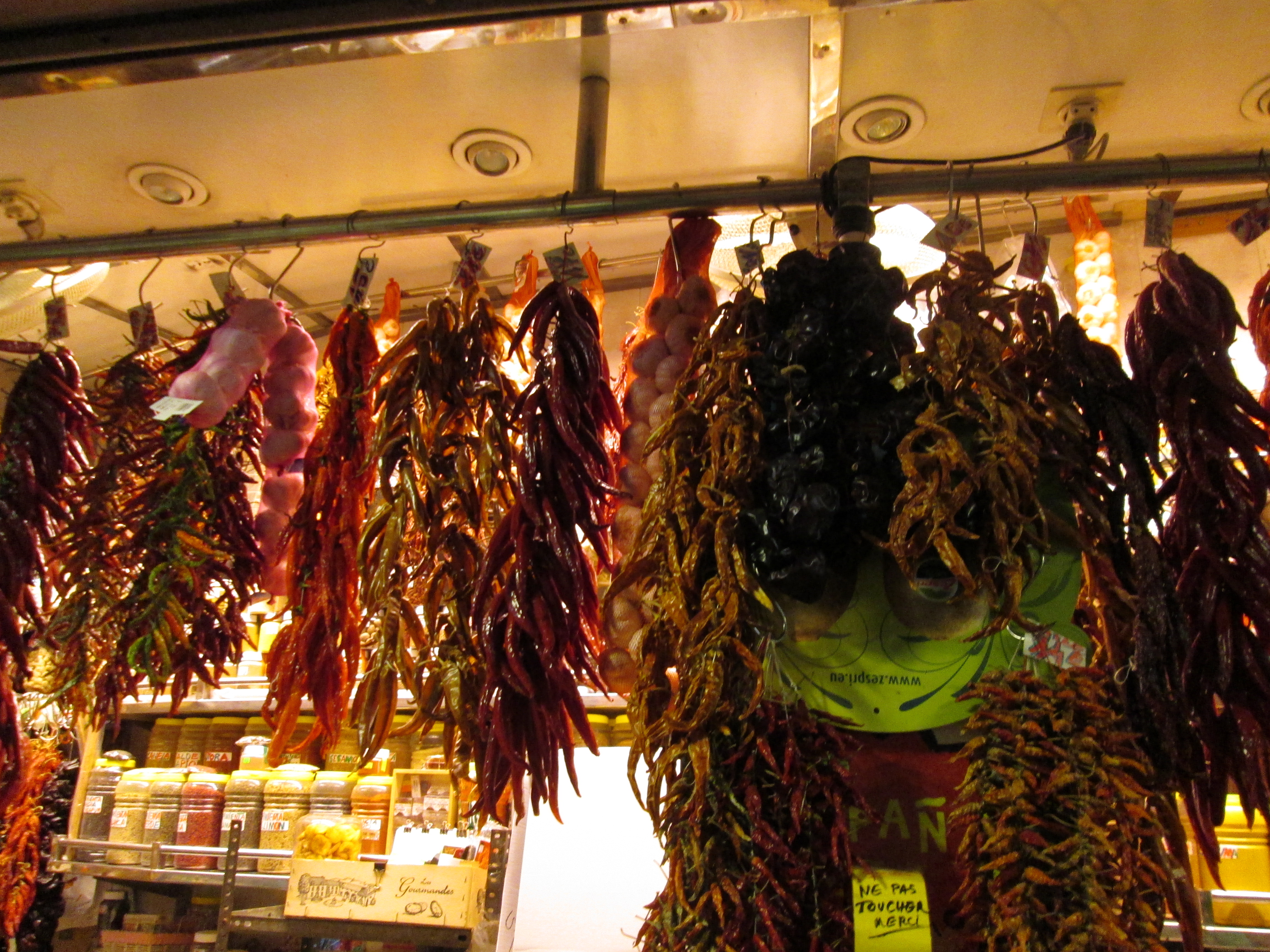
The day was wrapped up with a leisurely walk down the infamous La Rambla, including a stop at the Mercat de La Boqueria.

2013-04-17 12.44.482013-04-17 12.48.372013-04-17 12.40.202013-04-17 12.37.39

Previous Older Entries Next Newer Entries