Travel: Venice of the East

imageNick and I actually delayed our travels to the city of Udaipur by a day because we wanted to visit the Fort. Hence, rather than a 7:30 AM bus, we caught a 6.5-hr sleeper bus. Since it was a non-AC bus, we were feeling pretty optimistic that it would not be too cold. After all, how often does a typical commercial bus have openly ventilated windows? Much to our dismay, even though each cot had its own glass-enclosed cubicle, the windows to open air were not tightly sealed, and therefore it was impossible to limit the amount of penetrating cold desert air.

imageEven worse, I woke up at 3 AM with a pressing need to use the toilet, with no possibilities in sight. I was concerned that even if I asked the driver to pull to the side, the language barrier would prevent him from fully understanding that I needed him to wait for me. I was terrified that he’d drive off and leave me, in the desert, by myself, in the middle of the night. A long struggle later, Nick finally woke up, and he made sure the bus driver didn’t leave me behind (though he was concerned when he felt the wheels of the bus inching). 😦  There is never anything glamorous about popping a squat in a dark ally out of sheer necessity.

Credit: Nikhil Kulkarni

Credit: Nikhil Kulkarni

When we finally arrived at our hostel around 6 AM, they had given our beds away (even though we had called the previous day to give them fair warning)! Nick and I ended up having to squeeze ourselves into two very small chairs with a blanket to catch a little more shut-eye.


Needless to say, we did not feel very rested when we finally awoke, and had a pretty lazy day.

Credit: Nikhil Kulkarni

Credit: Nikhil Kulkarni

Udaipur, often called the “Venice of the East” for the its beautiful lakes, was founded in 1559 by Maharana Udai Singh II as the last capital of the Mewar Kingdom. It was during this time that the City Palace first came into existence. In reality, the City Palace is not merely one palace, rather it is a sprawling complex consisting of many different palaces that were constructed by 76 different kings over the course of nearly 400 years.

image

Credit: Nikhil Kulkarni


The royal family, the Sisodia Rajputs “Worshipers of the Sun God,” built each palace to face east, in order to greet the rising sun. The exquisite facade of the 11 palaces spans a total length of 800 ft, and a total height of 100 ft. A unique trait of the architecture is that, since the total structure was built over an extended period of time, one can see a diverse blend of different styles. Each characteristic of the Rajasthani, Mughal, Medieval, European, and even Chinese Architecture is paradoxically homogenous and unique at the same time.


It is said that the Maharana (distinct from the term Maharaja) built his palace atop the hill following the advice of a hermit who he had found meditating at the summit.

Travel: Agra Cantonment

We woke up at 4 AM today, because we needed to catch the 6 AM Shatabdi Express – India’s Fastest Train – to Agra for a day trip. Needless to say, it was a long day as our transit time was 2-hours one-way, assuming that everything is executed flawlessly.

image

Credit: Nikhil Kulkarni

Agra, a former cantonment of the British empire, is the home of the Taj Mahal, one of seven wonders of the world. It is an eye-catching structure consisting entirely of white marble and its impossible to miss the light reflecting off of its surface as the sun creeps higher in the sky.


Its origin story is one of love, despair, and tragedy.

imageIn the 17th century, Shah Jahan, one of the Mughal Emperors, lost his third wife, a Persian princess named Mumtaz Muhal during the birth of their 14th child in 1631. The following year, construction of the Taj Mahal began. Over the course of 20 years, this project enlisted the labor of over 1,000 elephants to transport building materials from all over India and Asia. In addition to the iconic white marble that the building is known for, 28 other types of precious and semi-precious stones were inlaid into the ornate design.


image


As this was a period of prosperity within the empire, a skilled labour force of twenty-thousand workers were recruited from all across India. A total of 37 men were selected to form the creative unit behind the Taj Mahal.


There were sculptors from Bukhara, calligraphers from Syria and Persia, inlayers from southern india, stonecutters from Baluchistan, and individuals who specialized in everything from turrets to the carving of marble flowers.

image

Credit: Nikhil Kulkarni

Not too soon after the Taj Mahal’s completion, the Shah was deposed by his son, Aurangzeb, and imprisoned at Agra Fort. It is said that he was given a cell with a window facing the Taj so that he could gaze at the resting place of his love. Shah Jahan was later buried in the mausoleum next to his wife.

image


As a young professional trying to balance the scales of career and ambition between passion and family in the 21st century, it is difficult to imagine the depth of emotion, much less, the hollow shadows that the Shah must have felt on his wife’s passing.


image

I feel that so much of my generation tends to trivialize the word love, that it’s merely a word to convey feeling, but the term amor speaks volumes more. It means depth of commitment, being willing to compromise, accepting the flaws of your significant other, and most of all, not giving up on your relationship when things get rough. You have to be willing to fight for it.

That’s what Shah Jahan did. Although Mumtaz was long gone from the world, she stayed alive in his memory. He wanted to commemorate her significance in his life, and the empty space left in his world by her departure.

The Taj Mahal was truly a tribute to the joy they shared.

imageNot too far away, is the Agra Fort, a towering fortress where the throne-less shah was held captive. A fort has stood at this location since the 11th century, although the current structure was built by the Mughal Empire. Spanning a total area of 94-Acres, the red sandstone is a staunch guard that dominates the skyline.

As the stories say, Shah Jahan was actually held in the Muasamman Burj, a tower with a marble balcony facing the Taj Mahal.

image


After our visit to the fort, it was time to catch our train home. This took a large amount of patience as, despite our 6 PM tickets back, our plane was consistently delayed. First it was by 40 mins, and then it was 1-hour. This soon changed to a 2-hour delay, and progressed further to a 3.5-hour delay. Eventually, we bought another set of tickets for the Shatabdi Express (which is always on time), and managed to get back to Delhi around 11:30 PM. Whew!

Travel: Hinduism and Peace

The one thing about traveling in a foreign country whose citizens are predominately one ethnicity or skin tone, is the complete incapacity for me to blend in. Much like a blonde friend of mine who studied abroad for a semester in Hong Kong, I am a curiosity to the locals. More so an anomaly, because it seems that East-Asians do not often visit India.

image

Credit: Juthani1

It is a little strange to feel eyes on oneself everywhere I go. This was best exemplified today when we went to visit the Akshardham. A toddler baby pulled my hair as we were going through security, and an entire school trip of boys all shouted hello and goodbye as we walked past their orderly line. One even ran up to me to shake my hand.


. . .If only they had been a few years older, it would have certainly been a major ego boost. 😛

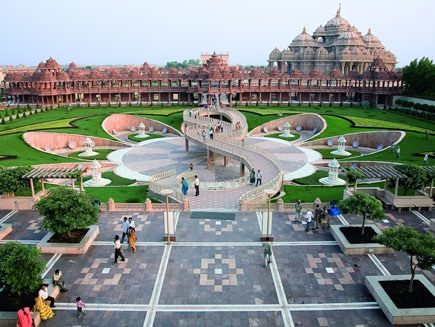
The Akshardam is a massive complex with a Hindu temple, devoted to Swaminarayan as its central focal point. Swaminarayan is the founder of one of the sects of Hinduism. Originally born in Chhapaiya, Uttar Pradesh, India in 1781, he began a 7-year pilgrimage across the country on June 29, 1792 at the age of 11 after the death of his parents.

image

Credit: Juthani1

He traveled across India and Nepal in search of an ashram that practiced what he considered to be the correct understanding of Vedanta, Samkhya, Yoga, and Pancaratra, the four primary schools of Hindu philosophy.


Finally, in 1799, Swaminarayan’s travels as a yogi concluded in Loj, where he stayed as a disciple of Ramanand Swami, and took over leadership as guru after Ramanand died. Swaminarayan passed away on June 1, 1830.

The Akshardham, although a more recent structure that was just completed in 2005, is designed according to ancient Vedic text, and features a blend of architectural styles from across India. It is not supported by steel nor concrete, but is constructed entirely from Rajasthani pink sandstone and Italian Carrara marble. Pictures can’t even begin to illustrate the ornate detail and craftsmanship that was invested into each microscopic niche of the temple. It’s truly an awe-inspiring piece of architecture.

image

Credit: Stanislav Sedov and Dmitriy Moiseenko


To quantify, the main monument is 141 ft high, 316 ft wide, and 356 ft long. There are 234 intricate pillars, 9 domes, and 20 0,000 murtis and statues of Hinduism’s sadhus, devotees, and acharayas. It also contains 148 scale-sized elephants. This total building weighs a massive 3000 tons.

image

Credit: Nikhil Kulkarni

In stark contrast to the elaborate and jaw-dropping Akshardham, Raj Ghat is understated and simple, as one would expect of the burial place of Mahatma Gandhi.  Its difficult not to be overwhelmed by the legacy this great man left behind.


Not only did he free his nation through peace, but he also inspired countless movements across the world. You can see his influence span from the American Civil Rights Movement to the Occupy Wall Street Moment. So many of the leaders we admire today have used Gandhi as there guiding light, Martin Luther King, Cesar Chavez, Nelson Mandela, and the Dalai Lama are but a few.

image

Credit: Nikhil Kulkarni


Our last stop of the day was Humayan’s Tomb, the inspiration behind the Taj Mahal, and the resting place of Emperor Humayan.


I shall leave you with one of my favorite quotes:

“Be the Change  you wish to see in the world” ~ Mahatma Gandhi.

Travel: New Delhi

image

Credit: Nikhil Kulkarni

After checking-in to our rooms, we took some time to scour off the travel grime, and prepare for our day. We arrived at the hotel around 7 AM, and had decided that taking a nap would basically just serve to encourage our jet lag.

New Delhi is the capital of India, and the seat of its executive, legislative, and judicial branches. Although the capitol was originally in Calcutta in the early 1900s, the British, formally decided to migrate the seat of their power to New Delhi in 1911.

It is not difficult to feel the british influence when one walks along the kingsway.


Master-planned by the architect Edwin Lutyens, New Delhi is centered around two central promenades call the Rajpath and the Janpath. The streets are wide and tree-lined, a design that was both ambitious and forward thinking in its hey-day.

imageOur first stop, was the India Gate. It sits along the eastern edge of the ‘ceremonial axis,’ and is a towering memorial that evokes an architectural style akin to the Arch of Constantine in Rome, or the Arc de Triomphe in Paris.


It calls for the remembrance of the 82,000 soldiers of the undivided Indian Army who lost there lives between 1914 and 1921 during the First World War and in the Third Anglo-Afghan War.

Below this towering structure, is an understated black marble plinth that bears a reversed rifled, capped by a war helmet, bound by four urns, each with a permanent jyoti (light) from flames. Inaugurated in 1972, this is the Amar Jawan Jyoti, India’s Tomb of the Unknown Soldier.

image

Credit: Nikhil Kulkarni

At the opposite end of the Rajpath, lies the secretariat, home to some of the most important ministries of the Cabinet of India. Much of the buildings of the North and South block are classic in style, but it is not difficult to see the Mughal or Rajastani motifs that have been incorporated.


They are visible in the form of the perforated screens which shield from both the scorching sund and the monsoon rains. Another feature is the dome-like Chatri, which provided shade to travelers in ancient times.

image

Credit: Nikhil Kulkarni

Our last stop of the day was the Lotus Temple. This location serves as the Mother Temple of India. The Bahá’í Faith, has roots dating from 19th-century Persia, its founder, Bahá’u’lláh died a prisoner when he was exiled to the Ottoman Empire for his teachings.


Three core principles are emphasized in the Bahá’í religion: (1) The unity of god, (2)  The unity of religion, and (3) The unity of Humanity.

image

Credit: Nikhil Kulkarni

Inspired by the lotus flower, a symbol of purity, the Lotus Temple is composed of 27 free-standing marble clad “petals” that form nine sides of three clusters each. Each of its nine doors open into a central hall that is more than 40 meters high, and can hold a total capacity of 2,500 people.

image


The engineer in me was completely awe-inspired by this building. Not only is it remniscent of the Sydney Opera House in Australia, but its a challenge to grasp the depth of shell-stresses and structural analysis involved in the fabrication of each monstrosity of a petal.


imageWe finished our day by savoring a snack of Pao Bhaji (Bombay street food, very similar to the American Sloppy Joe, except vegetarian) and having Tea, before retiring to our rooms to pass out.


Travel: Chaos of Delhi

imageAfter finally meeting up with Nick at the Delhi Airport around 6 AM (his flight was delayed by 2 hours on his way out from Dubai), we hopped on a Metro to reach our hotel.  Emerging from the metro station, I was quickly overwhelmed by the site that greeted us. It can best be summed up in one word: Chaos.

image


India is the most populous democracy in the world, with a staggering 1.2 billion citizens. However, despite being the world’s 10th largest economy by GDP, and the 3rd largest by PPP, this nation struggles to align its modern ambitions with its financial limitations.


After securing its independence from British rule in 1947, a period during which Mahatma Gandhi yielded significant influence,  India continues to face the shackles of corruption of corruption and poverty. It is home to the largest concentration of people living below the World Bank’s poverty line of $1.25 a day.

Chronic malnutrition of children is rampant across the nation, and the socio-economic disparity between this nation’s states has only continued to grow. India can only tax about 0.1% of its population, and then these funds are directly used to feed its poor, leaving little flexibility for the money to be allocated elsewhere.  It is a sobering reality to see all the day-to-day battles these individuals have to endure.

image


The street clamours for attention with the loud yells of the rigshaw drivers bantering for business and the constant beeping of horns as cars dodge each other, and people, as they drive the street.


We decided to take a rigshaw to our hotel, since we were a little disoriented after our tedious travel. I’d describe riding in a rigshaw as a harrowing experience, filled both with excitement, adrenaline, and an ounce of fear. There is little regard for right of way, and the drivers bravely weave their cars in and out of traffic. We like to laugh and call it taking a gamble on life, akin to playing a round of Mario Cart.


Travel: Hopeful Disillusions

I thought I would love Athens. As a kid I was fascinated by the colorfulness and diversity of Greek mythology and the polytheistic nature of is deities. I was wrong. Athens is in disrepair, crime is high, the neighborhoods are sketchy, and the nation is struggling, it is difficult to imagine this city at the height of its glory considering the clear challenges it has before it.

One thing that any passerby in Athens cannot help but notice is the quantity of people that are out and about just lounging, drinking coffee, or enjoying the sun, even in the middle of the day on a weekday. Unfortunately Greece cannot conceal the fact that the country is suffering, and as a tourist on the mainland, the evidence is clear. Unemployment is high, sustainable incomes are scarce, and many government employees are having to work without pay. 

This was no truer than it was this morning at 5 AM. After 10 weeks of an amazing solo journey backpacking from the Atlantic Coast of Europe to the Mediterranean Coast, it was time for me to catch a flight home. My graduation ceremony is in a few days, and still without a job offer, it was time for me to return to real life.

When I woke up at 5 AM this morning to catch the metro to the airport, I discovered that the employees had declared a strike overnight. How in the world was I supposed to get to the airport?! My back-up plan, carefully formulated the prior evening, to walk a few blocks north and hop on the slower, more expensive airport shuttle, were also foiled, apparently the operators were also part of the strike.

Amidst my clear panic, the hostel front desk was open and he helped me phone a taxi. The gentleman went even further to coordinate with the Taxi driver for us to stop at a street ATM on the way to the airport, since the driver would not accept credit, and I was down to my last few euros having budgeted my spending for Option A and B.

Thankfully, after a very hectic and stressful morning, I was able to catch my plane for the long flight home!

Travel: Omniscience of Meteora

The earliest ferry in this morning did not arrive until just before noon, so we slept in a little before hailing a taxi to bring us to the port.  After successfully rendezvousing with the crewman, and completing the license hand off, we headed to the airport to pick up our rental car. Unfortunately, the company mixed up our reservation, so it took us longer than anticipated to secure our transportation (2 hours). By the time we were on the road, it was around 2 pm.

2013-06-10 10.42.10We drove to Meteora as fast as we could (the average time is just around 5 hours), and arrived in the valley just before sunset.

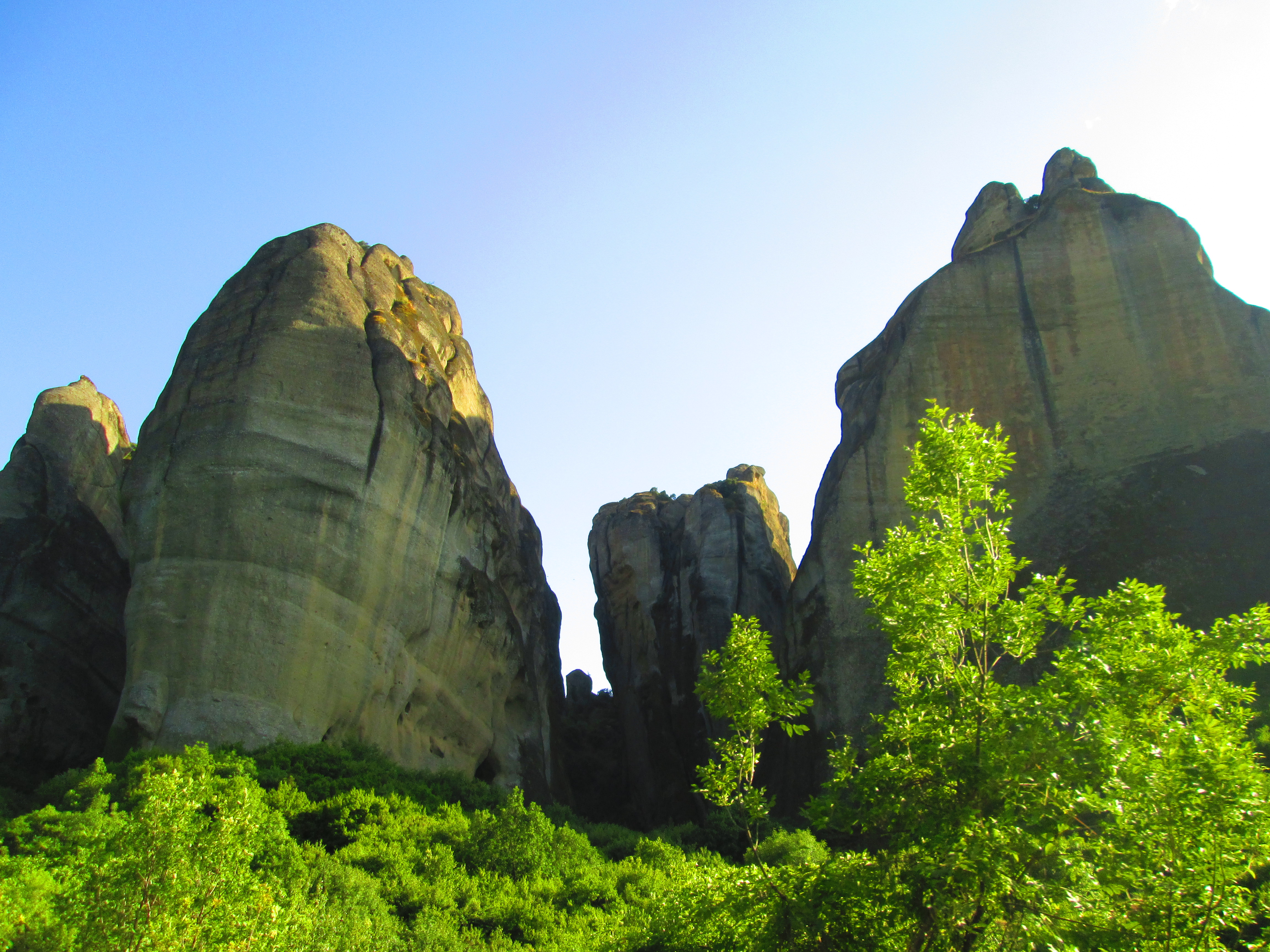
The name, Meteora can be broken down into the greek word Μετέωρα, which translates to “suspended in the air” or “in the heavens above.”

It may be logical to then extrapolate that this is the same origin from which we derive “Meteorite.” As one of the most significant Eastern Orthodox complexes in Greece (second to Mount Athos), it is a breathtaking view as all of the monasteries are carved into natural sandstone rock pillars.

2013-06-10 10.59.25


While the exact establishment of these buildings is unknown. A rudimentary monastic state, the Skete of Stagoi, formed in the late 11th and
early 12th centuries. This centered around the existing Church of Theotokos – “Mother of God.”

Athanasios Koinoviti brought a group of followers to the region in 1344, and from 1356 to 1372, they constructed the Great Meteoran Monastery on Broad Rock. – The common legend is that Athanasios did not scale the rock, but was borne there by an eagle.

2013-06-10 11.36.36

This was an ideal location for the monks, as it perched them above the reaches of political influence and interests. Only those within the complex had control over whom entered and exited as the only means of admittance was by climbing a long ladder or being hoisted by large nets, which the residents could draw up when threatened.

As the Byzantine Empire‘s 800-year reign over northern Greece became increasingly threatened by Turkish raiders in the late 14th century, the hermit monks found the naturally defensive rock pillars to be an ideal refuge. More than 20 monasteries were built.

2013-06-10 12.28.17

In the wise words of UNESCO,

“The net in which intrepid pilgrims were hoisted up vertically alongside the 373 metres (1,224 ft) cliff where the Varlaam monastery dominates the valley, symbolizes the fragility of a traditional way of life that is threatened with extinction.”

Today, only six of them remain; four house men and two are occupied by women.

Due to our extremely tight schedule, we were not able to reach the attractions until after visiting hours. We grabbed dinner at the nearby Kalabaka before heading further north to the foot of Olympus and spending our night in Litochoro. We also had to trim Delphi from our schedule due to the license confusion.

2013-06-10 12.27.40

Travel: Barbarians or Heroics?

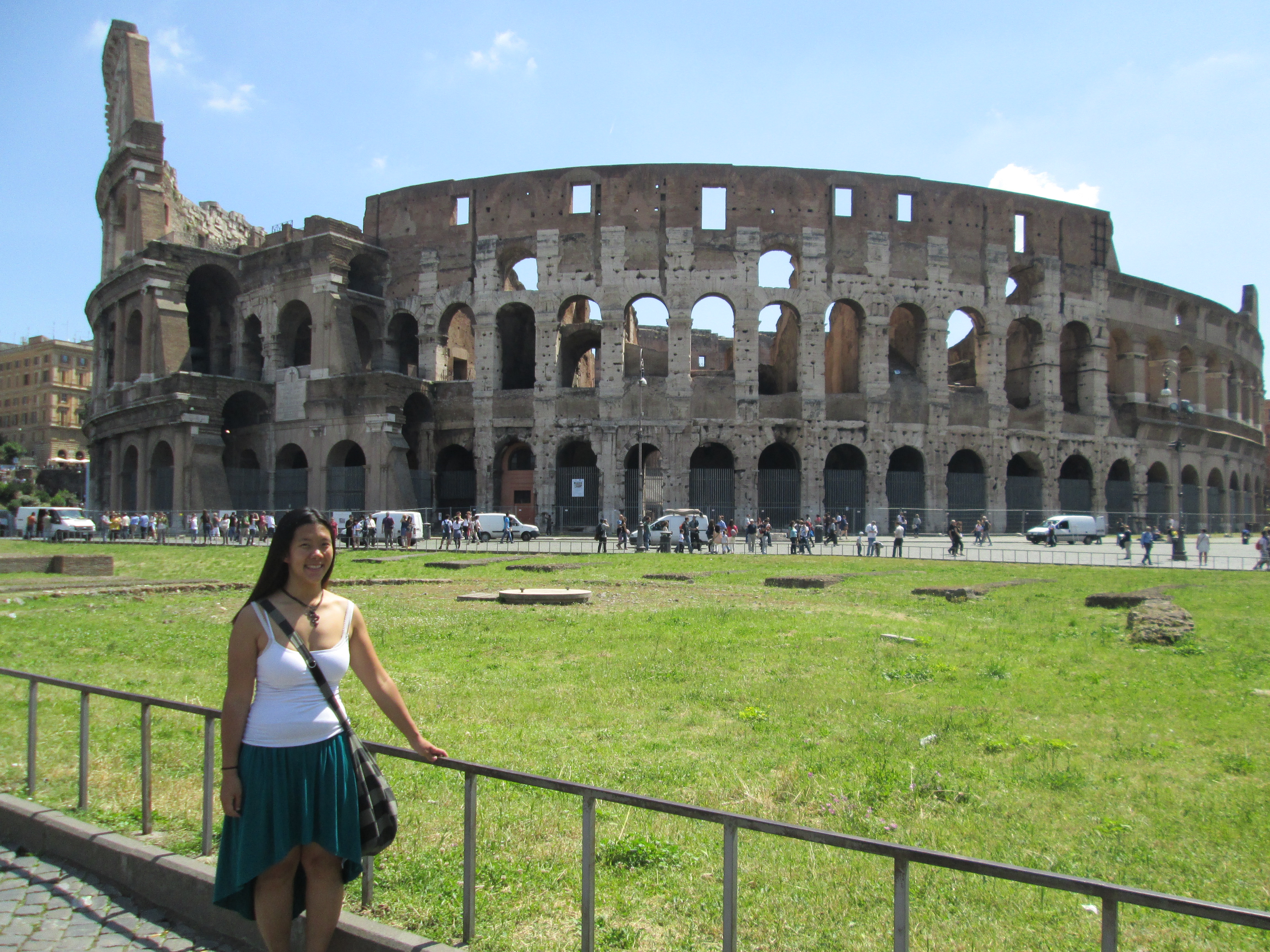
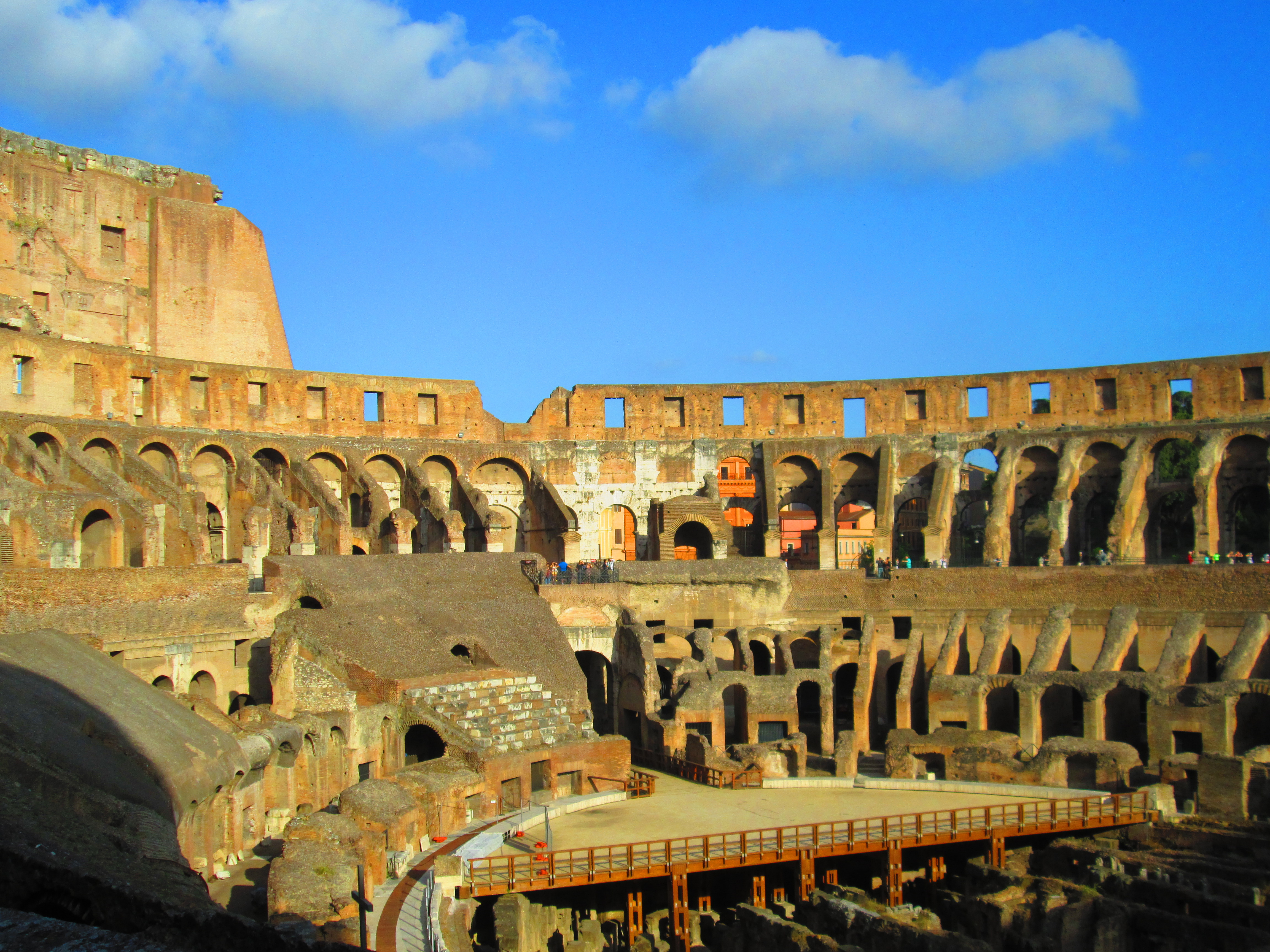
Although my muscles were silently crying tears, I made my way onwards toward the Colosseum that silently towers in the background. However, I first attempted to give my bones a reprieve by pausing in the shadows of these ancient roman giants and taking in their confident stances that have stayed steadfast despite the centuries.

2013-06-02 04.21.08

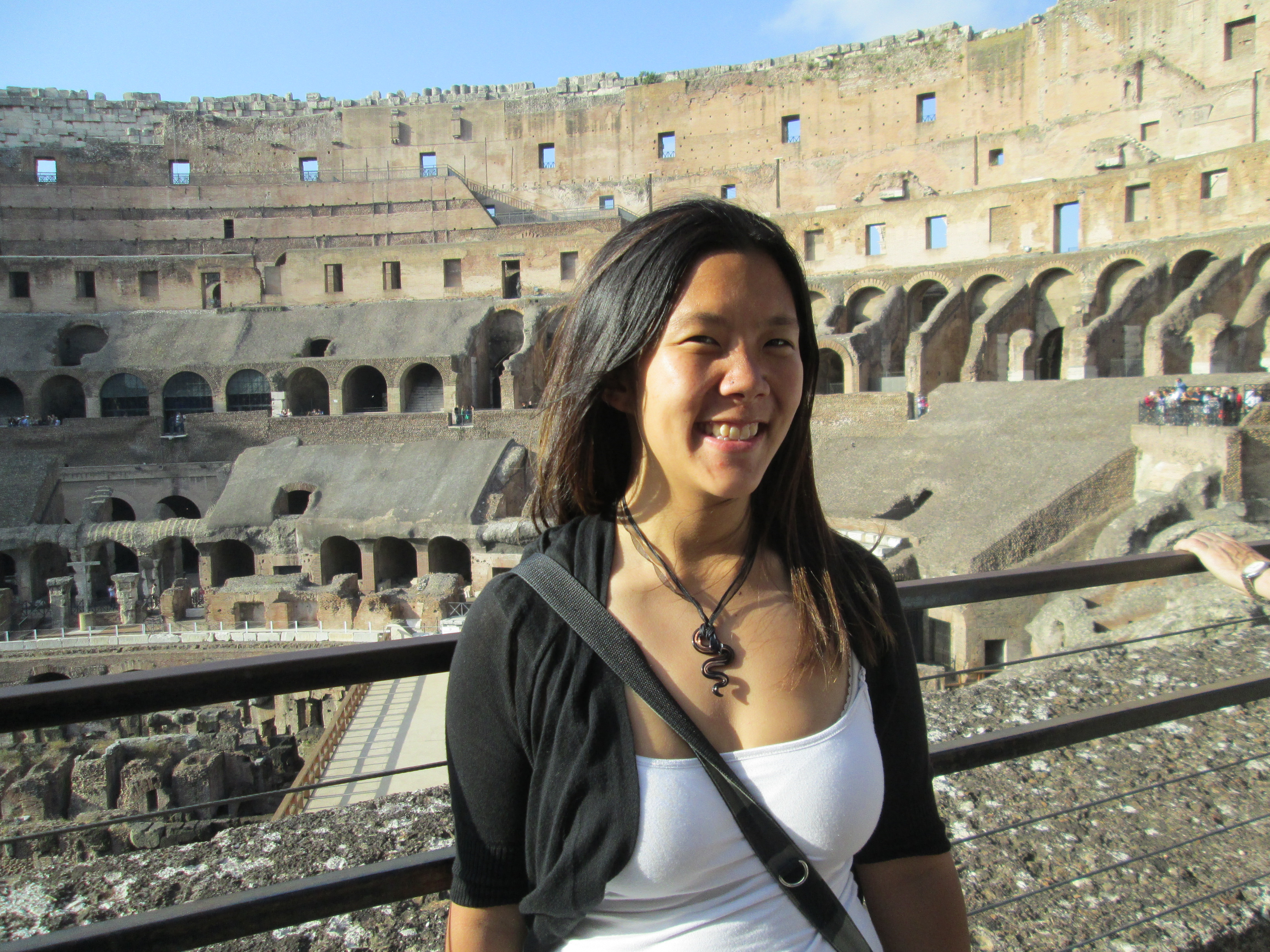
I know I’ve used this word far to often, but the first thought that comes to mind is ‘breathtaking.’ Its no wonder that it has consistently held its title as a ‘Wonder of the World.’ The structure is a monstrosity after all; built of concrete and stone, it has weathered the ages and remains the largest amphitheater ever constructed to date.

2013-06-02 11.29.01

The iconic name ‘Colosseum’ is believed to be derived from the nearby (although no longer in existence) colossal statue of Nero that was erected in bronze and towered at a height of 30m within the vestibule of Emperor Nero‘s imperial villa the Domus Aurea.

Considered a pinnacles of Roman Architecture and Engineering, it lies east of the Roman Forum and was erected during the Flavian dynasty under the reign trifecta of VespasianTitus, and Domitian.

2013-06-02 11.41.57

Shadows creep as the sun sets.

It held between 50-80 thousand spectators and was the site of gladiatorial contests and public spectacles for the entertainment of the public.

Events such as mock sea battles, animal hunts, reenactments of famous battles, classical mythological dramas, and even executions were regularly on display.

Unfortunately, it fell into disuse in the early medieval era, and was only reincarnated by necessity as  grounds for housing, workshops, religious quarters, a fortress, a quarry, and a Christian shrine. It even maintains close connections with the Roman Catholic Church, as each year, on Good Friday, the Pope leads a torchlit “Way of the Cross” procession originating from the Roman Ruins surrounding the Colosseum.

An epigram by the Venerable Bede often misattributed as a reference to the colosseum states the following:

 Quamdiu stat Colisæus, stat et Roma; quando cadet colisæus, cadet et Roma; quando cadet Roma, cadet et mundus 

“As long as the Colossus stands, so shall Rome; when the Colossus falls, Rome shall fall; when Rome falls, so falls the world”

Although the correct structure in question was the previously stated Statue Of Nero, one can’t help but consider the subtle symbology behind this statement.

The Roman’s were certainly an articulate and knowledgeable civilization that flourished for centuries despite systematic weaknesses. They knew how to effectively wield power across long distances, develop a unified army, distribute responsibilities amongst individual civil administrations, develop a system to control public finances, and maintain a class system. The empire didn’t fall in a sudden blaze of glory, but was whittled away at by circumstance, much as the Colosseum continues to lose it skeleton to greedy stone robbers.

I realize this is a de facto analogy, but it really causes one to ponder. What do you think?

Travel: In the Steps of Michaelangelo

English: Capitoline Hill, Rome. Image:Fratelli...

Before we could enter the Roman Ruins that day, my new friend and I stumbled upon the tail-end of a parade in celebration of some unknown national holiday. I’m still not clear on what it was, but I would have been thrilled if I had managed to catch sight of all the festivities. Unfortunately for us, we discovered that it delayed the opening of our attractions for the day. Rather than being open that morning, neither the Imperial Forum, nor the Colosseum were going to open until that afternoon. Instead, we took a long stroll around Capitoline Hill, one of the seven hills of Rome and the original Citadel of the first generation.

The Abduction of the Sabine Women, by Nicolas ...

It is at this site that the Sabines, were granted access by the Roman maiden Tarpeia. For her treachery, she was the first to be flung from a steep cliff overlooking the Roman Forum. Later named the Tarpeian Rock after the Vestal Virgin, it became a frequent execution site.

The first Sabines immigrated to Rome following the Rape of the Sabine Women.

You may recall an earlier post from the beginning of my trip when I went to visit the Fatima Sanctuary, the following brings to mind how individuals can be so devout to subject themselves to pain in the name of their faith. Legend says that  Julius Caesar approached the foot of the hill and Jupiter’s Temple on his knees in penance for his actions in the civil wars and to avert an unlucky omen of Jupiter’s wrath. He was moved to do so after he suffered an accident during one of his triumphs. Despite this, he was murdered six months later, and Brutus and his conspirators barricade themselves within the temple.

Excuse me, I’ve gotten a bit off track from my original topic., back to Michelangelo!

What I’ve come to love about Rome are the subtle nuances that pervade every cornerstone and recess of its ancient culture and architecture. A prime example of this is the Piazza del Campidoglio.

Michelangelo's design for Capitoline Hill, now...

In his prime, he was commissioned by the Farnese Pope Paul III to design a plaza. The Pope wanted a symbol of the new Rome to impress Charles V, who was expected in 1538. Having an opportunity to build such a monumental civic space, granted Michelangelo the opportunity to make a resonating statement reestablishing the grandeur of Rome.  His initial designs for the Piazza date from 1536 and were formidably extensive.

In an emblematic display, he chose to accentuate the reversal of the classic orientation of the Capitoline. Instead, the gesture turned Rome’s civic center away from the ancient Roman Forum  to face the direction of Papal Rome and the Christian church  represented by  St. Peter’s Basilica.

2013-06-02 05.01.33

His made a bold metaphorical statement:

“This full half circle turn can also be seen as Michelangelo’s desire to address the new, developing section of the city rather than the ancient ruins of the past.” ~In the wise words of Wikipedia

I have so much more I want to say about how Michelangelo used his ingenuity to address problems such as a sloped site and the lack of building facades facing each other squarely, however, I will leave that to your research. The structural engineer in me is trying her hardest not to bore you with devious architectural solutions.

Travel: Roman Art

After exploring the depths of Rome, I ventured onwards to Trajan’s Forum. This Fora was the last Imperial fora to be built, and was overseen by Apollodorus of Damascus. Built between 106 to 112 AD, it was constructed from the spoils of war amassed from the conquest of Dacia.

2013-05-31 05.49.582013-05-31 05.49.01

The most notable icon of this sprawling complex is Trajan’s Column, a triumphal tribute commemorating Trajan‘s victory during the Dacian Wars. Completely freestanding at 98 ft high (125 ft including the pedestal), the shaft is composed of a series of twenty 11 ft diameter colossal Carrara marble drums, each weighing  32 tons. It is most recognized for its spiral bas relief, at a total length of 625 ft, the frieze winds around 23 times, and depicts the epic wars of Romans Vs. Dacians. (I saw a miniature replica of this exact column wrought in gold in the museums of Vienna, Austria).

2013-05-31 08.00.162013-05-31 08.00.59

Taking another breather (after all, one can only ponder the historical significance or art and architecture for so long), I stopped by to admire the Monument to Victor Emmanuel, the first king of a unified Italy.  This monument is also home to the Tomb of the Unknown Soldier, a sobering reminder about the tragic losses of war.

2013-05-31 08.05.512013-05-31 08.18.00

Around the corner I decided to take a leisurely stroll through a park. This area was formerly the Circus Maximus, the first and largest stadium used primarily for Ludi in Ancient Rome. Ludi are public games directly connected to Roman Religious Festivals, and were sponsored by noble Romans or the State for the benefit of the people and the gods.

2013-05-31 08.41.50

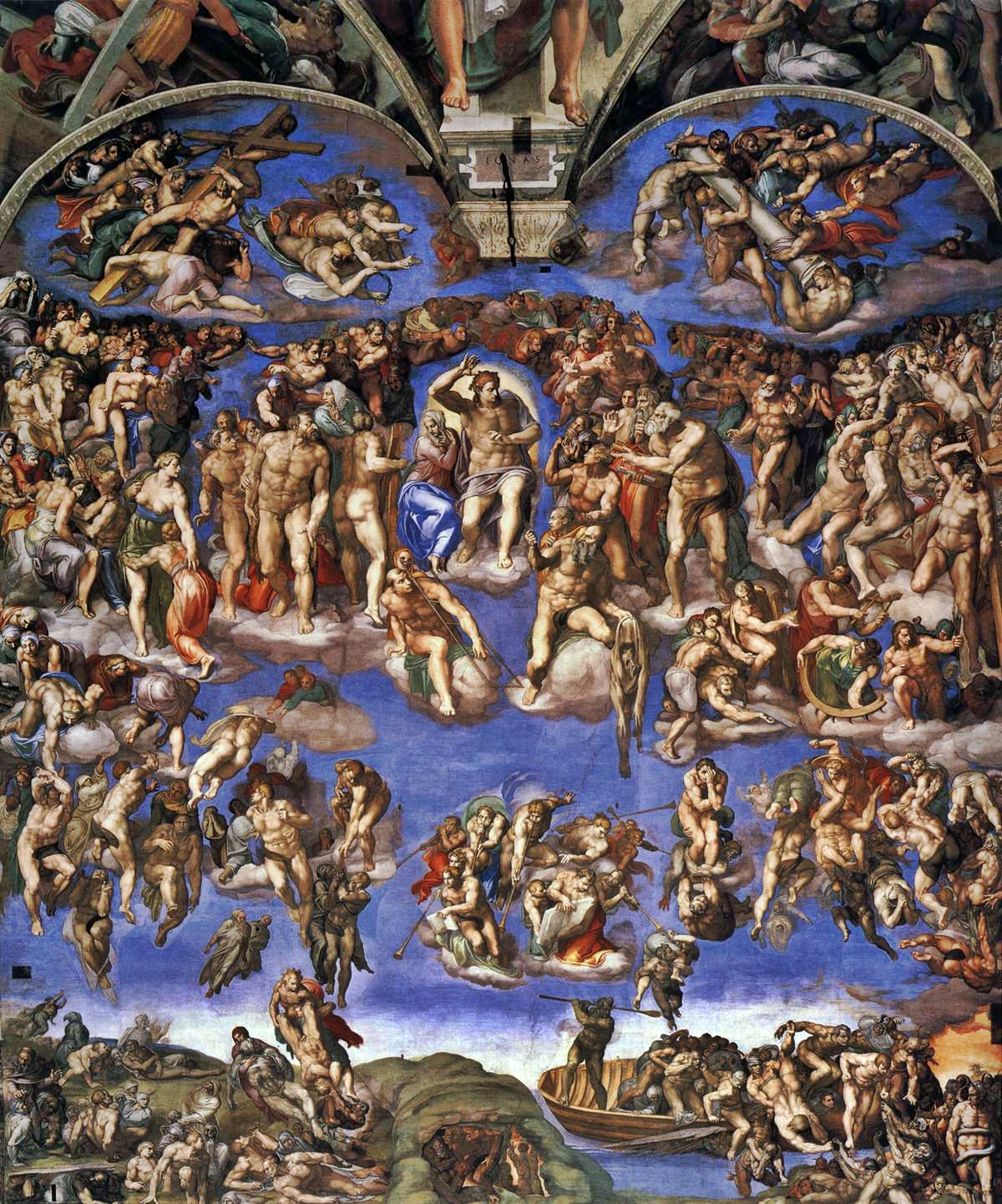
The last stop of my day was the Vatican Museum After Dark. Despite not having a full day, I was so proud that I discovered these tickets as it allowed me to enter at an allocated time and avoid the massive lines that tend to form during the day.

Sistine_Roof

I can’t even explain the overflowing stores of art that burst from the confines of each room. I was completely overwhelmed by the detail of the marble sculptures, the intricacies of the woven tapestries, and the breathtaking wonder that overtakes you when mortal eyes lay their gaze on the beauty of the Sistine Chapel.

Sistine_Wall

Do you not feel humble when you see the masterpieces of renowned artists that consistently challenged the constraints of art? Are you not jealous of the skill that they were blessed with? If you could have any artistic talent, what would it be, why?

Next Newer Entries