Travel: Longest Travel day EVER.

The last leg of my trip, I was excited to rendezvous with some good friends from home sweet home, New Jersey. 🙂 Unfortunately I was meeting with them in Athens, Greece, and getting there from Italy is not quite as straight forward as it seems with the EuroRail Pass. I first had to manage to get myself to the Eastern side of Italy to a town called Bari. From there, I was to hop a ferry (paying only the fuel surcharge and port tax) which would get me to the Grecian Peninsula Town of Patras (I’d figure out the last leg when I got to Greece.)

2013-06-03 05.29.16

Rather than rushing through each transit option, and to avoid a stopover on my train, I chose a 7 AM train. This allowed me a few hours to explore Bari before being sequestered on a ferry for the 18-hour cruise time.

2013-06-03 05.32.41

Arriving in this quaint town around 10 AM, I strolled to the port to acquire my tickets and stretch my legs. Being a port town, the sun was bright, the air was fresh with salt, and the atmosphere was relaxed.

2013-06-03 05.49.38After obtaining my tickets and boarding time, I decided to embrace the concept of aimless wandering, particularly because I hadn’t planned on having time to explore Bari.

2013-06-03 08.56.30

I first ventured into the Basilica di San Nicola.  Built between 1087 and 1197 during the Italo-Norman domination of Apulia, the foundation of this church has roots in the theft of St. Nicholas‘s relics from his original shrine in Myra (present-day Turkey).

2013-06-03 09.14.27

 According to the legend, the saint, having passed by the city on his way to Rome, had chosen Bari as his burial place. Despite the competition against Venice, Bari succeeded, and the relics safely landed on May 9, 1087 under the custody of its Greek custodians and Muslim masters.

It has maintained  religious significance as an important pilgrimage destination both for Roman Catholics and Orthodox Christians from Eastern Europe.

2013-06-03 09.17.00

I paused to take a picture of my self with St. Nicholas himself! The storage place for luggage was closed since it was the off-season and a Sunday, so I did all this exploration with an approximately 25-lb backpack strapped to my back.
Travel: Bidding Addio to Rome

Italian is an artful and complex language, it tops my  list of five languages that I want to gain fluency in,  and it is with this prose that I bid Addio to Rome. It was a long and prolonged day for both myself and my poor, ravaged feet. Despite this, I wanted to cherish the feeling of history beneath my footsteps, and inhale my final breaths of roman air.

2013-06-02 12.38.50

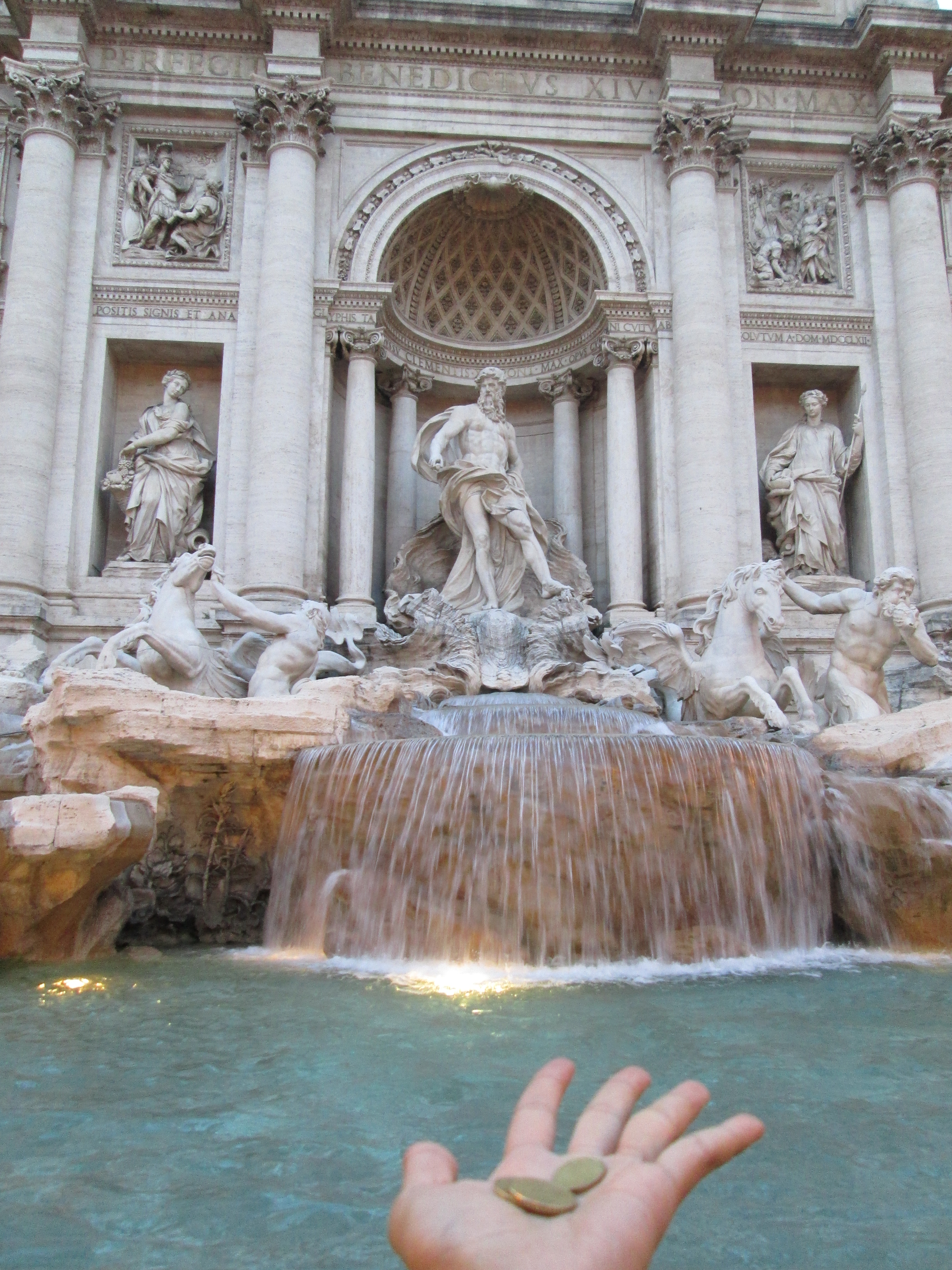
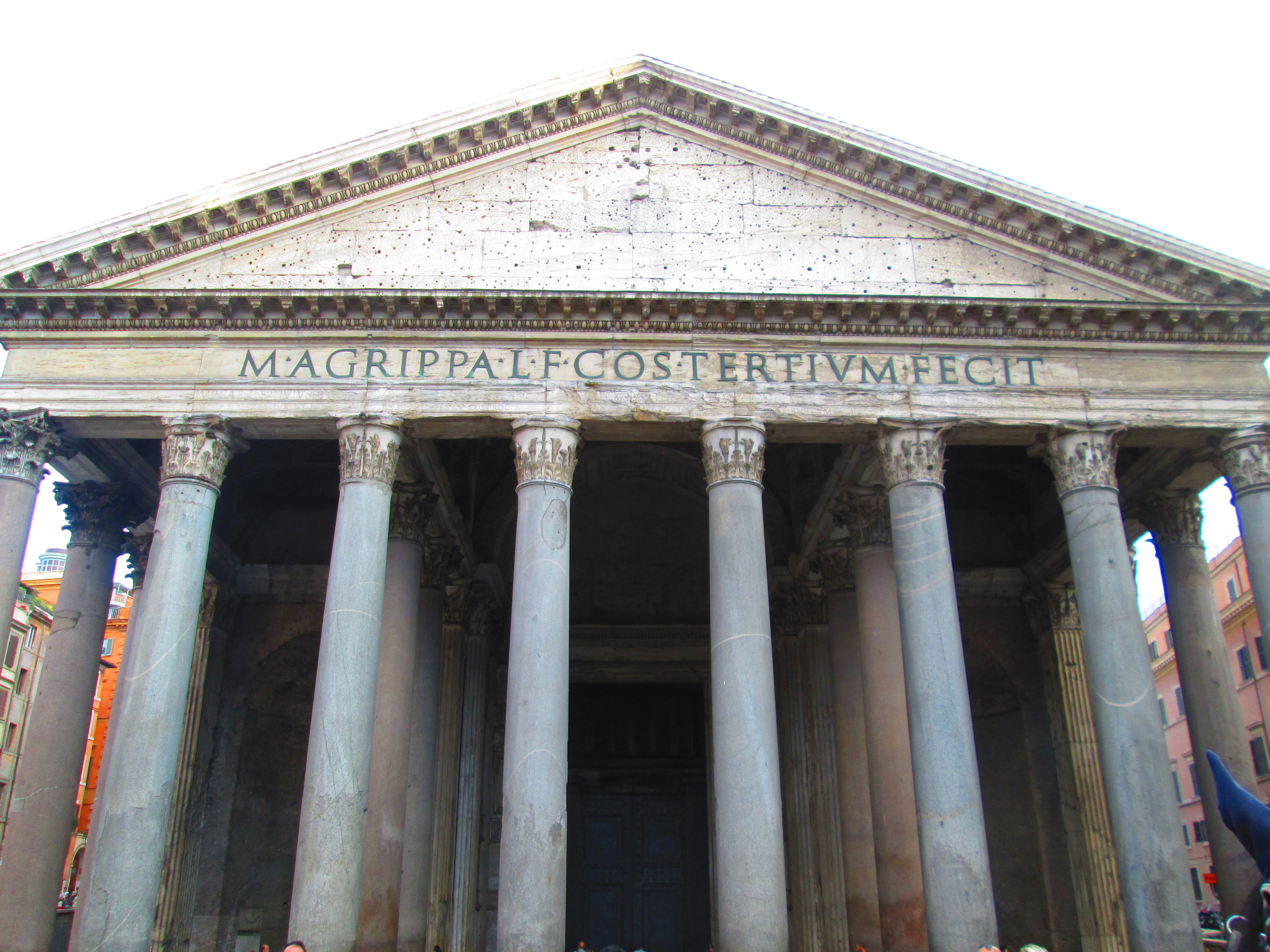
I could think of no better place to experience this, than to ponder the epic feats and legends of Ancient Rome whilst gazing at the Trevi Fountain at dusk with the sun retracting its golden rays. Fortunately (or unfortunately) I passed by the Pantheon during my stroll, I’m still not sure how this two-thousand year old structure missed my list of must-sees.

The circular building is composed of a portico supported by large granite Corinthian columns  beneath a pediment. This links to the rotunda which lays beneath a coffered concrete dome containing a occulus. To this day, this dome is still the world’s largest unreinforced concrete dome at a diameter and height of 43.3 meters (142 ft). It is from this building, that Paris’s pantheon derives its name.  The Pantheon contains the tombs of Raphael, Peruzzi, Carraci, Corelli, two kings of italy, and one queen. I will certainly have to remember to visit this beautifully preserved structure at a future date.

2013-06-02 12.46.16

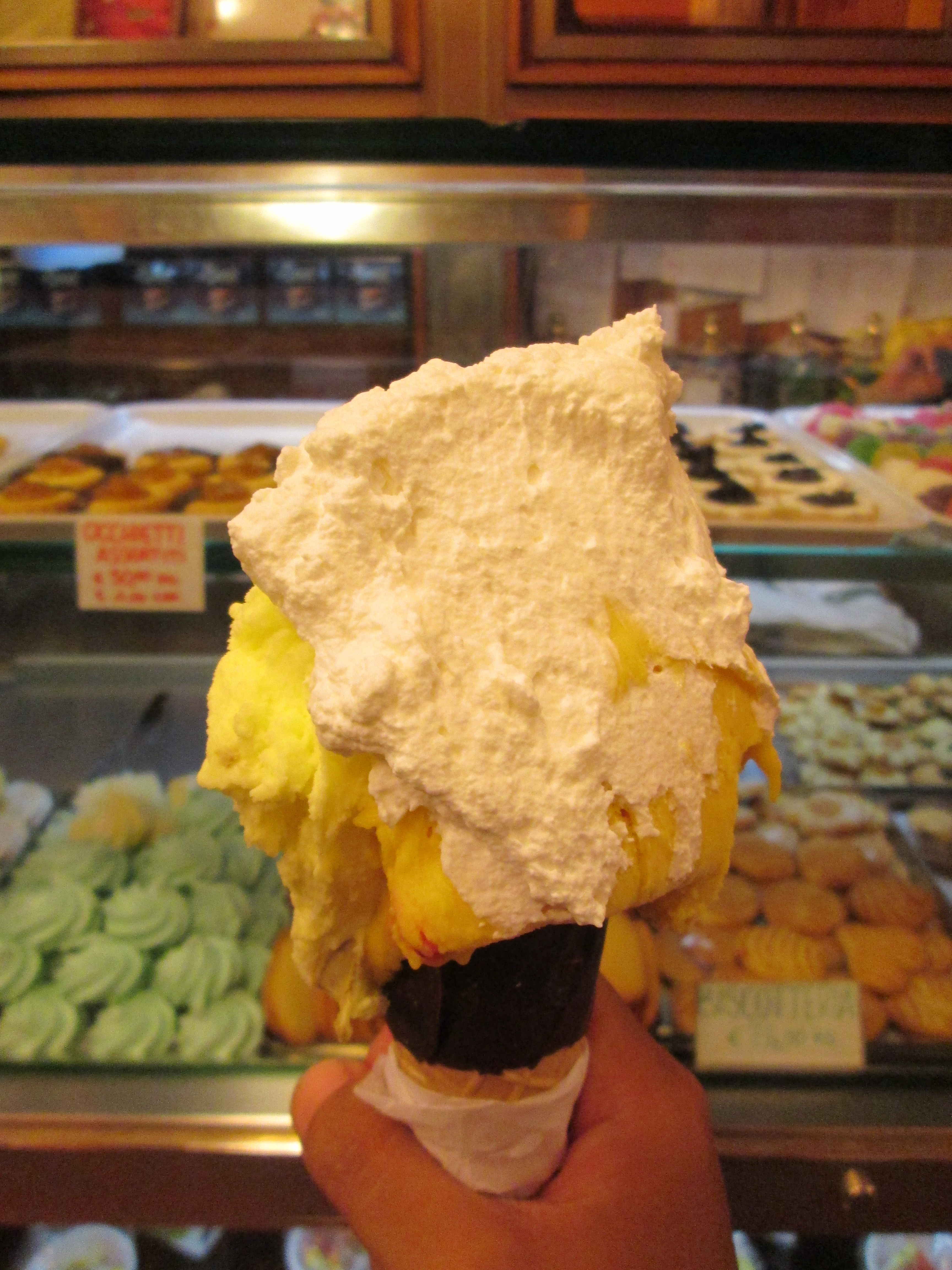
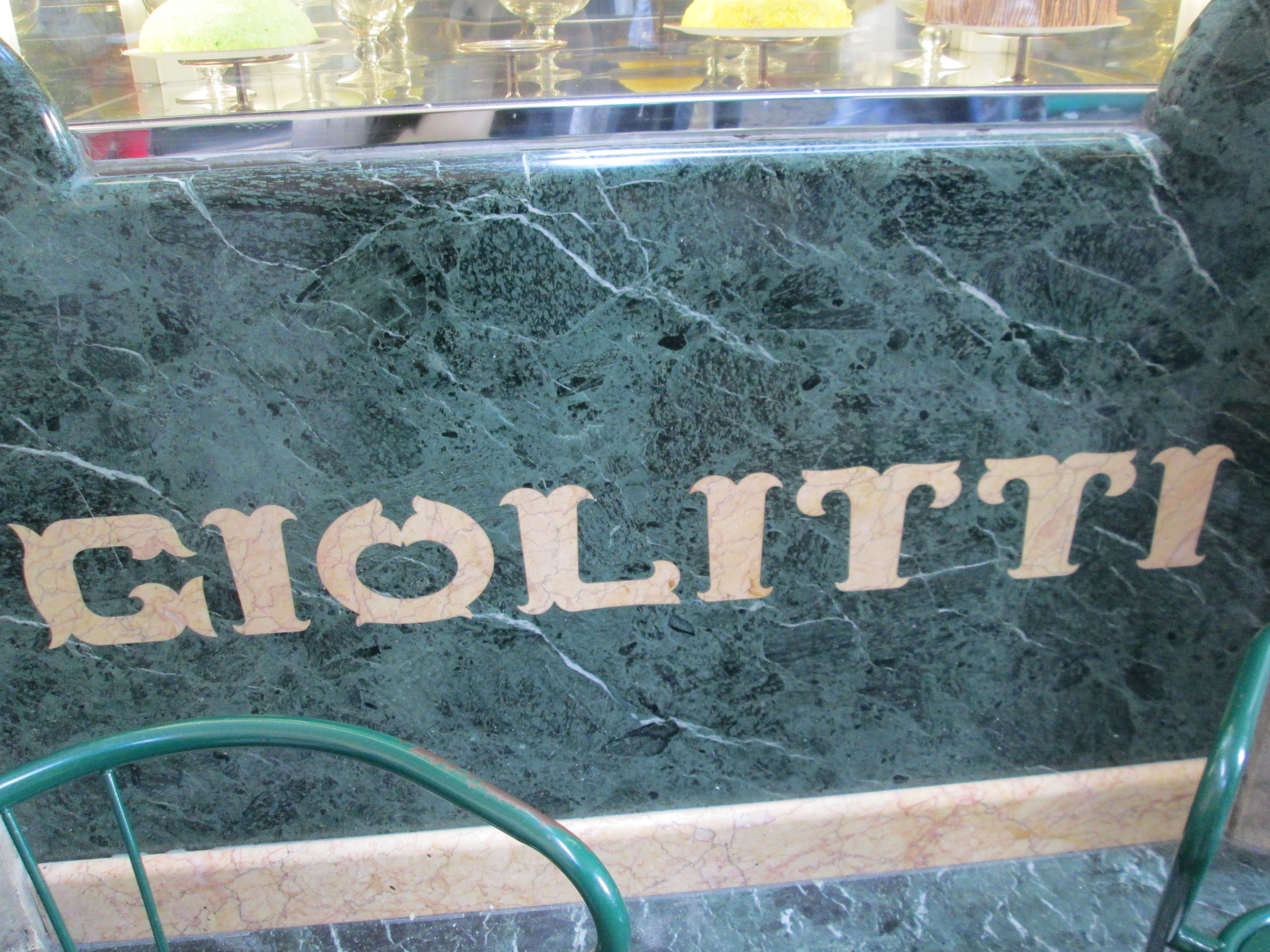
Nonetheless, I continued onwards to treat myself to some Gelato from the famous Giolitti‘s. As the oldest ice cream parlor in the city, it has been owned and run by the same family since its founding in 1890.


2013-06-02 12.56.13

Famous amongst tourists and locals alike, it maintains a diverse range of unique flavors, such as champagne, ricotta, and rice. Not aware of this, I opted for some more traditional choices.

I rounded off my night by tossing a Euro into the Trevi. The tradition is to use the right hand to throw a coin in over the left shoulder.


One coin means you’ll return to Rome, two mean you’ll return and fall in love, and three mean you’ll return, find love, and marry. I wish I had known about the superstition behind multiple coins, because my love life is seriously lacking . . .

2013-06-02 13.42.21


Travel: Barbarians or Heroics?

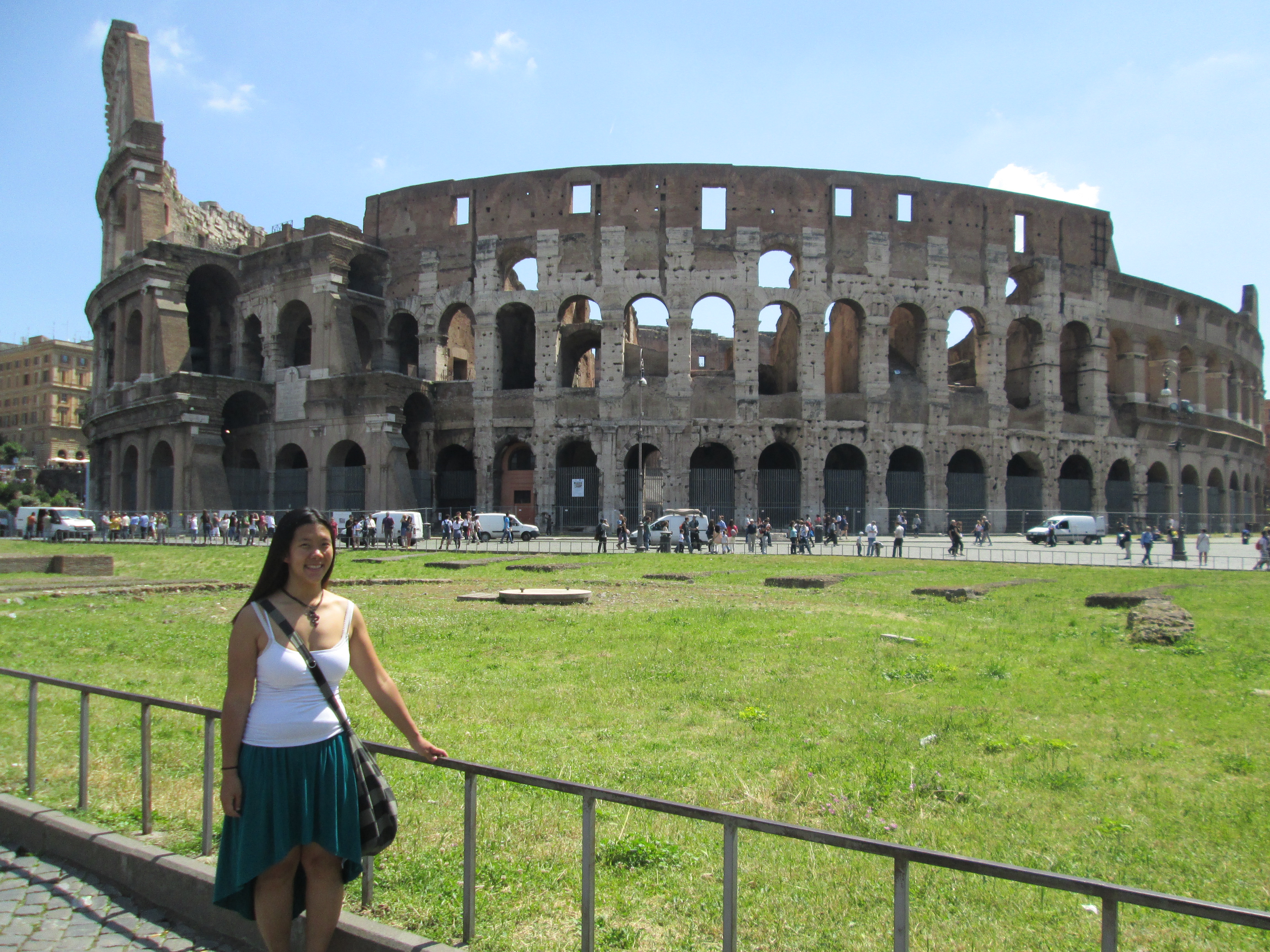
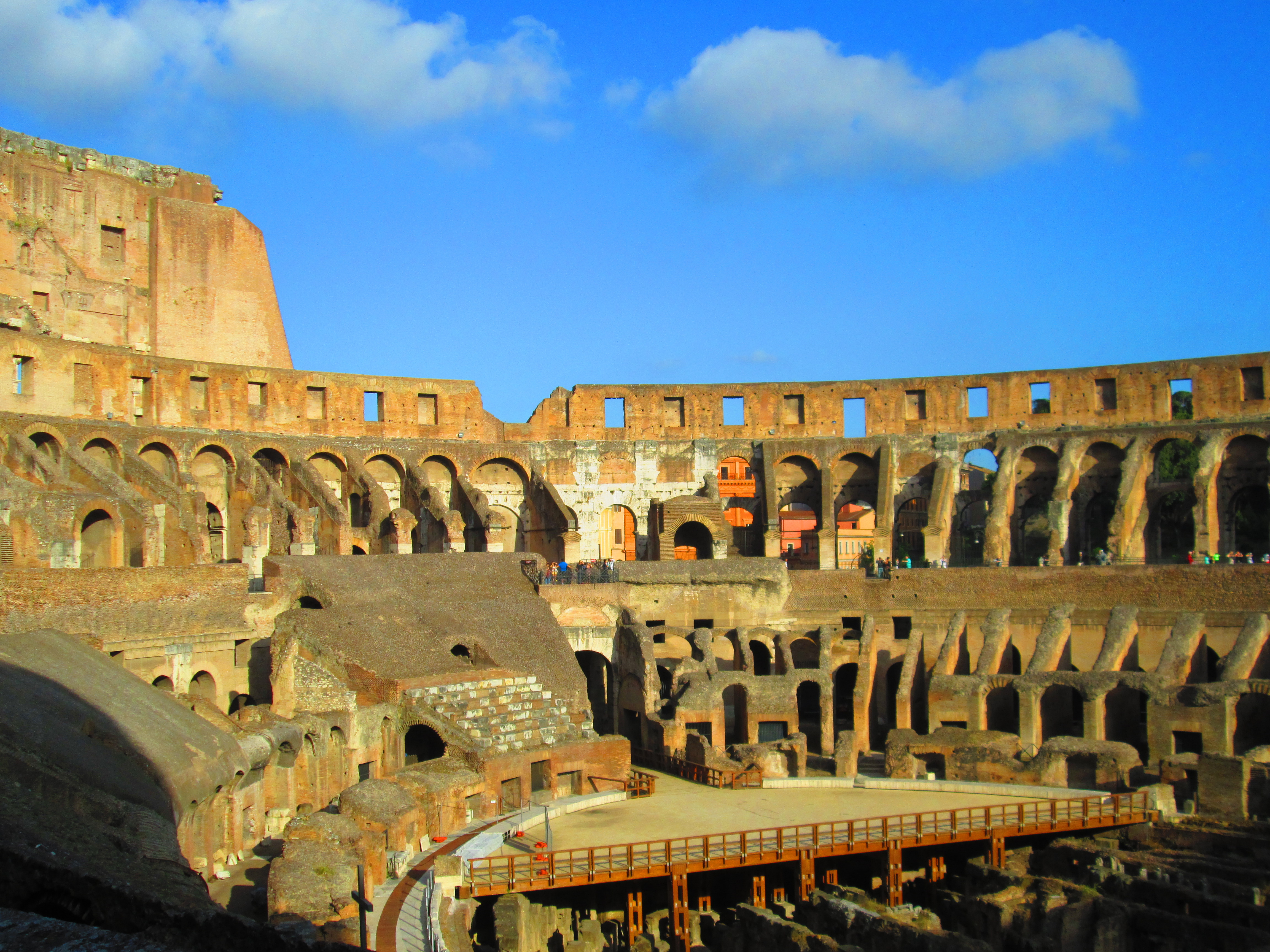
Although my muscles were silently crying tears, I made my way onwards toward the Colosseum that silently towers in the background. However, I first attempted to give my bones a reprieve by pausing in the shadows of these ancient roman giants and taking in their confident stances that have stayed steadfast despite the centuries.

2013-06-02 04.21.08

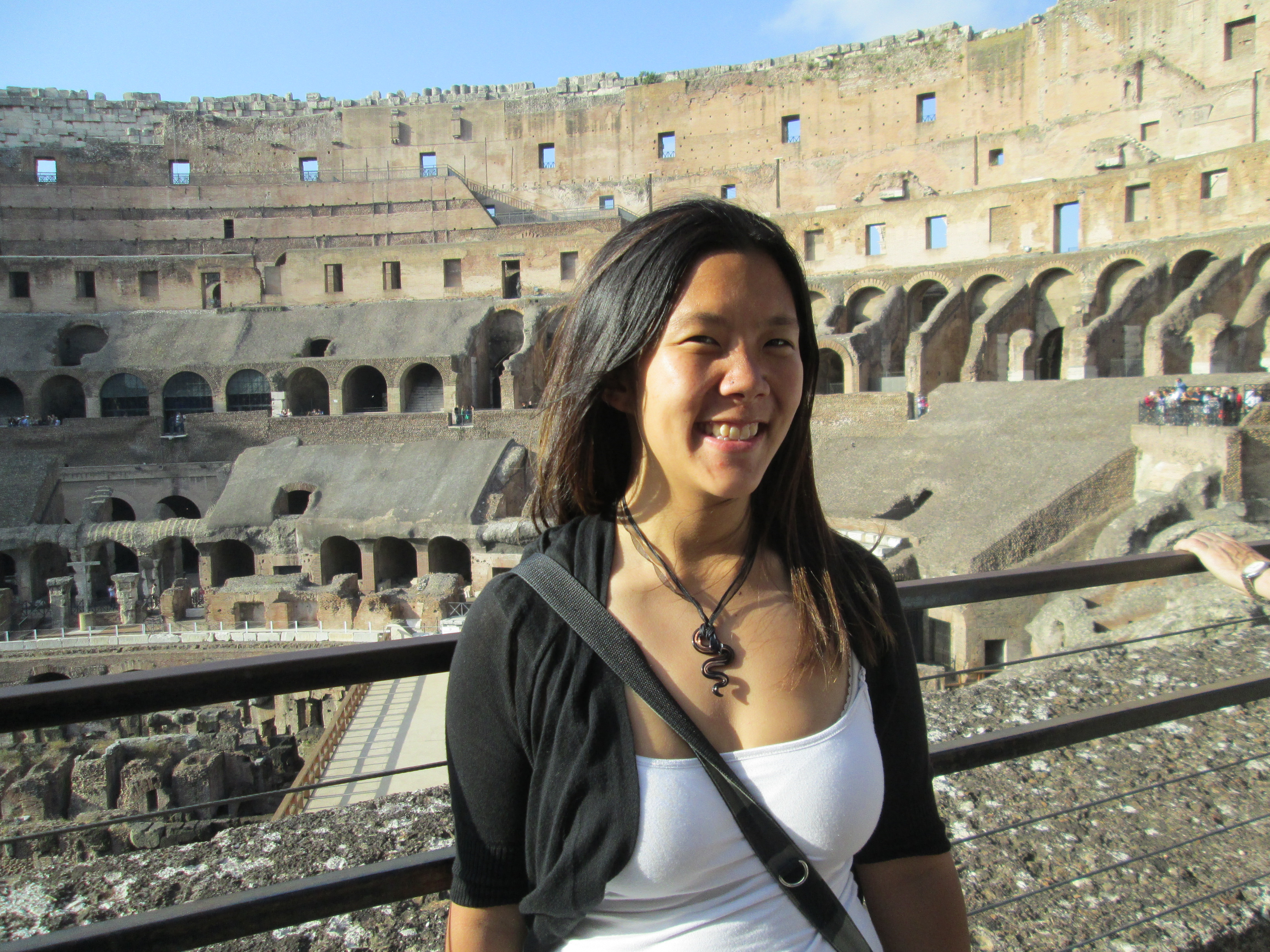
I know I’ve used this word far to often, but the first thought that comes to mind is ‘breathtaking.’ Its no wonder that it has consistently held its title as a ‘Wonder of the World.’ The structure is a monstrosity after all; built of concrete and stone, it has weathered the ages and remains the largest amphitheater ever constructed to date.

2013-06-02 11.29.01

The iconic name ‘Colosseum’ is believed to be derived from the nearby (although no longer in existence) colossal statue of Nero that was erected in bronze and towered at a height of 30m within the vestibule of Emperor Nero‘s imperial villa the Domus Aurea.

Considered a pinnacles of Roman Architecture and Engineering, it lies east of the Roman Forum and was erected during the Flavian dynasty under the reign trifecta of VespasianTitus, and Domitian.

2013-06-02 11.41.57

Shadows creep as the sun sets.

It held between 50-80 thousand spectators and was the site of gladiatorial contests and public spectacles for the entertainment of the public.

Events such as mock sea battles, animal hunts, reenactments of famous battles, classical mythological dramas, and even executions were regularly on display.

Unfortunately, it fell into disuse in the early medieval era, and was only reincarnated by necessity as  grounds for housing, workshops, religious quarters, a fortress, a quarry, and a Christian shrine. It even maintains close connections with the Roman Catholic Church, as each year, on Good Friday, the Pope leads a torchlit “Way of the Cross” procession originating from the Roman Ruins surrounding the Colosseum.

An epigram by the Venerable Bede often misattributed as a reference to the colosseum states the following:

 Quamdiu stat Colisæus, stat et Roma; quando cadet colisæus, cadet et Roma; quando cadet Roma, cadet et mundus 

“As long as the Colossus stands, so shall Rome; when the Colossus falls, Rome shall fall; when Rome falls, so falls the world”

Although the correct structure in question was the previously stated Statue Of Nero, one can’t help but consider the subtle symbology behind this statement.

The Roman’s were certainly an articulate and knowledgeable civilization that flourished for centuries despite systematic weaknesses. They knew how to effectively wield power across long distances, develop a unified army, distribute responsibilities amongst individual civil administrations, develop a system to control public finances, and maintain a class system. The empire didn’t fall in a sudden blaze of glory, but was whittled away at by circumstance, much as the Colosseum continues to lose it skeleton to greedy stone robbers.

I realize this is a de facto analogy, but it really causes one to ponder. What do you think?

Travel: In the Steps of Michaelangelo

English: Capitoline Hill, Rome. Image:Fratelli...

Before we could enter the Roman Ruins that day, my new friend and I stumbled upon the tail-end of a parade in celebration of some unknown national holiday. I’m still not clear on what it was, but I would have been thrilled if I had managed to catch sight of all the festivities. Unfortunately for us, we discovered that it delayed the opening of our attractions for the day. Rather than being open that morning, neither the Imperial Forum, nor the Colosseum were going to open until that afternoon. Instead, we took a long stroll around Capitoline Hill, one of the seven hills of Rome and the original Citadel of the first generation.

The Abduction of the Sabine Women, by Nicolas ...

It is at this site that the Sabines, were granted access by the Roman maiden Tarpeia. For her treachery, she was the first to be flung from a steep cliff overlooking the Roman Forum. Later named the Tarpeian Rock after the Vestal Virgin, it became a frequent execution site.

The first Sabines immigrated to Rome following the Rape of the Sabine Women.

You may recall an earlier post from the beginning of my trip when I went to visit the Fatima Sanctuary, the following brings to mind how individuals can be so devout to subject themselves to pain in the name of their faith. Legend says that  Julius Caesar approached the foot of the hill and Jupiter’s Temple on his knees in penance for his actions in the civil wars and to avert an unlucky omen of Jupiter’s wrath. He was moved to do so after he suffered an accident during one of his triumphs. Despite this, he was murdered six months later, and Brutus and his conspirators barricade themselves within the temple.

Excuse me, I’ve gotten a bit off track from my original topic., back to Michelangelo!

What I’ve come to love about Rome are the subtle nuances that pervade every cornerstone and recess of its ancient culture and architecture. A prime example of this is the Piazza del Campidoglio.

Michelangelo's design for Capitoline Hill, now...

In his prime, he was commissioned by the Farnese Pope Paul III to design a plaza. The Pope wanted a symbol of the new Rome to impress Charles V, who was expected in 1538. Having an opportunity to build such a monumental civic space, granted Michelangelo the opportunity to make a resonating statement reestablishing the grandeur of Rome.  His initial designs for the Piazza date from 1536 and were formidably extensive.

In an emblematic display, he chose to accentuate the reversal of the classic orientation of the Capitoline. Instead, the gesture turned Rome’s civic center away from the ancient Roman Forum  to face the direction of Papal Rome and the Christian church  represented by  St. Peter’s Basilica.

2013-06-02 05.01.33

His made a bold metaphorical statement:

“This full half circle turn can also be seen as Michelangelo’s desire to address the new, developing section of the city rather than the ancient ruins of the past.” ~In the wise words of Wikipedia

I have so much more I want to say about how Michelangelo used his ingenuity to address problems such as a sloped site and the lack of building facades facing each other squarely, however, I will leave that to your research. The structural engineer in me is trying her hardest not to bore you with devious architectural solutions.

Travel: Legacy of St. Peter

So, I meant to wake up super early to line up for St. Peter’s Basilica in order to avoid the long lines. This turned out to be a useless endeavor, since my travels had worn down my energy stores. I ended up not arriving in Vatican City until around 10 AM, unfortunately, at that point there was a line wrapping around the circumference of St. Peter’s Square, and it was beginning to drizzle.

2013-06-01 04.46.40

I ended up standing behind a nice couple from the states for the duration of 1.5 hours, and we enjoyed a conversation concerning the weather, traveling, the current state of the economy.

Due to my professional line-waiting experience (from attending the Shanghai World Expo) I was the first to jump on a group that budged their way in front of us. I was not able to eject them however, due to a language barrier, and the lack of efficiency in the overall line system. No barricades or lanes are offered, and all of a sudden a two-person wide line suddenly expanded to an eight-person wide line. I certainly have many suggestions to offer concerning how to improve the basilica’s egress.

2013-06-01 05.22.10

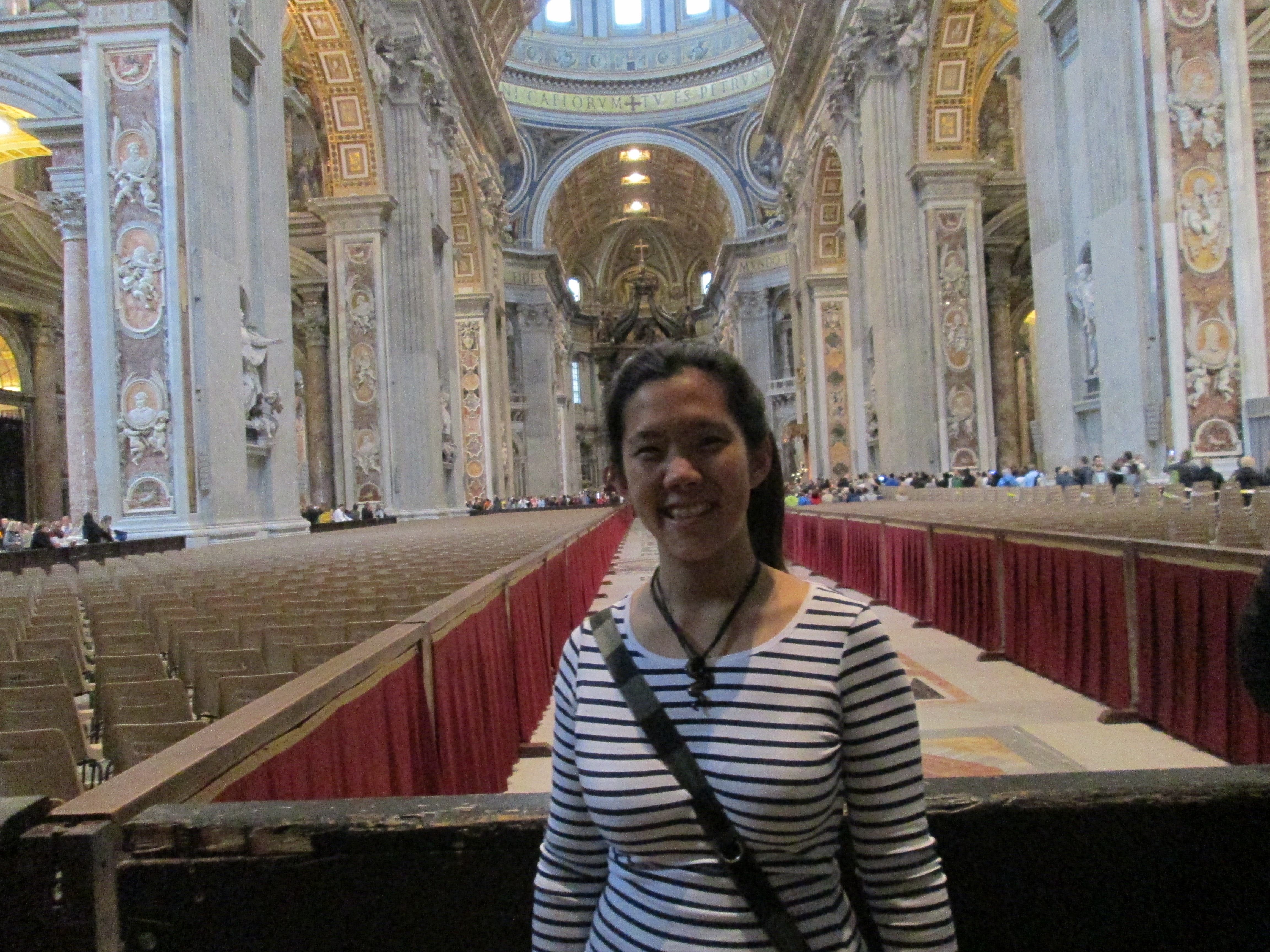
Finally getting inside, I was completely floored by the beauty of the interior. Designed by Donato Bramante , MichelangeloCarlo Maderno, and Gian Lorenzo Bernini, it is known as the most famous example of Renaissance Architecture. Following Roman Catholic tradition, this landmark building lies on the burial site of Saint Peter, the first Bishop of Rome and therefore first in the line of the papal succession. His tomb lies directly below the altar.

2013-06-01 04.41.11

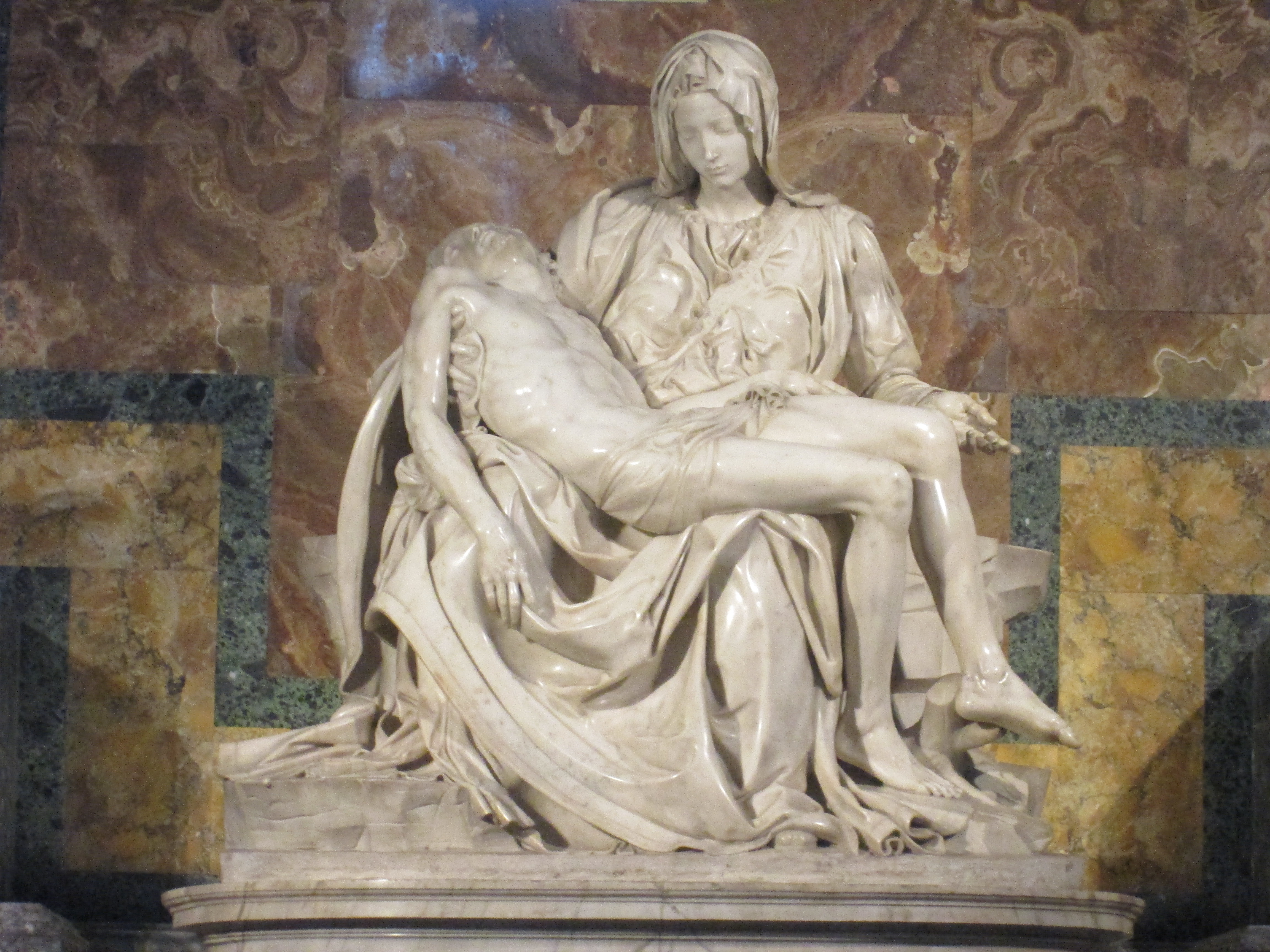
The Pietà was particularly moving. Michelangelo never fails to accurately depict the gradual caress of robes across the human form, or the somber emotion of an event. In this case, it is Mary, lamenting in her loss as she cradles the dead body of her son Jesus.

2013-06-01 07.56.11


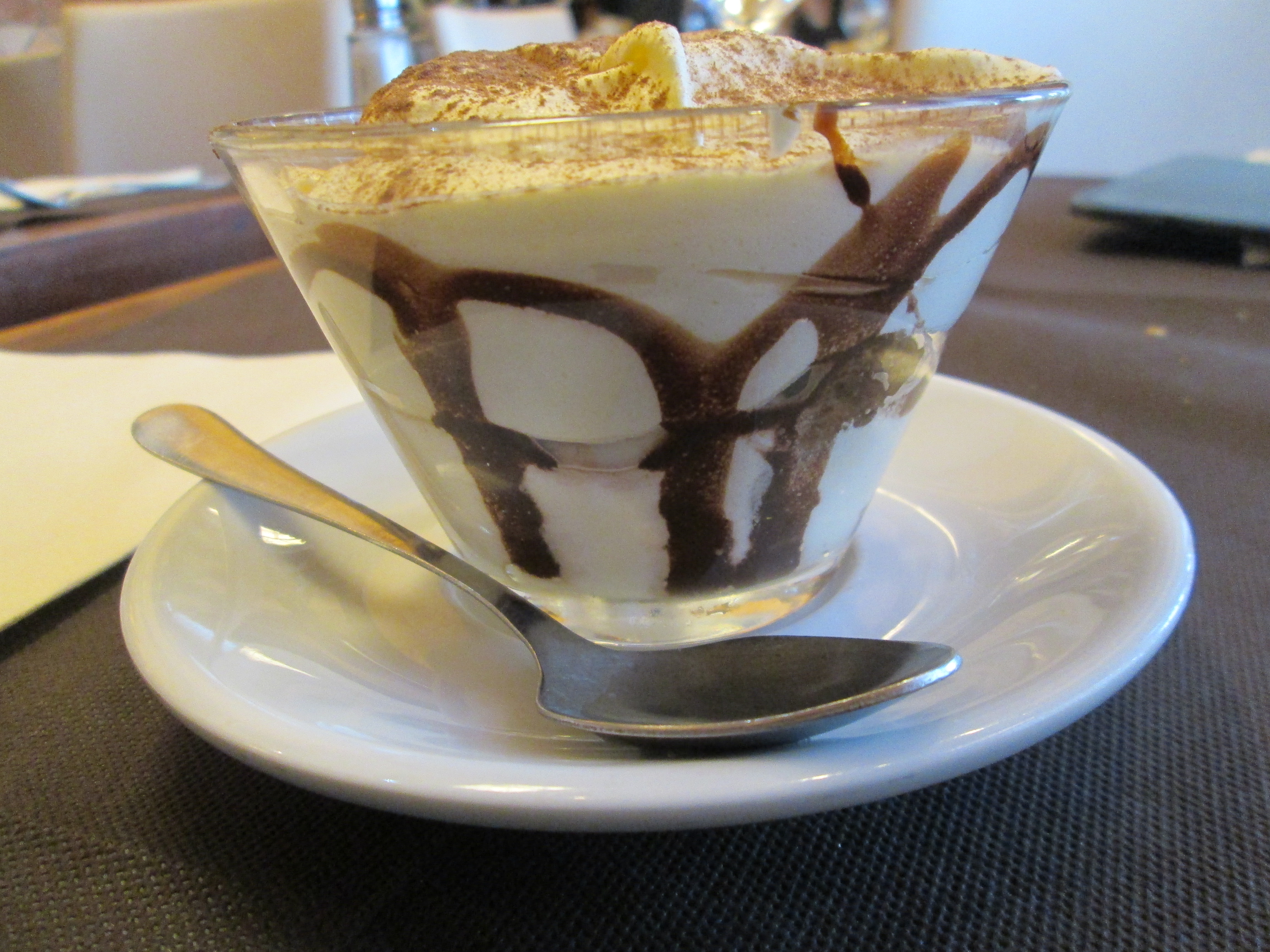
After fighting my way out of the masses, I took a break for lunch and treated myself to a delectable Tiramisu (My personal favorite dessert :D).

2013-06-01 08.42.43


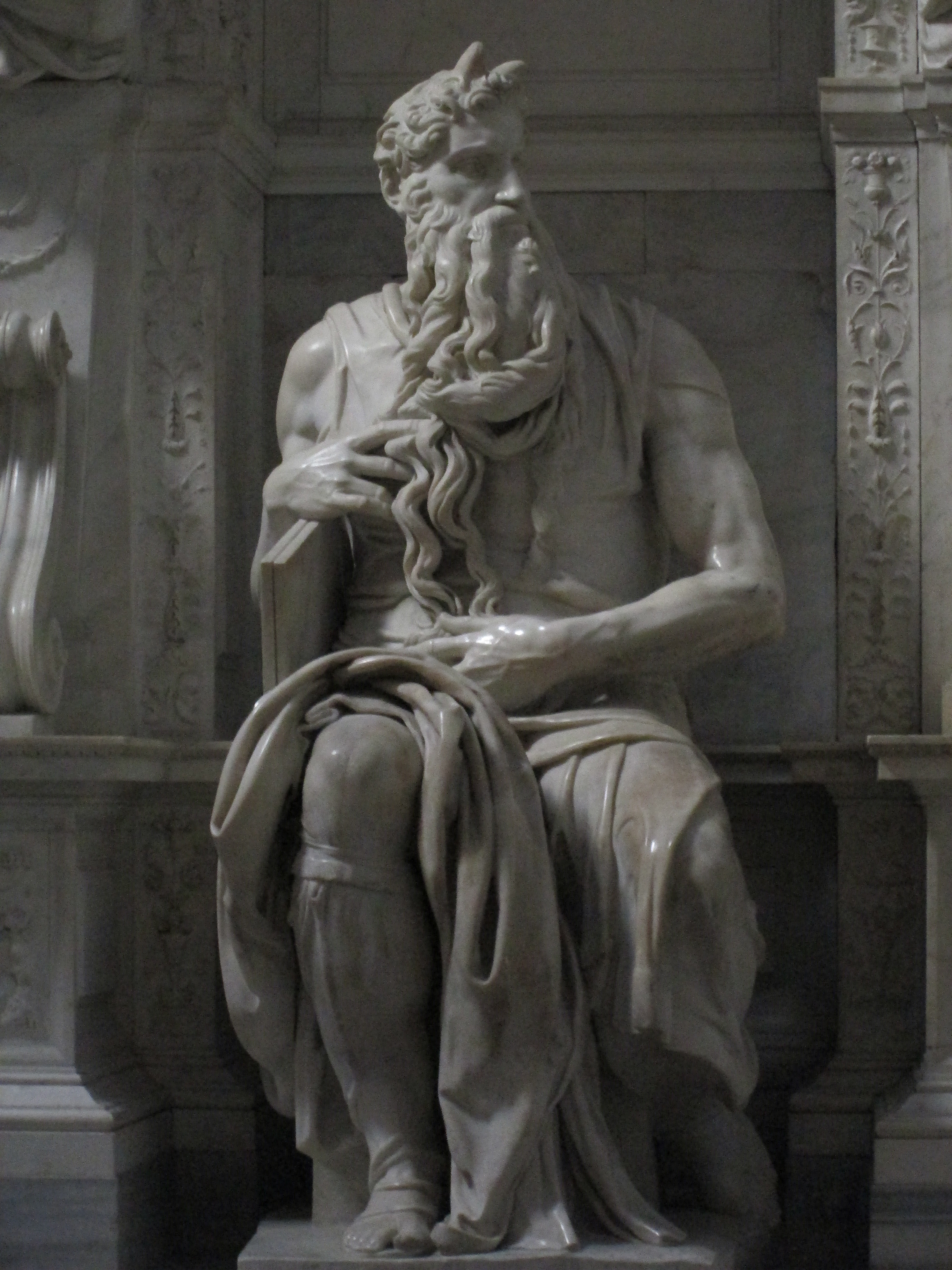
I then headed onward to a church known as St. Peter in Chains. It is the resting place of Michelangelo’s Moses.

In the words of Giorgio Vasari:

“Seated in a serious attitude, he rests with one arm on the tables, and with the other holds his long glossy beard, the hairs, so difficult to render in sculpture, being so soft and downy that it seems as if the iron chisel must have become a brush. The beautiful face, like that of a saint and mighty prince, seems as one regards it to need the veil to cover it, so splendid and shining does it appear, and so well has the artist presented in the marble the divinity with which God had endowed that holy countenance. The draperies fall in graceful folds, the muscles of the arms and bones of the hands are of such beauty and perfection, as are the legs and knees, the feet being adorned with excellent shoes, that Moses may now be called the friend of God more than ever, since God has permitted his body to be prepared for the resurrection before the others by the hand of Michelangelo.”
 
2013-06-01 08.34.27

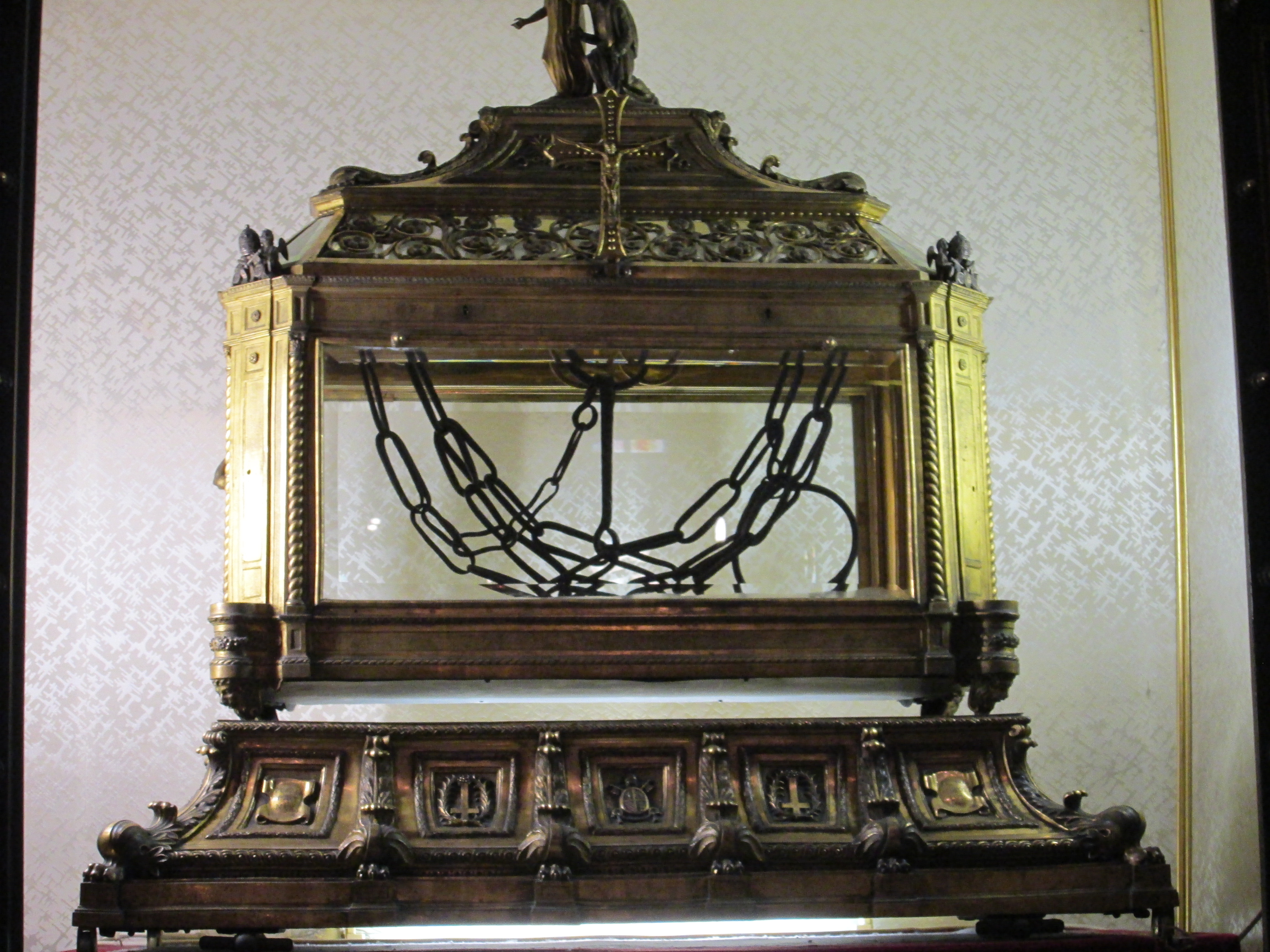
This minor basilica was originally built to house the chains that bound Saint Peter when he was imprisoned in Jerusalem. According to legend, when Empress Eudoxia presented the chains to Pope Leo I, he compared them to the chains of St. Peter’s final imprisonment in the Mamertine Prison and the two chains miraculously fused together.

2013-06-01 09.56.43

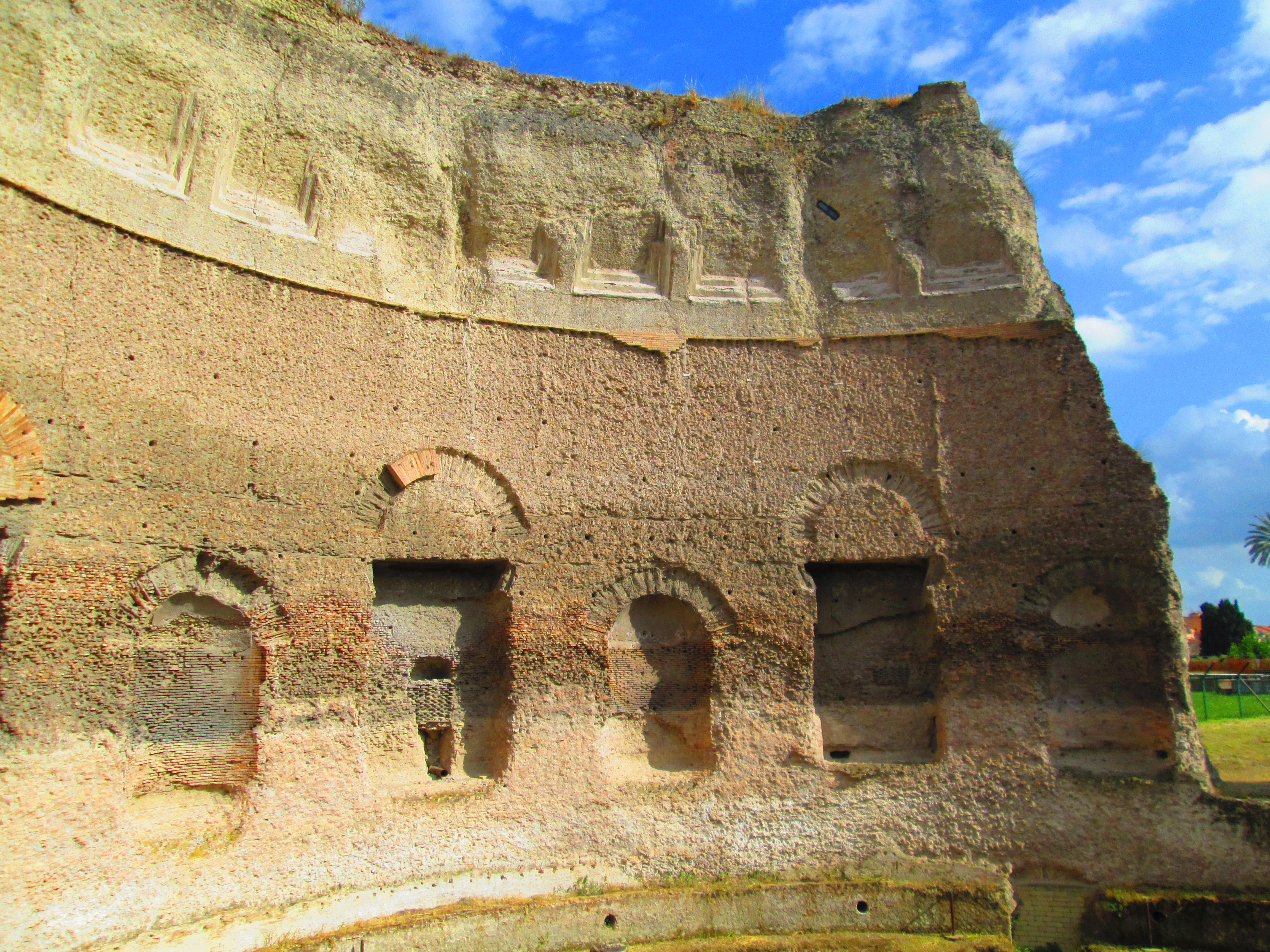
Thankfully, the sun reemerged from behind the clouds in the afternoon, and I wrapped up my day by taking a leisurely stroll on the Palatine Hill and exploring the Domus Aurea, a large landscaped portico villa built by the Emperor Nero.

What’s your take on all these Reliquaries? Do you have faith in the miraculous powers they are said to have?

Travel: Napoli Underground

Italy is a surprisingly long peninsula, requiring my trip from Venice to Napoli to last around 7 hours. Therefore, I took a night train and arrived in Napoli in the wee morning hour of 7 AM. After hauling my backpack to my hostel, I departed to explore the historic centre, without an inkling of a plan. (I had chosen Napoli as my rendezvous point so that I had easy day-trip access to Mt. Vesuvius and Pompeii. )

2013-05-27 06.07.54

Don’t get me wrong, this city is the only one on my list that legitimately terrified me. At present, the city has one of the highest crime rates in Italy; high unemployment paired with severe waste management issues continue to plague the city. Rumors of blackmail, extortion,and illicit contract tendering have emerged questioning the ethical viability of the local government. Read up on Camorra Organized Crime for a better understanding of the powerful opponents that challenge elected officials.


2013-05-27 05.36.43

Some of the most interesting churches I have visited are here. In my wanderings, I stumbled into the Church of Santa Maria delle Anime del Purgatorio ad Arco, an abode that has gained a cult-like following for the dark, yet hopeful atmosphere housed beneath it’s floors.


Traditionally, Roman Catholics view Purgatory as a state or place of purification or temporary punishment. It is where souls that died in a state of grace are believed to be preparing for the Beatific Vision in Heaven. No one in Purgatory will remain forever, or be banished to hell.

BelowWings

Origins of the ‘cult’ can be traced back to the early 1600s, when a church sought to establish a liturgical link between the living in the dead. The modes of worship for these souls vary, but express the possibility of developing a relationship through the ‘adoption’ and caring for of an individual’s remains. This ancient cult, survived despite wars and famines, and was so pervasive that Cardinal Ursi prohibited it in 1969, although it is still practiced.

Lucy


One of the most famous remains is ‘Princess Lucia.’ According to legend, the skull was that of an 18th-century teenage bride, whose tragic death evolved into her becoming the unofficial protector of young brides.


My next destination was a stop at San Lorenzo Maggiore; as a church and monastery, its presence is rooted in the Franciscan order, one that existing during St.Francis of Assisi‘s lifetime. Its location is at the precise geographic center of the historic center of the ancient Greek-Roman city. I was able to explore the streets of the original Roman Market at the intersection of via San Gregorio Armeno and via dei Tribunali.

2013-05-27 06.18.252013-05-27 06.24.15

Travel: Getting Lost in Venice

2013-05-26 E


After we arrived back at the port, we decided to snack at this quaint little coffee shop. I had the best Prosciutto, Salami, and Blue Cheese sandwich on an Olive Bread Bun. Mmmmm. 🙂


2013-05-26 B

We then enjoyed a walk along the, for lack of a better term, ‘boardwalk’, and enjoyed a view of the Venice Lagoon and the well-documented Ponte dei Sospiri. It is an enclosed bridge made of white limestone with barred windows that connects the Doge’s Palace to the prison’s interrogation room.

The translation of the Sospiri is ‘sighs’. The ‘Bridge of Sighs’ gained its name because it was the final view of the beautiful Venice that convicts enjoyed before they were imprisoned within their cells.

2013-05-26 A

A local legend states that lovers will be granted eternal love and bliss if they kiss on a gondola under the bridge at sunset, as the bells of St. Mark’s Campanile toll.

What a contradiction! The walkway is historically associated with imprisonment and a prisoner’s longing for freedom, but over the years it has become significant for amorous couples?

2013-05-26 DOur last stop was a visit to the Grimani Palace. It was originally a residence of the doge Antonio Grimani, but was rebuilt by his heirs Vittore and Giovanni Grimani from 1532 to 1569.

Unfortunately they had much of the interior decoration was either removed or deteriorated, so I was quite disappointed by the lack of ‘Period-Escape’ provided. Photos were also not allowed, but I managed to sneak a few of some outstanding Stucco and Rococo. 😛

2013-05-26 C

Travel: Werfen

Having exhausted my itinerary for the local culture, I took a tedious, but rewarding day-trip to Werfen. It is about a 45-60 min train ride away in the heart of Salzach Valley. From here, it was an additional 20-min shuttle ride to reach the entry point for the length path up to the Eisriesenwelt, the largest Ice Cave System in the world. This gorgeous natural wonder is only accessible from May to October, and the journey to the peaks of the Tennengebirge Mountains is not for the faint of heart.

2013-05-23 05.53.07

Even after arriving at the ticket office, to reach the cave entrance entails approximately 1-hour of inclined hiking, paired with 2 heart-rending funicular rides at a speed that makes your heart plummet to the shear drop you see below you.

On the way up, snow began to fall, and I was in awe at being able to experience part of the Austrian Alps and savor the snow in the middle of May.

2013-05-23 05.55.57The cave was discovered by Anton Posselt in 1879, he was merely able to explore into the first 200-meters. Prior to that, despite acknowledging the cave’s existence, the locals avoided it believing it to be an entrance to hell. Years later,Alexander von Mörk, recalled Posselt’s discover, and led expeditions into the caves beginning in 1912. Killed in 1914 during WWI, his remains are immortalized by an urn containing ashes in a niche deep within the ice’s recesses.

Cave_Eisriesenwelt_3eisriesenwelt-see-theworld-pic0

It is difficult to quantify how humble the sprawling caverns and massive ice formations made me feel. As the thawing snow seeps through the cave’s limestone, chilly winter winds blow into the cave, freezing the dripping water. Thus, the first kilometer of the cave entrance provides a radius within which unique, but characteristically similar sculptures are formed every season. The names that each have earned requires a sprinkling of imagination. Examples include Hymir’s Castle, Frigga’s Veil, and the Ice Organ.

2013-05-23 03.24.26

Closer to the train station, sits the HohenWerfen Castle, a former fortification built between 1075 and 1078. It was one of three major castles constructed to secure the Salzburg Archbishopric against the forces of King Henry IV. Unfortunately, this proved to be for naught, as Gebhard was expelled in 1077, and did not return to Salzburg until 1086, where he died at Hohenwerfen two years later.

In the following centuries, the property was used by Salzburg Rulers, not only as a military base, but also as a place of residence or a hunting retreat. It has withstood the German Peasant’s War, and been used as a state prison with a dark history; Wolf Dietrich Raitenau died here in 1617 after six-year of imprisonment.

2013-05-23 08.26.23

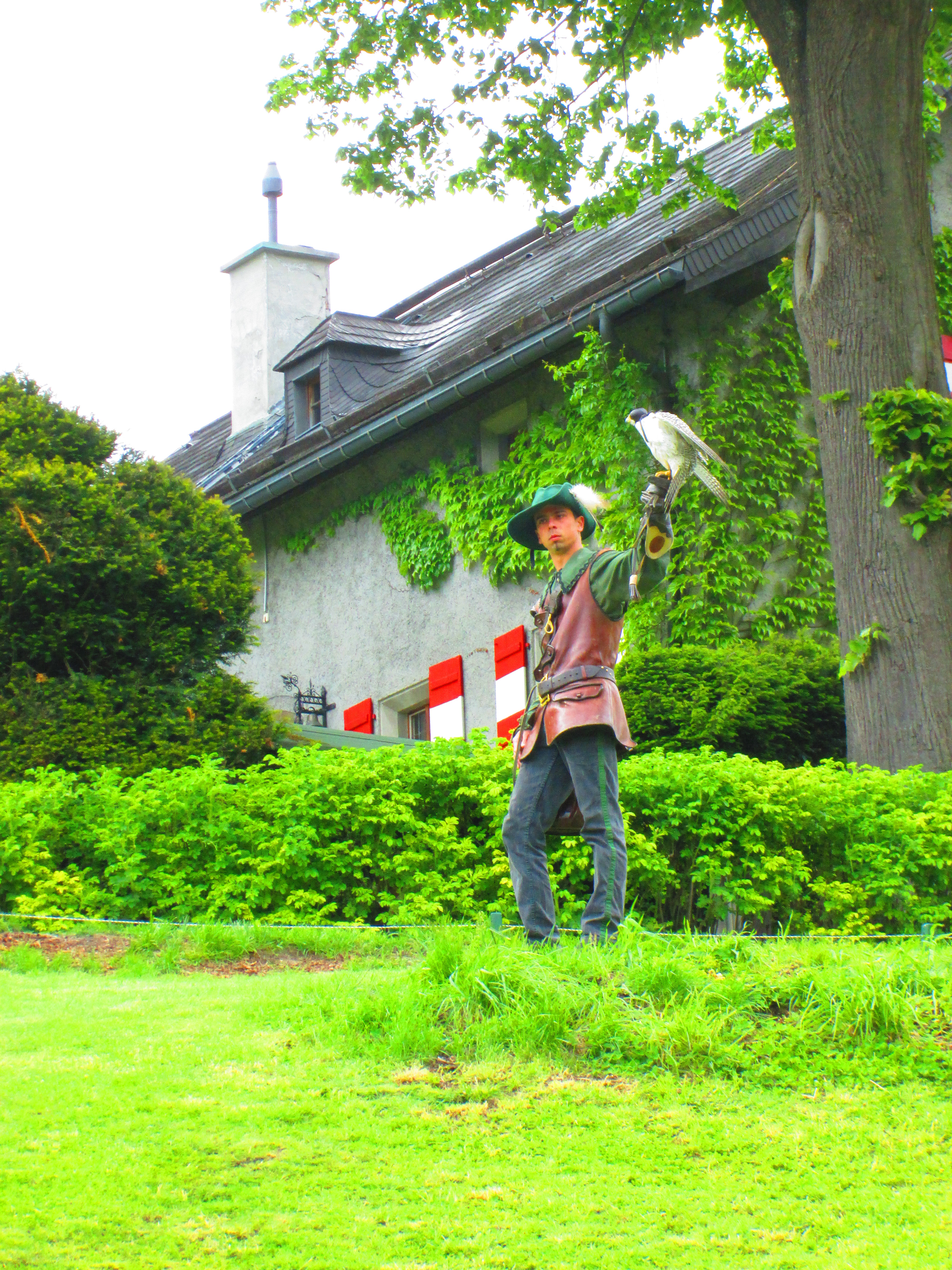
I enjoyed witnessing the expertise of the historic Salzburg Falconry, which helps demonstrate the heritage of using Birds of Prey as hunting companions.

What are your thoughts on hunting? Do you consider it a fashionable hobby that requires skill? Or do you consider it murder, of animals that are at the mercy of carnivorous and belligerent mankind?

Travel: Munich (Part II)

I apologize. At this point in my travels, the wanderlust has worn off and a sense of ennui has caught up with me. Hence, today was a lazy, hazy day. I had little motivation to cram as many events into my day as possible, therefore I slept in late, and meandered through town at a leisurely pace.

2013-05-19 04.46.13

First stop entailed a short visit to the Cuvilliés Theatre, which lies within the aforementioned Residenz Complex. It was ordered by Maximillian III Joseph outside the palace after a fire destored the previous St. George’s Hall. Construction spanned from 1751 to 1753 according to the design of François de Cuvilliés in rococo style.

If you look closely at the pictures from the Residenz Interior, you will see several rooms also exhibiting the Rococo Style. It is in this theater that Mozart’s Idomeneo premiered in 1781 and Carl Maria von Weber’s Abu Hassan in 1811. The theatre was intelligently meant to be multifunctional, and this was achieved via a floor that could be lowered or raised for ballroom festivities.

Lacking in energy, despite accomplishing little, I gave myself a reprieve by immersing myself in some casual reading and a glass of hot Chai (My favorite milky tea). Finally, summoning the impetus to move, I ventured to visit, now don’t be surprise, another palace.

2013-05-19 17.56.02

The Nymphenburg Palace was the main summer residence of the rulers of Bavaria designed in the Baroque style. The visionary was the italian architect Agostino Barelli, who was comissioned by the couple Ferdinand Maria and Henriette Adelaide of Savoy in 1664. It is within these walls that King Ludwig II was born in 1845, as the great-grandon of King Max I Joseph.

2013-05-19 07.50.162013-05-19 08.32.15

While open to the public, the building continues to be home and chancery for the current Franz, Duke of Bavaria, who is head of the house of Wittelsbach. Jacobite, who trace the line of the British Monarchy through legal heirs of James II of England, he is the legitimate heir of the Stuart claims to the throne of Great Britain.

It is interesting to note however, that despite merely having a dukedom, this claim has not been actively pursued. I can’t say that I would have done the same in his place, albeit that as a ‘commoner’ I grew up with Disney Movies and imagined a happily ever after as a princess with a prince on a white horse to rescue her.

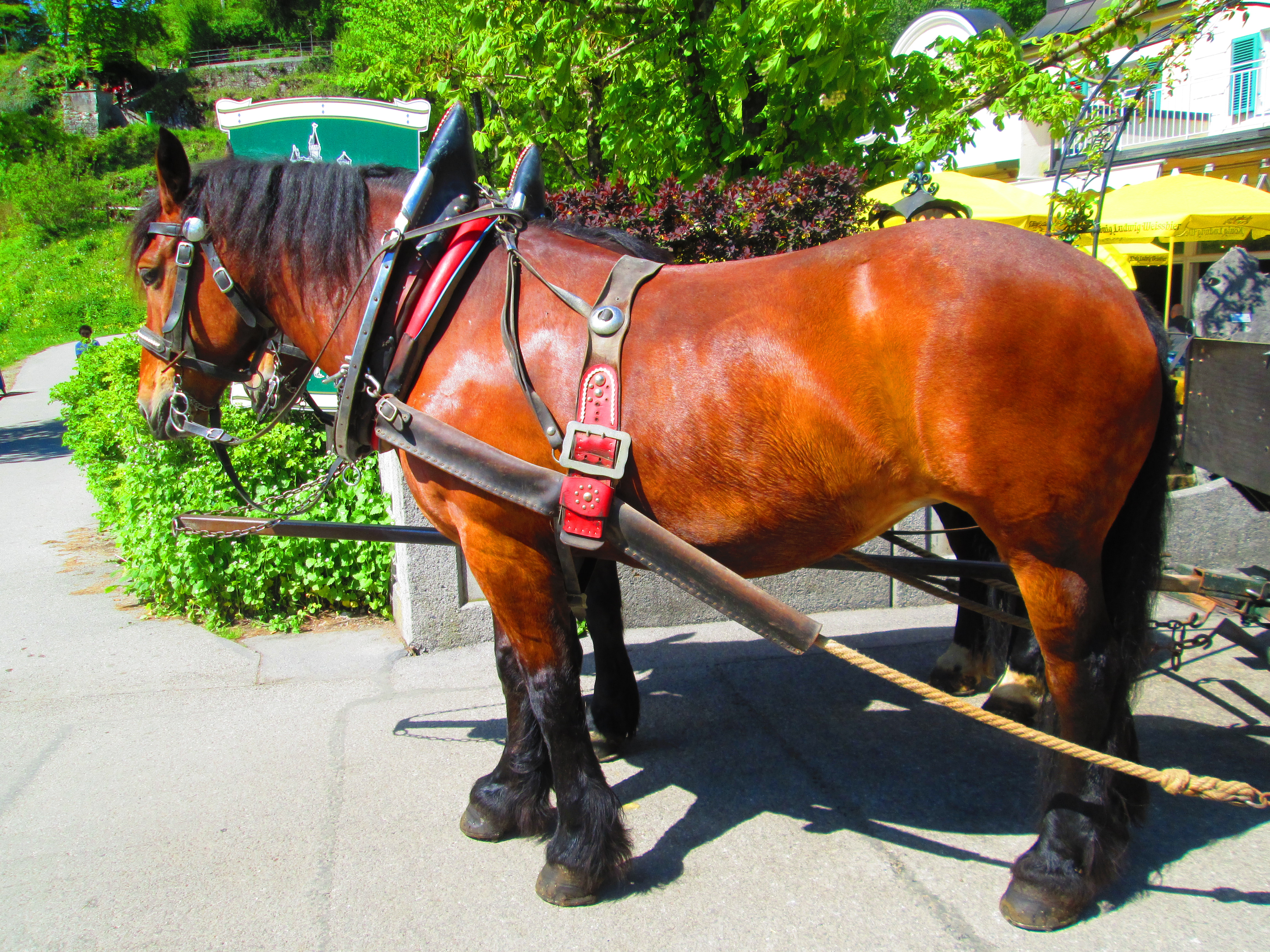
The Coach Museum:

2013-05-19 09.36.522013-05-19 09.49.44

The Porcelain Museum:

2013-05-19 10.17.532013-05-19 10.40.50

What are your thoughts on Monarchy? Democracy? I’m torn. While the medieival, monarchical period of history seems romantic, I also know that the power resulted in sever abuse and neglect of the general population. This doesn’t mean, however, that certain monarchs wielded economic and political decisions for the benefit of his people, in contrast to selfish gain by exploiting his subjects.

Travel: Bavarian Magic Castles

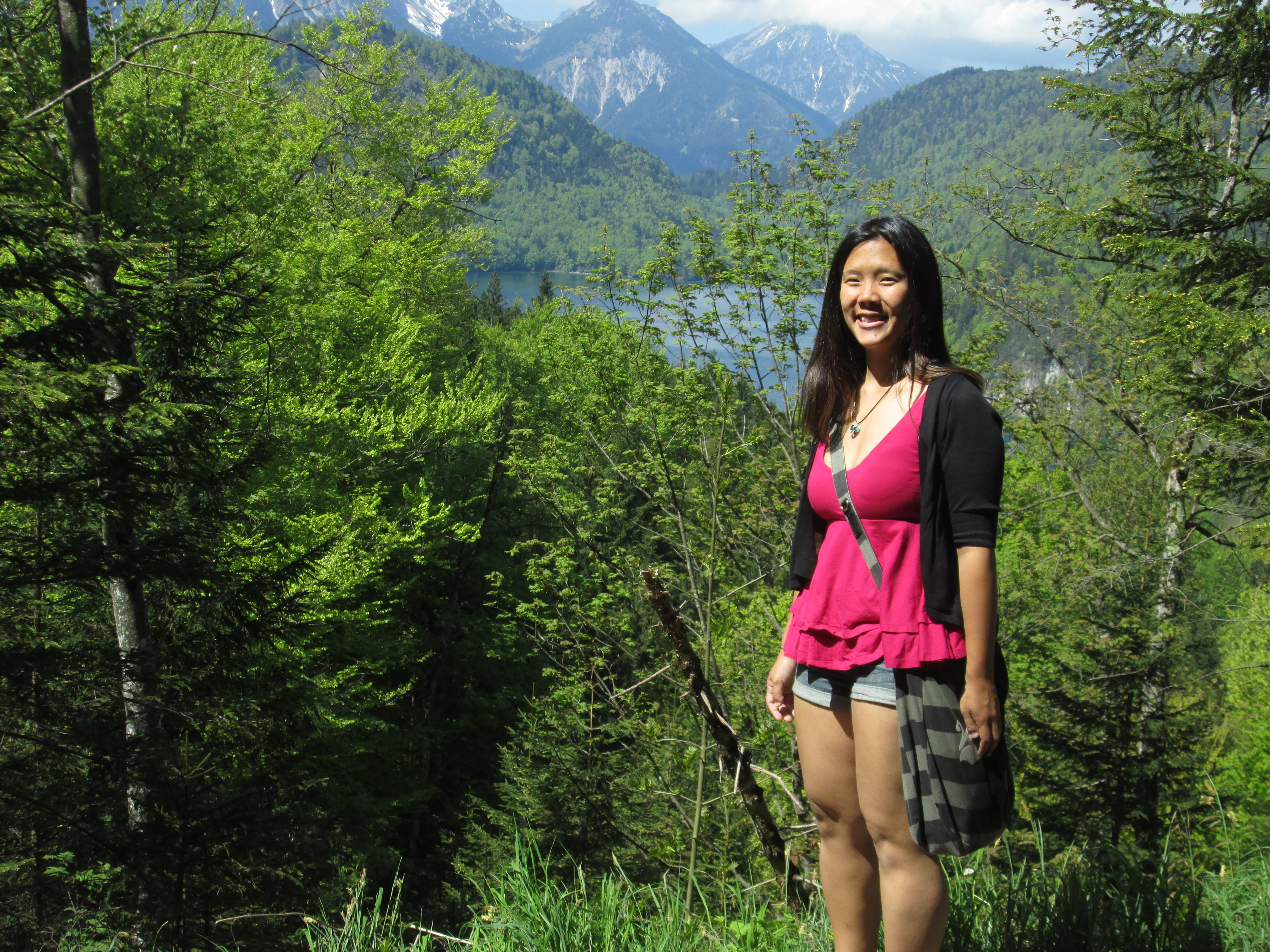
At this point in my trip, I have become increasingly uninterested in man-made structures, despite the story they tell about the daily lives of the clergy, royalty, and general population. Therefore, I took a day-trip to the heart of Bavaria; thankfully it was a gorgeous day filled with sunshine, that complemented my intense need to traipse through the natural undergrowth of the mountains.

2013-05-18 08.26.10

Modern day Bavaria comprises a large chunk of Southern Germany (approximately 27,200 square miles); this is 20% of the nation.  It originated as a duchy during the middle of the first millennium. Previously it had been inhabited by  Celts, but Bavarians began to emerge north of the alps, seeming to have coalesced out of the population remaining in the aftermath of the 5th century Roman withdrawal.

2013-05-18 04.07.46

This led way to the Duchy of Bavaria which was ruled by the house of Agilolfing from 554 to 788, before the last Duke Tassilo III was deposed by Charlemagne. In the following four centuries, numerous families held the post, but rarely did this extend beyond three generations.


2013-05-18 04.19.23

Fast-forward to the 1800s, when Napoleon abolished the Holy Roman Empire, Bavaria became a kingdom in 1806. It then preserved its independence by capitalizing on the rivalries during the 1866 Austro-Prussian War.

Eventually, Bavaria became a part of the German Empire despite religious tension between the protestant Prussian state and the Bavarian Catholic Population. 

2013-05-18 07.19.10

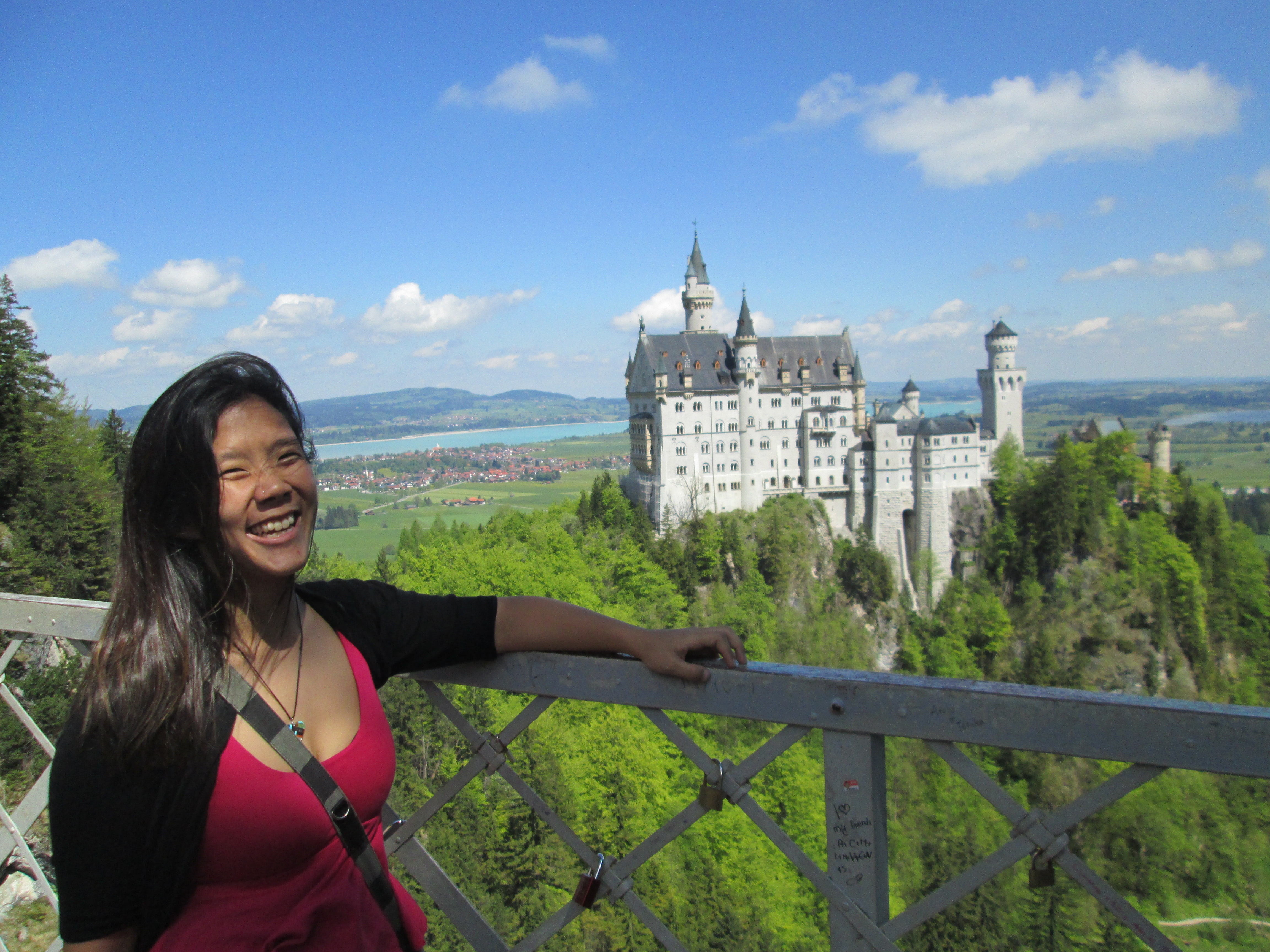
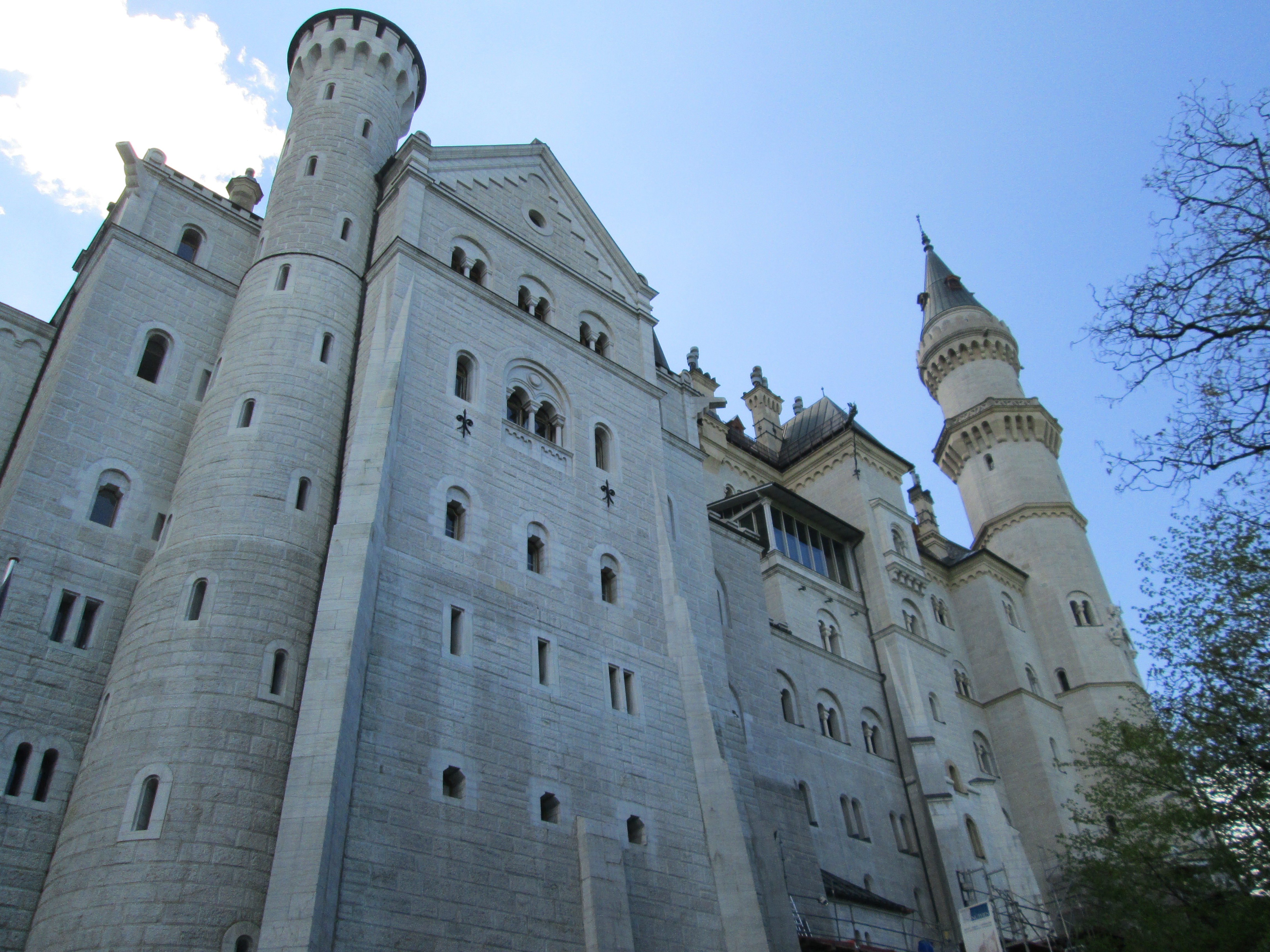
Sorry, I always let myself get overly enthusiastic about the origins and history of an area. Perhaps I should have chosen to be a history major or study anthropology or archeology instead! Nonetheless, the mountainous region was beautiful and capped off by a visit to Neuschwanstein Castle.

2013-05-18 04.33.33


The brainchild of Ludwig II, it was designed as a  Romanesque Revival in homage to Richard Wagner. Fortunately, Ludwig paid for the construction with his personal fortune or via borrowing instead of selfishly utilizing public funds. Unfortunately, the king died before the castle was complete, and therefore many of the major features remain unbuilt to this day, with only 14 rooms finished.

The Myth:

2013-05-18 04.52.31

Ludwig II is often called ‘Mad King Ludwig‘. His younger brother Otto was considered insane, so it is claimed to be hereditary. He was deposed on the grounds of mental incapacity despite lack of medical support.

Furthermore Ludwig II died under mysterious circumstances when both him and is doctor were found dead in the waist-high water of Lake Starnberg the day after his confinement. The doctor had managed to sustain unexplained injuries to both his head and shoulder.


Next Newer Entries