Travel: Vibrancy of Athens


2013-06-05 05.37.43Departing from the shadow of the Parthenon,  we climbed higher up the outcropping, where the Greek Flag proudly waved high above the city.

From here, we caught a great view  of the Temple of Zeus in the distance.


2013-06-05 05.44.13

Despite its current ruined state, this structure was once magnificent. As chief architect, Libon was charged with the intricate carving of the metopes and triglyph friezes. These were then  topped by pediments filled with sculptures in the Severe Style (now attributed to the “Olympia Master” and his studio).

This temple was the resting place of the Statue of Zeus, which was one of the Seven Wonders of the Ancient World. The Chryselephantine sculpture was made by the sculptor Phidias and approximately 13 m (43 ft) high It took him 12 years to complete it. On Zeus’s head was a sculpted wreath of olive sprays. He held a figure of Nike, the goddess of victory, made from ivory and gold in his right hand, and in his left hand, a scepter made with many kinds of metal, with an eagle perched on the top. His sandals were made of gold and so was his robe. His garments were carved with animals and with lilies. The throne was decorated with gold, precious stones, ebony, and ivory.

2013-06-05 06.24.47

The Erechtheum was encountered on our way down the slope.The current temple was built between 421 and 406 BC; It is surmised that the architect may have been Mnesicles, but it is known that the sculptor/mason was Phidias.

The namesake for this temple is derived from the theory that it was built in honor of the legendary king Erechtheus, who is referenced in Homer’s Iliad as a ruler of Athens during the Archaic Period.

An iconic view is the Porch of the Caryatids, more commonly known as the “Porch of Maidens” wherein six draped females are the supporting columns. This building is associated with some of the most holy relics of the Athenians, the  xoanon of Athena Poliasthe marks of Poseidon‘s trident and the salt water well, the sacred olive tree, and the burial places of the mythical kings Cecrops and Erechtheus, to name a few.

According to the myth, Athena’s sacred snake resided here. It was fed honey-cakes by Canephorae and when it refused to eat the cakes it was considered a disastrous omen.
Travel: Acropolis of Athens

Cherishing the shut-eye, we rose late in the morning. Despite the  beautiful weather and the sun shining bright in the sky, and knowing that quite a bit of uphill hiking would be involved, we decided to hop a metro to the base of the Acropolis, grabbing some coffee and croissants on the way. At the foot of the hill, we were fortunate to get into the region for free as it was a celebration day for the country.

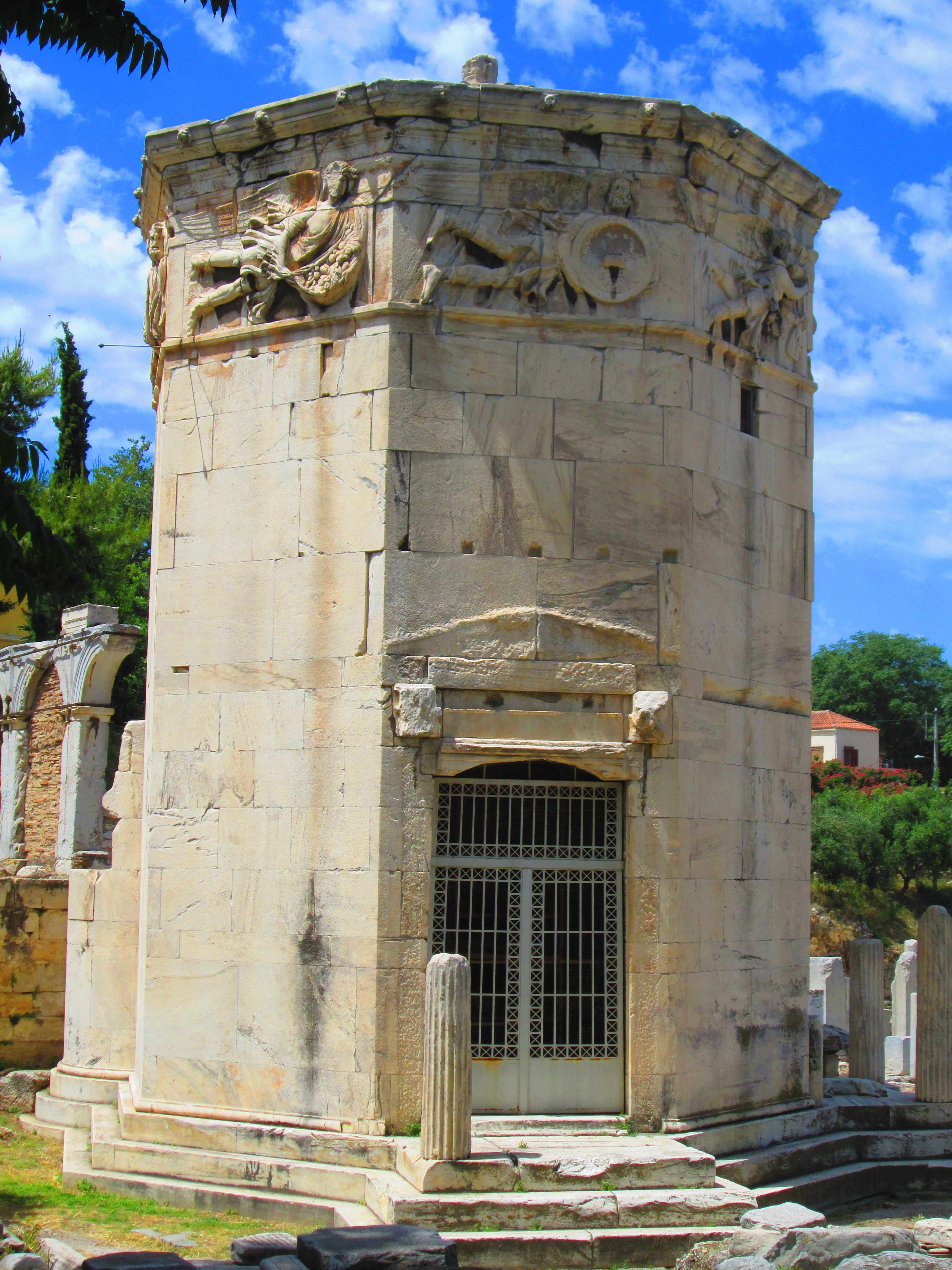
Some aimless meandering around the hill occurred while we searched for the appropriate path toward the top. On the way, we bypassed the Tower of the Winds.

2013-06-05 04.06.14It is an octagonal marble clock tower that resides in the Roman Agora whose primary function was to function as a “timepiece” or horologion.  The structure is 12-metres tall, has a diameter of 8-metres, and was topped in antiquity by a weathervane-like Triton indicating the wind direction. There is a frieze that depicts eight wind deities corresponding to the eight cardinal directionsBoreas (N), Kaikias (NE), Eurus (SE), Apeliotes (E), Notus (S), Livas (SW), Zephyrus (W), and Skiron (NW) – and below it, eight sundials.


Continuing up the Agora, we observed the ruins of the Temple Of Zeus from a distance, and a view of vibrant Athens.

2013-06-05 04.16.40

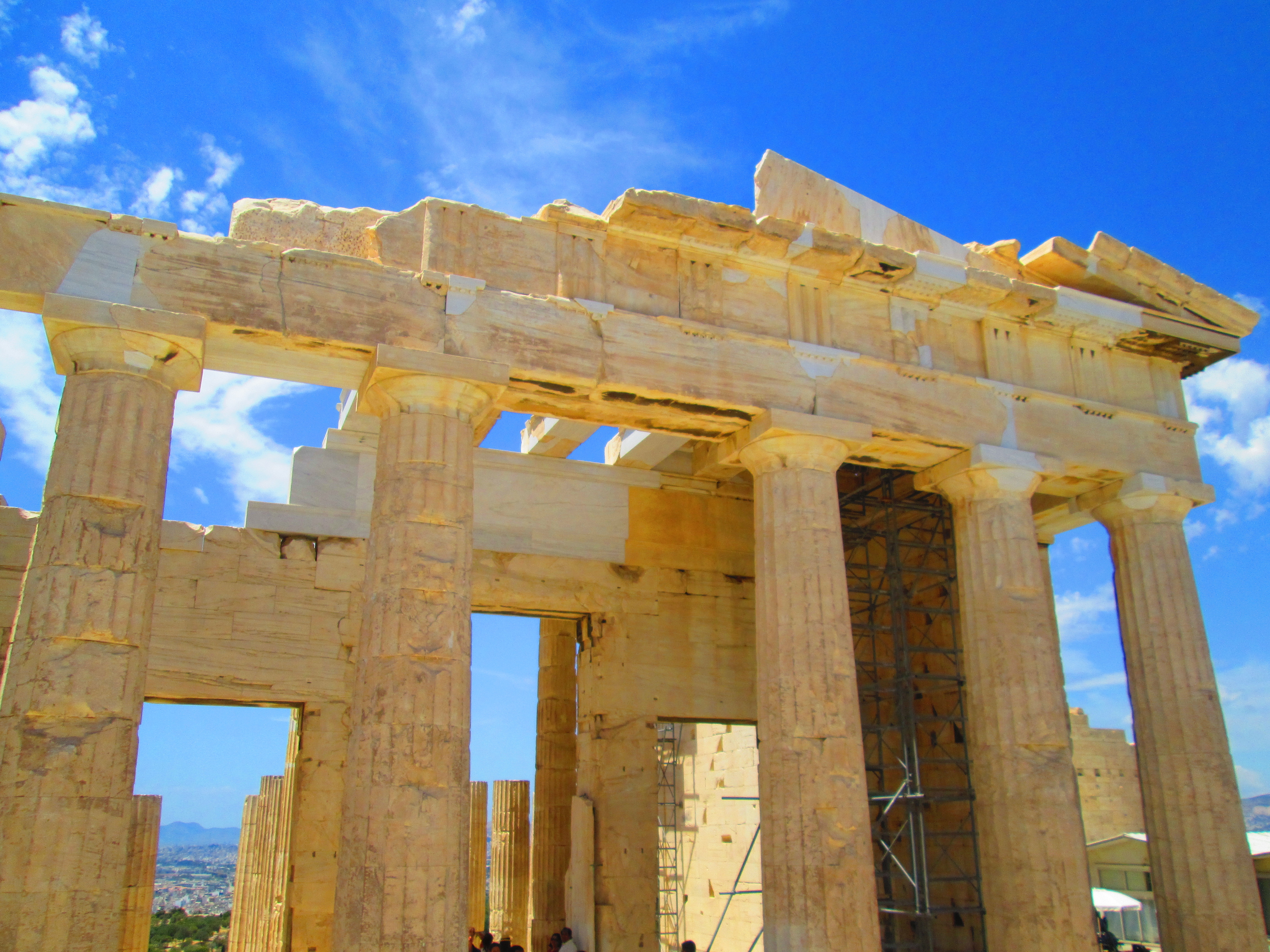
Not too long later, we ascended the steps of the Propylaea, a symbolic gateway that serves as the entrance to the Acropolis. (The Brandenburg Gate was inspired by this). Immediately beyond this window, one comes across the awe-inspiring Parthenon.


2013-06-05 05.33.52

Constructed from 447 to 438 BC, the temple was dedicated to the goddess Athena at the height of the Athenian Empire‘s power. It is recognized as the most important surviving building of  Classical Greece, and considered the culmination of the development of the Doric order. The decorative sculptures are the epitome of Ancient Grecian Culture, and this structure is an enduring symbol the continues to inspire future generations. It represents Ancient Greece, the prosperity of the  Athenian democracy, and the evolution of Western Civilization.

One of my favorite mythological stories, is of about how Athena beat Poseidon to become the patron of this great city.

2013-06-05 05.12.02

The citizens offered a competition to the greek gods in which each deity had to present a gift to the city, with the people serving as the judges. Poseidon struck the ground with his trident, and from it a salt water spring arose, providing a means of trade and water. However, due to it’s saltiness, it was not potable.

In turn, Athena presented them with the first domesticated olive tree. With this, Athena won the competition, for the olive tree provided wood to build and carve from, oil to light fires and cook, and olives as food.

Do you enjoy mythology? What is your favorite story? Why does it strike a chord in you?


Travel: Together at Last

I arrived in Athens just in time to rendezvous with my two friends for dinner.

2013-06-04 14.12.382013-06-04 14.37.342013-06-04 15.18.22

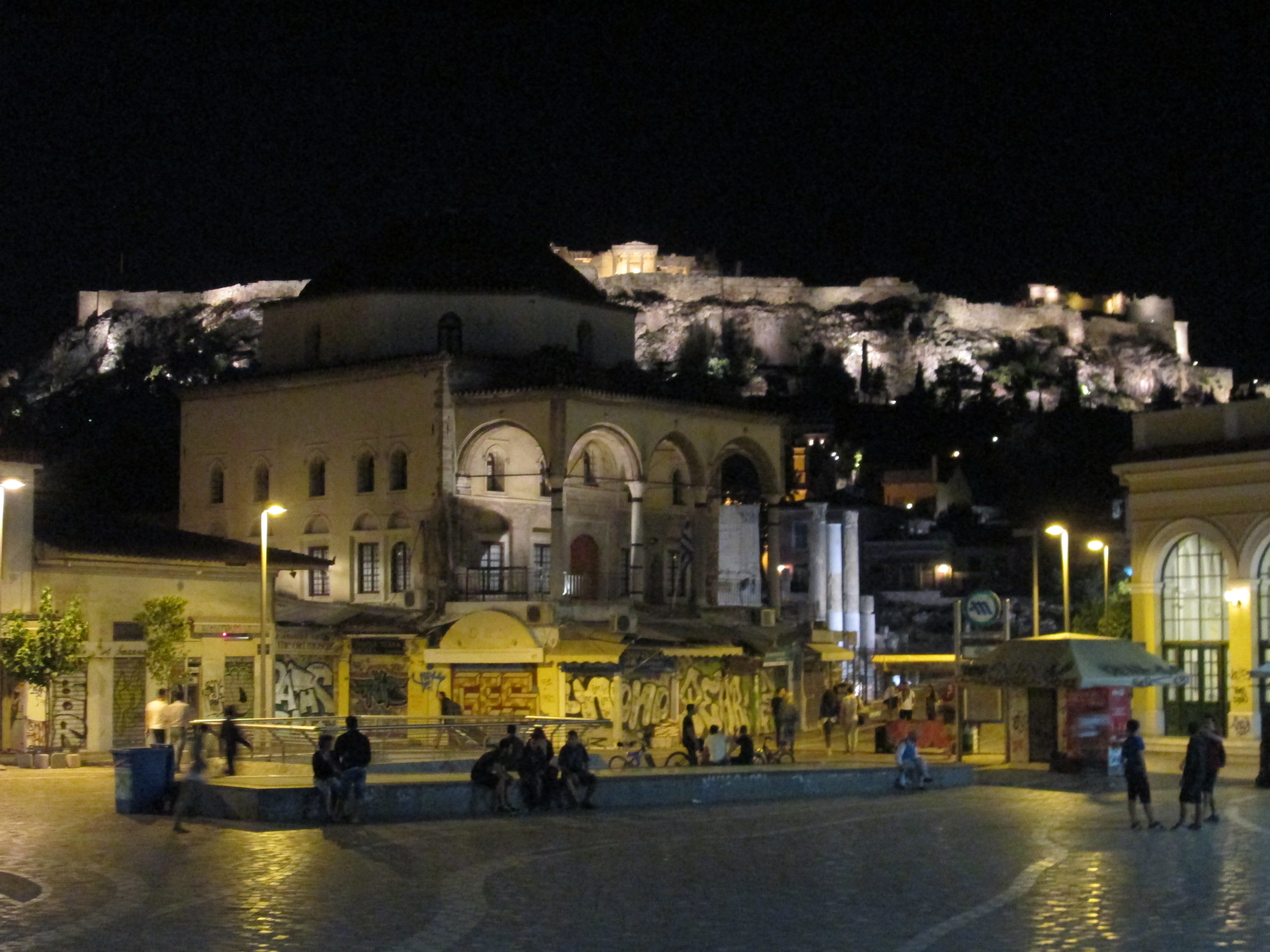
After, we walked through the streets and gazed upon the Acropolis in its nighttime splendor while relaxing on the square. Not too long after, a couch-surfing individual that one of my friends had been in contact with, arrived to socialize. (We were being hosted at another couch-hotel by a generous student).

Honestly, we were pretty skeptical.

2013-06-04 16.30.11

He took us down a questionable alleyway that was very close to abandoned in terms of human presence. My other friend and I were lagging behind and looking at each other with concerned faces. However, one friend courageously (or blindly) surged forward, and after swinging open an ominous wooden door, we were greeted by a lively, yet eclectic open atmosphere.

An upstairs level was accessed via stairs and an external porch, the open rooms play host to changing art exhibitions; unfortunately, I can’t recall what the gallery was exhibiting at the time. I remember it being dark and creepy, it may have centered around some context of violence.

2013-06-04 18.18.58

The ground floor had your standard bar and the individual associated with it. The four of us settled into a couple of chairs at a table, and the ladies ordered some sangria while the man ordered a beer.

To describe the couch-surfer as a “character” is to term it lightly. He was amongst the unemployed population of the suffering Greek population, and freelances in electronics repair. If you imagine a conspiracy theorist and an anarchist in one body, this fellow would be pretty close. He was also an avid smoker (as are most Europeans).

Calling it a night, we bid αντίο to our strange friend and strolled back to our couch-host’s apartment to rest and strategize for the next day. (This is when I found out that none of us are adept at falling asleep before midnight).

Travel: Longest Travel day EVER.

The last leg of my trip, I was excited to rendezvous with some good friends from home sweet home, New Jersey. 🙂 Unfortunately I was meeting with them in Athens, Greece, and getting there from Italy is not quite as straight forward as it seems with the EuroRail Pass. I first had to manage to get myself to the Eastern side of Italy to a town called Bari. From there, I was to hop a ferry (paying only the fuel surcharge and port tax) which would get me to the Grecian Peninsula Town of Patras (I’d figure out the last leg when I got to Greece.)

2013-06-03 05.29.16

Rather than rushing through each transit option, and to avoid a stopover on my train, I chose a 7 AM train. This allowed me a few hours to explore Bari before being sequestered on a ferry for the 18-hour cruise time.

2013-06-03 05.32.41

Arriving in this quaint town around 10 AM, I strolled to the port to acquire my tickets and stretch my legs. Being a port town, the sun was bright, the air was fresh with salt, and the atmosphere was relaxed.

2013-06-03 05.49.38After obtaining my tickets and boarding time, I decided to embrace the concept of aimless wandering, particularly because I hadn’t planned on having time to explore Bari.

2013-06-03 08.56.30

I first ventured into the Basilica di San Nicola.  Built between 1087 and 1197 during the Italo-Norman domination of Apulia, the foundation of this church has roots in the theft of St. Nicholas‘s relics from his original shrine in Myra (present-day Turkey).

2013-06-03 09.14.27

 According to the legend, the saint, having passed by the city on his way to Rome, had chosen Bari as his burial place. Despite the competition against Venice, Bari succeeded, and the relics safely landed on May 9, 1087 under the custody of its Greek custodians and Muslim masters.

It has maintained  religious significance as an important pilgrimage destination both for Roman Catholics and Orthodox Christians from Eastern Europe.

2013-06-03 09.17.00

I paused to take a picture of my self with St. Nicholas himself! The storage place for luggage was closed since it was the off-season and a Sunday, so I did all this exploration with an approximately 25-lb backpack strapped to my back.

Travel: Barbarians or Heroics?

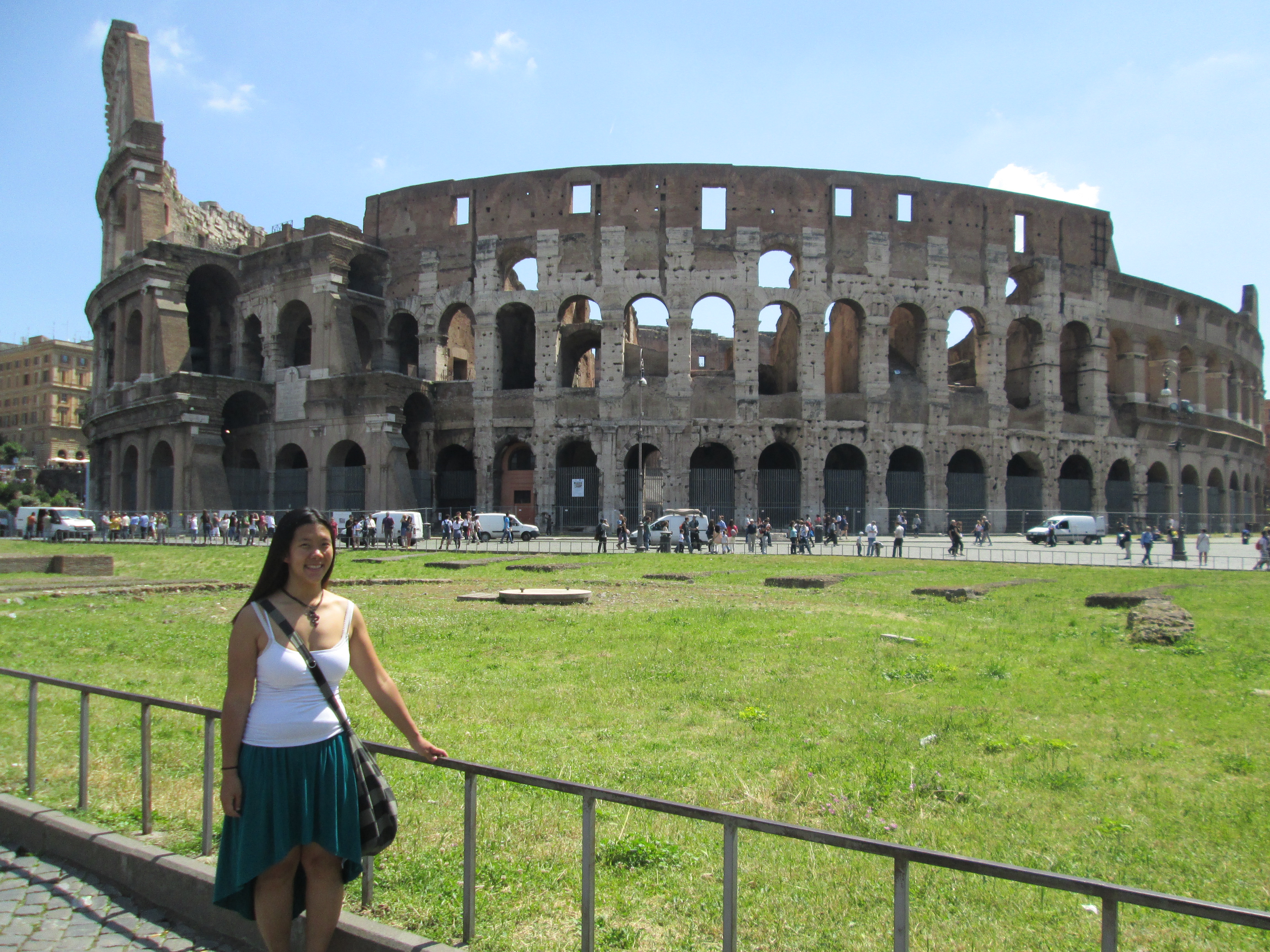
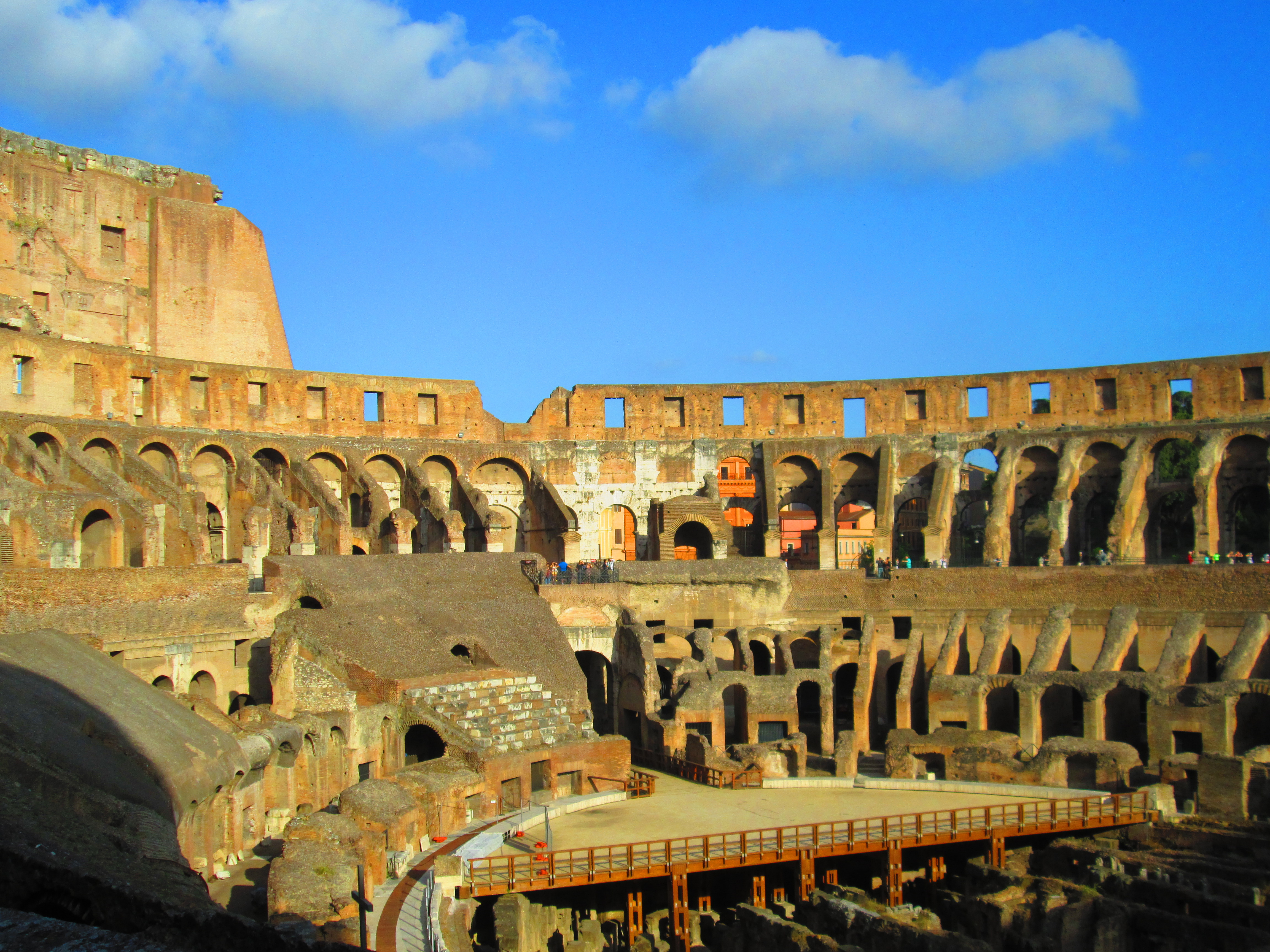
Although my muscles were silently crying tears, I made my way onwards toward the Colosseum that silently towers in the background. However, I first attempted to give my bones a reprieve by pausing in the shadows of these ancient roman giants and taking in their confident stances that have stayed steadfast despite the centuries.

2013-06-02 04.21.08

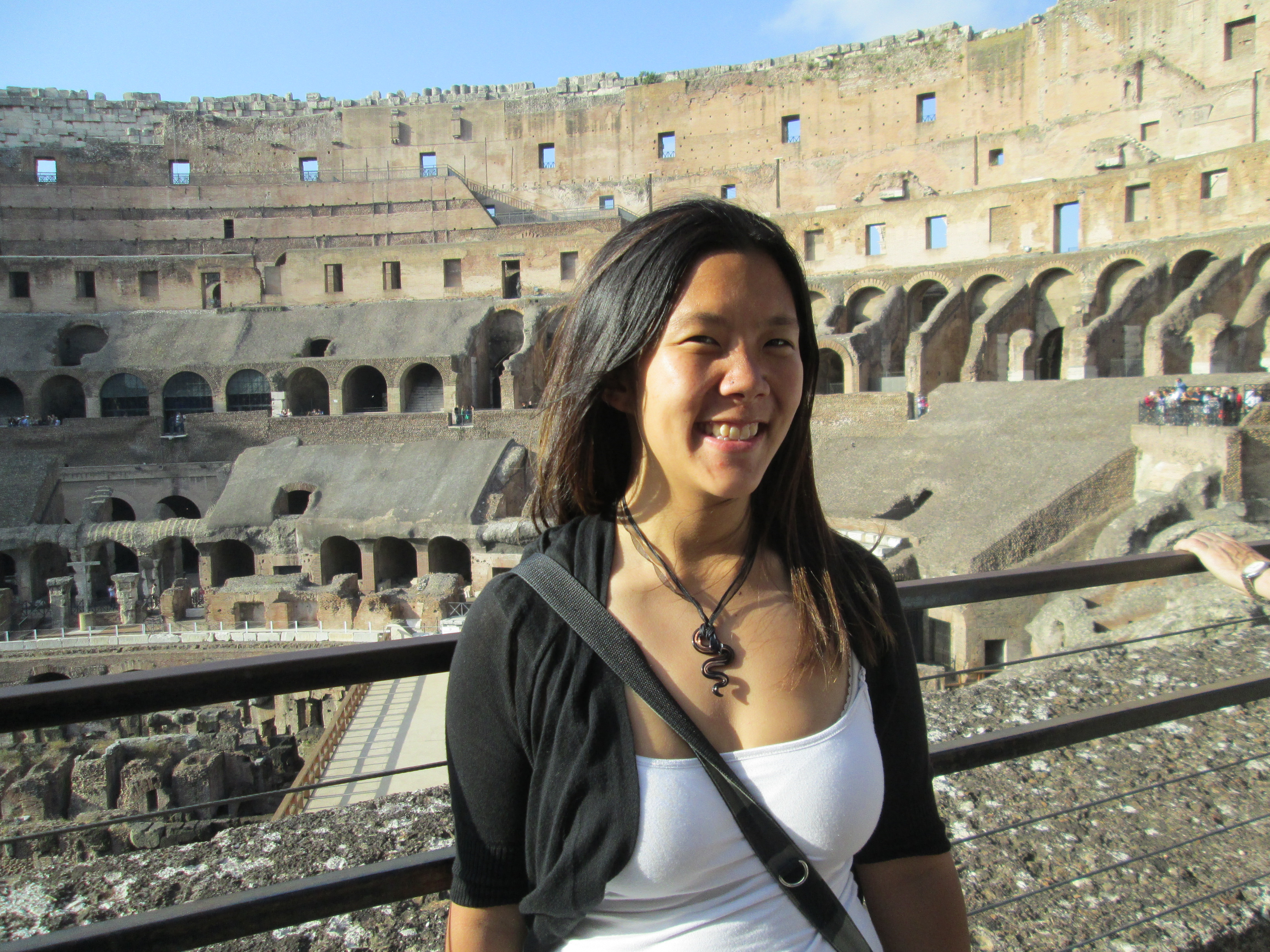
I know I’ve used this word far to often, but the first thought that comes to mind is ‘breathtaking.’ Its no wonder that it has consistently held its title as a ‘Wonder of the World.’ The structure is a monstrosity after all; built of concrete and stone, it has weathered the ages and remains the largest amphitheater ever constructed to date.

2013-06-02 11.29.01

The iconic name ‘Colosseum’ is believed to be derived from the nearby (although no longer in existence) colossal statue of Nero that was erected in bronze and towered at a height of 30m within the vestibule of Emperor Nero‘s imperial villa the Domus Aurea.

Considered a pinnacles of Roman Architecture and Engineering, it lies east of the Roman Forum and was erected during the Flavian dynasty under the reign trifecta of VespasianTitus, and Domitian.

2013-06-02 11.41.57

Shadows creep as the sun sets.

It held between 50-80 thousand spectators and was the site of gladiatorial contests and public spectacles for the entertainment of the public.

Events such as mock sea battles, animal hunts, reenactments of famous battles, classical mythological dramas, and even executions were regularly on display.

Unfortunately, it fell into disuse in the early medieval era, and was only reincarnated by necessity as  grounds for housing, workshops, religious quarters, a fortress, a quarry, and a Christian shrine. It even maintains close connections with the Roman Catholic Church, as each year, on Good Friday, the Pope leads a torchlit “Way of the Cross” procession originating from the Roman Ruins surrounding the Colosseum.

An epigram by the Venerable Bede often misattributed as a reference to the colosseum states the following:

 Quamdiu stat Colisæus, stat et Roma; quando cadet colisæus, cadet et Roma; quando cadet Roma, cadet et mundus 

“As long as the Colossus stands, so shall Rome; when the Colossus falls, Rome shall fall; when Rome falls, so falls the world”

Although the correct structure in question was the previously stated Statue Of Nero, one can’t help but consider the subtle symbology behind this statement.

The Roman’s were certainly an articulate and knowledgeable civilization that flourished for centuries despite systematic weaknesses. They knew how to effectively wield power across long distances, develop a unified army, distribute responsibilities amongst individual civil administrations, develop a system to control public finances, and maintain a class system. The empire didn’t fall in a sudden blaze of glory, but was whittled away at by circumstance, much as the Colosseum continues to lose it skeleton to greedy stone robbers.

I realize this is a de facto analogy, but it really causes one to ponder. What do you think?

Travel: In the Steps of Michaelangelo

English: Capitoline Hill, Rome. Image:Fratelli...

Before we could enter the Roman Ruins that day, my new friend and I stumbled upon the tail-end of a parade in celebration of some unknown national holiday. I’m still not clear on what it was, but I would have been thrilled if I had managed to catch sight of all the festivities. Unfortunately for us, we discovered that it delayed the opening of our attractions for the day. Rather than being open that morning, neither the Imperial Forum, nor the Colosseum were going to open until that afternoon. Instead, we took a long stroll around Capitoline Hill, one of the seven hills of Rome and the original Citadel of the first generation.

The Abduction of the Sabine Women, by Nicolas ...

It is at this site that the Sabines, were granted access by the Roman maiden Tarpeia. For her treachery, she was the first to be flung from a steep cliff overlooking the Roman Forum. Later named the Tarpeian Rock after the Vestal Virgin, it became a frequent execution site.

The first Sabines immigrated to Rome following the Rape of the Sabine Women.

You may recall an earlier post from the beginning of my trip when I went to visit the Fatima Sanctuary, the following brings to mind how individuals can be so devout to subject themselves to pain in the name of their faith. Legend says that  Julius Caesar approached the foot of the hill and Jupiter’s Temple on his knees in penance for his actions in the civil wars and to avert an unlucky omen of Jupiter’s wrath. He was moved to do so after he suffered an accident during one of his triumphs. Despite this, he was murdered six months later, and Brutus and his conspirators barricade themselves within the temple.

Excuse me, I’ve gotten a bit off track from my original topic., back to Michelangelo!

What I’ve come to love about Rome are the subtle nuances that pervade every cornerstone and recess of its ancient culture and architecture. A prime example of this is the Piazza del Campidoglio.

Michelangelo's design for Capitoline Hill, now...

In his prime, he was commissioned by the Farnese Pope Paul III to design a plaza. The Pope wanted a symbol of the new Rome to impress Charles V, who was expected in 1538. Having an opportunity to build such a monumental civic space, granted Michelangelo the opportunity to make a resonating statement reestablishing the grandeur of Rome.  His initial designs for the Piazza date from 1536 and were formidably extensive.

In an emblematic display, he chose to accentuate the reversal of the classic orientation of the Capitoline. Instead, the gesture turned Rome’s civic center away from the ancient Roman Forum  to face the direction of Papal Rome and the Christian church  represented by  St. Peter’s Basilica.

2013-06-02 05.01.33

His made a bold metaphorical statement:

“This full half circle turn can also be seen as Michelangelo’s desire to address the new, developing section of the city rather than the ancient ruins of the past.” ~In the wise words of Wikipedia

I have so much more I want to say about how Michelangelo used his ingenuity to address problems such as a sloped site and the lack of building facades facing each other squarely, however, I will leave that to your research. The structural engineer in me is trying her hardest not to bore you with devious architectural solutions.

Travel: Roman Ingenuity

I suppose I could have visited these vestiges of Roman Power earlier on during my stay in Rome, but those days were fraught with cloudy skies and doubtful rain. The scenery and the nobility of these shrewdly crafted sprawling complexes is best observed by admiring their height against the deep, blue sky, and pondering the shadows they leave behind. Still standing 2 Millenia later, the longevity of these structures are a testament to the Roman Empire‘s influence and power.

2013-06-02 04.41.44

The word awe-inspiring has certainly been used by me more times on this trip than I can count. In this case, I feel that it is well deserved, although my tender feet may not acknowledge this compliment since the square area that was traipsed across tested their limits.

As you can imagine, the lines to get into these archaeological ruins tend to be lengthy, I ventured there with a girl who was staying at the same hostel as me, unfortunately, it is at the lines that we split up. I had invested in the Roma Card, a visitor pass that allowed me to bypass the lines, and I was simply not eager to bide my time with her.

My first stop was the Roman Forum.

2013-06-02 07.44.23

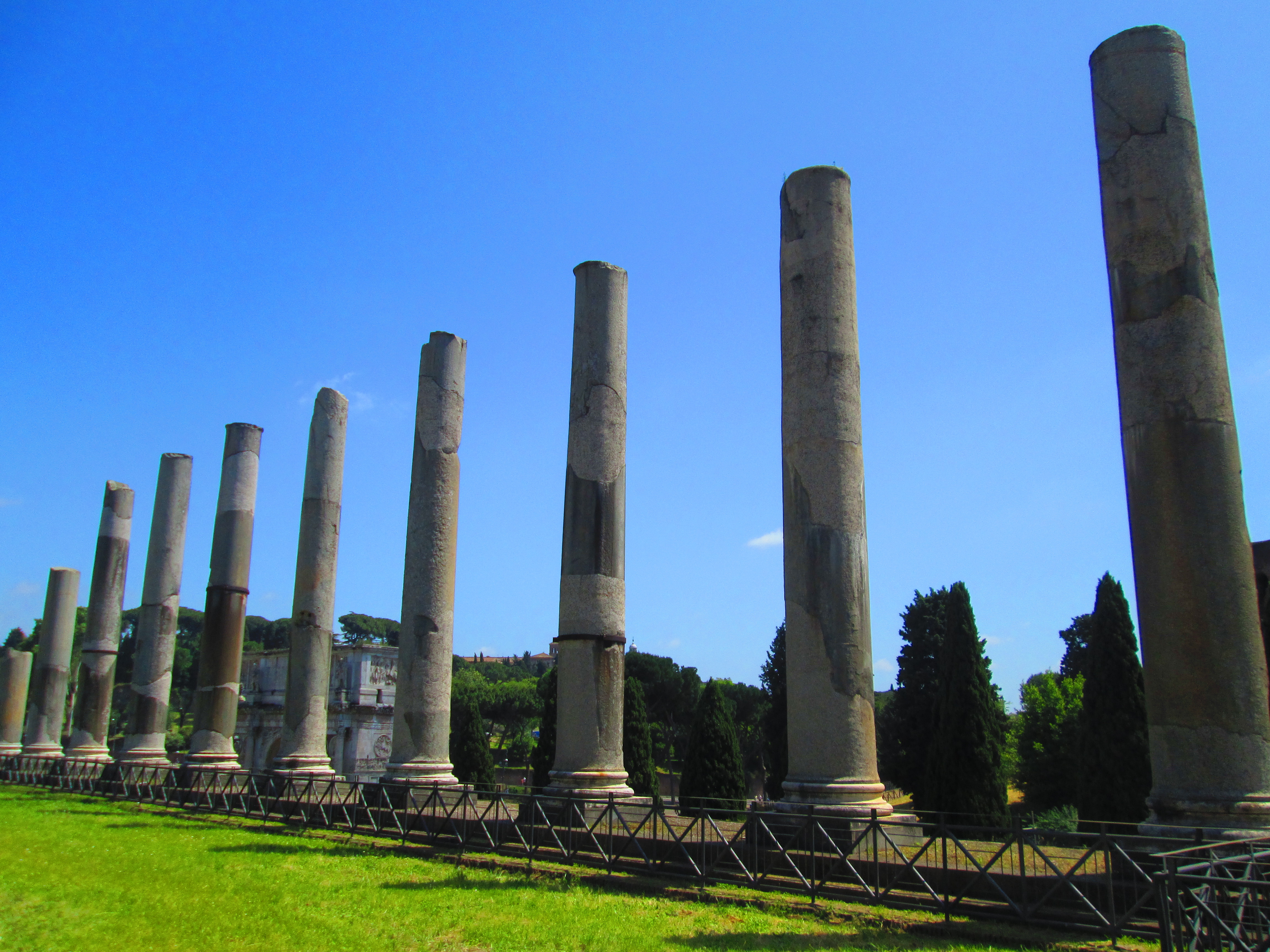
This complex was located in the center of the city and houses the important government buildings of this ancient civilization. It was the main social environment for its citizens, a square for public speeches, criminal trials, triumphal processions and elections. The venue was used for gladiatorial matches and was the nucleus for the commercial affairs of the city.

2013-06-02 05.49.08

I literally lost more than half my day here! There are so many towering structures and secret little niches that are delicately foiled in bright green moss. It’s definitely not an area that you can rush through, because smelling the air, and envisioning the daily lives of Roman Citizens is a must.  Believe me, my feet were absolutely KILLING me by the end of it, but I just couldn’t bring myself to rush through the subtle nuances of heritage that are exuded with each step. (I think that is a grammatically correct sentence…)

Travel: Legacy of St. Peter

So, I meant to wake up super early to line up for St. Peter’s Basilica in order to avoid the long lines. This turned out to be a useless endeavor, since my travels had worn down my energy stores. I ended up not arriving in Vatican City until around 10 AM, unfortunately, at that point there was a line wrapping around the circumference of St. Peter’s Square, and it was beginning to drizzle.

2013-06-01 04.46.40

I ended up standing behind a nice couple from the states for the duration of 1.5 hours, and we enjoyed a conversation concerning the weather, traveling, the current state of the economy.

Due to my professional line-waiting experience (from attending the Shanghai World Expo) I was the first to jump on a group that budged their way in front of us. I was not able to eject them however, due to a language barrier, and the lack of efficiency in the overall line system. No barricades or lanes are offered, and all of a sudden a two-person wide line suddenly expanded to an eight-person wide line. I certainly have many suggestions to offer concerning how to improve the basilica’s egress.

2013-06-01 05.22.10

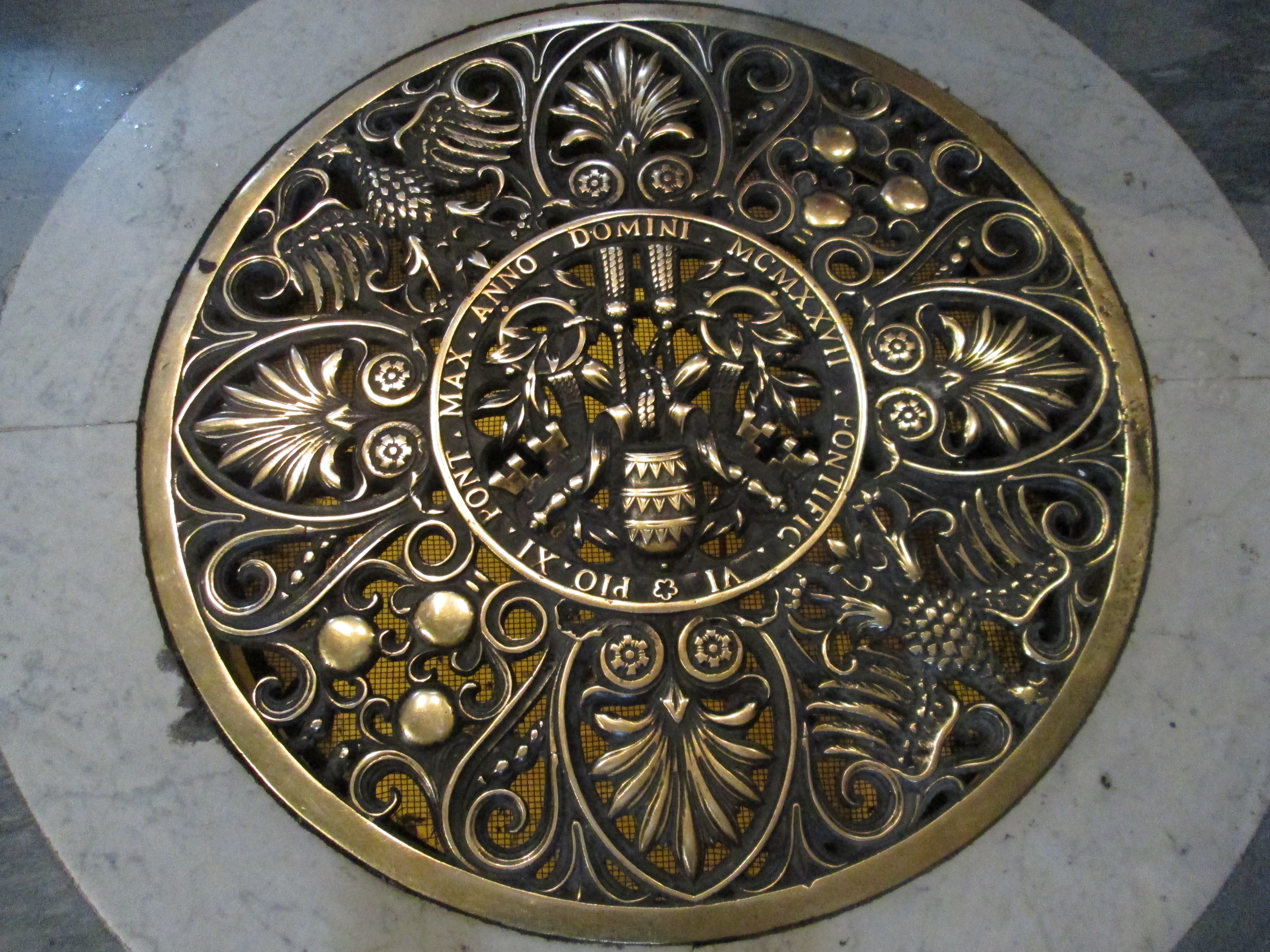
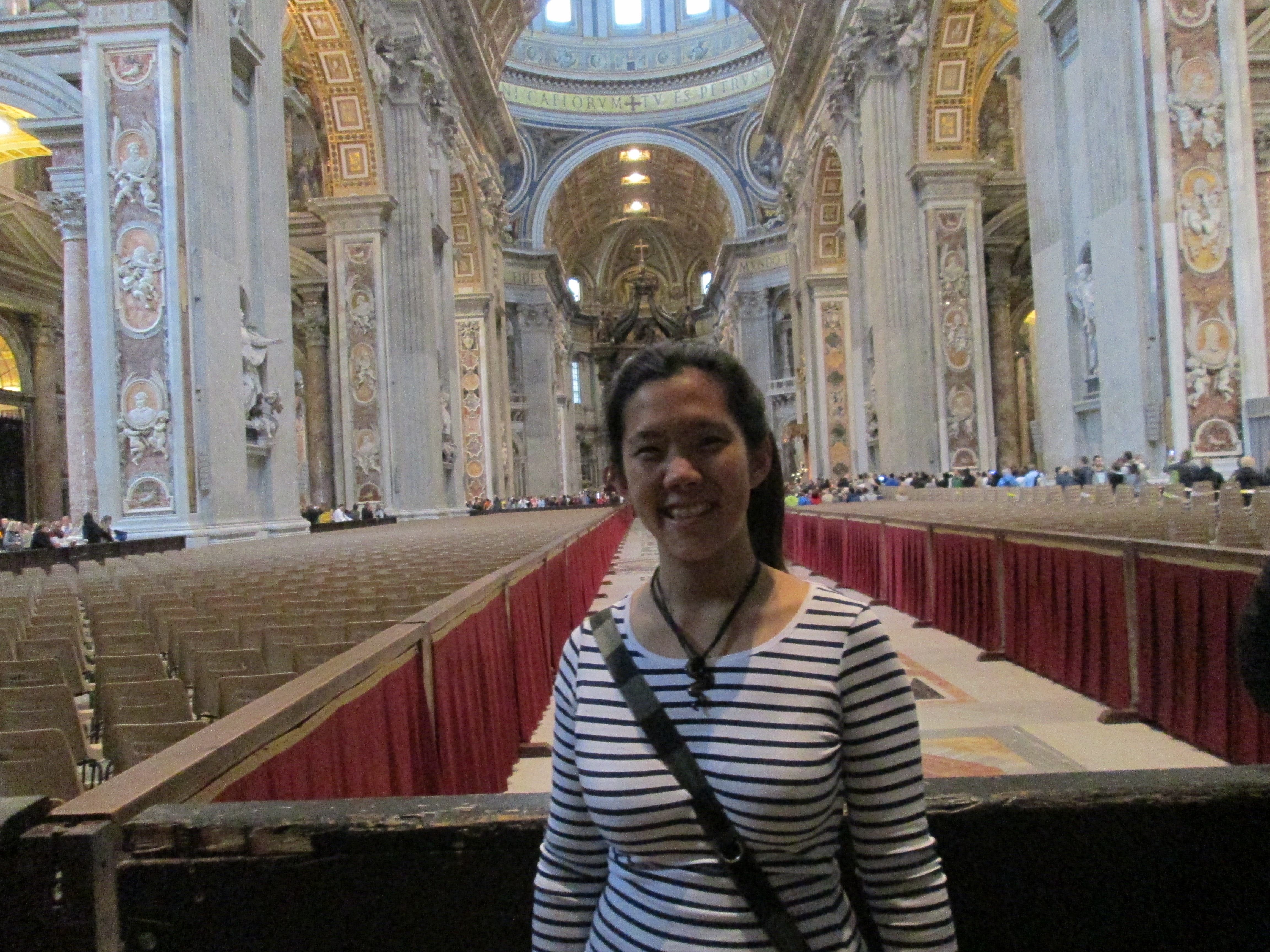
Finally getting inside, I was completely floored by the beauty of the interior. Designed by Donato Bramante , MichelangeloCarlo Maderno, and Gian Lorenzo Bernini, it is known as the most famous example of Renaissance Architecture. Following Roman Catholic tradition, this landmark building lies on the burial site of Saint Peter, the first Bishop of Rome and therefore first in the line of the papal succession. His tomb lies directly below the altar.

2013-06-01 04.41.11

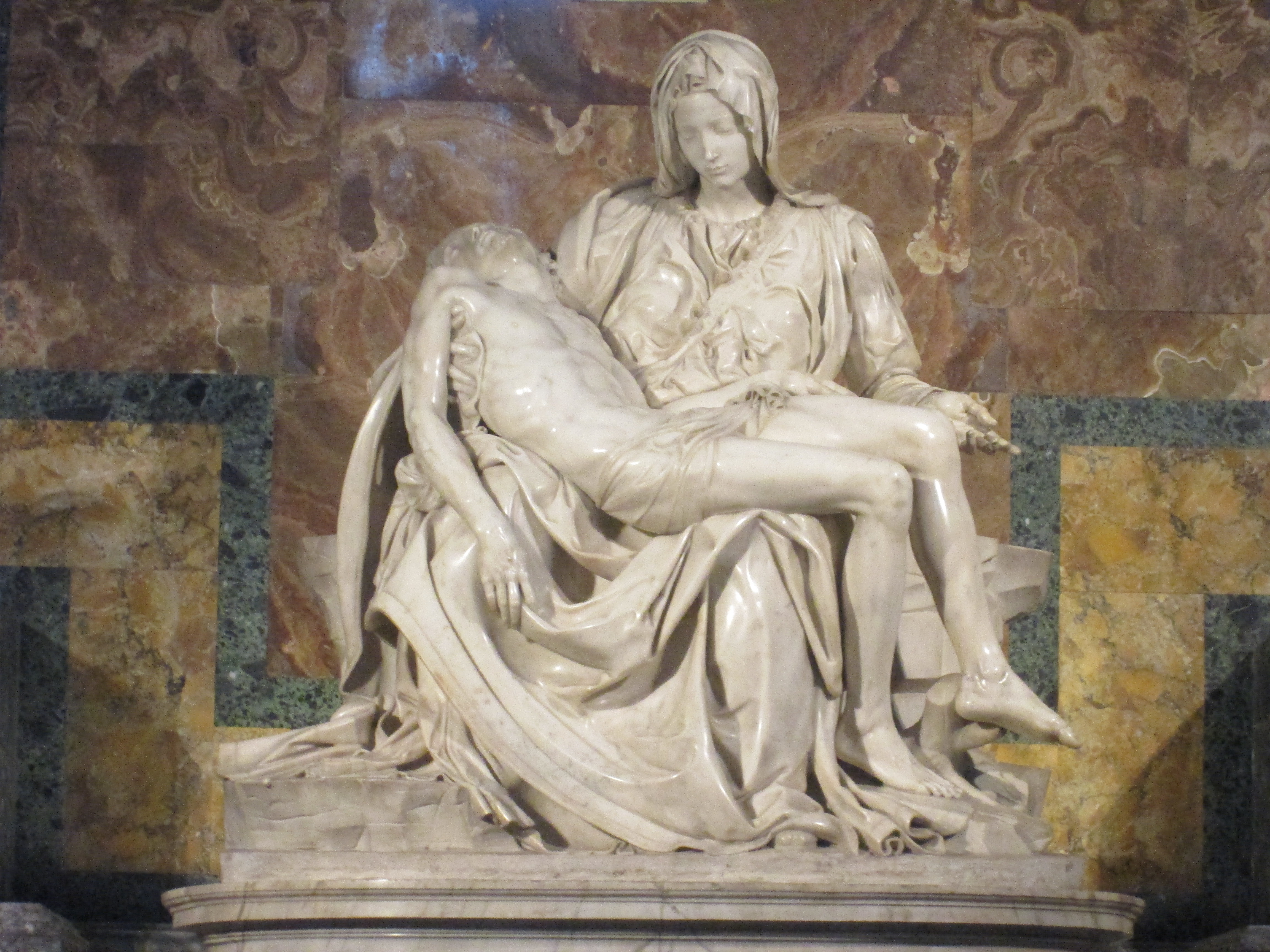
The Pietà was particularly moving. Michelangelo never fails to accurately depict the gradual caress of robes across the human form, or the somber emotion of an event. In this case, it is Mary, lamenting in her loss as she cradles the dead body of her son Jesus.

2013-06-01 07.56.11


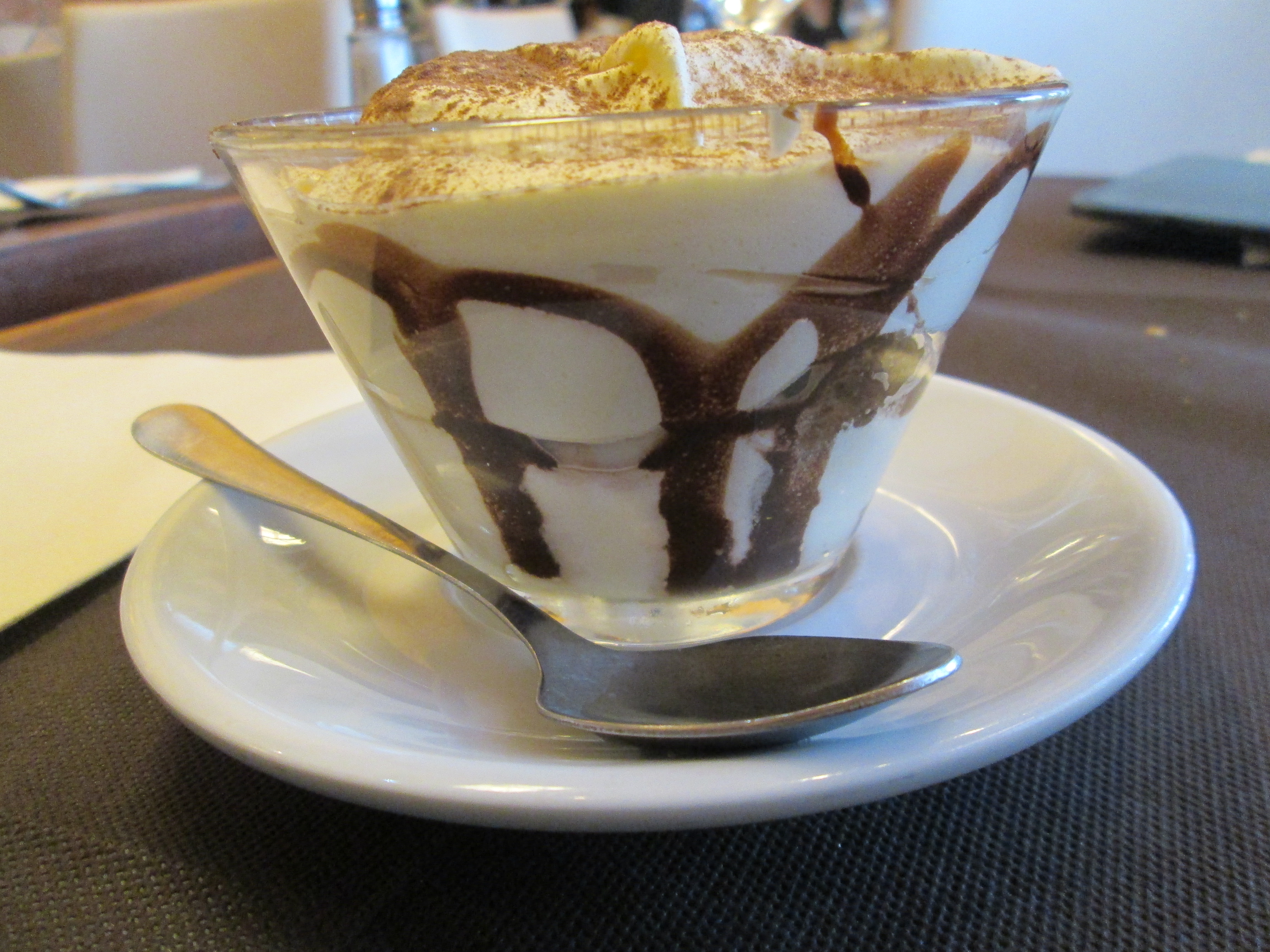
After fighting my way out of the masses, I took a break for lunch and treated myself to a delectable Tiramisu (My personal favorite dessert :D).

2013-06-01 08.42.43


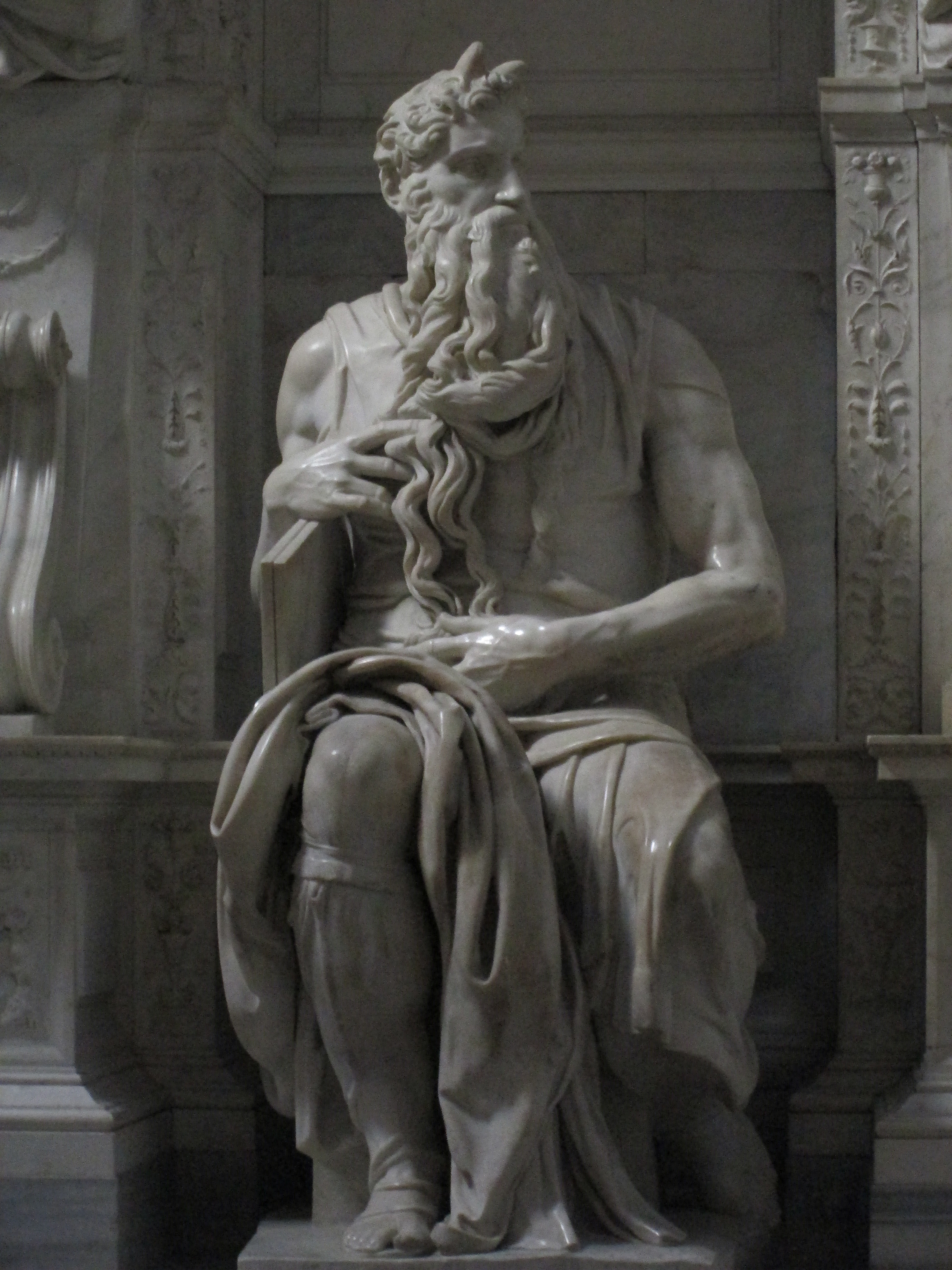
I then headed onward to a church known as St. Peter in Chains. It is the resting place of Michelangelo’s Moses.

In the words of Giorgio Vasari:

“Seated in a serious attitude, he rests with one arm on the tables, and with the other holds his long glossy beard, the hairs, so difficult to render in sculpture, being so soft and downy that it seems as if the iron chisel must have become a brush. The beautiful face, like that of a saint and mighty prince, seems as one regards it to need the veil to cover it, so splendid and shining does it appear, and so well has the artist presented in the marble the divinity with which God had endowed that holy countenance. The draperies fall in graceful folds, the muscles of the arms and bones of the hands are of such beauty and perfection, as are the legs and knees, the feet being adorned with excellent shoes, that Moses may now be called the friend of God more than ever, since God has permitted his body to be prepared for the resurrection before the others by the hand of Michelangelo.”
 
2013-06-01 08.34.27

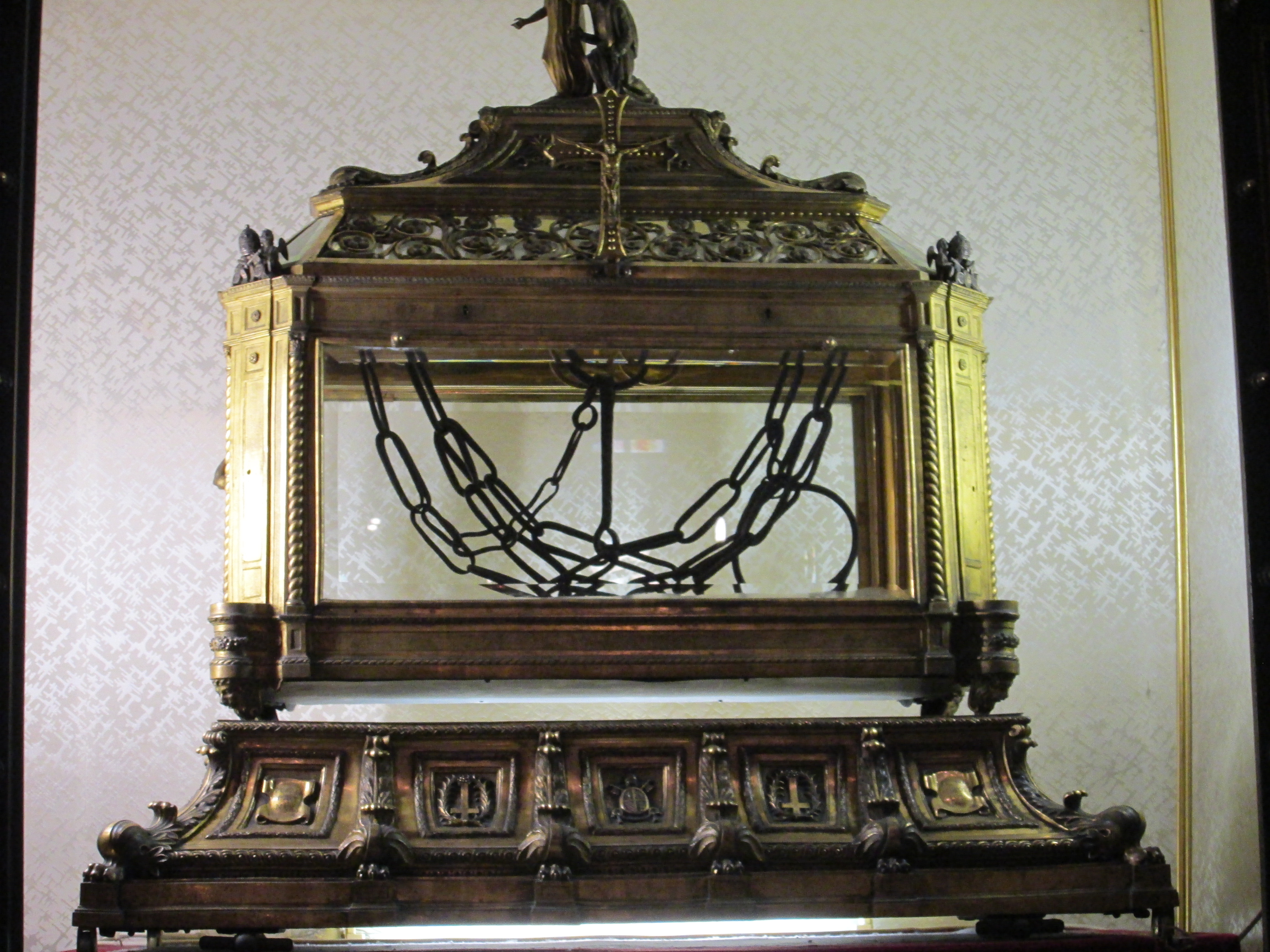
This minor basilica was originally built to house the chains that bound Saint Peter when he was imprisoned in Jerusalem. According to legend, when Empress Eudoxia presented the chains to Pope Leo I, he compared them to the chains of St. Peter’s final imprisonment in the Mamertine Prison and the two chains miraculously fused together.

2013-06-01 09.56.43

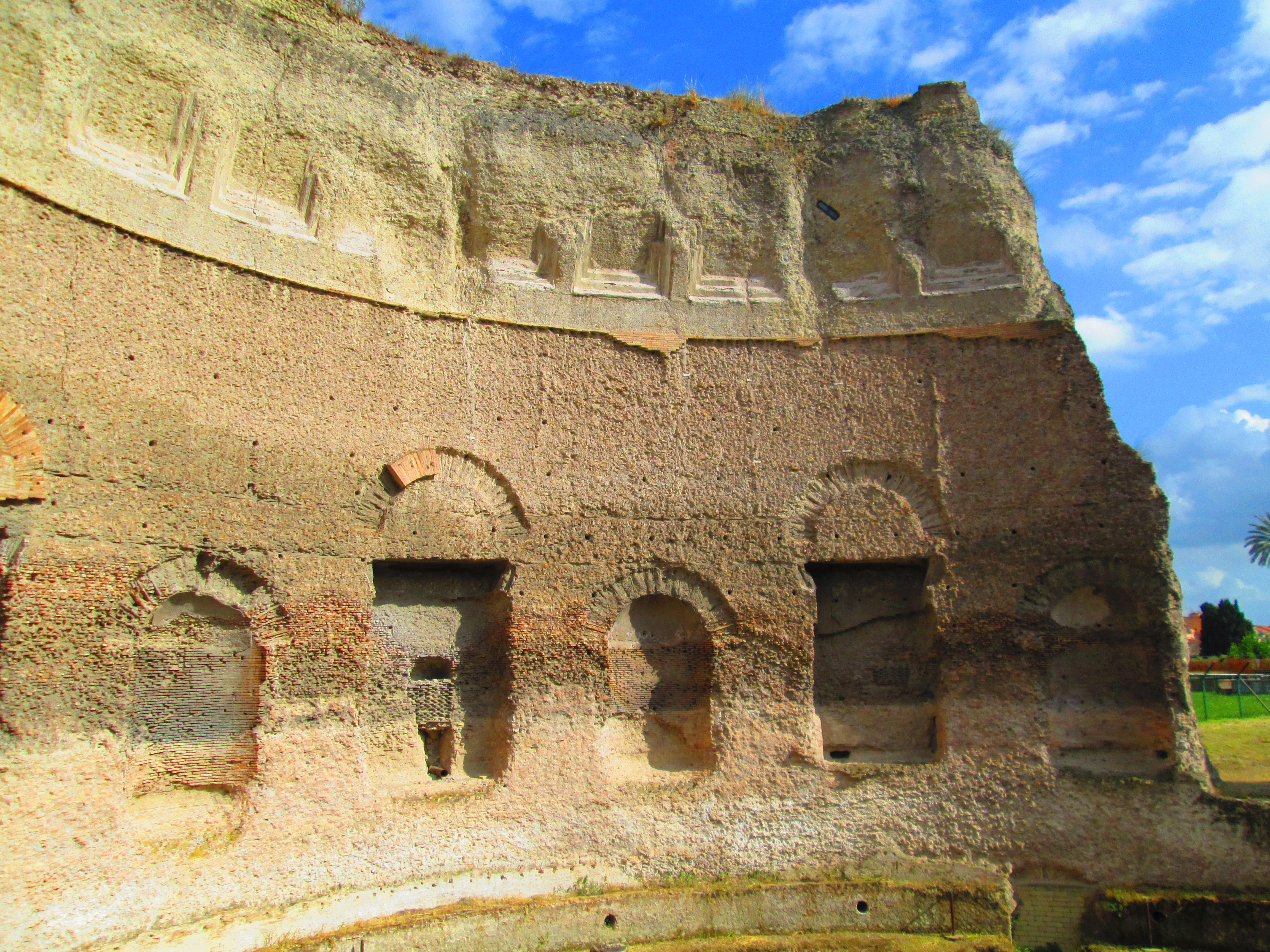
Thankfully, the sun reemerged from behind the clouds in the afternoon, and I wrapped up my day by taking a leisurely stroll on the Palatine Hill and exploring the Domus Aurea, a large landscaped portico villa built by the Emperor Nero.

What’s your take on all these Reliquaries? Do you have faith in the miraculous powers they are said to have?

Travel: Capri

2013-05-29 03.36.21

Since I had a flexible schedule due to eliminating a few of my planned cities along the original route, I decided to meet my friend (we became acquainted in Venice), on the gorgeous island of Capri. She was staying in Nerano, I was staying in Naples, and hopping on ferries to rendezvous in the middle of the sea happened to be the best compromise

Capri is about a 1-hour ferry ride from the western end of the Italian Peninsula. It lies on the south-side of the Gulf of Naples within the Campania region of Italy. As a result, I set out early in the morning; It was a joy to be on the water and feel the wind in my face while watching the large wakes the boat’s speed left behind.

2013-05-29 04.55.21According to the greek geographer Strabo, and confirmed by archeological findings and geological surveys, Capri was once part of the mainland. Evidence of human settlement during the Roman Era indicates that the city has been inhabited since the  Neolithic and the Bronze Ages.

It is on these shores that the emperor Augustus constructed his villa; giant bones and “weapons of stone” were prominently displayed in the garden of his Sea Palace. He is the individual credited with the urbanization of Capri, seeing it as his own private paradise. Temples, villas, aqueducts, and gardens built to complement Augustus’ Vision.

2013-05-29 08.46.54

His successor,  Tiberius, went on to build a series of Villas, the most famous of all, Villa Jovis, remains one of the best-preserved Roman villas in Italy. It is from these shores that Tiberius ran his empire from 27 AD until his death in 37 AD.


Renata

My friend and I hiked up to the main town foregoing the funicular. With no set plan, we merely traipsed around the paths catching gorgeous panoramic views of the island, and absorbing some Vitamin D. After, we grabbed some deli sandwiches (my european favorite being the Caprese with Fresh Buffalo Mozzarella), and relaxed on the beach.

She, being an inspirational late-20’s Marathon runner,  went off to run, and I sun-bathed and caught up on a bit of my reading. After grabbing some wine upon her return, we split off of each other, and I hopped on a round-the-island tour to see all the hidden coves and imaginative rock formations that Capri had to offer.

2013-05-29 08.40.392013-05-29 08.49.54

Unfortunately, due to extenuating wind conditions, I was not able to kayak into the infamous cavern known as the Blue Grotto (Grotta Azzurra). It is one of the most visited sites on of Capri, and considered the island’s emblem.


Travel: Vesuvius and Pompeii

Today, I finally achieved my goal of hiking along the side of an active volcano, and exploring a two-millennia old roman village. We will get to the emotions ignite later. Getting there was a challenge, however, because they shut down the metro system without any notice. I was forced to cram myself into two different buses (transfer) so that I could reach the train station. What should have taken a mere half hour, ended up in consuming an hour and a half of my morning. 😦

2013-05-28 04.47.14

Finally, I arrived on Mt. Vesuvius, after getting to the Ercolano Train station, and hopping a 20-min shuttle drive up the side. I won’t lie, it was a little anticlimactic for me. The 30-min hike up the rim was steep, but riddled with gravel and dust, and no protection from the beating sun. The rim of the volcanic crater slopped off into this massive hole with disproportionate sides, sparse vegetation, and nothing close to an imposing atmosphere.

2013-05-28 05.17.24

The volcano is best known for it eruption in AD 79 that completely smothered and buried the Roman cities of Pompeii and Herculaneum. The activity ejected a sprawling cloud of stonesash, and fumes to a height of 20.5 miles; Molten rock and pulverized pumice were spewed at a rate of 1.5 million tons/sec, releasing a 100,000x the thermal energy released by the Hiroshima Bombing.

Today, it is on only volcano on the european mainland to have erupted within the last hundred years. It is regarded as one of the most dangerous in the world due to the dense population of 3,000,000 people and its tendency towards explosive (Plinian) eruptions.

2013-05-28 08.56.19

Descending from the volcanic slopes, I hopped a train to reach my next destination. Unfortunately, the signage was not clear, and it took a bit longer due to having to hop off and go back in the former direction. I did meet two british teachers who were on holiday for the season, and we enjoyed a very nice chat about employment and careers. Somehow I always manage to converse with kindly middle-aged people; I just have that kind of personality.

2013-05-28 09.19.11

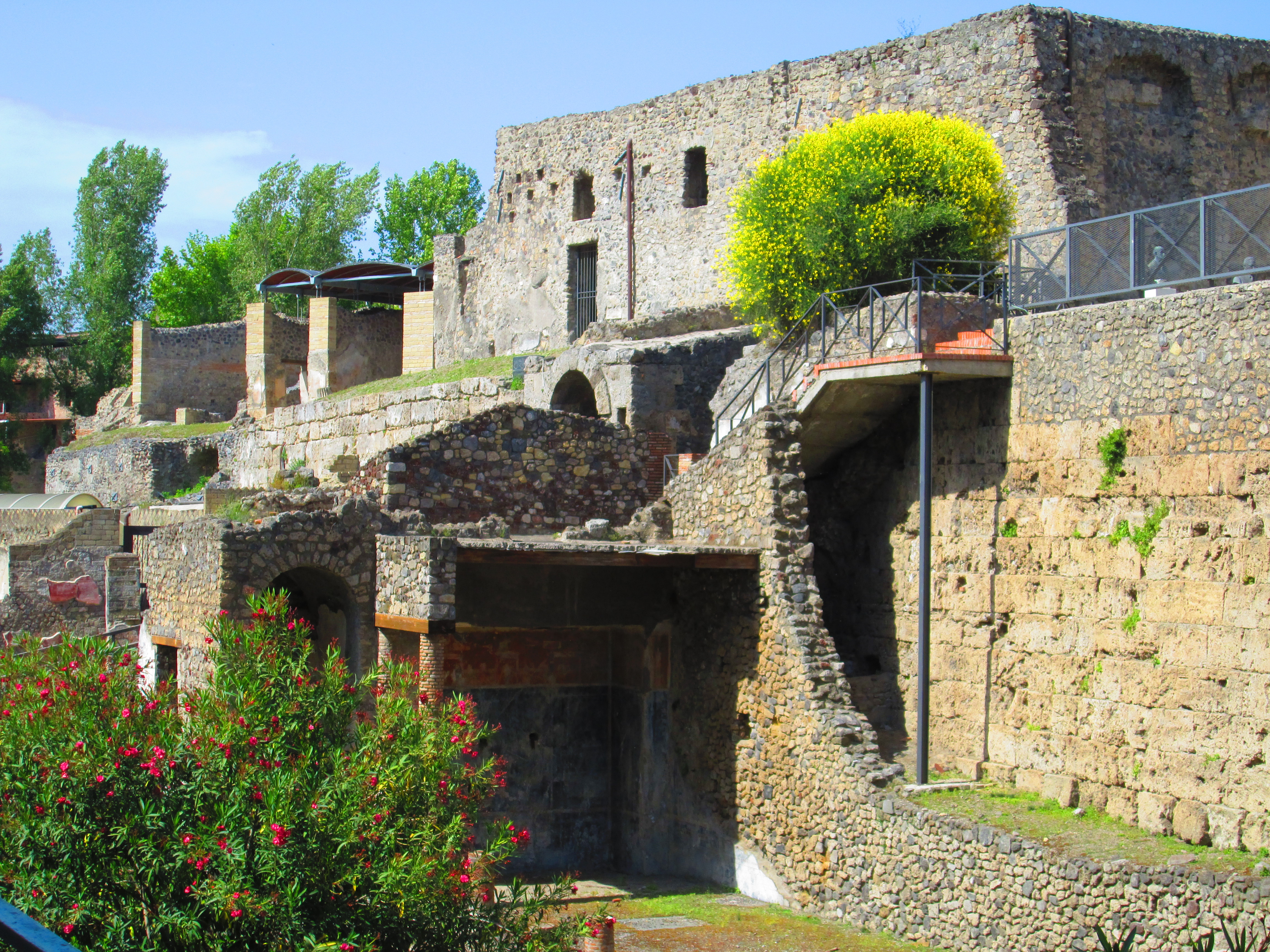
Arriving at the Pompeii Scavi, it is difficult to describe how much square footage this city encompasses. It is believed that the town was founded in 6th or 7th century BC and was captured by the romans in 80 BC. When it was destroyed 160 years later, the population had exploded to 20,000 with a complex water system, amphitheatre, gymnasium, and a port.

Evidence indicating the destruction comes from a surviving account from a letter written by Pliny the Younger. He saw a firsthand account of the eruption from a distance across the bay, and described the death of his uncle, Pliny the Elder, an admiral of the Roman fleet who tried to rescue citizens. The site was then lost for 1500 years before being rediscovered in 1599. Buried objects have been well-preserved for thousands of years due to the lack of air and moisture.

The  Pax Romana civilization was extremely intelligent in their urban design:

2013-05-28 09.06.46

White Marble to reflect the moonlight, so citizens could walk the streets at night.

2013-05-28 12.16.21


Raised stones, so citizens could cross the streets above the much of animal refuse and garbage.


2013-05-28 11.24.46


The first documented brothel in the world. (Okay, maybe not innovative, but certainly a historical achievement).


At the end of the day, I just couldn’t get over the fact that it was these humble two feet, that traipsed across the streets of a centuries old city riddled with heritage and tragedy.2013-05-28 10.50.57

Previous Older Entries Next Newer Entries