Travel: Roman Ingenuity

I suppose I could have visited these vestiges of Roman Power earlier on during my stay in Rome, but those days were fraught with cloudy skies and doubtful rain. The scenery and the nobility of these shrewdly crafted sprawling complexes is best observed by admiring their height against the deep, blue sky, and pondering the shadows they leave behind. Still standing 2 Millenia later, the longevity of these structures are a testament to the Roman Empire‘s influence and power.

2013-06-02 04.41.44

The word awe-inspiring has certainly been used by me more times on this trip than I can count. In this case, I feel that it is well deserved, although my tender feet may not acknowledge this compliment since the square area that was traipsed across tested their limits.

As you can imagine, the lines to get into these archaeological ruins tend to be lengthy, I ventured there with a girl who was staying at the same hostel as me, unfortunately, it is at the lines that we split up. I had invested in the Roma Card, a visitor pass that allowed me to bypass the lines, and I was simply not eager to bide my time with her.

My first stop was the Roman Forum.
2013-06-02 07.44.23

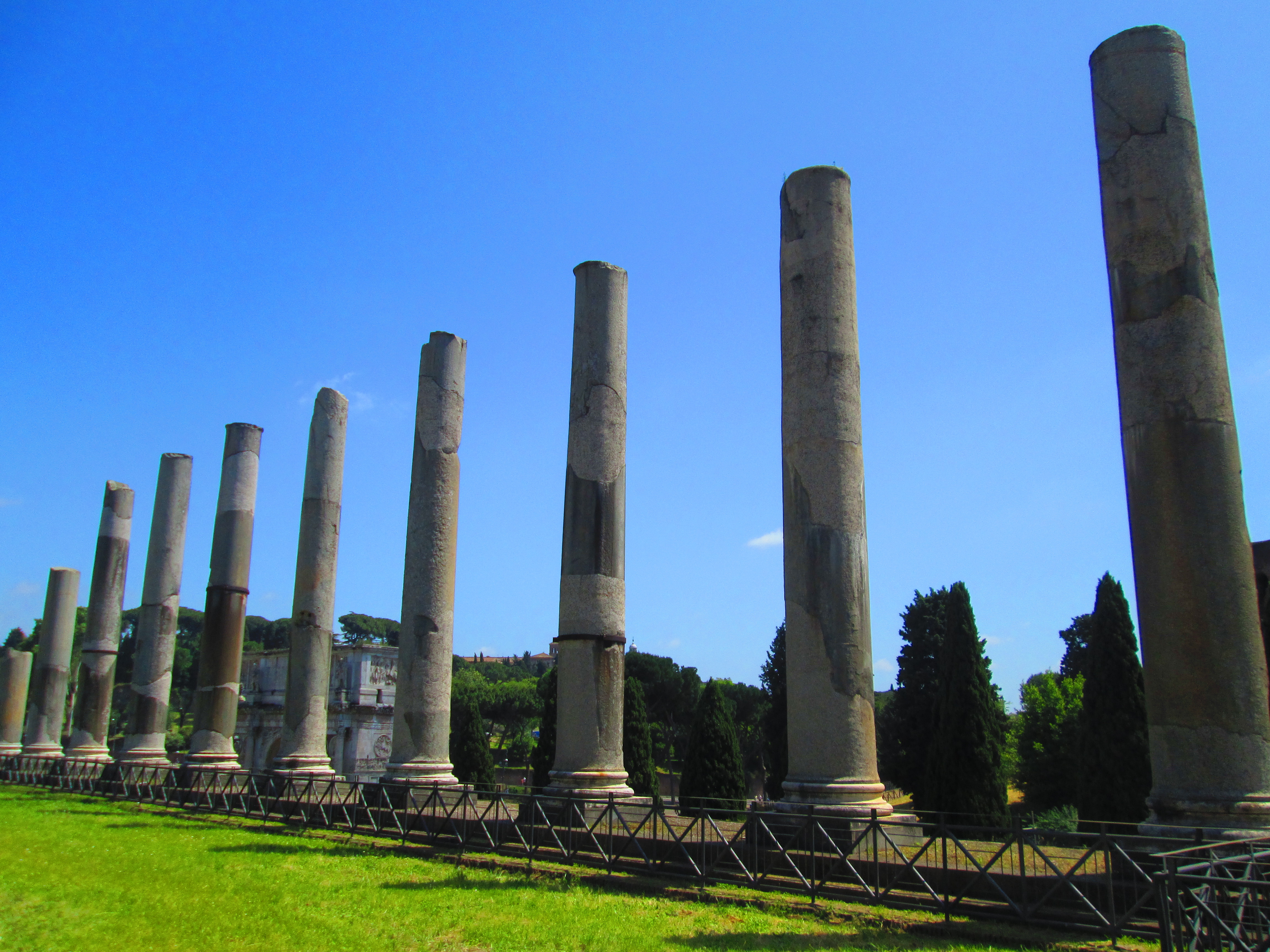
This complex was located in the center of the city and houses the important government buildings of this ancient civilization. It was the main social environment for its citizens, a square for public speeches, criminal trials, triumphal processions and elections. The venue was used for gladiatorial matches and was the nucleus for the commercial affairs of the city.

2013-06-02 05.49.08

I literally lost more than half my day here! There are so many towering structures and secret little niches that are delicately foiled in bright green moss. It’s definitely not an area that you can rush through, because smelling the air, and envisioning the daily lives of Roman Citizens is a must.  Believe me, my feet were absolutely KILLING me by the end of it, but I just couldn’t bring myself to rush through the subtle nuances of heritage that are exuded with each step. (I think that is a grammatically correct sentence…)

Travel: Beneath the Streets of Rome

My day started off fairly morbidly as it began by exploring a Capuchin Crypt beneath the church of Santa Maria della Concezione dei Cappuccini. When moving from an old monastery in 1631, the monks arrived bearing 300 cartloads of deceased friars. Fr. Michael of Bergamo then oversaw arrangement of the bones amongst soil that had been brought from Jerusalem by order of Pope Urban VIII.

Capuchin_4

During the lifetime of the crypt, as monks passed away, longer-buried remains were exhumed to make room for the newly-deceased and the reclaimed bones were added to the decorative motifs.The average time span of decomposition was 30 years, and the total skeletal remains number 3,700.

Six rooms with individual themes bear the following names:

  1. Crypt of the Resurrection
  2. The Mass Chapel
  3. Crypt of the Skulls
  4. Crypt of the Pelvises
  5. Crypt of the Leg Bones and Thigh Bones
  6. Crypt of the Three Skeletons

If you recall a former post, from my visit to Kutna Hora in the Czech Republic, despite modern-day opinions on death, bones, and gore, one could understand the thought behind such a display. It is not meant to be macabre, but a gentle reminder that each lifespan is but a swift passage on earth and even we can not escape our own mortality.

2013-05-31 04.36.41

Experiencing a strong desire to bask in the roman air and sunshine, I emerged from these depths to stroll above ground. This led me to pensive pondering while admiring the infamous Trevi Fountain. I’ll speak more about the history and myths behind this landmark site in a future post as I came back to this location a multitude of times.

2013-05-31 05.02.29

A hop, skip, and jump away is an archaeological dig called the ‘City of Water.’ Discovered in 1999 during reconstruction of the former Cinema Sala Trevi, it is a little-known tourist destination.  The excavation is merely 400 m², but reveals a 4th century Roman mansion built upon two former insulae and a section of aqueduct. This section is part of the Acqua Vergine and actually connects to the Trevi Fountain!


Travel: Catacombs of Rome

I woke up early this morning to catch a fast train back to Rome. It only took about 1.5 hours, and I didn’t want to waste my entire morning by sleeping in (although there’s no denying that I was very sleep-deprived at this point). After arriving at my hostel, I gave myself some decompression time to regroup while I figured out where I could most optimally spend my day.

2013-05-30 07.13.14

My first stop was the Catacombs of Callixtus, it is an underground graveyard that is 20 km long and occupies 15 hectares.  The tomb got its name from the belief that it was created by Pope Callixtus I, a deacon of rome, by enlarging early pre-existing Christian hypogea during the 2nd century. It was continuously used for burials through the 3rd and 4th centuries. As the years passed into the 9th century, the crypt suffered from disuse and decay as it was subject to enemy ransacking and the relics were translated to the various churches of Rome.

The catacombs are best known for containing the Crypt of the Popes as this site held the remains of 16 popes and 15 martyrs.

Catacombe

It was a little creepy walking through these arcades. You could see the narrow niches that had been carved into the bedrock, and imagining oneself lying in those small spaces was quite, gruesome. It was a true maze, and it’s terrifying to consider the possibility of getting lost in the cold, damp, passages.

2013-05-30 08.37.45From there, I strolled down Appian Way,  one of the earliest Roman roads of the ancient republic.

It was strategically important in that it connected Rome to Brindisi, Apulia, in southeast Italy. 

This is represented by its very common name, as recorded by Statius

Appia teritur regina longarum viarum

“the Appian way is the queen of the long roads”

At the beginning of Appian Way, lies the Church of Domine Quo Vadis. The small building lies on the site where, according to the legend, Saint Peter met Jesus while the former was fleeing persecution in Rome.

2013-05-30 08.49.15

The presence of St. Peter is confirmed by an epigraph in the Catacombs of Saint Sebastian that reads Domus Petri (House of Peter). It is here, that according to the apocryphal Acts of Peter, Peter asked Jesus, “Lord, where are you going?” (Domine, quo vadis?). Jesus answered, “I am going to Rome to be crucified again” (Eo Romam iterum crucifigi).

On a marble slab in the center of the church, are two embedded footprints. They are believed to be a miraculous sign left Jesus.

2013-05-30 10.56.22

The final stop of the day were the Baths of Caracalla, the second largest Roman public baths built between AD 212 and AD 216 during the reign of Emperor Caracalla. A slightly longer construction period between 211-217 AD is provided by Chris Scarre.

To meet this constricted deadline, over 2,000 tons of material would have had to be installed every day over a six year period. Historical records show that the idea for the baths were drawn up by Septimius Severus. A complex  hypocaust system burning coal and wood beneath the ground was utilized to heat the water that was provided by a dedicated aqueduct.

2013-05-30 10.01.522013-05-30 10.02.02

I would have loved to experience them at the peak of of its life. Can you imagine having a FREE spa experience in this huge architectural complex? What is your favorite relaxation activity?

Travel: Vesuvius and Pompeii

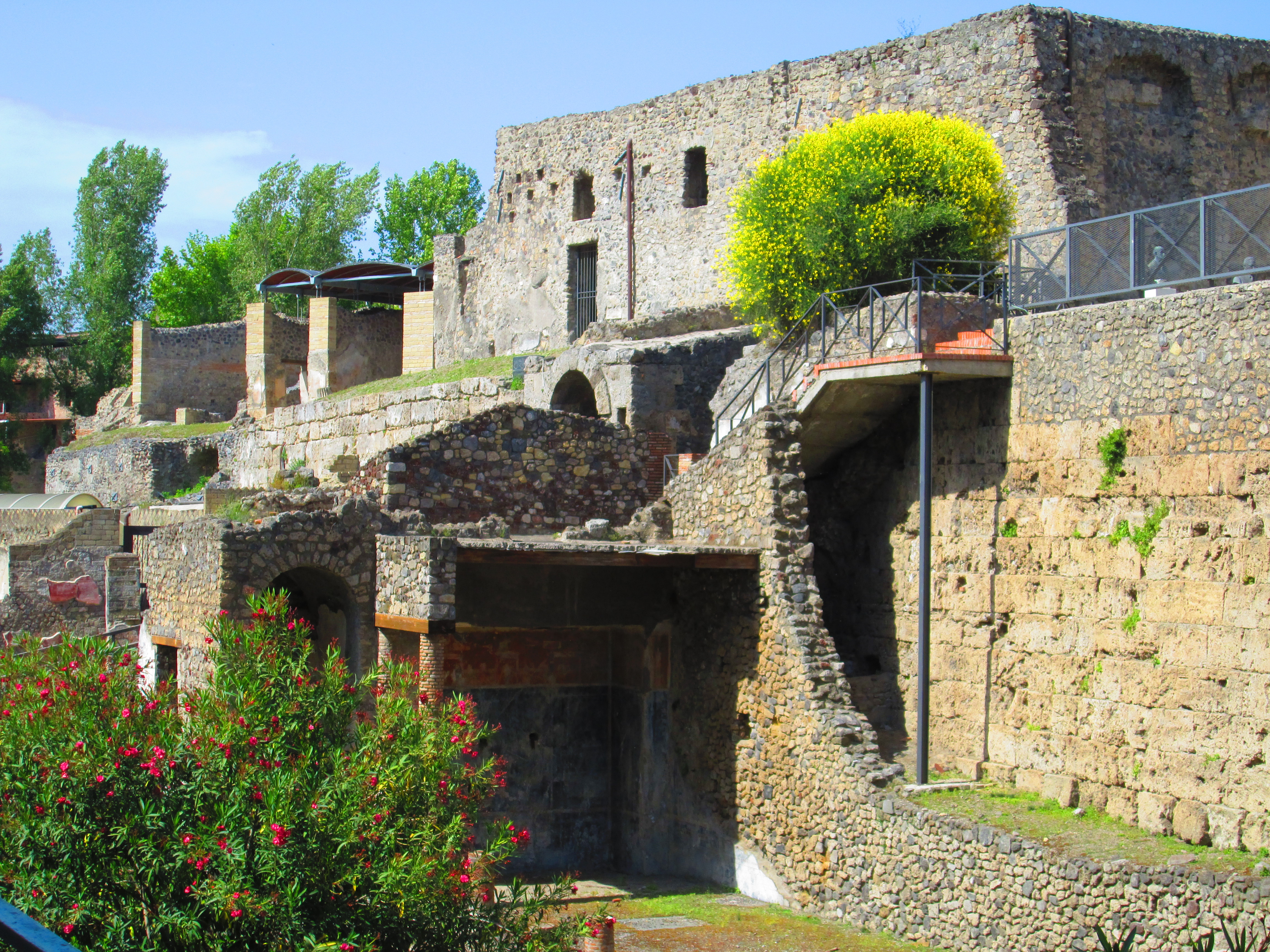
Today, I finally achieved my goal of hiking along the side of an active volcano, and exploring a two-millennia old roman village. We will get to the emotions ignite later. Getting there was a challenge, however, because they shut down the metro system without any notice. I was forced to cram myself into two different buses (transfer) so that I could reach the train station. What should have taken a mere half hour, ended up in consuming an hour and a half of my morning. 😦

2013-05-28 04.47.14

Finally, I arrived on Mt. Vesuvius, after getting to the Ercolano Train station, and hopping a 20-min shuttle drive up the side. I won’t lie, it was a little anticlimactic for me. The 30-min hike up the rim was steep, but riddled with gravel and dust, and no protection from the beating sun. The rim of the volcanic crater slopped off into this massive hole with disproportionate sides, sparse vegetation, and nothing close to an imposing atmosphere.

2013-05-28 05.17.24

The volcano is best known for it eruption in AD 79 that completely smothered and buried the Roman cities of Pompeii and Herculaneum. The activity ejected a sprawling cloud of stonesash, and fumes to a height of 20.5 miles; Molten rock and pulverized pumice were spewed at a rate of 1.5 million tons/sec, releasing a 100,000x the thermal energy released by the Hiroshima Bombing.

Today, it is on only volcano on the european mainland to have erupted within the last hundred years. It is regarded as one of the most dangerous in the world due to the dense population of 3,000,000 people and its tendency towards explosive (Plinian) eruptions.

2013-05-28 08.56.19

Descending from the volcanic slopes, I hopped a train to reach my next destination. Unfortunately, the signage was not clear, and it took a bit longer due to having to hop off and go back in the former direction. I did meet two british teachers who were on holiday for the season, and we enjoyed a very nice chat about employment and careers. Somehow I always manage to converse with kindly middle-aged people; I just have that kind of personality.

2013-05-28 09.19.11

Arriving at the Pompeii Scavi, it is difficult to describe how much square footage this city encompasses. It is believed that the town was founded in 6th or 7th century BC and was captured by the romans in 80 BC. When it was destroyed 160 years later, the population had exploded to 20,000 with a complex water system, amphitheatre, gymnasium, and a port.

Evidence indicating the destruction comes from a surviving account from a letter written by Pliny the Younger. He saw a firsthand account of the eruption from a distance across the bay, and described the death of his uncle, Pliny the Elder, an admiral of the Roman fleet who tried to rescue citizens. The site was then lost for 1500 years before being rediscovered in 1599. Buried objects have been well-preserved for thousands of years due to the lack of air and moisture.

The  Pax Romana civilization was extremely intelligent in their urban design:

2013-05-28 09.06.46

White Marble to reflect the moonlight, so citizens could walk the streets at night.

2013-05-28 12.16.21


Raised stones, so citizens could cross the streets above the much of animal refuse and garbage.


2013-05-28 11.24.46


The first documented brothel in the world. (Okay, maybe not innovative, but certainly a historical achievement).


At the end of the day, I just couldn’t get over the fact that it was these humble two feet, that traipsed across the streets of a centuries old city riddled with heritage and tragedy.2013-05-28 10.50.57

Travel: Mozart’s Town and the Sound of Music

My primary motivation for visiting Salzburg was to walk in the steps of Mozart. It was only after arriving that I realized that the city had also gained fame as the home of Maria Von Trapp and the location for the movie ‘The Sound of Music.’ As such, my day was filled with musical melodies and dancing magic.

2013-05-21 03.23.452013-05-21 02.53.56

First stop was at the Mirabell Palace. Although I couldn’t go in, I enjoyed walking amongst its meticulously landscaped garden, and dancing around the Horse Fountain (Do-Re-Mi Scene). The building was constructed in 1606 at the behest of Prince-Archbishop Wolf Dietrich Raitenau according to Italian and French models for his mistress. He was deposed in 1612, and during this era, the palace received its current italian name, bella meaning ‘Amazing’ or ‘Wonderful’. Subject to much remodeling through the years, its current  neoclassical appearance dates from about 1818.

2013-05-21 03.48.22

Next, I visited the birthplace of the only Wolfgang Amadeus Mozart. If you don’t recognize the name, then I am no longer your friend. 😛 He is recognized as one of the most prolific and influential composer’s of the Classical Era. As a child, Mozart showed prodigious ability; He was competent on Keyboard and Violin, and regularly composing pieces and performing for European Royalty from the age of five. Eventually, he grew restless, and was dismissed from his Salzburg position while visiting Vienna in 1781. It is in Vienna where he spent his final years composing some of his best-known symphonies, concertos, and operas.

Last on the list for my meandering day was a stroll through the Hellbrunn Palace. The Schloss is best known for its jeux d’eau, the magical fountain filled with unexpected water delights. The water-park was conceived by Markus Sittikus von Hohenems, an individual with a keen sense of humour who employed practical jokes, which were performed on guests. I personally was incapable of avoiding these deviously hidden mechanisms that would sprout water up through seats and overhead when least expected. Water-pressure also allowed for ingeniously designed mobile figurines, best illustrated in a musical-playing theatre that was built-in 1750. There was always one location where the Archbishop would stand or sit, that was protected from water.

2013-05-21 07.23.292013-05-21 07.22.45

So, I know the pictures here look the same. but if you look closely between the two, you will notice an extension and retraction of the face’s tongue. This is achieved by a small pail mechanism, that when filled, lowers the jaw, automatically extending the tongue. Once emptied, it retracts, and the process repeats.

2013-05-21 08.04.20

I stopped by the Glass Gazebo on my way out to relive the ‘Sixteen going on Seventeen’ moment from the movie.

Next Newer Entries