Oslo: City of Tigers


We started off our day with a latte and cappuccino from Tim Wendleboe. Its known as one of the best places to get coffee in Oslo, and also serves as a micro-roastery and training center for all things related to the art of coffee. Tim has claimed multiple championship titles including that of “World Barista Champion.” Tom, the coffee conossieur, said that it was probably the best coffee he has ever had, and I’d have to agree.  

Walking further south to the historic city center, we passed Damstredet, a street that has preserved the charming, small town character of Oslo with its pedestrian-only access and wooden houses. Unfortunately, since it was snowing, the sloping drive up to it simply seemed too precariously slippery to the both of us.  

We spent our afternoon strolling around Old Oslo and passed the Storting Building (Parliament). Oslo’s parliament was established in 1814, but it was not until 1836 that a government proposal was approved for the construction of a permanent building. The location of this structure was finalized in 1857, and a competition was held for the architectural design.  Even though Heinrich Ernst Schirmer and Wilhelm von Hanno won, their proposal looked to much like a church and was thus struck down. Eventually, Swedish architect Emil Victor Langlet was chosen, and the parliament moved into their new permanent residence on March 5, 1886. In 1860, the building cost 957,332 NOK to construct. That’s $31.3 Million dollars in present day value!


Coinciding with our trip, is the 2016 World Biathlon Championship, so we strolled through a pop-up market celebrating this event with kids participating in mini-versions, and were even able to take a picture with the mascot. 

Next, we passed the Nobel Peace Center which celebrates the history of this prestigious award. Ironically, Alfred Nobel, is the inventor of dynamite, and it was a premature obituary condemning him for profiting from the sale of arms, that inspired him to establish the Nobel Prizes. 

It is in the adjacent City Hall that Malala Yousafzai was awarded the Nobel Peace Prize on December 10, 2014. You may recall her as the brave girl that fought for a female’s right to education in Pakistan, was subsequently targeted with an attempted assassination by the Taliban, and after achieving a full recovery, continues to promote her message around the globe. “One child, one teacher, one pen and one book can change the world.”
Travel: Ranakpur Apathy

image

Our initial plan today was to hire a taxi to day trip to Ranakpur before being dropped back at the airport for our flight to Mumbai later tonight. Unfortunately, our lack of internet connection at the hostel proved to be our downfall.


While I had posited asking the staff for advice on taking buses, Nick didn’t hear me, and I was too snuggled into my cozy cocoon to emerge from the warmth. We did not make it to Ranakpur and I regret not summoning the willpower to face the cold. Admittedly though, it was really nice to have an open day with nothing planned.

Credit: Ingo Mehling

Credit: Ingo Mehling

Ranakpur is 91 km away from Udaipur, making it approximately a 1-hour car ride in US terms and a 2.5 to 3-hour travel time according to IST (one needs to factor in traffic, rough roads, and slower speed limits). It is home to a  UNESCO World Heritage Site, a massive, sprawling, Jain Temple constructed entirely of marble in 1437.

imageIt is with sorrow that I cannot speakbout how amazing the structure was, as it has over 1444 pillars that are each uniquely carved in exquisite detail. Additionally, there is a massive rock that is carved into 108 snake heads and tails. The layout of the building is in the form of a chaumukha – four faces in each of the four cardinal directions that symbolize the cosmos.

Instead, Nick went off to meet his Uncle and I found a little cafe to savor coffee in while using their wifi for some net-based tasks. We met up again later that morning to visit Monsoon Palace.

image

Credit: Nikhil Kulkarmi

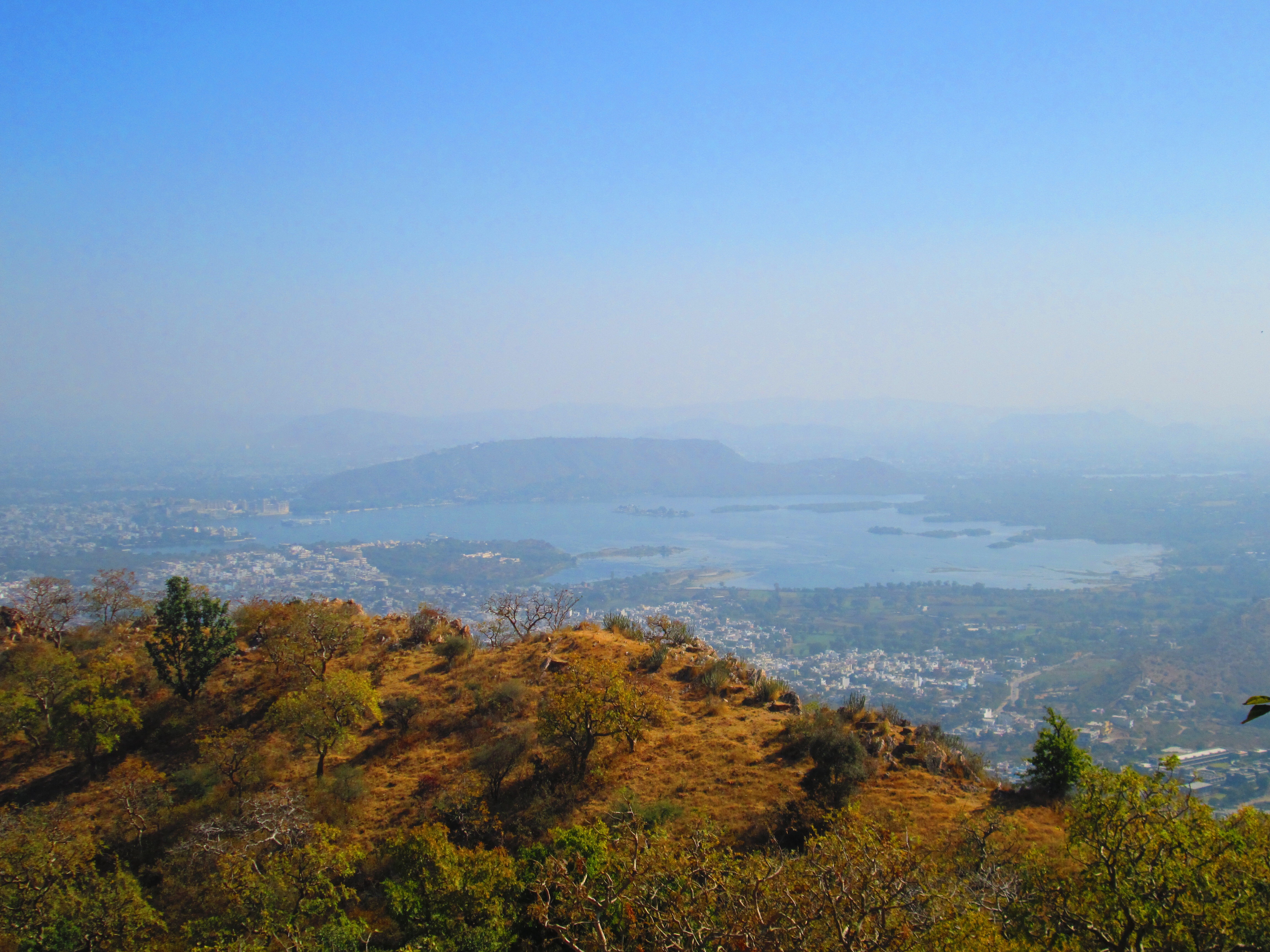
The Monsoon Palace was built in 1884 entirely of white marble on the Bansdara Peak of the Aravalli Hill. At a total elevation of 3100 ft overlooking Lake Pichola, the original intent was for it to be a 9-story astronomical centre to track the movement of the monsoon clouds. It would also be a vacation home for the royal family.


imageUnfortunately, despite the innovative water harvesting system the building utilized in its underground cistern, the storage capacity proved to be inadequate resulting in the abandonment of the palace.

After the palace, all we had to do was get Nick a shave for the wedding, and find him some shoes. This was surprisingly almost as difficult as finding me a Saree; there’s not much you can do about a gigantor’s foot size when you are on a continent that tends to produce petite-sized humans.


Travel: Man Sagar Lake

This morning, we both enjoyed the luxury of sleeping in before heading for a walk around the Man Sagar Lake to observe the beauty of the Jal Mahal “Water Palace.” We even got to see an elephant just strolling down the street amidst the motorcycles and rigshaws, and a camel just resting its legs!

imageimage

Interestingly, Maharaja Madho Singh I constructed the complex in 1750 intending for it to be a lodge for himself and his entourage during duck hunting parties, it was never intended to be a palace.

imageIt is considered a classic example of Rajput and Mughal Architecture, and as we’ve seen often during our trip, composed entirely of red sandstone. There is a rectangular chhartri on the roof, and four octagonal chhattris on each of corners of the building. They are elevated dome-shaped pavilions that have become a signature of Indian Design.

Based on plain observation, one cannot derive the complexity of design and technological forethought involved in this structure. While we only see it as a one-story building, in reality, the palace has five floors in total, four of which are submerged in the lake

image


As we savored the nice weather and strolled along the lake, we came across a costume peddler and decided to have fun and play “dress-up.” The most awkward part of this, was when they wanted us to pose and take a picture as a couple. [Insert Awkward Turtle].


image

Credit: Nikhil Kulkarni


India is still a conservative nation, so when they see a man and a woman travel together, assumptions are often made. Additionally, seeing an Indian and an Asian together is almost an unheard of circumstance. Fortunately, Nick and I had a good laugh about this.


image


We wandered the area and found ourselves a nice open garden to take a seat in and relax, before grabbing lunch and heading to hike up to Galta Ji.


imageThe pilgrimage site lies in the town of Khania-Balaji, just outside of Jaipur. It is known for its natural water springs that accumulate in tanks “kunds”. Thousands come to bathe in these waters every year as it is considered auspicious. Additionally, some believe that the Saint Galav lived here. He meditated, did penance, and survived for years just drinking cow’s milk.

image

Credit: Nikhil Kulkarni


Galta Ji is also commonly called “The Monkey Temple” as a tribe of monkey lives there. Nick was being mean and joking that he had reunited me with my family. T.T.


I’ve self-perpetuated this ongoing joke when, a few years ago, I discovered that my strangely shaped thumbs coincidentally align with the thumb shape of a gorilla. It is all in good fun though, and I enjoyed getting up close and personal with my brethren.

imageimage

Credit: Nikhil Kulkarni


Travel: Old Jaipur

To recap thus far, we have visited the states of Delhi – the capital territory of India – and Madhya Pradesh – “the heart of India” – and are now exploring Jaipur, the capital city of Rajasthan.

imageJaipur was founded by Jai Sing II, the Raja of Amer in 1727. His capitol originally lay 51 km away, but water was becoming scarce, and Jai felt that shifting his city would increase the population. After much deliberation and the architectural guidance of Vidyadhar Bhattacharya, the city was laid-out in accordance with the classic principles of Vastu Shastra. Its core concept centers around urban planning for the comfort of its citizens and the integration of the built environment with nature, while trying to maintain perfect geometric patterns (Yantra), symmetry, and directional alignment.

image

Credit: Nikhil Kulkarni

The first stop of our day was the Hawa Mahal, “Palace of Winds.” Built in 1799 by the Maharaja Sawai Pratap Singh, the structure was designed by Lal Chand Ustad to form the crown of Krishna. The five-story exterior face is reminiscent of the honeycombs of a beehive, and has 953 jharokhas (small windows) with intricate latticework. Not only did the windows allow royal ladies to observe daily life without being seen, but it also resulted in the Venturi Effect, natural ventilation that helped promote the flow of cool air through the building in the summers.

imageI also noticed that a lot of the window slots slanted downwards. Jaipur, named “The Pink City” because so many of its buildings are painted pink, lies in the desert. The slant of the window perforations allowed residents access to fresh air, without putting them at the mercy of the blazing sun. I found this to be a particularly ingenious idea for being created almost 300 years ago.

We had then hoped to visit the City Palace, but were rebuffed by how expensive it would have been to tour the interior (about 2500 rupees for foreigners with no cameras allowed).

imageWhile the pictures shown at the ticket office were pretty jaw dropping, this price point would have been equivalent to $45! It would have been the most expensive tourist destination I’d ever gone to across every continent and country. At the same time, this is marginally understandable as Rajasthan is one of the few states with present-day Royalty. They only chose to merge with the Indian Union after Indian Independence in 1949.

Credit: Nikhil Kulkarni

Credit: Nikhil Kulkarni

Just a few steps away was the Juntar Mantar. You may recall that it has a sister that we visited in Delhi.


Travel: Khajaraho Temples

image*Disclaimer: The photographs contained in this post may not be suited for younger eyes.

This morning, we bid adieu to the chaos and clamour of New Delhi, and hopped a quick domestic flight to Khajaraho for the night.

Khajaraho lies 385 miles southeast of New Delhi and is home to a mere population of 20,000 people. It was the seating ground of the Chandela Dynasty which ruled much of the Bundelkhand region of central India between the 10th and 13th centuries.

imageThe name Kharjuravāhaka is derived from ancient Sanskrit (kharjura, खर्जूर meaning date palm, and vāhaka, वाहक meaning “one who carries” or bearer). As the legend goes, there was once two golden date-palm trees at the gate of the temples. Kharjuravāhaka also has another meaning in Desai, scorpion bearer; this is a symbolic name for the deity Shiva, who bears snake and scorpion garlands upon his shoulders. This is fitting, as Khajuraho is one of four holy sites linked to Shiva. Hindu mythology recognizes the town as the location of his marriage.

imageIn its prime. Khajaraho had 85 temples spread over 20 square kilometers. Today, there are only 12 temples spread over 6 kilometers. As is typical with Hindu temples, they are clustered near a body of water and face east, towards the sunrise. Each temple integrates the interdependence between feminine and masculine deities and highlights the four goals of life – Dharma, Kama, Artha, and Moksha.


imageLike most Hindu temples, these temples follow a grid geometrical design called vastu-purusha-mandala, which has three important components. Mandala meaning circle, Purusha conveying universal essence, and Vastu meaning a dwelling structure.


This is displayed by the geometric use of squares and circles. A square, divided into 64 perfect sub-squares (padas) circumscribe the circle of mandala. The square is considered divine and represents the product of knowledge and human thought while the circle, considered earthly, symbolizes everyday life.

imageTo further illustrate the comprehensive design of the site, the Chandela’s laid out the territory in three triangles, which converge to forma a pentagon. The three triangles represent the three realms (trilokinatha) and the five-side pentagon, indicates the five cosmic substances (panchbuteshvara).

image


For me, the most interesting thing about the temples, is that the sandstone blocks aren’t glued together with mortar. Rather, in a fashion similar to classic Chinese wood construction, each mortise and tenon was precision cut so that the male piece could interlock with his female counterpart, allowing gravity to keep them joined.


We decided to take this side trip primarily because the temples are best known for the erotic carvings that adorn the faces.

imageHowever, these sexual figures only account for about 10% of the detailing on the temples, and are not prominent nor emphasized compared to the others. It was a bit of a “Where’s Waldo” scavenger hunt, as we went searching for these. Other sculptures depict the numerous aspects of human life and the values vital within the Hindu Pantheon.

Some of the positions just didn’t seem humanly possible! Although, given that the art of Yoga was developed in Ancient Pre-Vedic India between 5th to 6th century BC, perhaps our ancestors possessed a depth of flexibility that current humans do not.

Travel: Ancient India

Today, Nick and I learned the true meaning of IST ‘Indian Standard Time.’ We went to Vodaphone with the intent of acquiring pre-paid SIM cards. Needless to say, 2.5 hours later, we finally had our SIM cards, however, neither of us have managed to get service.

imagePart of the challenge was that regulations for foreigners to acquire SIM cards are much more stringent than it has been previously due to the 2008 Mumbai Attacks – 12 coordinated shooting and bombing attacks lasting over four days by the terrorist group Lashkar-e-Taiba.

image

Credit: Nikhil Kulkarni

With our errands over for the day, we were finally able to explore part of Delhi’s ancient past. Delhi has been home to a total of seven previous dynasties, and as a result, retains unique heritage structures that illustrate the diverse differences between each kingdom.


As we cut our way through the bazaar of Connaught Place, one of the largest commercial, financial, and business centers of New Delhi, we went from the Inner Circle, Rajiv Chowk, to the outer ring, Indira Chowk.

image

Credit: Nikhil Kulkarni

Nick managed adopt a little girl along the way. We were both confused and laughing at the time, because we simply did not know how to react. Truthfully, it was heartbreaking. She couldn’t have been more than 5 years old, and she just latched onto the corner of Nick’s polo, and followed us for a few blocks.


It was at this moment that I understood why some are proponents of Child Labor. While it may seem like a travesty against human rights, it does provide a means for children in developing countries to earn an income, and provide essentials for their survival. It’s a sad reality, but a necessary truth.

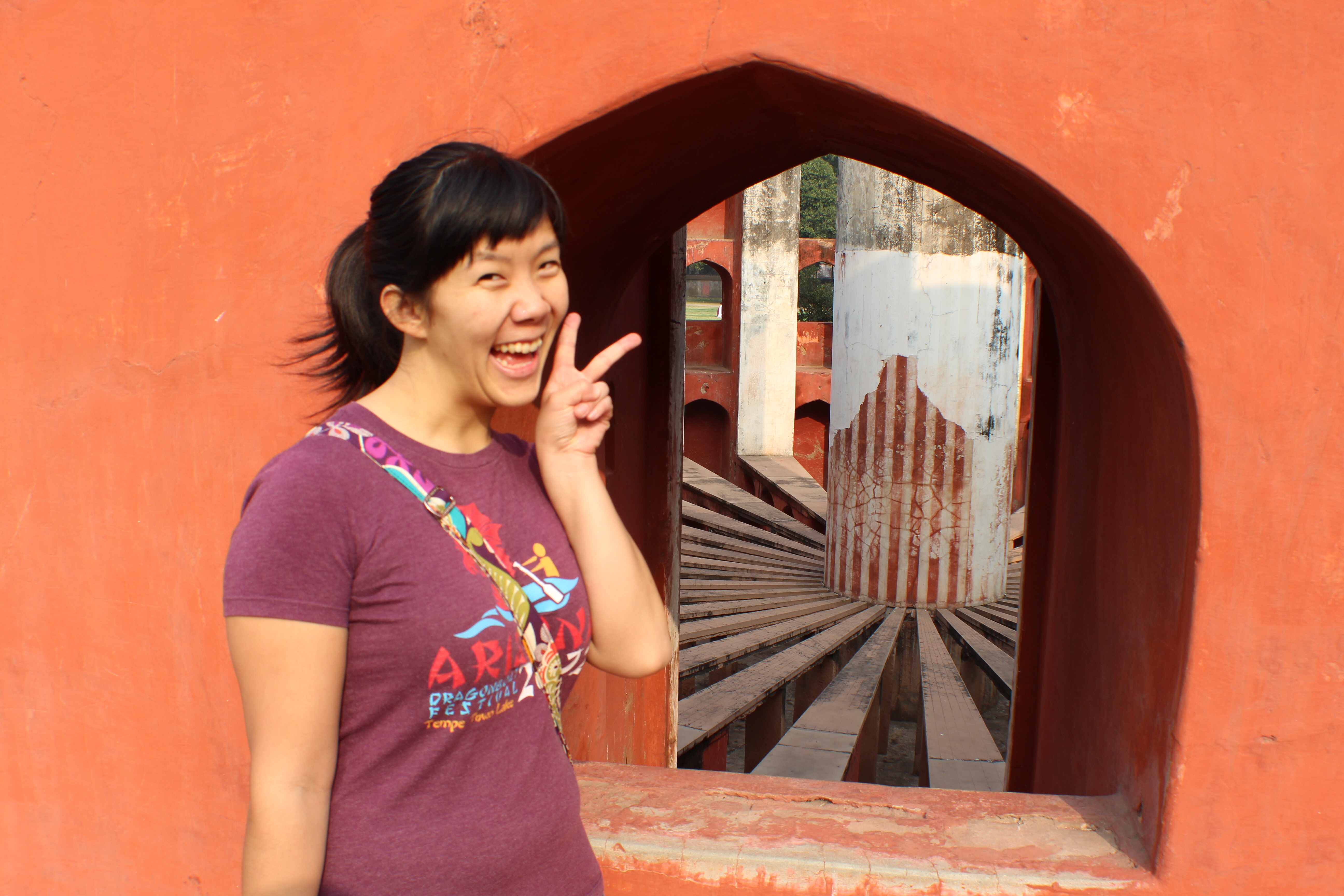
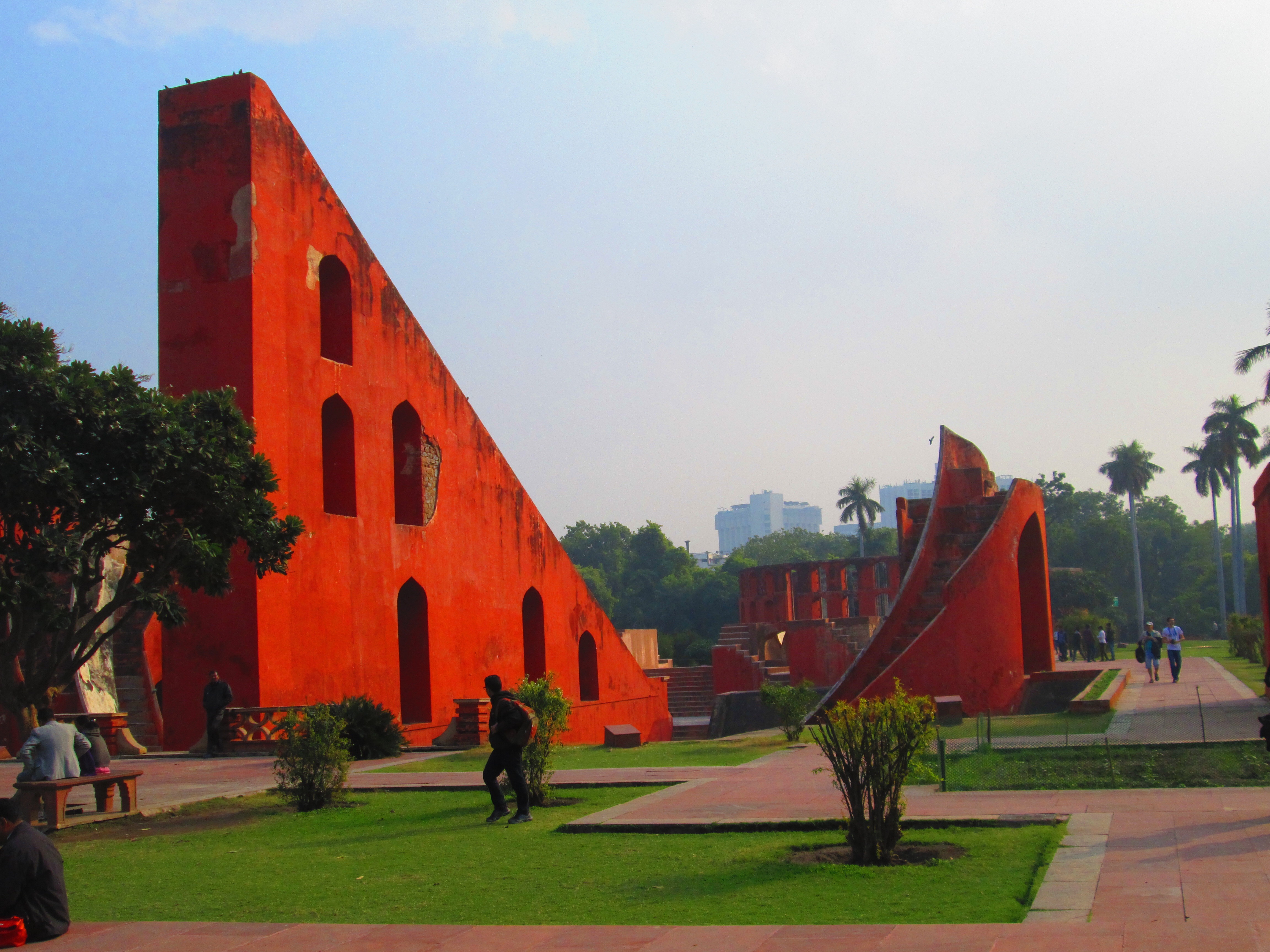
Outside the Rajiv Chowk, lies the Jantar Mantar complex. Built in 1724, it comprises 13 astronomical instruments. This site is one of five built by the Maharaja Jai Singh II of Jaipur, after he was given the task of revising the calendar and astronomical tables by the Mughal emperor Muhammad Shah.

image


The Mughal Empire lasted for over 300 years, and spans the timeline from 1526-1857. Babur, the founder, had turned to India to satisfy his political ambitions after being ousted from his ancestral domain in Central Asia.


The towering instrument that greets us as enter the grounds is the Samrat Yantra, a giant triangle that is essentially a massive sundial. The 128-ft long hypotenuse is parallel to the Earth’s axis and points toward the North Pole. Each side has a quadrant, with graduations that indicate hours, minutes, and seconds, turning the basic instrument, into a precision tool.

image

Credit: Nikhil Kulkarni

We next came across the Jayaprakesh Yantra; A hollowed out hemisphere with cross-wires stretching out between points of the rim. An observer at the center, could align the position of a star with the various ribs.


Then, we came across the Misra Yantra, a tool used to determine the shortest and longest days of the year in addition to the exact moment of noon in cities and locations worldwide, regardless of geographical distance from Delhi.

imageDescending even deeper into time, the Qutab Minar is the 2nd tallest Minaret in the world at a total height of 73 meters. It is made of red sandstone and marble, and has a diameter gradient that begins at 14.3 meteers at its base before narrowing to 2.7 meters at its peak. This sprawling tower has five layers, and despite construction beginning in 1192, was not complete until 1368.

You will often see minarets as an iconic feature of muslim mosques. It is from these spires that Adhans, the call to prayer, are issued five times each day.

imageIf you look closer, you can see the islamic influence in the shape of the Muqarnas that encircle each tier of the tower. Remniscient of stalactites, they take the form of small pointed niches stacked in radially symmetric tiers that project outward. The number of unique tiles is limited by N-gonal symmetry, or the equation N = N/2 -1.

imageWe then stopped by the Dilli Haat, a market that hosts unique handicrafts from each of India’s 29 states, and snacked on some Momo’s, which are essentially dumplings. This makes sense, given that this ethnic food is from north-eastern India near the Chinese border.


.

Travel: New Delhi

image

Credit: Nikhil Kulkarni

After checking-in to our rooms, we took some time to scour off the travel grime, and prepare for our day. We arrived at the hotel around 7 AM, and had decided that taking a nap would basically just serve to encourage our jet lag.

New Delhi is the capital of India, and the seat of its executive, legislative, and judicial branches. Although the capitol was originally in Calcutta in the early 1900s, the British, formally decided to migrate the seat of their power to New Delhi in 1911.

It is not difficult to feel the british influence when one walks along the kingsway.


Master-planned by the architect Edwin Lutyens, New Delhi is centered around two central promenades call the Rajpath and the Janpath. The streets are wide and tree-lined, a design that was both ambitious and forward thinking in its hey-day.

imageOur first stop, was the India Gate. It sits along the eastern edge of the ‘ceremonial axis,’ and is a towering memorial that evokes an architectural style akin to the Arch of Constantine in Rome, or the Arc de Triomphe in Paris.


It calls for the remembrance of the 82,000 soldiers of the undivided Indian Army who lost there lives between 1914 and 1921 during the First World War and in the Third Anglo-Afghan War.

Below this towering structure, is an understated black marble plinth that bears a reversed rifled, capped by a war helmet, bound by four urns, each with a permanent jyoti (light) from flames. Inaugurated in 1972, this is the Amar Jawan Jyoti, India’s Tomb of the Unknown Soldier.

image

Credit: Nikhil Kulkarni

At the opposite end of the Rajpath, lies the secretariat, home to some of the most important ministries of the Cabinet of India. Much of the buildings of the North and South block are classic in style, but it is not difficult to see the Mughal or Rajastani motifs that have been incorporated.


They are visible in the form of the perforated screens which shield from both the scorching sund and the monsoon rains. Another feature is the dome-like Chatri, which provided shade to travelers in ancient times.

image

Credit: Nikhil Kulkarni

Our last stop of the day was the Lotus Temple. This location serves as the Mother Temple of India. The Bahá’í Faith, has roots dating from 19th-century Persia, its founder, Bahá’u’lláh died a prisoner when he was exiled to the Ottoman Empire for his teachings.


Three core principles are emphasized in the Bahá’í religion: (1) The unity of god, (2)  The unity of religion, and (3) The unity of Humanity.

image

Credit: Nikhil Kulkarni

Inspired by the lotus flower, a symbol of purity, the Lotus Temple is composed of 27 free-standing marble clad “petals” that form nine sides of three clusters each. Each of its nine doors open into a central hall that is more than 40 meters high, and can hold a total capacity of 2,500 people.

image


The engineer in me was completely awe-inspired by this building. Not only is it remniscent of the Sydney Opera House in Australia, but its a challenge to grasp the depth of shell-stresses and structural analysis involved in the fabrication of each monstrosity of a petal.


imageWe finished our day by savoring a snack of Pao Bhaji (Bombay street food, very similar to the American Sloppy Joe, except vegetarian) and having Tea, before retiring to our rooms to pass out.


Travel: Bidding Addio to Rome

Italian is an artful and complex language, it tops my  list of five languages that I want to gain fluency in,  and it is with this prose that I bid Addio to Rome. It was a long and prolonged day for both myself and my poor, ravaged feet. Despite this, I wanted to cherish the feeling of history beneath my footsteps, and inhale my final breaths of roman air.

2013-06-02 12.38.50

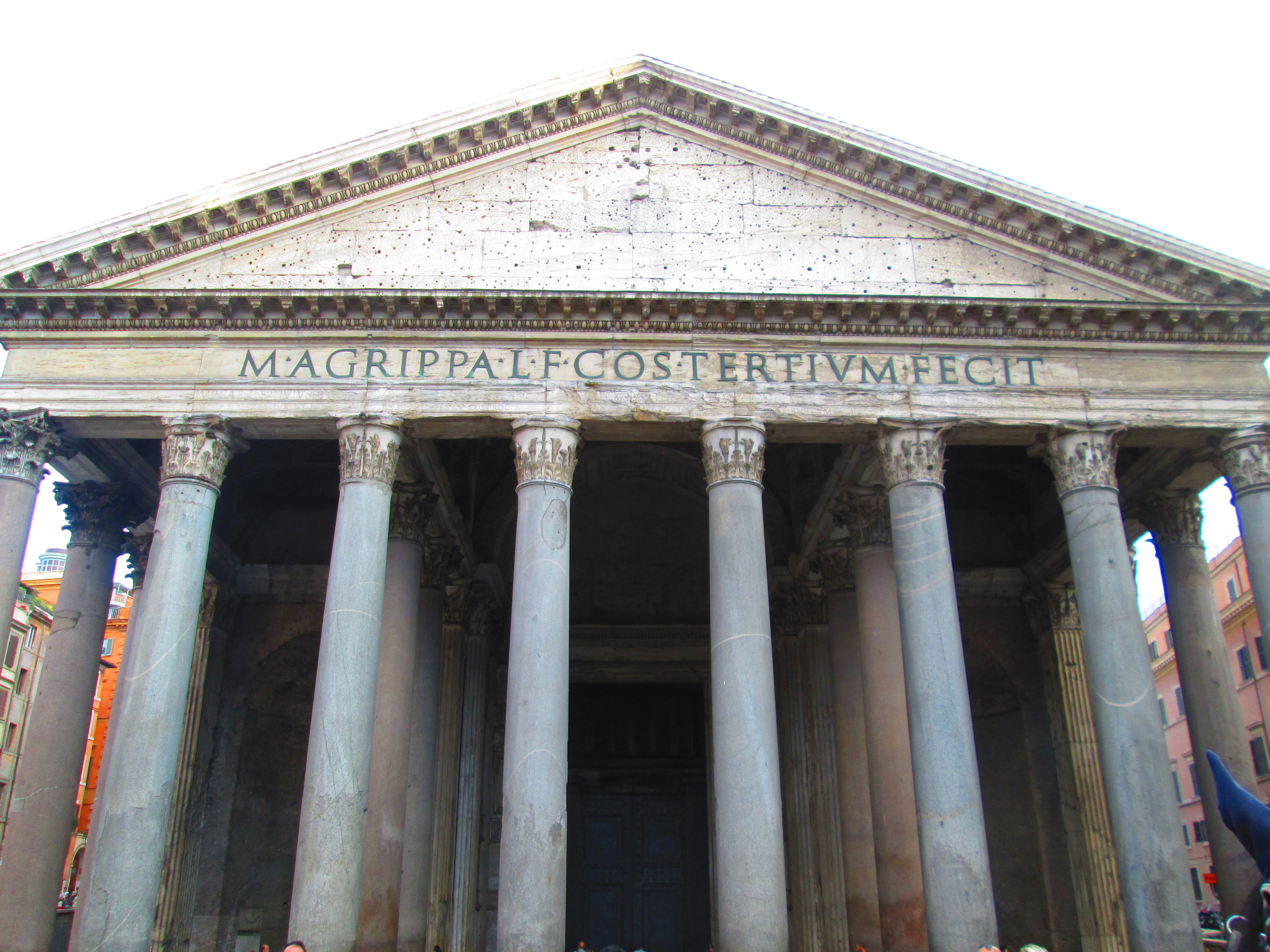
I could think of no better place to experience this, than to ponder the epic feats and legends of Ancient Rome whilst gazing at the Trevi Fountain at dusk with the sun retracting its golden rays. Fortunately (or unfortunately) I passed by the Pantheon during my stroll, I’m still not sure how this two-thousand year old structure missed my list of must-sees.

The circular building is composed of a portico supported by large granite Corinthian columns  beneath a pediment. This links to the rotunda which lays beneath a coffered concrete dome containing a occulus. To this day, this dome is still the world’s largest unreinforced concrete dome at a diameter and height of 43.3 meters (142 ft). It is from this building, that Paris’s pantheon derives its name.  The Pantheon contains the tombs of Raphael, Peruzzi, Carraci, Corelli, two kings of italy, and one queen. I will certainly have to remember to visit this beautifully preserved structure at a future date.

2013-06-02 12.46.16

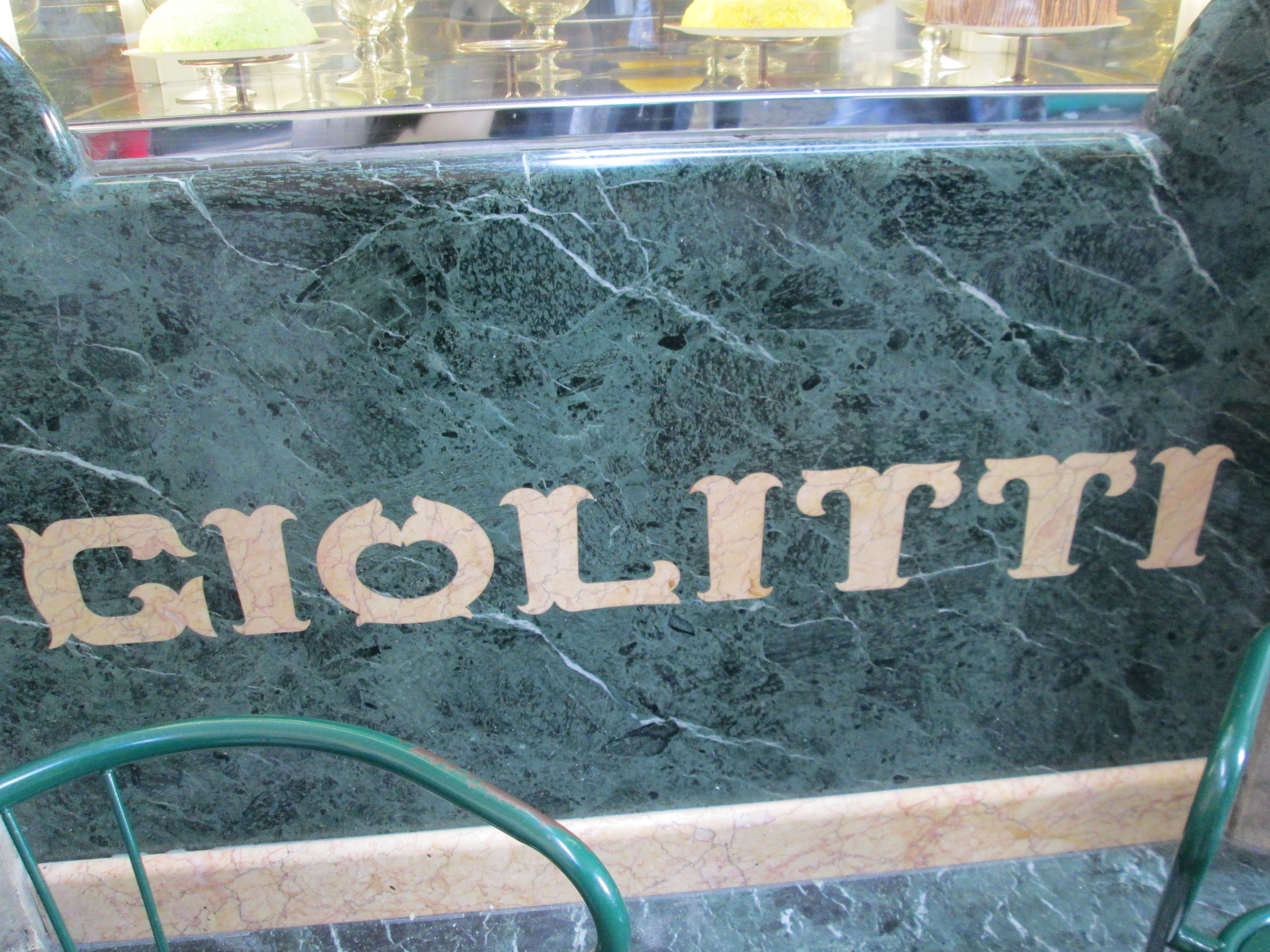
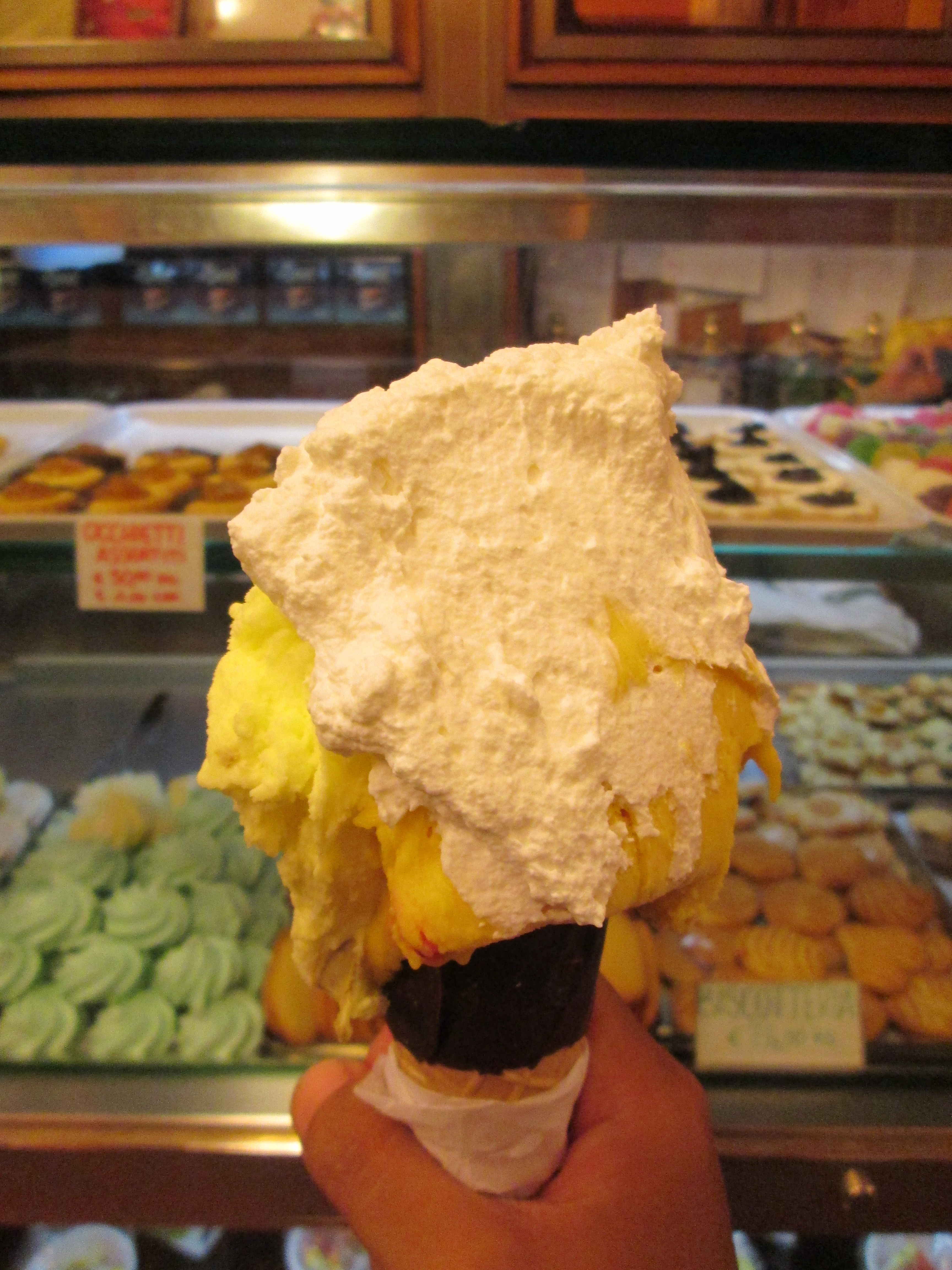
Nonetheless, I continued onwards to treat myself to some Gelato from the famous Giolitti‘s. As the oldest ice cream parlor in the city, it has been owned and run by the same family since its founding in 1890.


2013-06-02 12.56.13

Famous amongst tourists and locals alike, it maintains a diverse range of unique flavors, such as champagne, ricotta, and rice. Not aware of this, I opted for some more traditional choices.

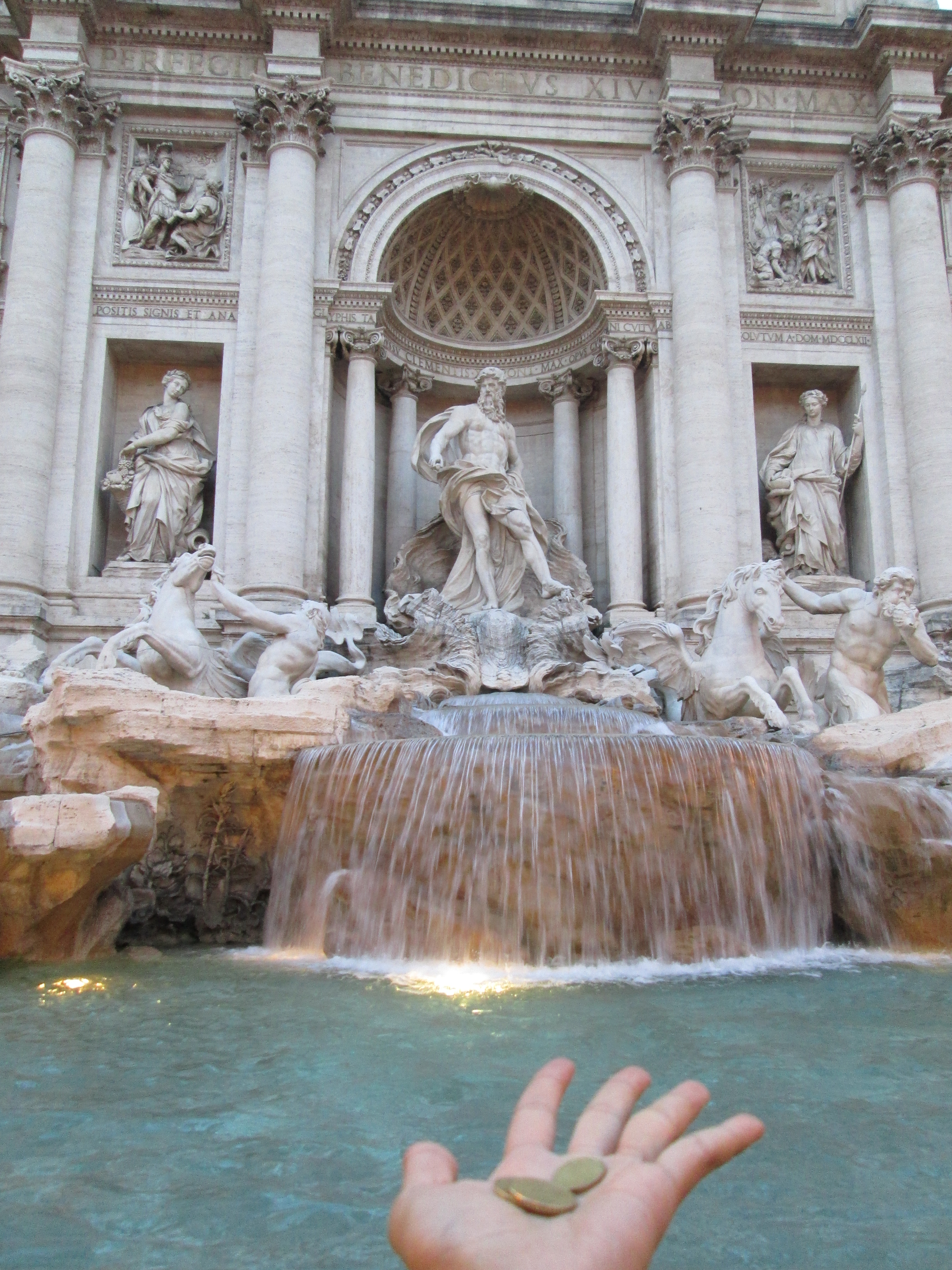
I rounded off my night by tossing a Euro into the Trevi. The tradition is to use the right hand to throw a coin in over the left shoulder.


One coin means you’ll return to Rome, two mean you’ll return and fall in love, and three mean you’ll return, find love, and marry. I wish I had known about the superstition behind multiple coins, because my love life is seriously lacking . . .

2013-06-02 13.42.21


Travel: Barbarians or Heroics?

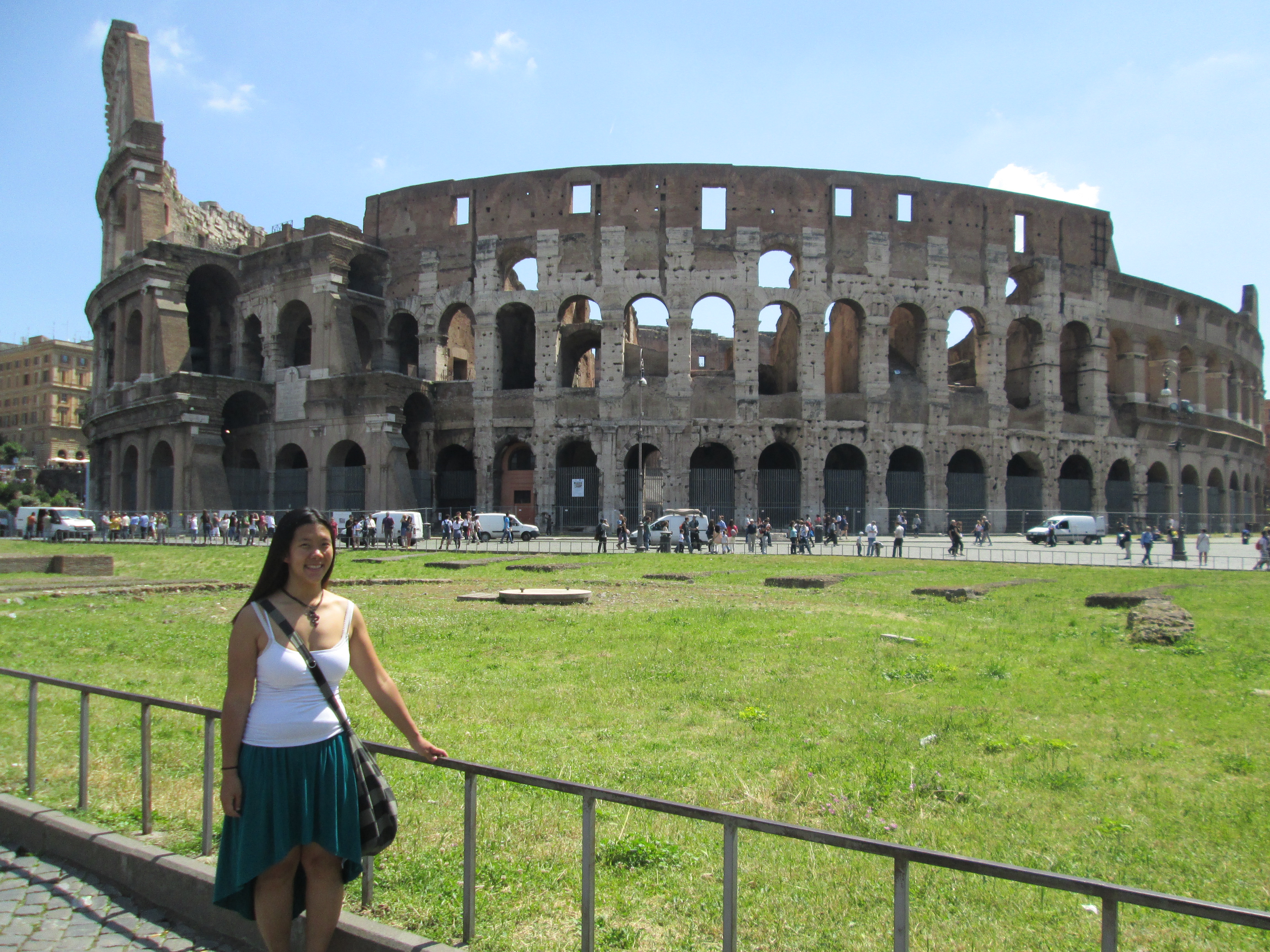
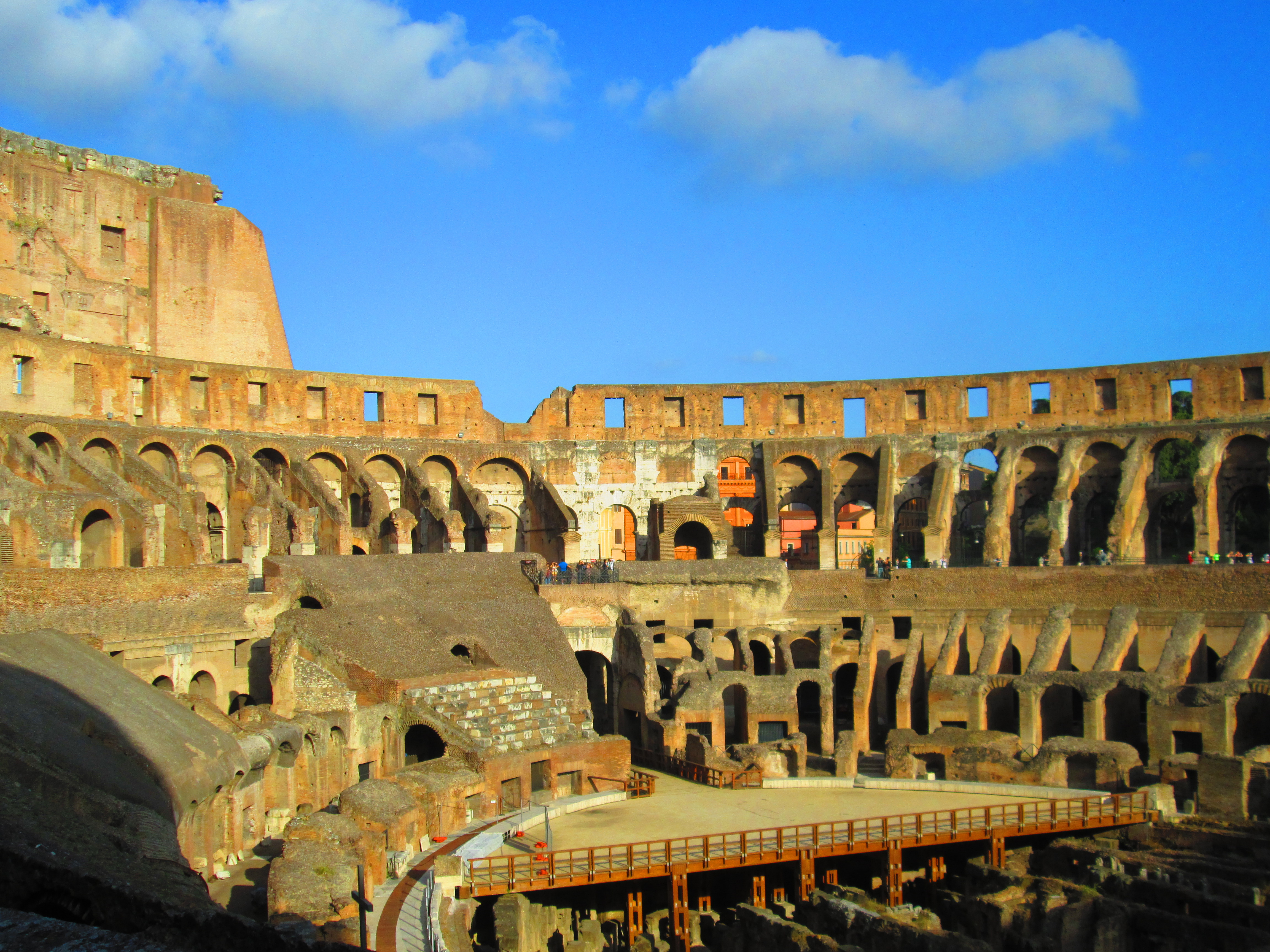
Although my muscles were silently crying tears, I made my way onwards toward the Colosseum that silently towers in the background. However, I first attempted to give my bones a reprieve by pausing in the shadows of these ancient roman giants and taking in their confident stances that have stayed steadfast despite the centuries.

2013-06-02 04.21.08

I know I’ve used this word far to often, but the first thought that comes to mind is ‘breathtaking.’ Its no wonder that it has consistently held its title as a ‘Wonder of the World.’ The structure is a monstrosity after all; built of concrete and stone, it has weathered the ages and remains the largest amphitheater ever constructed to date.

2013-06-02 11.29.01

The iconic name ‘Colosseum’ is believed to be derived from the nearby (although no longer in existence) colossal statue of Nero that was erected in bronze and towered at a height of 30m within the vestibule of Emperor Nero‘s imperial villa the Domus Aurea.

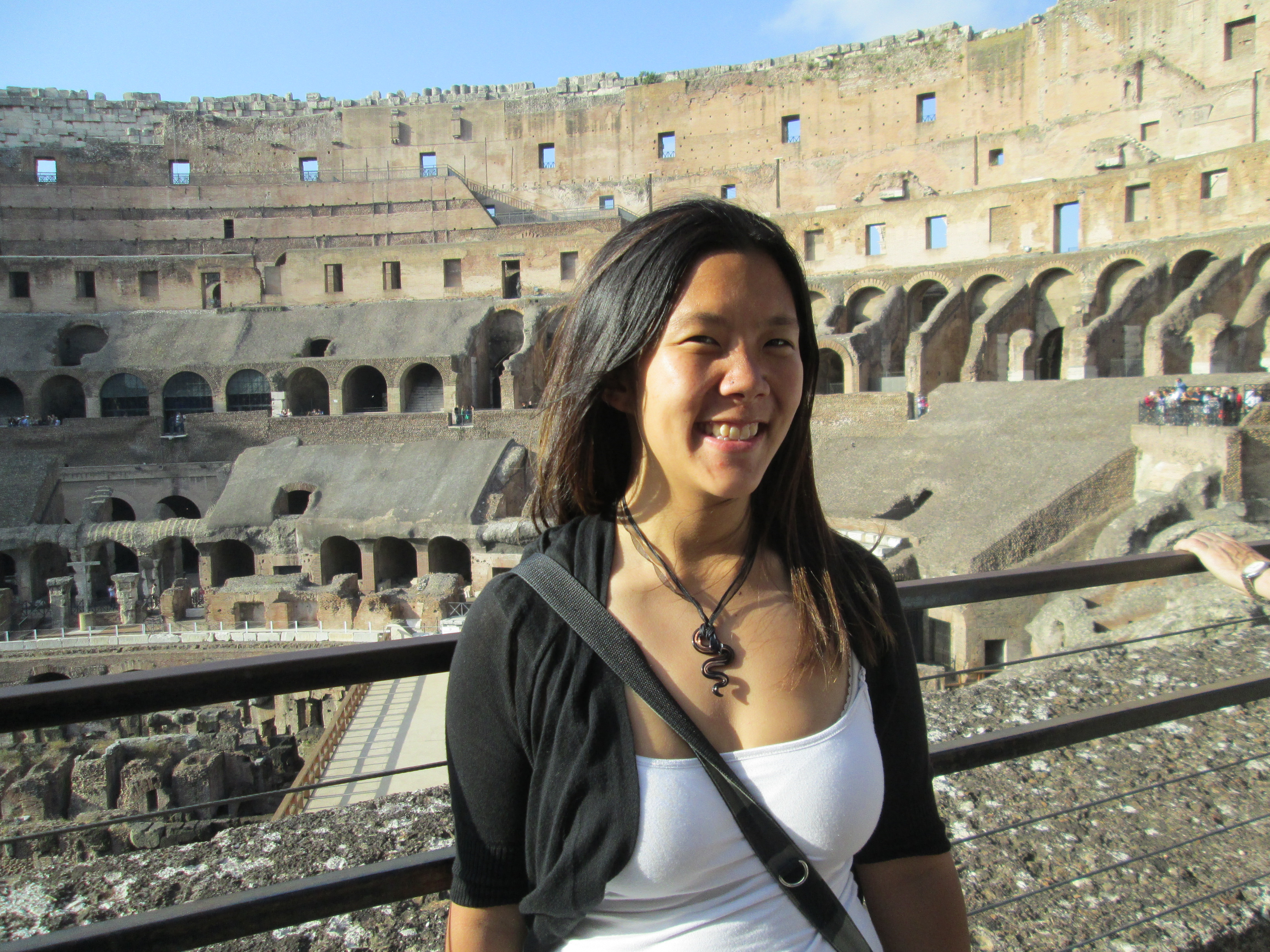
Considered a pinnacles of Roman Architecture and Engineering, it lies east of the Roman Forum and was erected during the Flavian dynasty under the reign trifecta of VespasianTitus, and Domitian.

2013-06-02 11.41.57

Shadows creep as the sun sets.

It held between 50-80 thousand spectators and was the site of gladiatorial contests and public spectacles for the entertainment of the public.

Events such as mock sea battles, animal hunts, reenactments of famous battles, classical mythological dramas, and even executions were regularly on display.

Unfortunately, it fell into disuse in the early medieval era, and was only reincarnated by necessity as  grounds for housing, workshops, religious quarters, a fortress, a quarry, and a Christian shrine. It even maintains close connections with the Roman Catholic Church, as each year, on Good Friday, the Pope leads a torchlit “Way of the Cross” procession originating from the Roman Ruins surrounding the Colosseum.

An epigram by the Venerable Bede often misattributed as a reference to the colosseum states the following:

 Quamdiu stat Colisæus, stat et Roma; quando cadet colisæus, cadet et Roma; quando cadet Roma, cadet et mundus 

“As long as the Colossus stands, so shall Rome; when the Colossus falls, Rome shall fall; when Rome falls, so falls the world”

Although the correct structure in question was the previously stated Statue Of Nero, one can’t help but consider the subtle symbology behind this statement.

The Roman’s were certainly an articulate and knowledgeable civilization that flourished for centuries despite systematic weaknesses. They knew how to effectively wield power across long distances, develop a unified army, distribute responsibilities amongst individual civil administrations, develop a system to control public finances, and maintain a class system. The empire didn’t fall in a sudden blaze of glory, but was whittled away at by circumstance, much as the Colosseum continues to lose it skeleton to greedy stone robbers.

I realize this is a de facto analogy, but it really causes one to ponder. What do you think?

Travel: In the Steps of Michaelangelo

English: Capitoline Hill, Rome. Image:Fratelli...

Before we could enter the Roman Ruins that day, my new friend and I stumbled upon the tail-end of a parade in celebration of some unknown national holiday. I’m still not clear on what it was, but I would have been thrilled if I had managed to catch sight of all the festivities. Unfortunately for us, we discovered that it delayed the opening of our attractions for the day. Rather than being open that morning, neither the Imperial Forum, nor the Colosseum were going to open until that afternoon. Instead, we took a long stroll around Capitoline Hill, one of the seven hills of Rome and the original Citadel of the first generation.

The Abduction of the Sabine Women, by Nicolas ...

It is at this site that the Sabines, were granted access by the Roman maiden Tarpeia. For her treachery, she was the first to be flung from a steep cliff overlooking the Roman Forum. Later named the Tarpeian Rock after the Vestal Virgin, it became a frequent execution site.

The first Sabines immigrated to Rome following the Rape of the Sabine Women.

You may recall an earlier post from the beginning of my trip when I went to visit the Fatima Sanctuary, the following brings to mind how individuals can be so devout to subject themselves to pain in the name of their faith. Legend says that  Julius Caesar approached the foot of the hill and Jupiter’s Temple on his knees in penance for his actions in the civil wars and to avert an unlucky omen of Jupiter’s wrath. He was moved to do so after he suffered an accident during one of his triumphs. Despite this, he was murdered six months later, and Brutus and his conspirators barricade themselves within the temple.

Excuse me, I’ve gotten a bit off track from my original topic., back to Michelangelo!

What I’ve come to love about Rome are the subtle nuances that pervade every cornerstone and recess of its ancient culture and architecture. A prime example of this is the Piazza del Campidoglio.

Michelangelo's design for Capitoline Hill, now...

In his prime, he was commissioned by the Farnese Pope Paul III to design a plaza. The Pope wanted a symbol of the new Rome to impress Charles V, who was expected in 1538. Having an opportunity to build such a monumental civic space, granted Michelangelo the opportunity to make a resonating statement reestablishing the grandeur of Rome.  His initial designs for the Piazza date from 1536 and were formidably extensive.

In an emblematic display, he chose to accentuate the reversal of the classic orientation of the Capitoline. Instead, the gesture turned Rome’s civic center away from the ancient Roman Forum  to face the direction of Papal Rome and the Christian church  represented by  St. Peter’s Basilica.

2013-06-02 05.01.33

His made a bold metaphorical statement:

“This full half circle turn can also be seen as Michelangelo’s desire to address the new, developing section of the city rather than the ancient ruins of the past.” ~In the wise words of Wikipedia

I have so much more I want to say about how Michelangelo used his ingenuity to address problems such as a sloped site and the lack of building facades facing each other squarely, however, I will leave that to your research. The structural engineer in me is trying her hardest not to bore you with devious architectural solutions.

Previous Older Entries Next Newer Entries